The Lord of the Rings: The Fellowship of the Ring
"A journey into a world where every pebble and shadow feels dangerously real."
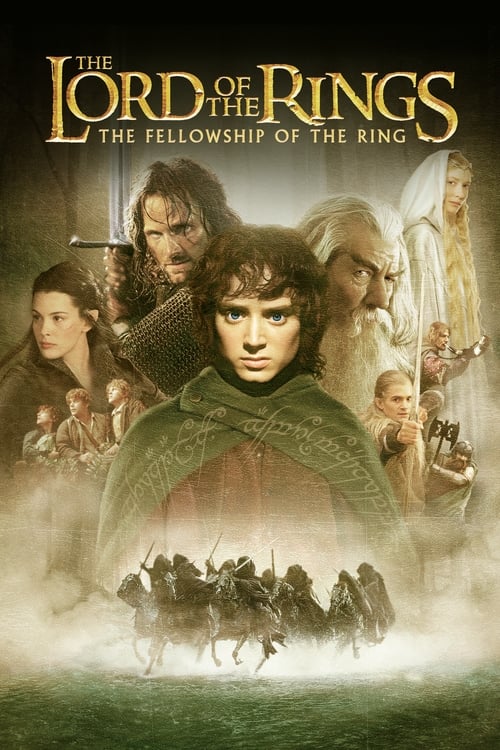
The first time I saw the Ring slip onto Frodo’s finger at the Prancing Pony, I genuinely forgot to breathe. At the time, I was sitting on a sagging beanbag chair that smelled faintly of damp wool and stale popcorn, but as the screen dissolved into that terrifying, hazy shadow-world of the Nazgûl, the room around me vanished. I watched this particular re-watch while nursing a lukewarm mug of Earl Grey and wearing socks with a hole in the big toe, yet even in my living room, the sheer scale of Peter Jackson’s Middle-earth makes everything else feel small.

Looking back, it’s easy to forget what a massive gamble The Fellowship of the Ring actually was. Before the MCU turned multi-film arcs into a factory standard, Peter Jackson—a guy previously known for splat-stick horror like Dead Alive—convinced New Line Cinema to let him film three epic fantasies back-to-back in New Zealand. This was the era where CGI was starting to flex its muscles, but hadn't yet become the weightless, glossy blur we see in modern blockbusters.
The Mud and the Magic
What strikes me most twenty-plus years later is how heavy everything looks. When Viggo Mortensen (as Aragorn) parries a blow from a massive Uruk-hai, you don't just see the spark; you feel the vibration of steel hitting steel. The production design by Weta Workshop brought a level of "used-universe" detail that we hadn't seen since the original Star Wars. Every buckle on Frodo’s vest looks hand-stitched; every stone in the Mines of Moria looks like it has sat in the dark for three thousand years.
This film caught the perfect tail-end of the practical effects era. Jackson used "Big-atures"—massive, highly detailed scale models for places like Rivendell and Lothlórien—that give the locations a tangible soul. While Ian McKellen’s Gandalf is doing battle with a CGI Balrog, he’s doing it in a space that feels geographically certain. There’s a grit here that modern fantasy often trades for convenience. Sean Bean’s Boromir is the only person in the Fellowship who actually seems to understand how much this whole situation sucks, and his desperate, mud-caked final stand remains one of the most impactful action beats of the decade.
The Faces of the Fellowship
The casting is, frankly, miraculous. Elijah Wood carries a heavy burden as Frodo, but it’s Sean Astin as Samwise Gamgee who provides the emotional North Star. Then you have Ian McKellen, who managed to define the wizard archetype for an entire generation. I remember reading that Christopher Lee (who plays Saruman) actually met J.R.R. Tolkien in a pub once—he was the only person on set who had. That kind of deep-rooted connection to the source material radiates from the screen.

Even the smaller moments, like Ian Holm’s Bilbo struggling with the Ring’s addiction in the Shire, feel grounded in a psychological reality that elevates the film above mere spectacle. Viggo Mortensen famously lived in his costume and even broke two toes kicking a helmet in the second film, but his commitment starts here. He turned what could have been a generic ranger into a reluctant king defined by sweat and survival.
Action with Consequence
The action in Fellowship is a masterclass in escalating tension. From the claustrophobic flight to the ferry to the sprawling chaos of the Mines of Moria, the pacing is relentless. Orlando Bloom’s Legolas essentially invented the ‘looking pretty while doing physics-defying nonsense’ genre, but the film balances his elven grace with the blunt-force trauma of John Rhys-Davies’ Gimli.
The sound design by Howard Shore is the secret weapon. The music doesn't just accompany the action; it tells you exactly how much history is at stake. When the Fellowship flees across the Bridge of Khazad-dûm, the booming masculine choir makes the threat feel ancient and inevitable. It’s an aural landscape that makes the $93 million budget look like it was actually $300 million.
The Legacy of the Extended Edition
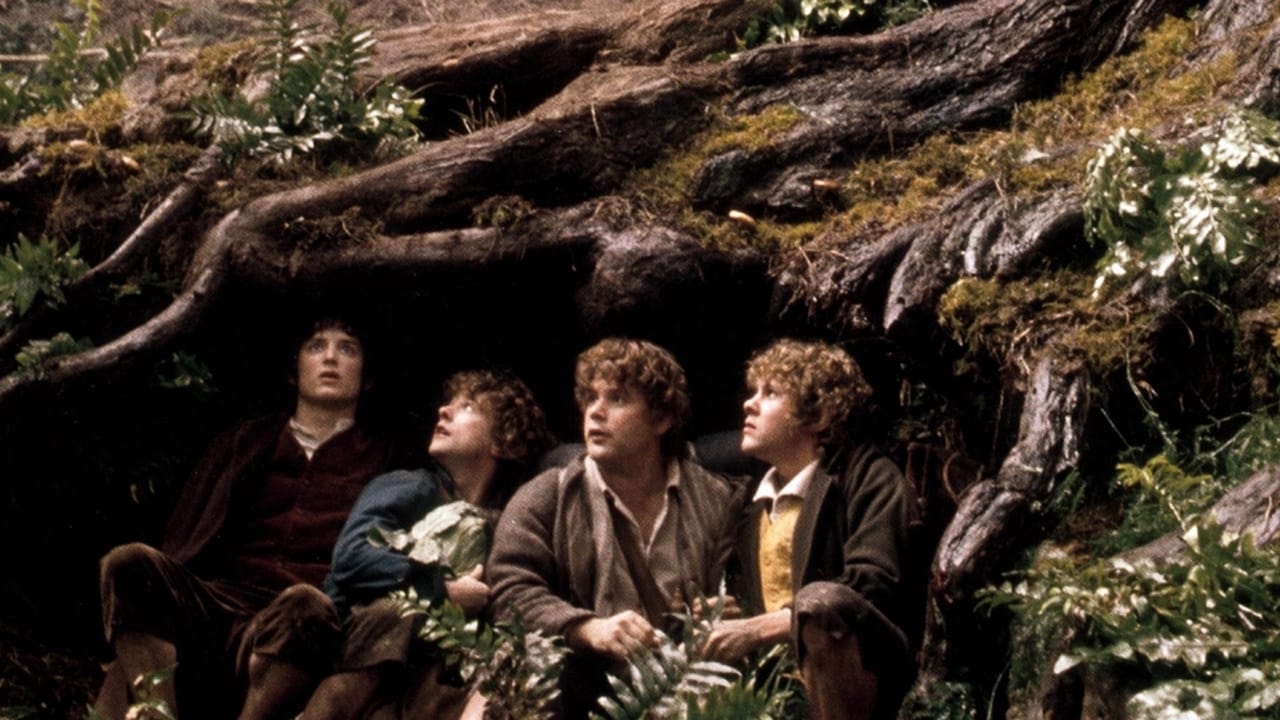
We can't talk about this film without mentioning the DVD culture of the early 2000s. For many of us, the four-disc "Platinum Series" Special Extended Edition was our first real film school. Watching the behind-the-scenes footage of the "forced perspective" tricks—where they placed Elijah Wood several feet behind Ian McKellen to make him look three feet tall—revealed the sheer ingenuity required before digital "shrinking" became the easy answer. The film was a bridge between two worlds: the old-school trickery of the 20th century and the digital frontier of the 21st.
Even the accidents became lore. During the skirmish at Amôn Hen, a stuntman accidentally threw a real steel knife directly at Viggo Mortensen’s face instead of past it; Viggo simply parried it away with his sword in real-time. That’s the kind of luck and skill that defines this production. It was a lightning-in-a-bottle moment where everyone from the caterers to the lead actors knew they were making something that would outlast them.
The Lord of the Rings: The Fellowship of the Ring isn't just a fantasy movie; it’s a landmark in how we tell stories on a grand scale. It took the "unfilmable" and made it feel like a historical documentary of a world that never was. While CGI has evolved, the heart and craftsmanship of this first journey remain the gold standard for what a blockbuster can achieve when it respects its audience and its source material. If you haven't visited the Shire lately, it’s time to go back.
Keep Exploring...
-

The Lord of the Rings: The Return of the King
2003
-
The Lord of the Rings: The Two Towers
2002
-

The Hobbit: The Desolation of Smaug
2013
-
The Hobbit: An Unexpected Journey
2012
-
The Hobbit: The Battle of the Five Armies
2014
-
Pirates of the Caribbean: The Curse of the Black Pearl
2003
-

King Kong
2005
-
Avatar
2009
-
How to Train Your Dragon 2
2014
-

Star Wars: Episode III - Revenge of the Sith
2005
-
The Mummy
1999
-

Pirates of the Caribbean: Dead Man's Chest
2006
-
Shrek
2001
-
The Incredibles
2004
-
Harry Potter and the Philosopher's Stone
2001
-
Harry Potter and the Chamber of Secrets
2002
-
Harry Potter and the Prisoner of Azkaban
2004
-
Harry Potter and the Goblet of Fire
2005
-
Casino Royale
2006
-
Justice League: The Flashpoint Paradox
2013