The Others
"The darkness is their only sanctuary."
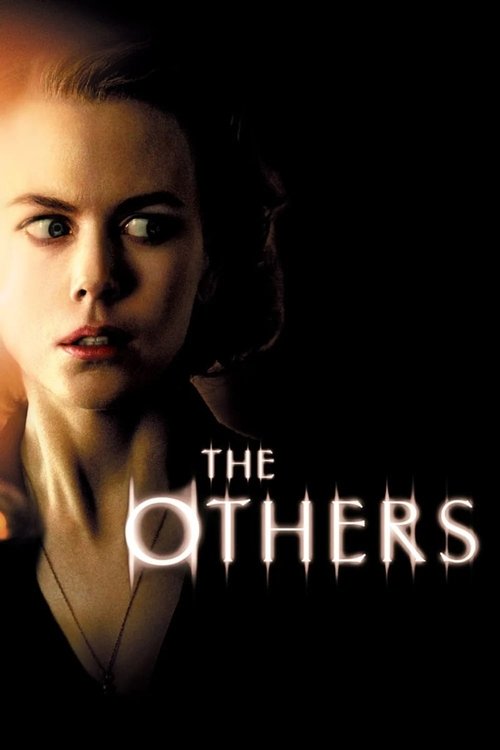
The fog doesn’t just sit outside the house in Alejandro Amenábar’s 2001 masterpiece; it seems to seep through the floorboards and settle in your lungs. While the early 2000s were busy trying to figure out how many digital monsters could fit on a screen—think the frantic energy of The Mummy Returns or the burgeoning CGI spectacle of the Star Wars prequels—The Others took a defiant, hushed step backward. It’s a film that trusts the power of a closing door and a flickering candle more than a hundred million dollars of pixels. I first watched this in a basement flat where the natural light was perpetually dim anyway, and I spent half the runtime wondering if the scratching in the walls was a ghost or just my landlord’s very active mice. That kind of lingering paranoia is exactly what this movie harvests.
The Architecture of Brittle Silence
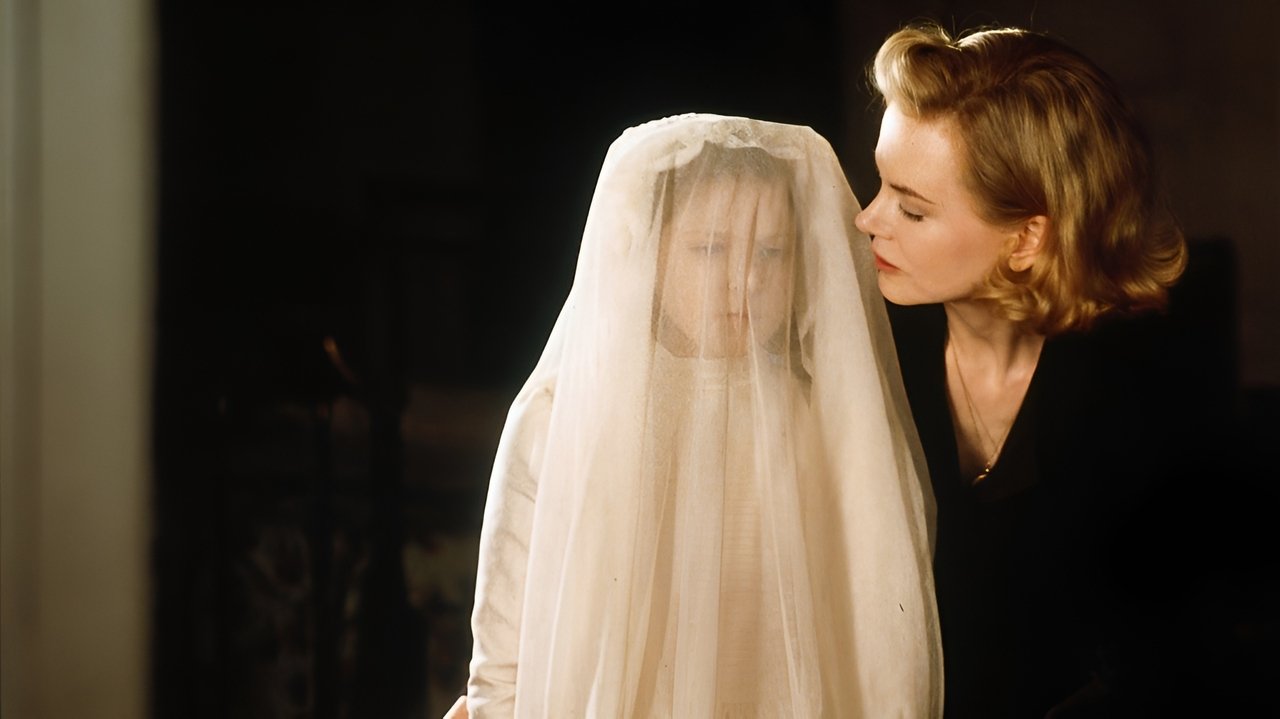
Set in a cavernous, Victorian-era mansion on the Channel Islands shortly after World War II, the story follows Grace Stewart, played by Nicole Kidman in a performance so high-strung it makes my own neck hurt just watching her. Grace is a woman of immense religious conviction and even greater anxiety, tasked with protecting her two children, Anne (Alakina Mann) and Nicholas (James Bentley), who suffer from a rare "photosensitivity" that makes sunlight lethal. This conceit is a stroke of genius; it forces the film into a permanent twilight. Every window is shrouded by heavy velvet curtains, and no door can be opened before the previous one is locked.
Nicole Kidman was at the absolute zenith of her "Ice Queen" era here, coming off the heels of Moulin Rouge! and just before her Oscar-winning turn in The Hours. She brings a fragile, almost crystalline intensity to Grace. She isn't just a mother; she’s a warden of a very specific, dark reality. When three mysterious servants, led by the impeccably eerie Fionnula Flanagan (whom you might recognize from Waking Ned Devine), arrive looking for work, the carefully maintained silence begins to crack. The way Amenábar uses sound—or the absence of it—is deeply unsettling. In an era where horror was becoming increasingly reliant on "jump-scares" bolstered by loud orchestral stings, The Others thrives on the sound of a heavy silk dress rustling in an empty hallway.
A Masterclass in Atmospheric Restraint
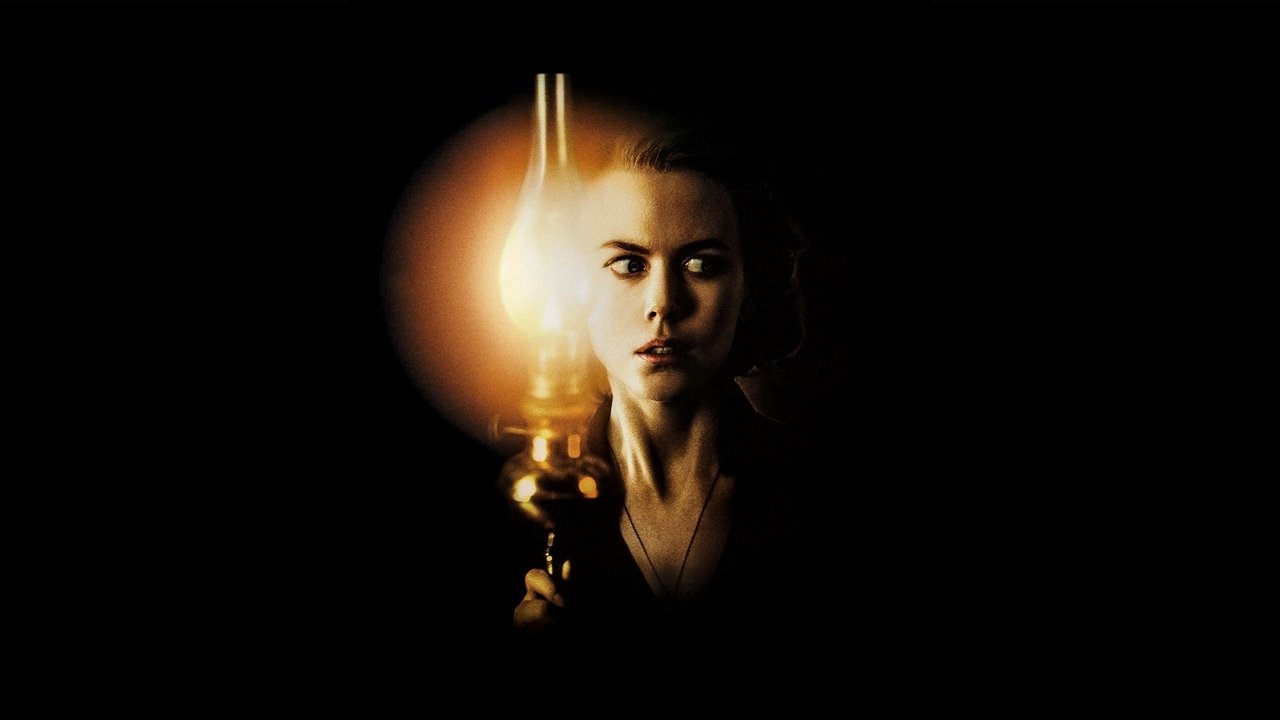
What strikes me most, looking back twenty-odd years later, is how much this film feels like a bridge between the classic Gothic horror of the 1940s and the modern "prestige horror" we see today. Alejandro Amenábar, who not only directed and wrote the script but also composed the haunting score, creates a sense of dread that is purely psychological. There are no monsters under the bed, only the terrifying possibility that someone is standing right behind you in the dark.
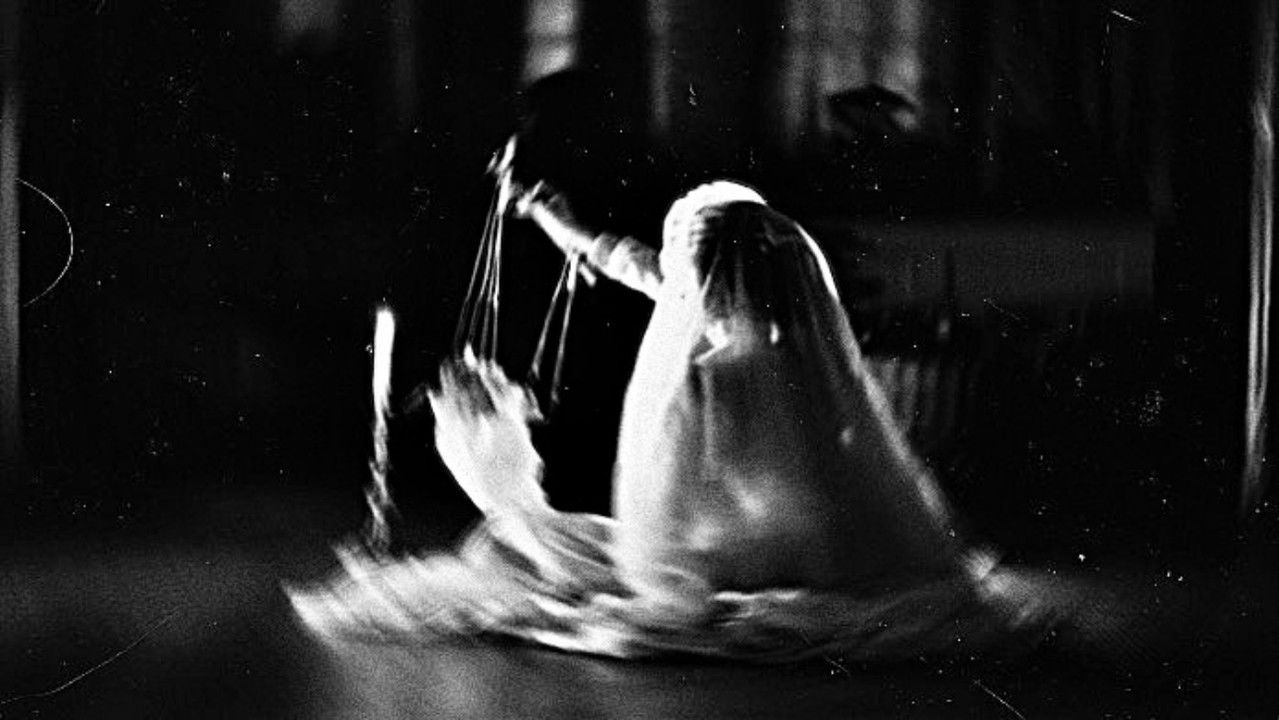
The cinematography by Javier Aguirresarobe (who later shot The Road and The Twilight Saga: New Moon) is a masterclass in shadow. He manages to make the darkness feel tactile, like a physical weight the characters have to push through. It’s a stark contrast to the bright, saturated look of many early digital films of the period. This was a film meant for the DVD era; it was the kind of disc you’d pop into the player, turn off all the lights, and let the high-contrast blacks of the screen swallow the room. The children are actually more terrifying than the ghosts for the first hour, mostly because their wide-eyed, pale-faced intensity mirrors their mother’s descent into madness.
The Sleeper Hit that Defied the Odds
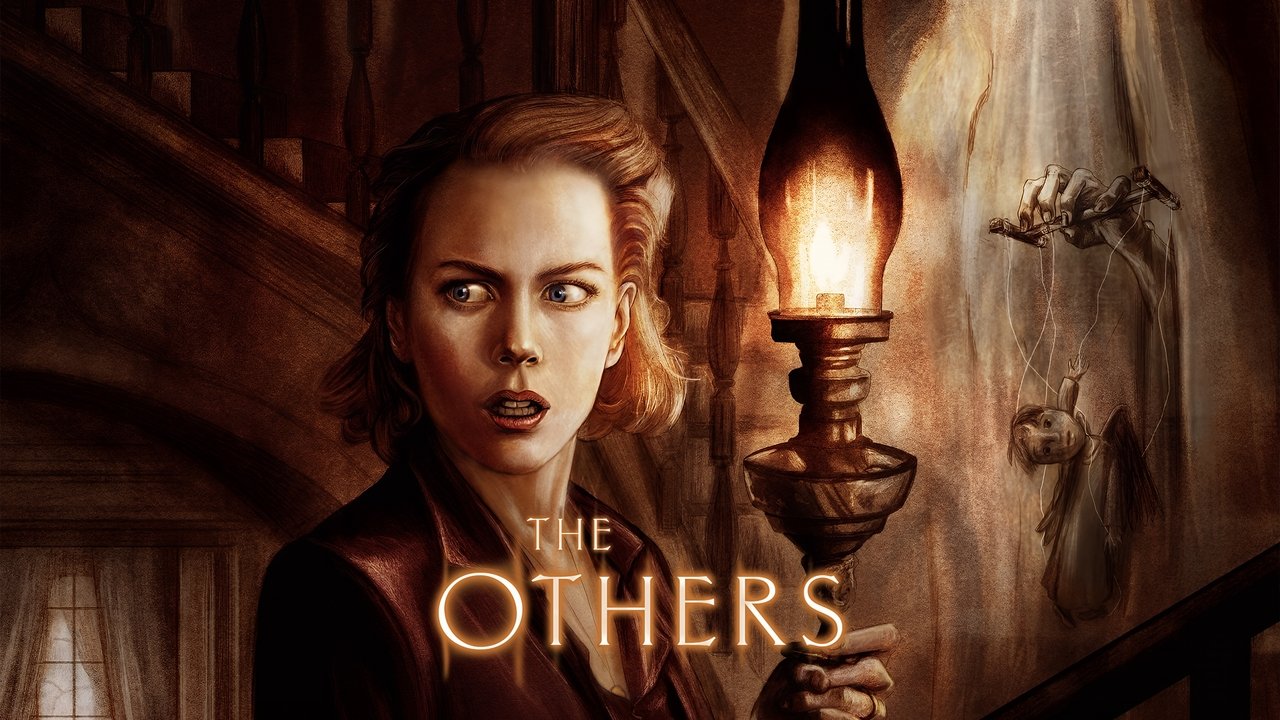
Culturally, The Others was a massive anomaly. Produced by Tom Cruise and Paula Wagner's production company during the height of the Cruise/Kidman media frenzy, it could have easily been a shallow star vehicle. Instead, it became a global phenomenon. On a modest budget of $17 million, it clawed its way to over $210 million worldwide. It didn't rely on a massive franchise tie-in or a summer blockbuster release date; it opened in August and relied on the most powerful marketing tool of the time: word-of-mouth about "The Twist."
While I won’t spoil the ending for the three people who haven't seen it, I will say that it recontextualizes every single frame that came before it. Unlike many films that rely on a final-act reveal—looking at you, M. Night Shyamalan—The Others doesn't feel like it’s playing a trick on you. It feels like an inevitability. It also made history in Spain, becoming the first English-language film to sweep the Goya Awards (Spain’s equivalent of the Oscars), including Best Film and Best Director. It proved that a Spanish sensibility could take the tropes of British Gothic horror and make them feel fresh, urgent, and deeply tragic.
In the landscape of modern cinema, The Others stands as a reminder that the most effective special effect is a well-placed shadow and a brilliant performance. It captures that specific post-millennium anxiety where we began to question the reliability of our own perspectives. It’s a somber, beautiful, and deeply moving ghost story that refuses to offer easy comfort. If you haven't revisited this one since the days of rented DVDs and chunky CRT televisions, it’s time to close the curtains and let the fog back in.
Keep Exploring...
-

Thesis
1996
-
Inland Empire
2006
-
Open Your Eyes
1997
-
Sleepy Hollow
1999
-
Primal Fear
1996
-
Scream
1996
-
Mystic River
2003
-
Shutter
2004
-
Unbreakable
2000
-
The Bourne Identity
2002
-
Saw
2004
-
The Skin I Live In
2011
-
Ghost
1990
-
Se7en
1995
-
Twelve Monkeys
1995
-
Black Swan
2010
-
Limitless
2011
-
The Conjuring
2013
-
The Maze Runner
2014
-

Stir of Echoes
1999