The Piano Teacher
"Desire is a cold, sharp blade."
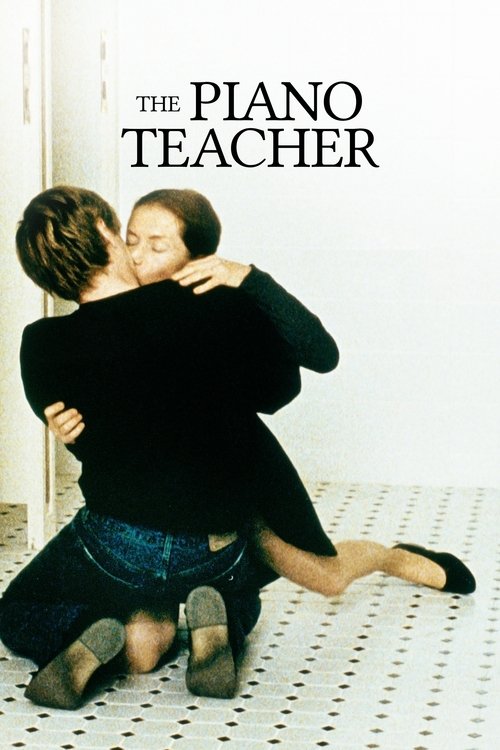
If you’ve ever felt that most movie romances are a bit too "sunlight through a wheat field," Michael Haneke is here to dump a bucket of ice water over your head and then stare at you until you feel uncomfortable. Watching The Piano Teacher isn’t exactly a cozy Sunday afternoon experience. It’s more like having a psychological colonoscopy performed by a world-class musician. I recently revisited this on a Tuesday night while eating a bag of slightly stale Haribo cherries, and the chewy, medicinal sweetness of the candy felt like a weirdly perfect counterpoint to the clinical, bitter chill of the film.
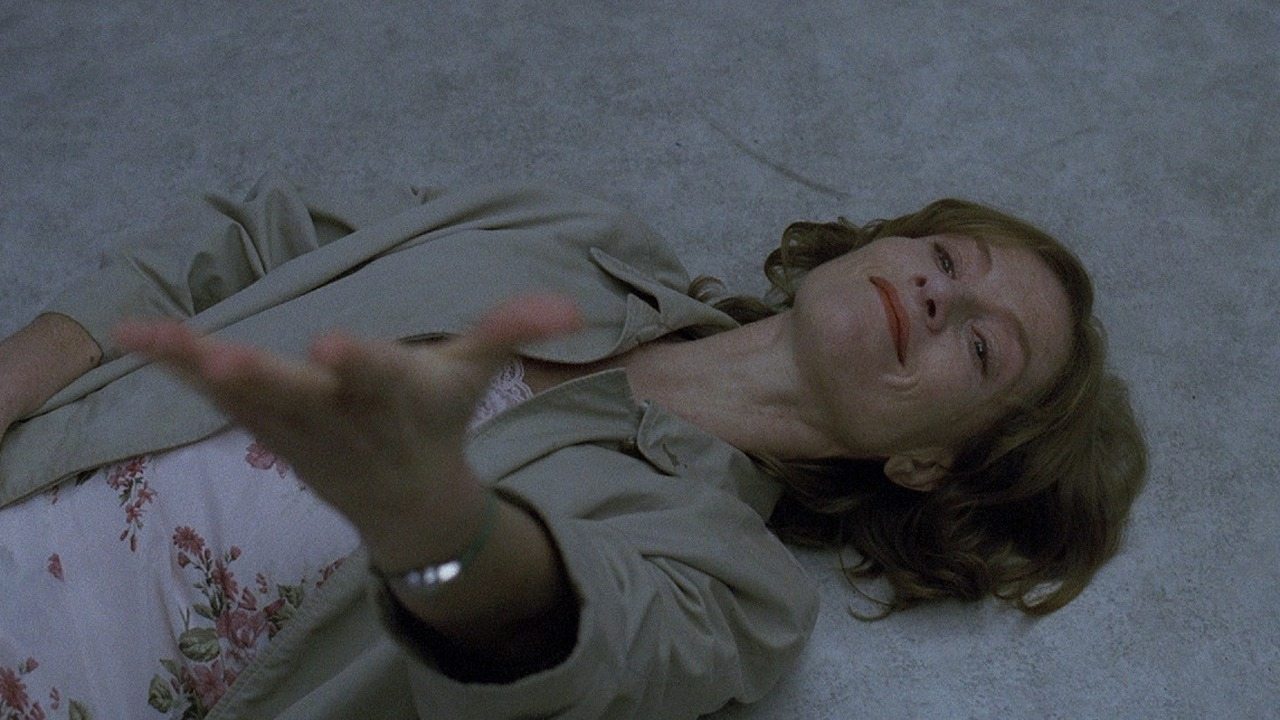
Released in 2001, this movie arrived right as the DVD revolution was turning casual viewers into "cinephiles." This was the kind of disc you’d see on a shelf next to Memento or Requiem for a Dream—the "serious" movies that felt like a rite of passage. While it swept the major awards at Cannes, it has since drifted into that territory of "the movie everyone knows is a masterpiece but is too scared to actually watch again."
The Huppert Masterclass
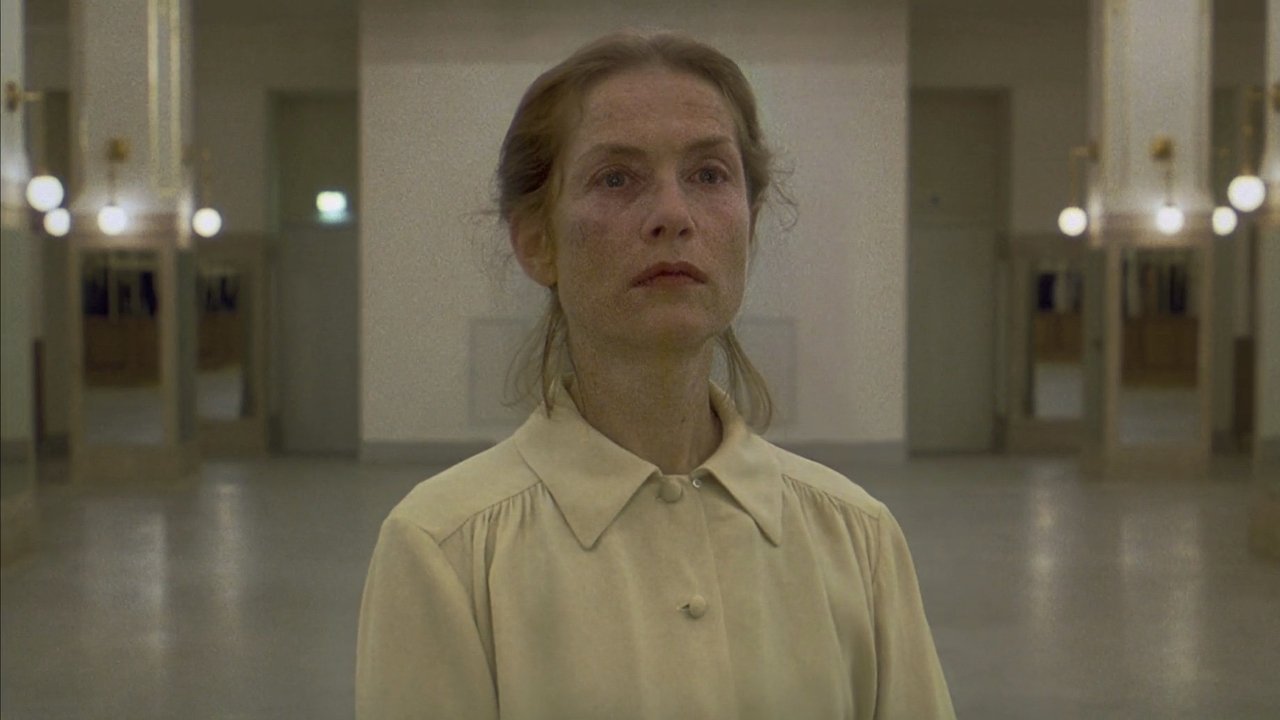
At the center of this storm is Isabelle Huppert as Erika Kohut. Erika is a prestigious piano teacher at a Vienna conservatory who lives in a state of perpetual, vibrating tension with her overbearing mother (played with terrifying precision by Annie Girardot). Erika is a woman who has traded her soul for technical perfection, and her only outlets for her repressed desires are voyeurism and self-mutilation.
I honestly believe Isabelle Huppert might be the only actor on the planet who could pull this off. She plays Erika with a face like a marble statue that’s just beginning to crack. There’s a scene early on where she walks through a pornographic multiplex with the same detached professionalism she uses to critique a Schubert sonata. It’s haunting because she doesn’t play Erika as a "crazy person." She plays her as a person whose internal logic has simply folded in on itself.
When Walter Klemmer (Benoît Magimel), a handsome, talented, and dangerously arrogant student, decides he’s going to "win" her, the film shifts from a character study into a psychological war. Walter thinks he’s in a romantic drama; Erika knows she’s in a tragedy. Benoît Magimel is fantastic here because he brings a jock-like confidence that slowly dissolves into genuine horror as he realizes Erika’s desires aren't a game—they're a prison.

Haneke’s Clinical Eye
Director Michael Haneke is famous (or infamous) for his refusal to use a traditional film score. In The Piano Teacher, the only music you hear is the music the characters are actually playing. This choice makes the silence between the notes feel heavy, almost suffocating. Looking back at the early 2000s, this was a bold rejection of the "emotional manipulation" of mainstream cinema. Haneke doesn't tell you how to feel with a swelling violin; he just puts the camera in the corner of the room and forces you to witness the wreckage.
The cinematography by Christian Berger avoids the warm, grainy look of the 90s, opting instead for a cool, sterile palette that mirrors the conservatory’s hallways. It feels modern, even twenty-some years later. There’s a specific sequence involving a letter Erika writes to Walter—detailing her specific, masochistic demands—that is one of the most difficult things I’ve ever sat through. Not because of what’s shown, but because of how long Haneke holds the shot on Walter’s face as he reads it. He’s a director who understands that the imagination is far more brutal than any special effect.
A Relic of the "Difficult" Era
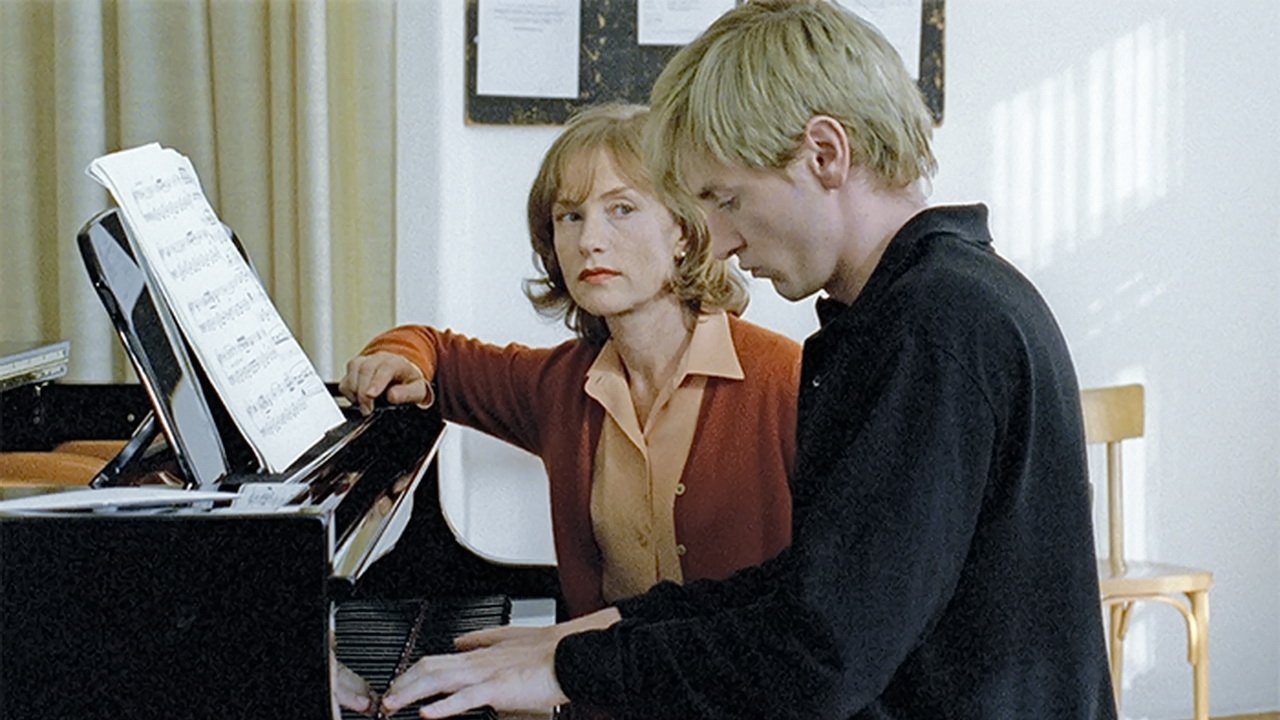
Why has this film become somewhat obscure to the average viewer? Part of it is the subject matter. It’s a "Romance" in the same way a car crash is "Transportation." It also belongs to a specific window of European cinema—often called the "New French Extremity" (though Haneke is Austrian)—where directors were pushing the boundaries of what an audience could endure.
In the age of streaming algorithms, The Piano Teacher is a hard sell. It doesn't fit into a neat "mood" playlist. However, for those who appreciate the craft of acting, it’s essential viewing. Isabelle Huppert actually plays the piano in her scenes, adding a layer of authenticity that you just don't see in modern "actor-holding-an-instrument" tropes.
Apparently, during the film's premiere at Cannes, several audience members walked out during the more graphic scenes of self-harm. To me, that’s not a sign of a bad movie; it’s a sign of a movie that is doing exactly what it intended. It wants to provoke a reaction. It wants to strip away the polite veneer of "high art" to show the messy, pulsing, often ugly human needs beneath.
The Piano Teacher is a towering achievement that I never want to see again, yet I’m so glad I did. It’s a film about the cost of perfection and the danger of being "seen" by the wrong person. It’s cold, it’s cruel, and it features a performance by Isabelle Huppert that is quite literally one for the history books. If you’re feeling brave and want a film that will stay in your brain for weeks, this is the one. Just maybe skip the Haribo cherries.
Keep Exploring...
-
Amour
2012
-
Caché
2005
-

The White Ribbon
2009
-
Funny Games
1997
-
The Spanish Apartment
2002
-
A Very Long Engagement
2004
-
Breaking the Waves
1996
-
That Thing You Do!
1996
-
EverAfter
1998
-
Sliding Doors
1998
-
Blast from the Past
1999
-
The Thomas Crown Affair
1999
-
Y Tu Mamá También
2001
-
Confessions of a Dangerous Mind
2002
-
Talk to Her
2002
-
Girl with a Pearl Earring
2003
-
2046
2004
-
Broken Flowers
2005
-
Casanova
2005
-
Joyeux Noel
2005