The Score
"Three generations of legends. One impossible vault."
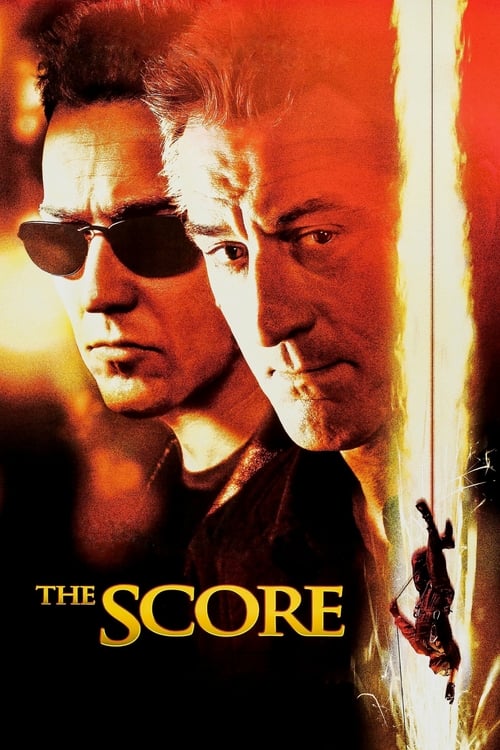
If you were to assemble a Mount Rushmore of 20th-century acting, you’d probably end up with a cast list remarkably similar to the one in The Score. Released in that final, sweltering summer before the world changed in September 2001, this film represents a fascinating collision of three specific eras of Hollywood royalty. You have Marlon Brando (the godfather of Method), Robert De Niro (the king of the 70s gritty realism), and Edward Norton (the 90s wunderkind who seemed poised to inherit the throne). It’s a heist movie, sure, but for me, the real "score" was just seeing these three share a frame before Brando took his final bow.
I watched this most recently on a humid Tuesday night while nursing a lukewarm Diet Coke, and the condensation on the can felt oddly thematic for the rainy, blue-tinted Montreal setting. It’s a "meat and potatoes" thriller that doesn't try to reinvent the wheel, but man, that’s some high-quality beef and very well-seasoned potatoes.
The Mount Rushmore of Method Acting
The plot is a classic "one last job" setup. Robert De Niro plays Nick Wells, a jazz club owner and master thief who lives by a strict set of rules: never work in your own city, and never have partners. Naturally, he breaks both rules when his fence, Max (played by a gargantuan and delightfully eccentric Marlon Brando), convinces him to team up with a young, arrogant hotshot named Jack Teller (Edward Norton).
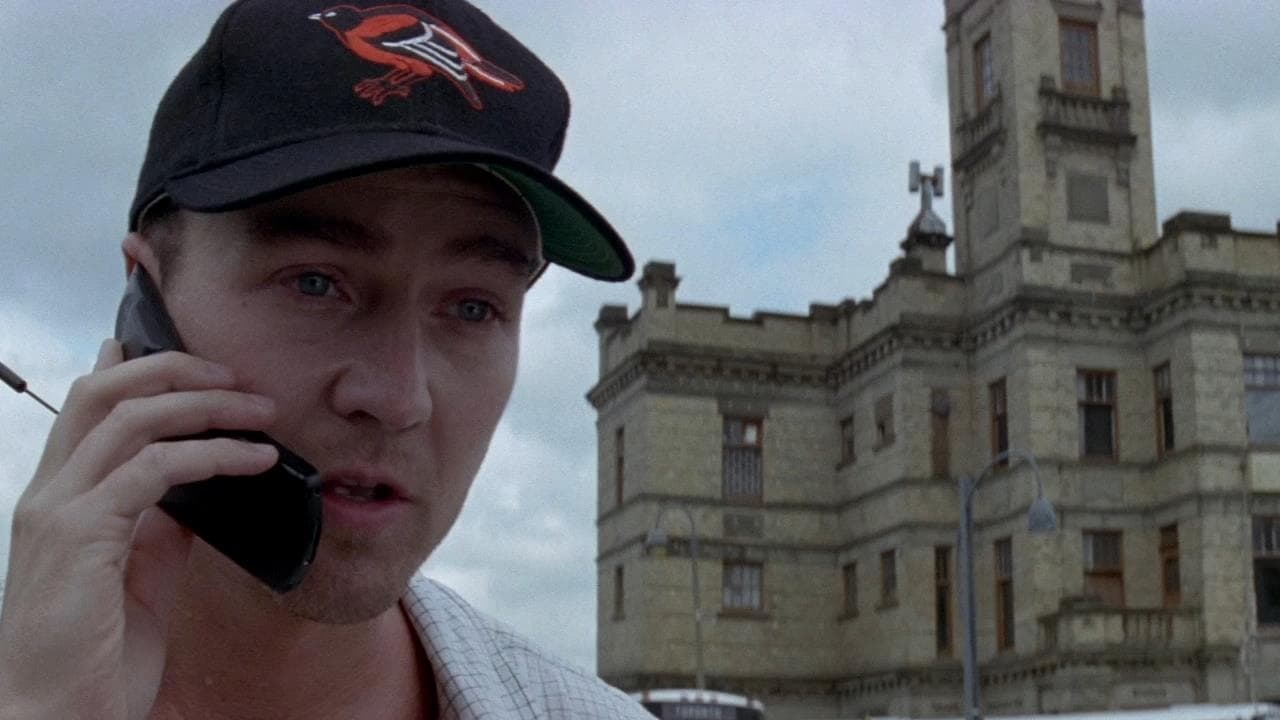
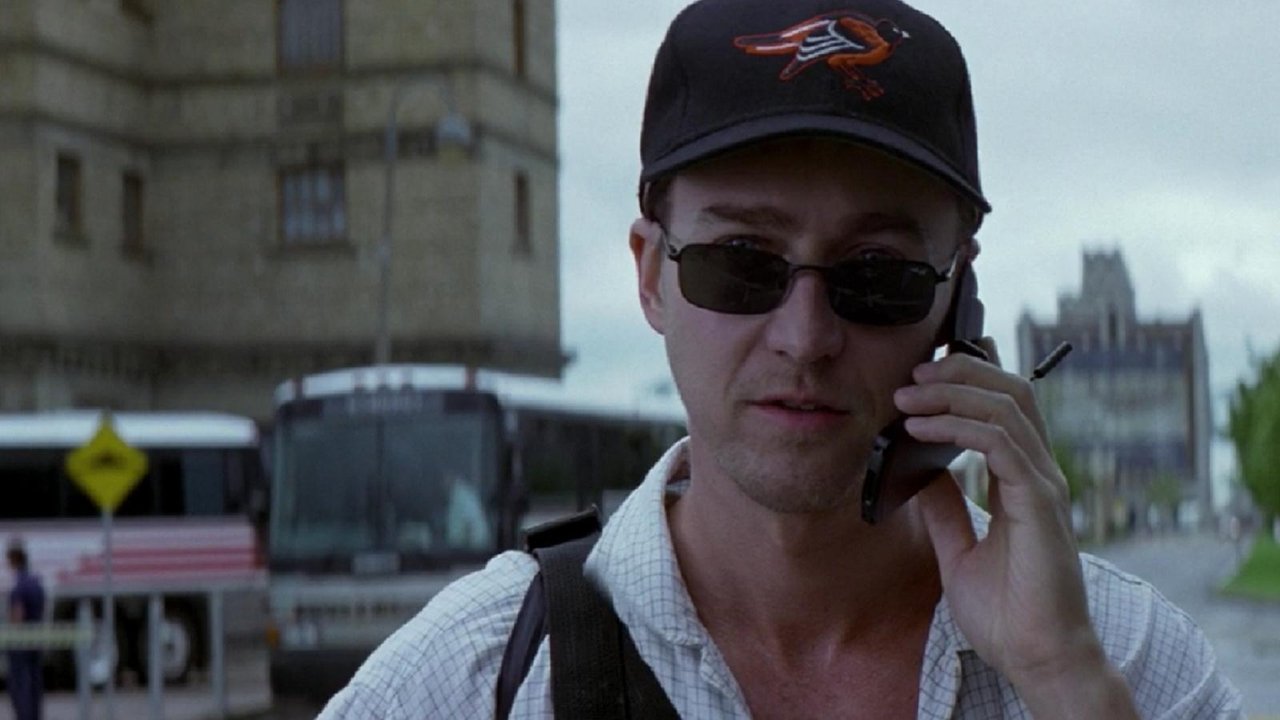
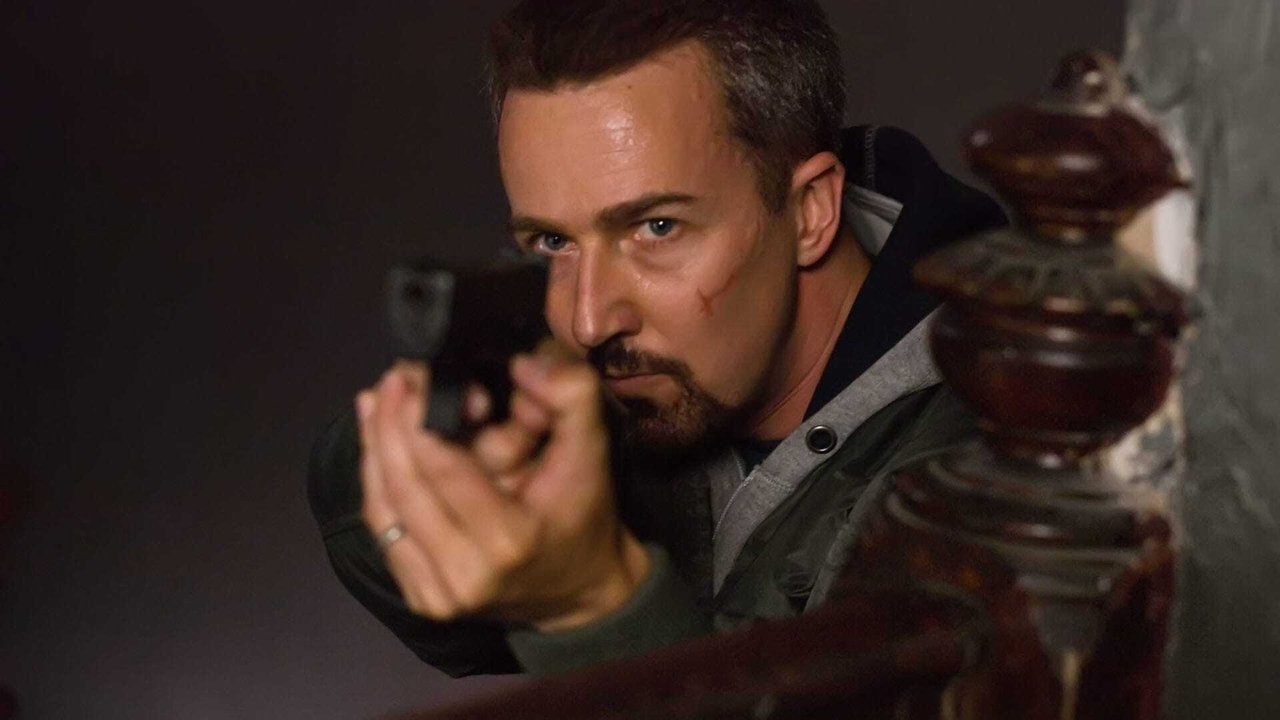
What makes this work isn't the complexity of the crime, but the friction between the players. De Niro is in his "restrained professional" mode here—think Heat (1995) but with a bit more weariness and a desire to settle down with Angela Bassett. Norton, however, is the one doing the heavy lifting. To scout the Customs House where the prize (a French national treasure) is kept, his character poses as "Benny," a janitor with a developmental disability. Edward Norton’s ‘Benny’ performance is actually more compelling than the heist itself, showcasing that chameleon-like intensity that made him a household name after Primal Fear (1996) and American History X (1998).
A Heist Movie That Actually Respects Physics
In an era where we’re used to seeing Tom Cruise hang off the side of a plane or the Fast & Furious crew go to space, The Score feels refreshingly grounded. Director Frank Oz—yes, the man behind Miss Piggy and Yoda—brought a surprising amount of disciplined tension to the proceedings. There are no CGI-heavy car chases here. Instead, we get a deep dive into the logistics of safecracking.
The centerpiece involves a "water safe," a bypass bypass of a bypass, and a thermal lance. It’s methodical, slow, and genuinely sweat-inducing. I’ve always appreciated movies that treat the "work" of being a criminal with professional respect. The cinematography by Rob Hahn emphasizes the shadows and the cold, industrial architecture of Montreal, making the city feel like a character in its own right. It captures that early-2000s thriller aesthetic perfectly: lots of steel blues, dimly lit jazz clubs, and technology that looks cutting-edge for 2001 but now feels charmingly tactile. Seeing them use a bypass tool that looks like a modified GameBoy is a great reminder of the tech-transition era.
The Miss Piggy Incident and Other Curiosities
The behind-the-scenes drama of The Score is almost as famous as the movie itself. This was Marlon Brando’s final completed film, and by all accounts, he was a handful. He reportedly took a dislike to Frank Oz and refused to be directed by him, famously calling the director "Miss Piggy" (a nod to Oz's Muppet history) and only taking directions if they were relayed through Robert De Niro.
You can see a bit of that anarchy in Max's performance. Brando is whispering, sweating, and improvising, looking like a man who has completely transcended the need for a script. It’s a weird, flamboyant performance that stands in stark contrast to De Niro’s minimalism. Frank Oz, who previously directed lighter fare like What About Bob? (1991) and In & Out (1997), manages to keep the ship upright despite the clashing egos. It’s a testament to his skill that the movie feels cohesive rather than a disjointed battle of the stars.
The film also captures that specific "DVD Culture" moment. I remember the special features on the disc being a big deal at the time—especially the breakdown of the safe-cracking sequence. It was a period when we were becoming obsessed with the "how-to" of filmmaking, and The Score fed that hunger perfectly.
Ultimately, The Score is a masterclass in professional execution. It doesn't have the operatic scale of Heat or the kinetic flash of Ocean’s Eleven, but it has a sturdy, reliable soul. It’s the kind of movie you stop and watch every time you find it while channel surfing because the chemistry between the leads is simply too good to ignore.
While the ending might feel a little telegraphed to modern audiences who have seen a thousand heist twists, the journey there is incredibly satisfying. It's a snapshot of a time when you could build a $68 million blockbuster around nothing but character tension and a very difficult-to-open box. If you’ve never seen it, or haven't revisited it since the days of Blockbuster rentals, it’s well worth the investment for the Brando and De Niro pairing alone. Just don't expect any Muppets to show up.

Keep Exploring...
-
Basic
2003
-
Breakdown
1997
-

The Long Kiss Goodnight
1996
-
Conspiracy Theory
1997
-
The Siege
1998
-
Payback
1999
-
Along Came a Spider
2001
-
Blood Work
2002
-
The Hunted
2003
-

Domino
2005
-
Running Scared
2006
-
Kiss the Girls
1997
-
Arlington Road
1999
-
The Pledge
2001
-
I'm Not Scared
2003
-

Revolver
2005
-
The Protector
2005
-
Tell No One
2006
-
Undisputed II: Last Man Standing
2006
-
United 93
2006