Waking Life
"The most beautiful way to lose your mind."

The first time I saw a frame of Waking Life, I thought my eyesight was failing or my monitor was melting. The edges of the characters don't stay still; they shimmer, float, and occasionally drift away from the bodies they’re supposed to define. It’s a visual vibration that perfectly mirrors that shaky, middle-of-the-night realization that you might actually be asleep. I watched this most recent time on a laptop with a dying battery, which added a frantic "will I finish this dream before the screen goes black?" tension to the whole experience that, honestly, felt very on-brand for the movie.
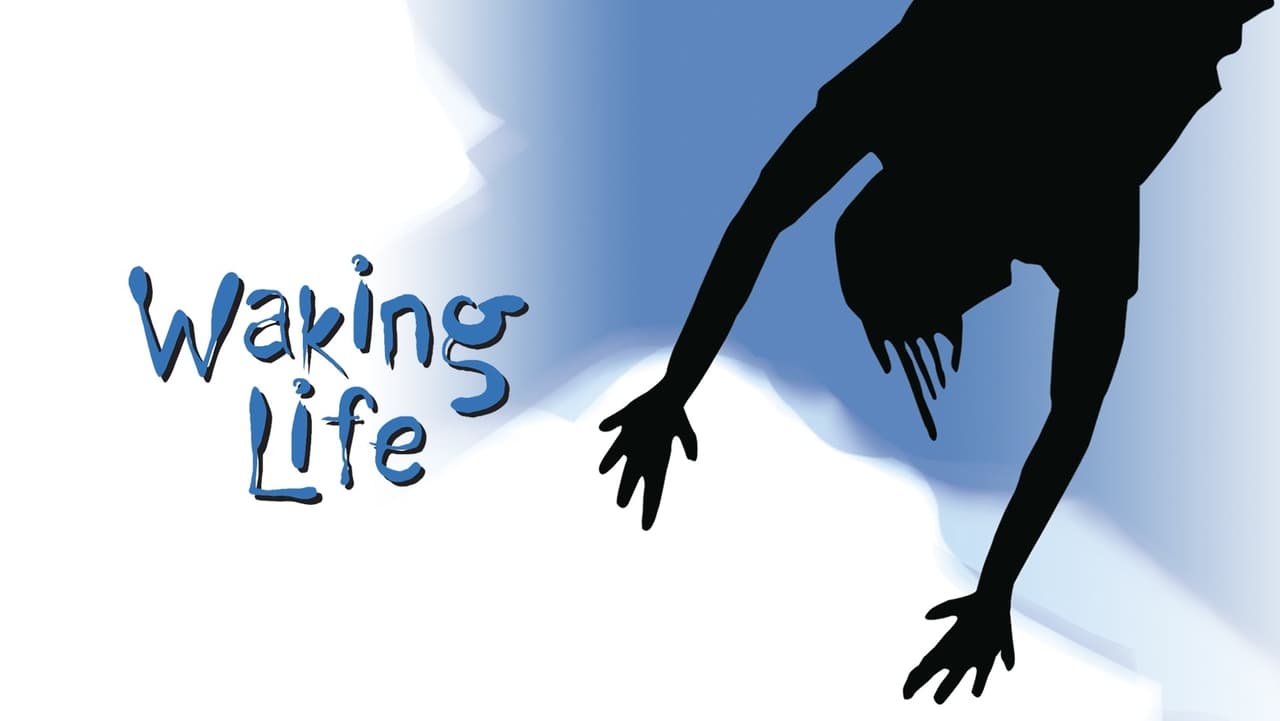
The Digital Shimmer
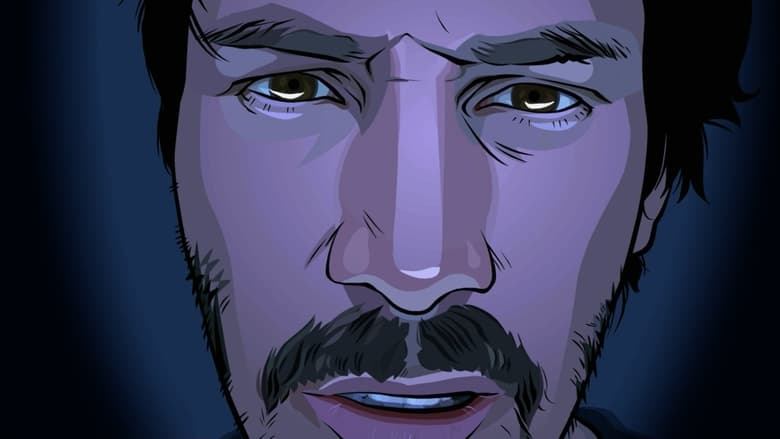
Released in 2001, Waking Life arrived at the exact moment when digital filmmaking was beginning to shed its "cheap and ugly" reputation. Richard Linklater (fresh off the success of Before Sunrise) decided to take a massive gamble on a piece of software called Rotoshop, created by Bob Sabiston. They shot the entire movie on consumer-grade digital video—stuff that would look like a grainy home movie today—and then handed the footage over to a team of about 30 animators.
The result is something that felt like a glimpse into a future that never quite arrived. Each animator was given the freedom to interpret their assigned scenes, meaning the art style shifts as often as the conversation. One minute you’re looking at a relatively realistic rendering of Wiley Wiggins (the kid from Dazed and Confused), and the next, he’s a collection of jagged, expressionist lines. It was a shoestring-budget solution that turned a $2 million indie project into something that looked more expensive and imaginative than the CGI blockbusters of the era. It’s a reminder of a time when "digital" meant "experimental" rather than "corporate."
A Philosophical Mixtape
The plot is... well, it’s a vibe. Our unnamed protagonist (Wiley Wiggins) wanders through Austin, Texas, drifting from one conversation to the next. He’s a passenger in his own dream, listening to people wax poetic about existentialism, the evolution of humanity, and the "holy moment." Watching this film feels like being cornered at a party by the smartest person you’ve ever met, right before the edible kicks in.

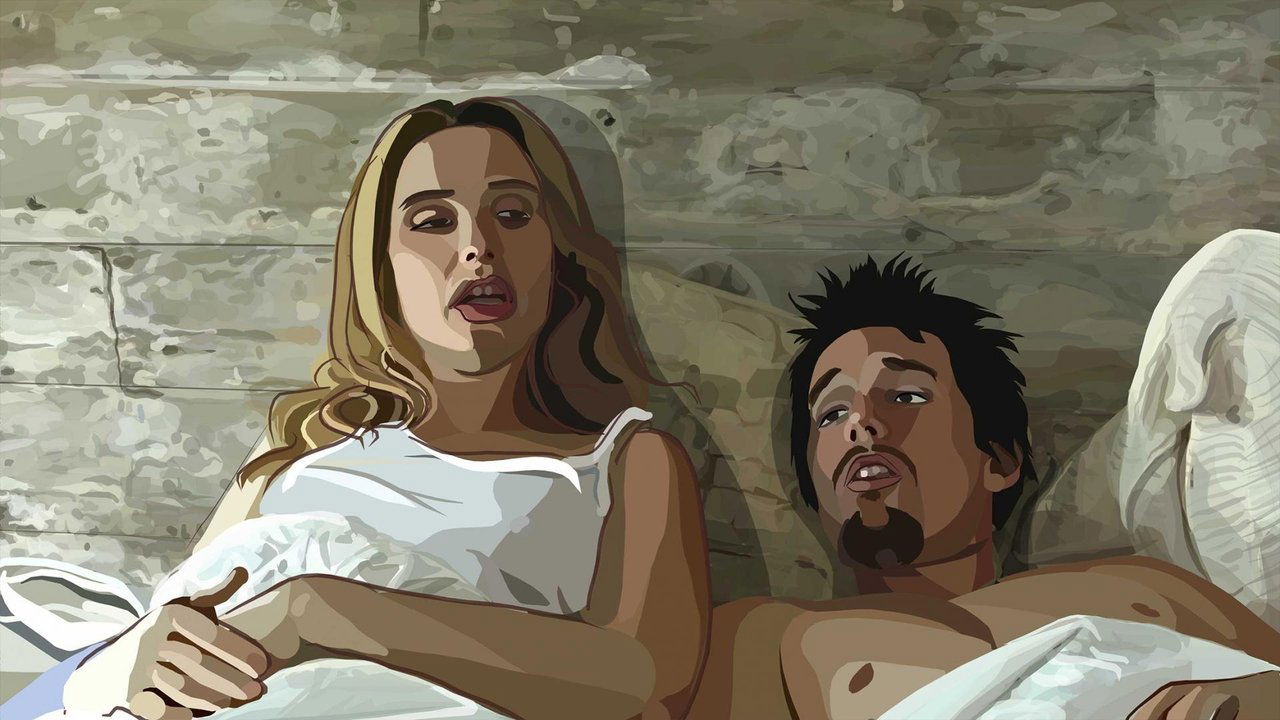
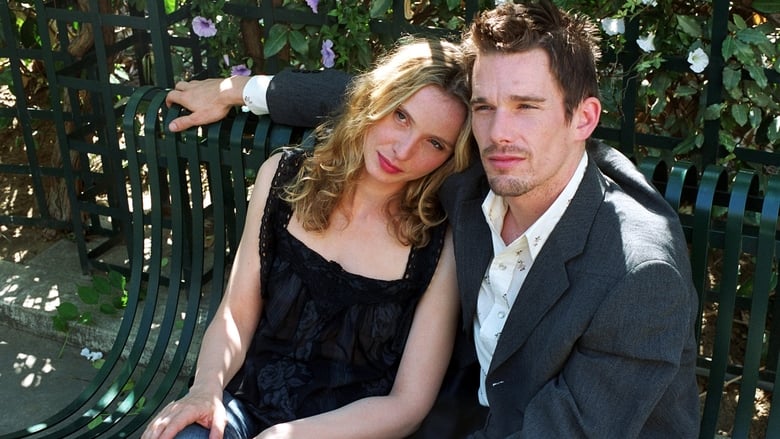
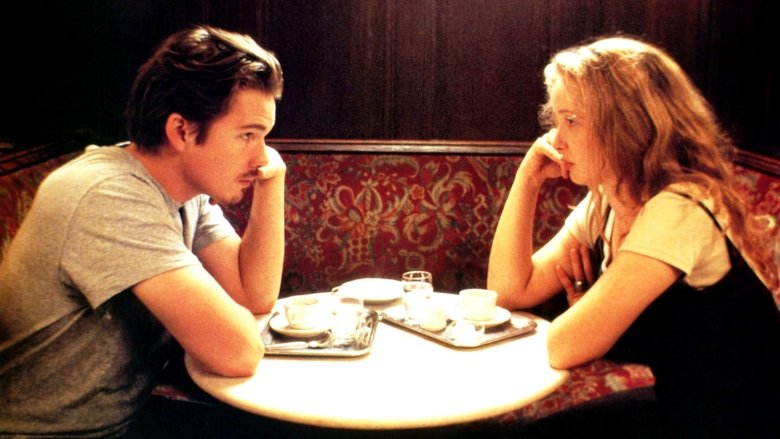
Some people find the dialogue pretentious, and I get that. If you aren't in the mood for a lecture on André Bazin’s film theory or the neurological basis of lucid dreaming, you might want to tap out. But Linklater anchors the "headiness" with genuine human drama. There’s a sequence where Ethan Hawke and Julie Delpy—reprising their roles as Jesse and Celine from the Before trilogy—lie in bed talking about reincarnation. It’s a quiet, tender moment that grounds the surrounding chaos. It feels like a secret DVD extra that accidentally became part of a different movie.
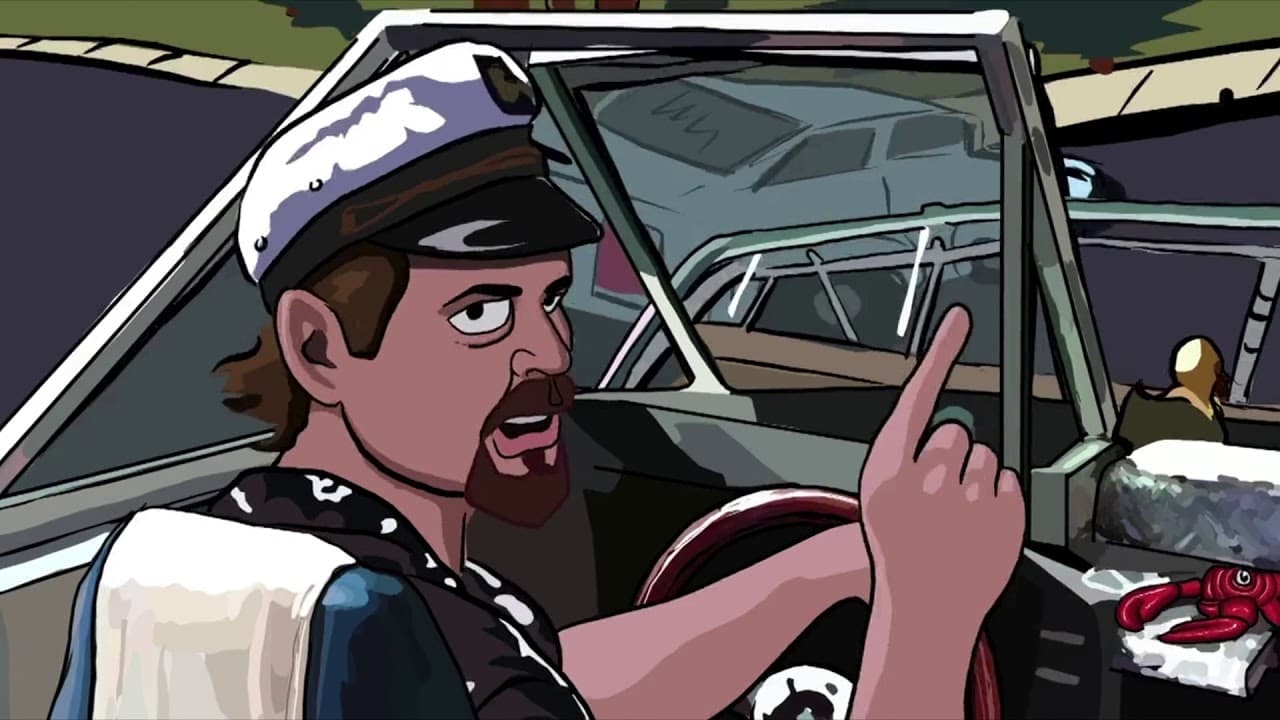
The film also serves as a weird time capsule of Y2K-era anxieties. You’ve got Alex E. Jones—yes, that one, long before he became a professional conspiracy peddler—screaming through a P.A. system in a car about the "system." At the time, it played like a quirky, fringe Austin character; looking back now, it’s a bit like seeing a dark omen in the rearview mirror. The guy in the car with the P.A. system is basically every Twitter thread come to life twenty years early.
The Beauty of the "Holy Moment"
What keeps me coming back to Waking Life isn't necessarily the big questions about free will, but the craft of the "drama" in the mundane. Linklater has this incredible ability to make a conversation in a boat-car (driven by Bill Wise) feel as high-stakes as a car chase. He captures the way people actually talk when they’re trying to impress, connect, or simply understand why they exist.

The score by Glover Gill and the Tosca Tango Orchestra is the secret weapon here. The accordion-heavy, melancholic tango music provides a rhythmic heartbeat to the shifting visuals. It keeps the film from floating away entirely. Even when the screen becomes a mess of abstract colors, the music tells you exactly how to feel. It’s a drama of the mind, where the "action" is the spark of a new idea.
Behind the scenes, the production was a labor of love that defined the "Indie Gem" spirit. The animators weren't just tracing; they were acting as cinematographers after the fact. Because it was shot on digital, Linklater could film his friends, local Austin legends, and even Steven Soderbergh (telling an anecdote about Louis Prima) with minimal gear. They took the limitations of 2001 digital video—the blur, the low resolution—and turned it into a dreamscape where those flaws became features.
Waking Life is the kind of movie you don't just watch; you let it wash over you. It’s a testament to what happens when a director has total creative freedom and a very small budget. It’s not always "easy" viewing, but it’s consistently rewarding if you’re willing to drift along with it. Whether you treat it as a philosophy 101 course or just a beautiful, wobbling piece of art, it remains a singular achievement in the 2000s indie landscape.
By the time the protagonist finally tries to grab hold of a cloud and float away, you’ll probably find yourself checking your own pulse to see if you’re still awake. It’s a rare film that makes the real world feel a little more vivid once the credits roll. It’s a shimmering reminder that even if life is a dream, it’s a pretty interesting one to be caught in.
Keep Exploring...
-
Before Midnight
2013
-
Before Sunset
2004
-
Before Sunrise
1995
-

Boyhood
2014
-
A Scanner Darkly
2006
-

Dazed and Confused
1993
-
Donnie Darko
2001
-
Bernie
2012
-
Neon Genesis Evangelion: The End of Evangelion
1997
-

Millennium Actress
2002
-

The Cat Returns
2002
-
The Girl Who Leapt Through Time
2006
-
Kirikou and the Sorceress
1998
-

The Devil's Backbone
2001
-

A Christmas Carol
2009
-
Beasts of the Southern Wild
2012
-

Wolf Children
2012
-
The Tale of The Princess Kaguya
2013
-
A Grand Day Out
1990
-

Waltz with Bashir
2008