25th Hour
"One day to face everything you've lost."
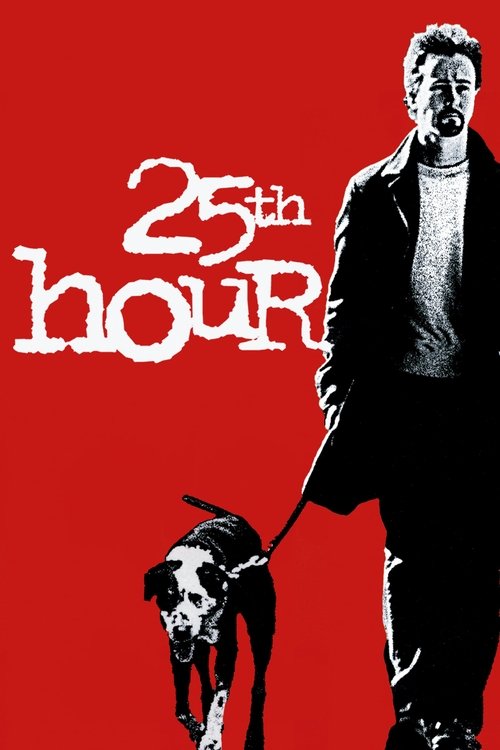
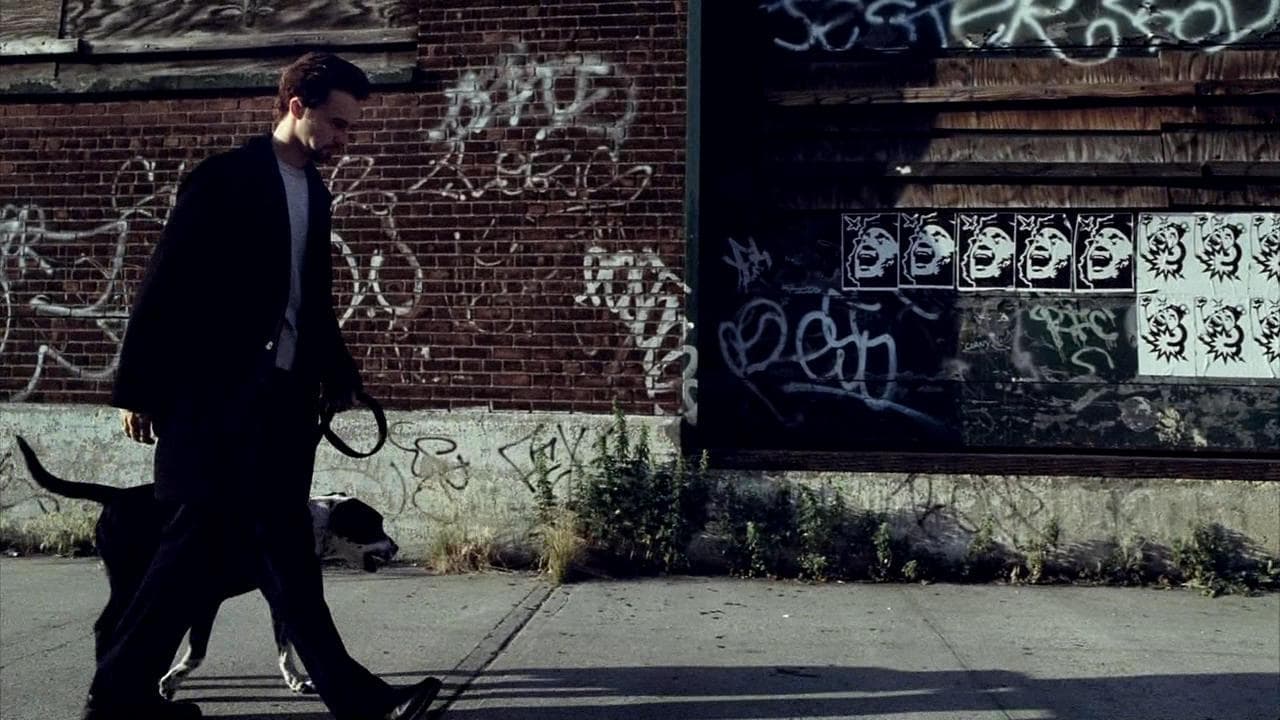
The camera hovers over the jagged, glowing remains of Ground Zero, accompanied by Terence Blanchard’s mournful, soaring trumpet. It’s a shot that stays with you long after the credits roll. I remember watching this for the first time on a grainy DVD I’d borrowed from a library; the disc was so scratched it skipped during the pivotal nightclub scene, but the tension was so high I didn't even care. I just sat there in the dark, staring at the frozen frame of Edward Norton’s face, realizing I was watching something that wasn't just a movie, but a time capsule of a city’s broken heart.
The Mirror and the Monologue
25th Hour is ostensibly a crime drama about Monty Brogan (Edward Norton), a drug dealer with 24 hours left before he heads to Otisville for a seven-year stretch. But really, it’s a eulogy for a version of New York City that died on September 11, 2001. Monty is a man who knows he’s finished, wandering through a city that feels equally fragile.
The centerpiece of the film—and perhaps the most famous sequence in Spike Lee’s post-90s filmography—is the bathroom mirror monologue. Monty stares at his own reflection and launches into a "fuck you" to every demographic, every borough, and every stereotype in the city. It’s a sequence that could have felt like a gimmick, but Edward Norton plays it with such self-loathing intensity that it becomes a confession. He isn't actually mad at the Sikhs, the Upper East Side socialites, or the Bensonhurst Italians; he’s furious at the man in the glass who threw his life away for easy money. Edward Norton’s goatee in this movie is a crime against humanity, but his acting is so good you almost forgive the facial hair.
A Trio of Regret
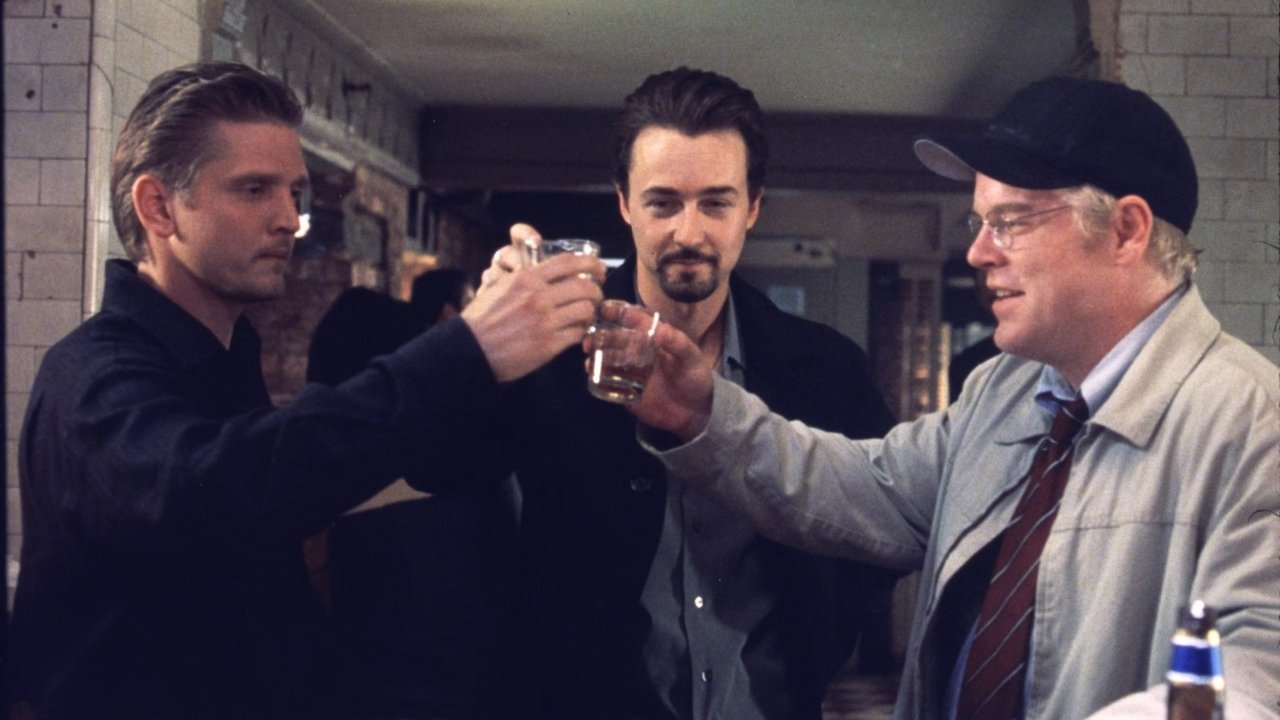
While Monty is the anchor, the film breathes through his two childhood friends: Jacob, a painfully awkward teacher played by the late, irreplaceable Philip Seymour Hoffman, and Frank, a high-flying, cynical bond trader played by Barry Pepper.
The chemistry between these three is where the "Drama" of the genre really earns its keep. There is a scene on a balcony overlooking the site where the Towers once stood, where Frank and Jacob argue about Monty’s future while Monty sits just a few feet away. It’s uncomfortable, raw, and deeply human. Philip Seymour Hoffman brings that trademark vulnerability to Jacob, making his ill-advised crush on a student (Anna Paquin) feel like a tragic extension of his own stunted life. Meanwhile, Barry Pepper is all jagged edges and expensive suits. Barry Pepper’s apartment overlooking the Twin Towers site is the most stressful piece of real estate in cinematic history, serving as a constant, looming reminder of the fragility of the world they live in.
The Spike Lee Touch
Spike Lee took David Benioff’s novel (written before Benioff became the Game of Thrones guy) and infused it with a specific, post-9/11 anxiety that wasn't in the original text. Apparently, the script didn't initially mention the attacks, but Lee realized you couldn't tell a story about a New Yorker facing his end without acknowledging the city’s collective trauma.
The film is full of these "Stuff You Didn't Notice" moments. For instance, Tobey Maguire was originally going to play Monty, but he opted to go do Spider-Man instead, staying on only as a producer. It’s hard to imagine anyone but Norton in the role now; he has that specific "smartest guy in the room who knows he’s an idiot" energy. Also, that dog Monty rescues in the beginning? That was actually a stray the crew found, and its survival serves as the only real bit of hope in a story that is otherwise quite bleak.
The cinematography by Rodrigo Prieto (who went on to shoot The Wolf of Wall Street) uses these saturated, almost sickly colors that make the city feel like it’s nursing a permanent hangover. It captures that transition era where film was starting to look sharper, but before digital took the soul out of the grain.
The Road Not Taken
As the film reaches its climax, Brian Cox—playing Monty’s father—delivers a monologue that serves as a "what if" fantasy. It’s a stunning piece of visual storytelling that shows us the life Monty could have had if he just kept driving past the prison gates. It’s beautiful, it’s heartbreaking, and it’s a lie.
Looking back at this film twenty-odd years later, it feels more essential than it did upon release. It didn't set the box office on fire, but it’s grown into a cult favorite for anyone who appreciates a drama that doesn't offer easy exits. It’s a movie about the consequences of your own choices, set against a backdrop of a world that changed when no one was looking.
25th Hour is a heavy hitter that manages to be both a deeply personal character study and a massive cultural statement. It’s the kind of film that makes you want to call your friends, hug your dog, and maybe think twice about the shortcuts you’re taking in life. It isn't always easy to watch, but for those 135 minutes, you are right there on the sidewalk with Monty, watching the clock run out. It is a haunting, necessary piece of New York cinema that has only grown more profound with age.

Keep Exploring...
-

Inside Man
2006
-

Jackie Brown
1997
-
American Psycho
2000
-
Training Day
2001
-

Adaptation.
2002
-
John Q
2002
-
21 Grams
2003
-
Monster
2003
-
Lucky Number Slevin
2006
-
Gone Baby Gone
2007
-
The Illusionist
2006
-

The Negotiator
1998
-
Blow
2001
-
Gangs of New York
2002
-
Road to Perdition
2002
-

Dogville
2003
-

A History of Violence
2005
-

Batman Begins
2005
-

American Gangster
2007
-
Freedom Writers
2007