Hart's War
"Honor is the perfect distraction."
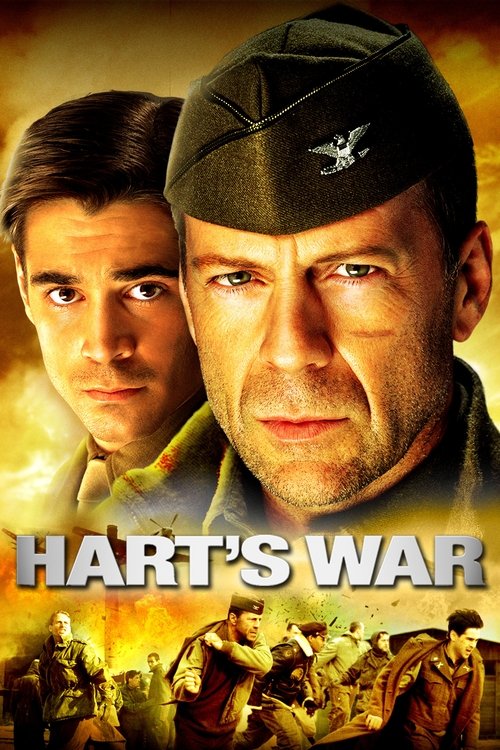
I watched Hart’s War while eating a frozen burrito that remained stubbornly icy in the middle, and honestly, the cold lump of beans perfectly complemented the perpetual permafrost onscreen. There is a specific kind of "dad movie" that flourished in the early 2000s—films with high production values, stoic leading men, and a plot that feels like it was designed to be watched in installments on TNT between lawn-mowing sessions. Hart’s War is the king of that particular hill, yet it’s a film that has almost entirely slipped through the cracks of cinematic memory.
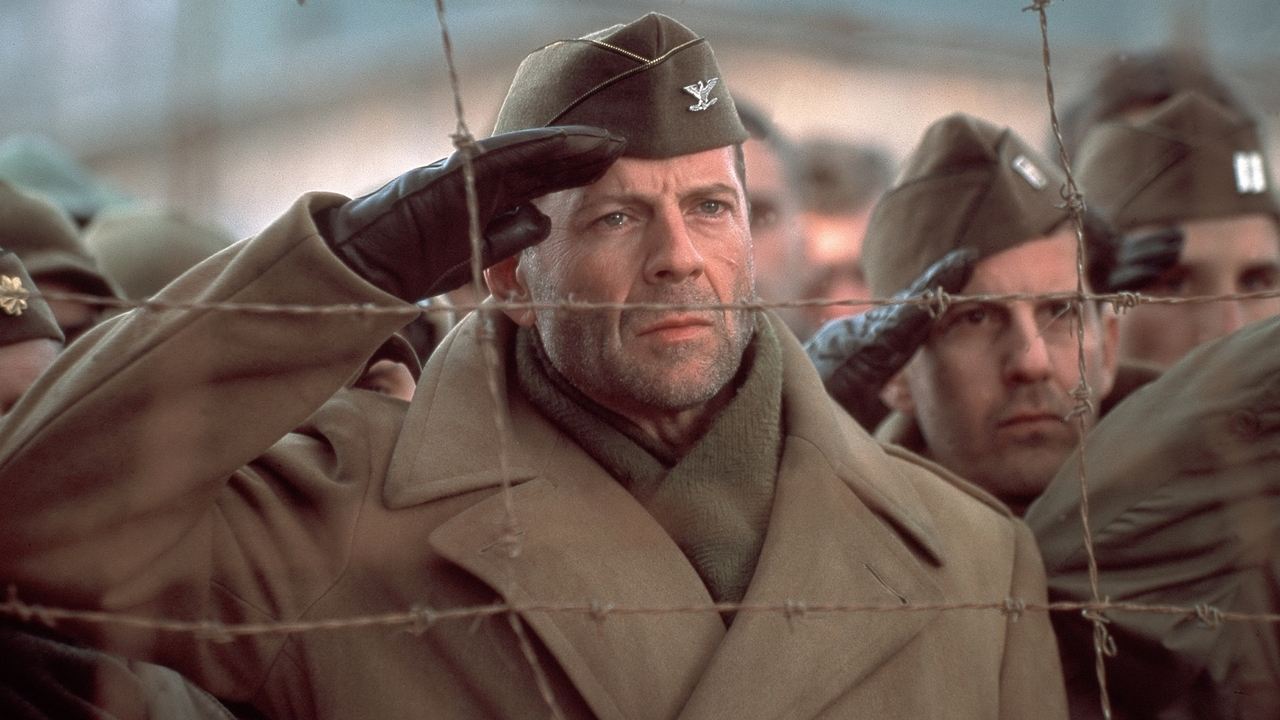
Released in February 2002, it was a movie born into a world that wasn't ready for it. We were mere months away from 9/11, and the American public was hungry for the moral clarity of Black Hawk Down or the straightforward heroism of We Were Soldiers. Instead, director Gregory Hoblit (who gave us the sleek Primal Fear) delivered a $70 million claustrophobic drama that suggested American leadership might be just as cold-blooded and manipulative as the enemy. It’s no wonder it tanked at the box office; it’s a feel-bad war movie that transforms into a courtroom procedural halfway through.
A Courtroom in a Cage
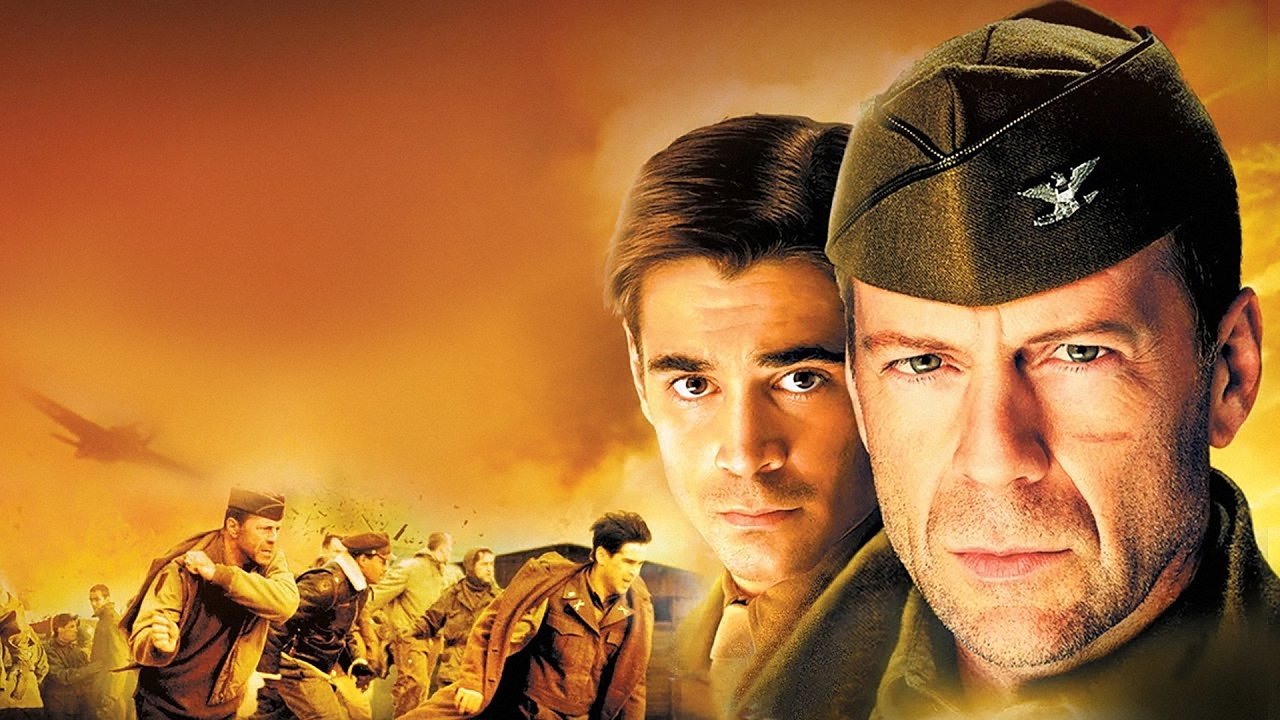
The setup is classic POW-flick territory. Colin Farrell, looking incredibly young and sporting a "next big thing" intensity, plays Lt. Tommy Hart, a senator’s son who has been playing it safe in a desk job until he’s captured and tossed into a brutal German camp. There, he meets the camp's ranking American officer, Col. William McNamara, played by Bruce Willis.
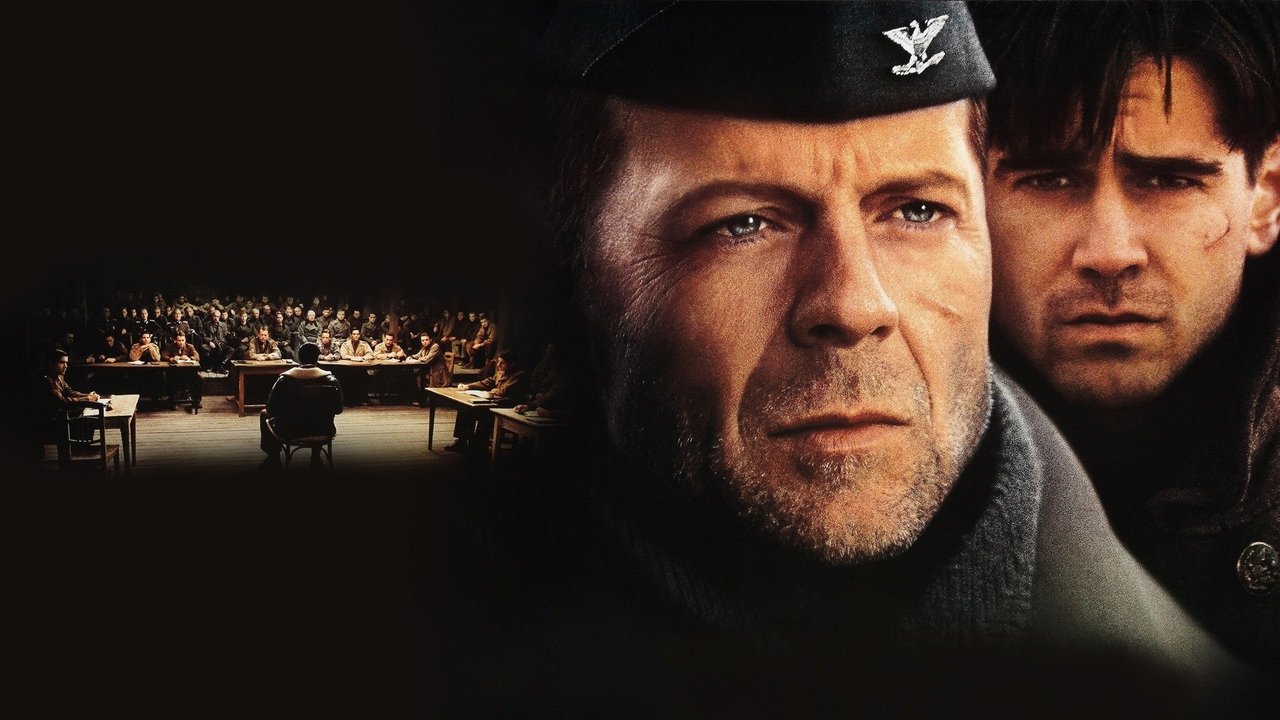
The film takes a sharp left turn when two Tuskegee airmen are brought into the camp. The racism they face from their fellow American soldiers is depicted with a bluntness that still feels jarring today. When one of the airmen is murdered and the prime suspect—a vile racist sergeant played with oily perfection by Cole Hauser—is found dead, the other pilot, Lt. Lincoln Scott (Terrence Howard), is put on trial. McNamara insists on a full court-martial, appointing the inexperienced Hart as the defense.
What makes this more than just A Few Good Men in the snow is the subtext. You realize fairly quickly that the trial is a sham—not because of the Germans, but because of McNamara. Bruce Willis treats his charisma like a rationed supply of chocolate, doling out tiny slivers of that "John McClane" smirk only to retract it into a mask of grim, utilitarian coldness. It’s a fascinating performance because he’s essentially the antagonist of Hart’s moral journey.
The Willis Enigma and the Farrell Spark
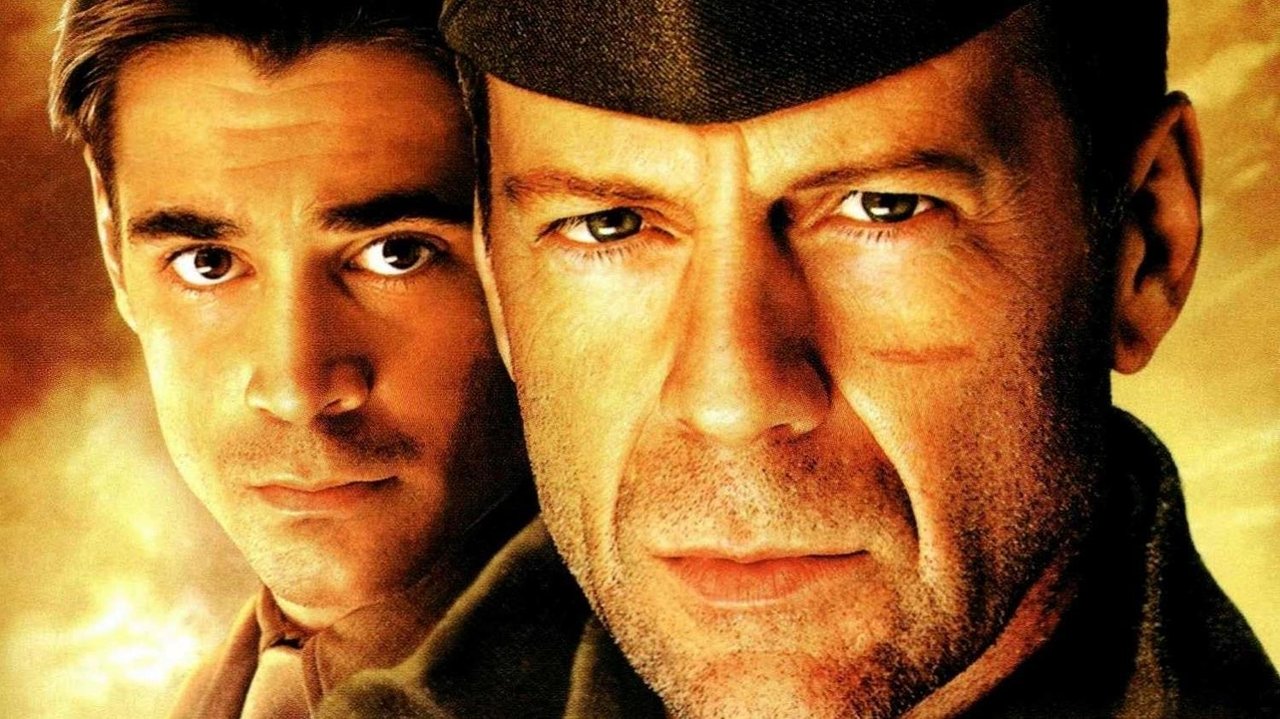
Looking back, this was the peak of the "Willis as the Elder Statesman" era. He isn't interested in being the hero here; he’s interested in being a soldier. Beside him, Colin Farrell vibrates with an earnest, nervous energy. This was right before Phone Booth and S.W.A.T., and you can see him trying to figure out how to be a leading man in real-time. He’s great as the "privileged kid" forced to grow a spine, but he’s frequently acted off the screen by the supporting cast.
The real standout, however, isn't even American. Marcel Iureș, playing the camp commandant Col. Visser, is a revelation. He’s a Yale-educated Nazi who listens to jazz and quotes Mark Twain, yet he never falls into the "refined villain" cliché. There is a weariness to him, a sense that he and Willis are two sides of the same rusted coin, both just trying to finish a war that has already hollowed them out. Their scenes together have a crackle that the actual courtroom scenes sometimes lack.
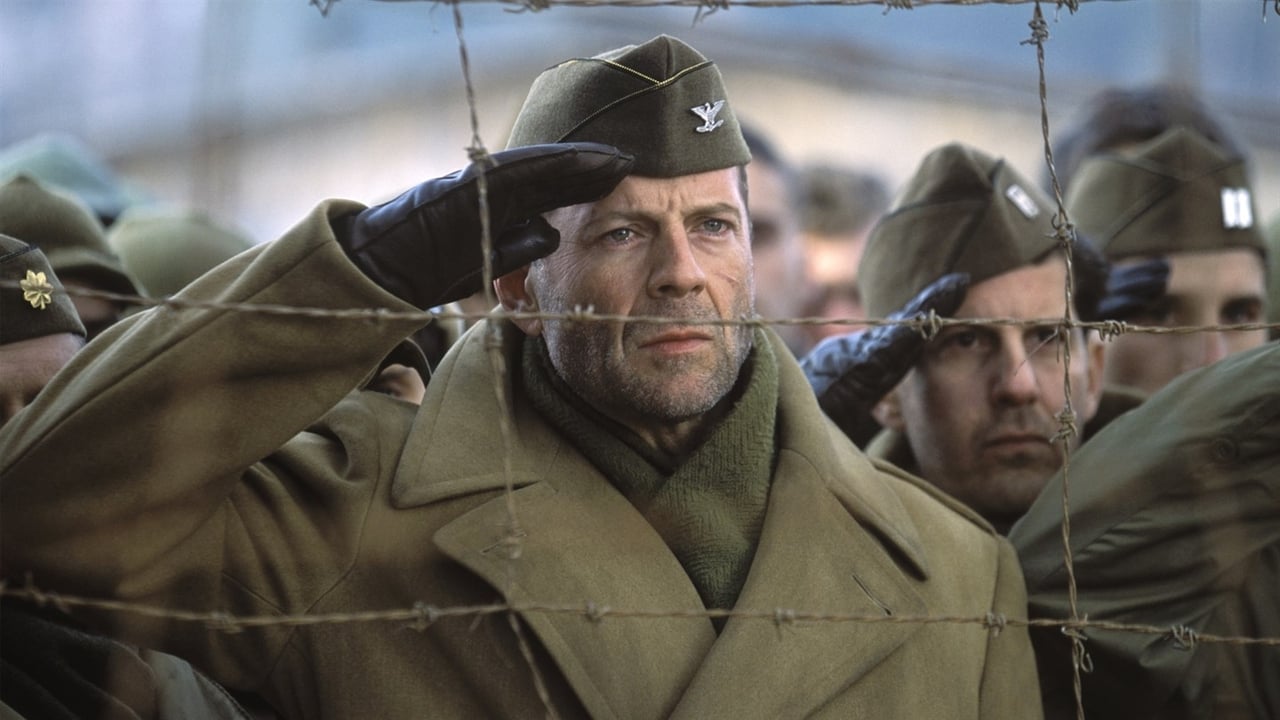
The production itself is a marvel of the "practical over CGI" transition period. Shot in the Czech Republic, the mud looks real because it is; the breath is visible because the actors are actually freezing. Cinematographer Alar Kivilo captures the camp in a de-saturated, grayish-blue palette that makes the occasional burst of fire or blood feel like a scream. It’s a handsome movie, bolstered by a surprisingly lyrical score by Rachel Portman (The Cider House Rules), which avoids the usual bombastic brass in favor of something more melancholic.
A Victim of Bad Timing
Why did Hart’s War vanish? Beyond the post-9/11 mood, it suffers from a bit of an identity crisis. It’s marketed as an action-packed escape movie, but it’s actually a dense drama about the ethics of sacrifice. It asks: Is it okay to ruin an innocent Black man’s life if it helps win the war? That’s a heavy question for a movie that the trailer promised would be Die Hard in a stalag.
It also reveals its era through its pacing. At 125 minutes, it breathes in a way that modern streaming movies don't. It allows for quiet moments of Linus Roache providing legal counsel or the slow-burn tension of a hidden radio. In our current landscape of "constant stakes," Hart's War feels like a relic of a time when studios still gambled big money on mid-budget adult dramas.
The film's cynicism is its most enduring quality. It doesn't offer easy answers about the "Greatest Generation." Instead, it shows a group of men who are tired, biased, and willing to use one another as pawns. It’s a grimy, snowy, uncomfortable watch that deserves a second look—not as a war epic, but as a character study of what happens to "honor" when it’s left out in the cold for too long.
Ultimately, Hart’s War is a noble failure that is more interesting than many successful films from the same period. It’s a mashup of genres that shouldn’t work—and occasionally doesn't—but the sheer weight of the performances and the unapologetic grimness of the setting make it a compelling "what-if" in the careers of both Willis and Farrell. If you can handle the tonal whiplash between a civil rights drama and a sabotage thriller, it’s a journey worth taking. Just make sure your burrito is heated all the way through before you start.
Keep Exploring...
-
Tears of the Sun
2003
-
Fallen
1998
-
Flags of Our Fathers
2006
-
Untraceable
2008
-
The Messenger: The Story of Joan of Arc
1999
-
Behind Enemy Lines
2001
-
K-19: The Widowmaker
2002
-
Rescue Dawn
2007
-
Volcano
1997
-
Crimson Tide
1995
-
Joyeux Noel
2005
-
Frequency
2000
-
Courage Under Fire
1996
-
The Patriot
2000
-

Alexander
2004
-
King Arthur
2004
-
Jarhead
2005
-

The Brave One
2007
-
Defiance
2008
-
Mercury Rising
1998