Hero
"To save an empire, the sword must rest."
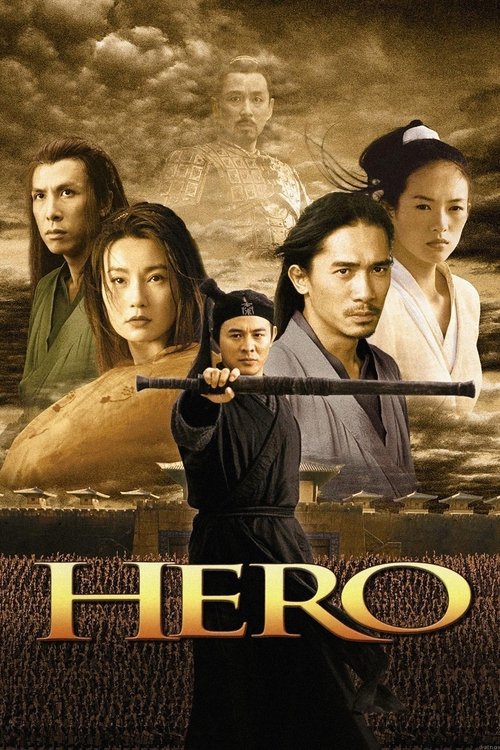
The first time I saw Hero, I was sitting in a dorm room that smelled faintly of old gym socks and cheap ramen, watching it on a desktop monitor that weighed forty pounds. Even on that clunky CRT screen, the film felt like it was vibrating. I remember thinking that if I reached out and touched the glass, my fingers might come back stained crimson or cerulean. It was 2004 by the time it finally hit U.S. theaters, and we were all still riding the high of Crouching Tiger, Hidden Dragon, but Zhang Yimou (the man behind Raise the Red Lantern) wasn’t interested in just giving us more gravity-defying romance. He wanted to give us an epic that felt like a philosophy lecture delivered at the tip of a spear.
A Symphony of Color and Calligraphy
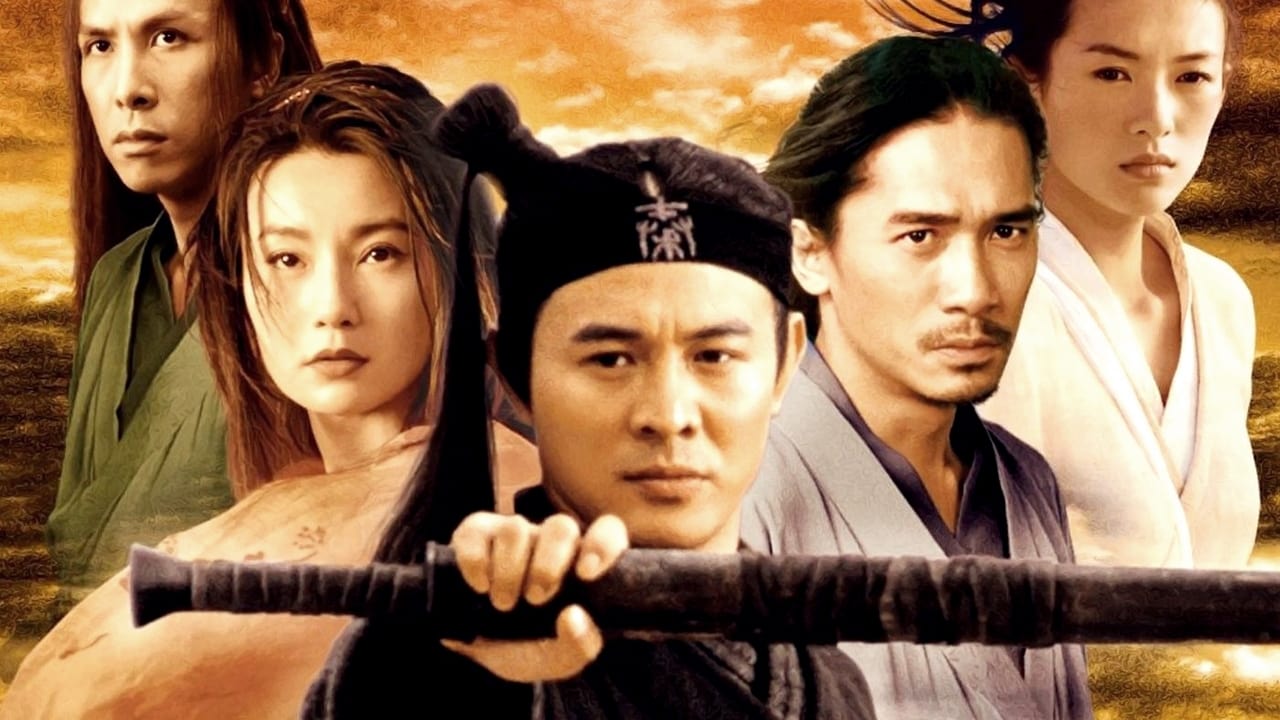
If you haven’t seen it, the plot is a clever, Rashomon-style puzzle. A nameless prefect, played with a stoic, iron-jawed intensity by Jet Li (Lethal Weapon 4), arrives at the palace of the King of Qin (Chen Daoming). He claims to have defeated the three most dangerous assassins in the land: Long Sky (Donnie Yen), Broken Sword (Tony Leung Chiu-wai), and Flying Snow (Maggie Cheung). As he tells his story, the King challenges his version of events, and the film resets, replaying the same encounters with different outcomes and entirely different color palettes.
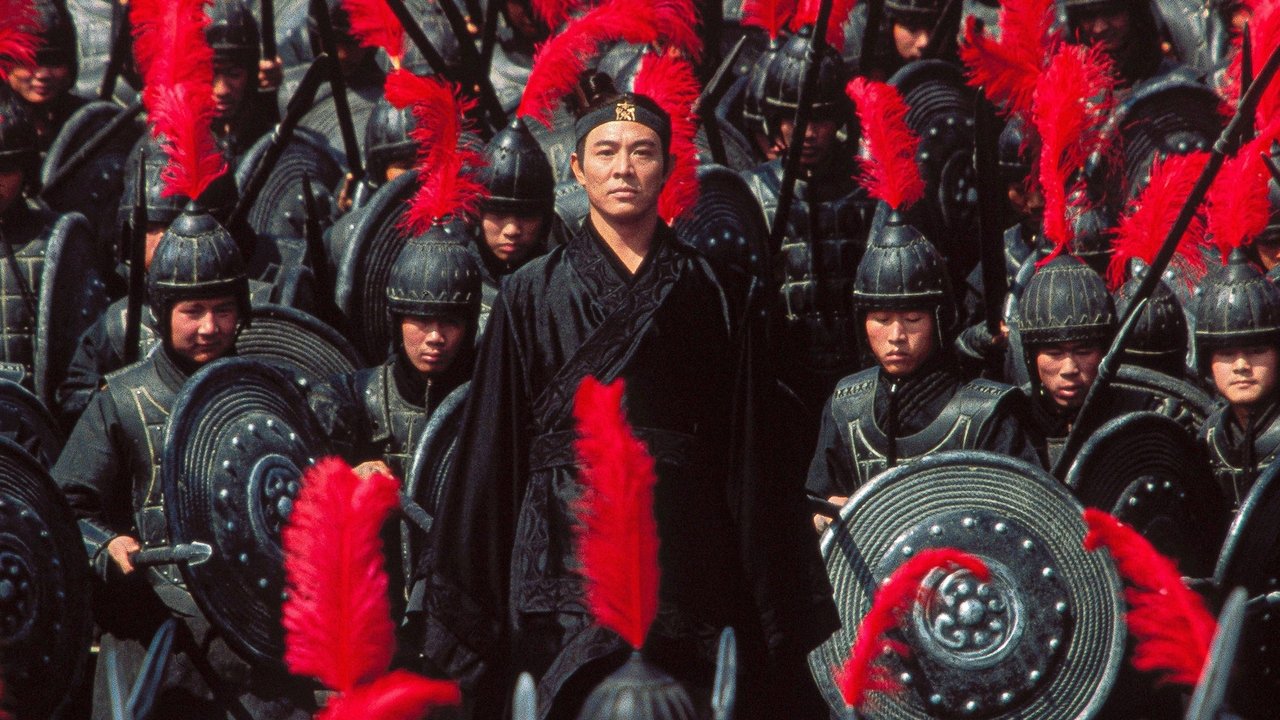
This is where the cinematography by Christopher Doyle (In the Mood for Love) transcends "pretty" and enters the realm of the hallucinatory. Each "version" of the story is bathed in a single dominant hue—red, blue, green, white. It’s not just a gimmick; it’s a way of signaling the emotional truth of the narrator. In the red sequence, the jealousy and passion are so thick you can practically taste the copper in the air. By the time the film reaches the white sequence, the visuals have a crystalline, heartbreaking purity. The entire movie is basically the world’s most lethal PowerPoint presentation, and I mean that as the highest possible compliment.
The Last Gasp of the Practical Epic
Looking back from our current era of "gray sludge" CGI, Hero feels like a miracle of physical production. While there is digital assistance—most notably in the legendary "rain of arrows" sequence where the Qin army blots out the sun—the film relies heavily on the sheer scale of humanity. Zhang Yimou utilized thousands of soldiers from the Chinese People’s Liberation Army as extras, creating a sense of mass and weight that a computer simply can't replicate. When you see those black-clad legions chanting "Zhi! Zhi!" (Order!), the vibration isn't a sound effect; it’s the collective lungs of three thousand people.
The fight choreography, handled by Ching Siu-tung, is less about the "crunch" of bone and more about the "flow" of energy. The duel between Jet Li and Donnie Yen in the rain-slicked chess house is a highlight of the genre, a rhythmic exchange where the music of Tan Dun (who also scored Crouching Tiger) competes with the clatter of weapons. It’s also a treat to see a young Zhang Ziyi (Memoirs of a Geisha) as Moon, providing a frantic, youthful energy that balances out the regal melancholy of Tony Leung and Maggie Cheung.
The Tarantino Connection and the DVD Boom
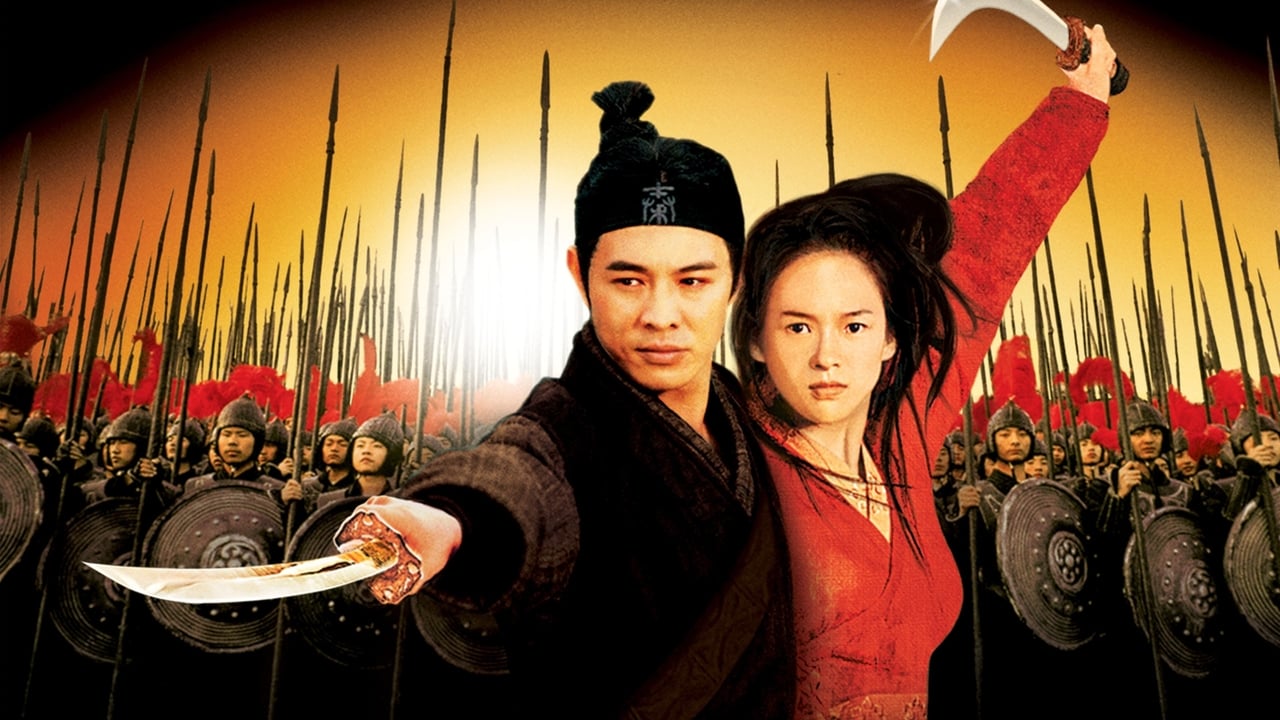
It’s easy to forget that Hero almost didn't happen for Western audiences. Miramax, then run by the Weinsteins, sat on the film for two years, terrified that American audiences wouldn't turn out for a subtitled wuxia epic. It took Quentin Tarantino throwing his weight behind it—his name was splashed across the top of the posters as a "Presenter"—to get it into theaters. It worked. It became the first Chinese-language film to hit number one at the American box office.
This was the peak of the DVD era, a time when we’d spend twenty minutes scouring the "Special Features" to see how they filmed the sword-fight on the lake. I recall the "making-of" featurette revealed they had to wait for the water to be perfectly still to get that mirror effect, often only getting a few minutes of shooting time a day. That kind of obsessive craft is what separates a blockbuster from a work of art.
The Weight of "All Under Heaven"
The film’s philosophy is its most controversial element. The central theme is Tianxia—"All Under Heaven." It suggests that the peace of the empire is more important than the lives of individuals or the grievances of small states. In a post-9/11 world, this message of "unity through strength" felt uncomfortably authoritarian to some critics. Looking at it now, I see it more as a tragic meditation on the cost of peace. It’s a film where the "Hero" isn't necessarily the one who wins the fight, but the one who understands when to stop fighting.

The King of Qin isn't a cartoon villain; he's a man terrified by the chaos he’s trying to end. By the time the final volley of arrows is fired, the film has moved past action into something closer to a funeral dirge. It’s beautiful, it’s massive, and it’s deeply, deeply sad.
Hero remains the gold standard for the visual epic. It managed to bridge the gap between high-art cinema and crowd-pleasing action at a time when the world was just beginning to truly embrace global storytelling. Whether you’re there for the physics-defying stunts or the color-coded melodrama, it’s a film that demands to be seen on the largest screen possible. Just make sure your room doesn't smell like old ramen when you put it on.
Cool Details
The production used over 18,000 arrows for the palace attack scenes, many of which were fired from specially designed air cannons. The leaf-fight sequence between Maggie Cheung and Zhang Ziyi required crew members to painstakingly sort through thousands of yellow leaves to ensure they were the "correct" shade for the color palette. Despite the rivalry on screen, Jet Li and Donnie Yen were old friends who had trained together at the same martial arts school in Beijing years earlier. The "water fight" was filmed at the Jiuzaigou National Park, and the actors had to deal with freezing temperatures that made the elegant wire-work a physical nightmare.

Keep Exploring...
-
House of Flying Daggers
2004
-
Apocalypto
2006
-
Red Cliff
2008
-

Crouching Tiger, Hidden Dragon
2000
-
The Count of Monte Cristo
2002
-
Kingdom of Heaven
2005
-

The Man in the Iron Mask
1998
-
Fearless
2006
-
Ip Man
2008
-

Robin Hood: Prince of Thieves
1991
-
The Karate Kid
2010
-
The Flowers of War
2011
-
The King's Speech
2010
-
Twister
1996
-
The Edge
1997
-
Brotherhood of the Wolf
2001
-
United 93
2006
-
The Grandmaster
2013
-
Selena
1997
-
Coach Carter
2005