Joseph: King of Dreams
"The vibrant, forgotten shadow of a giant."
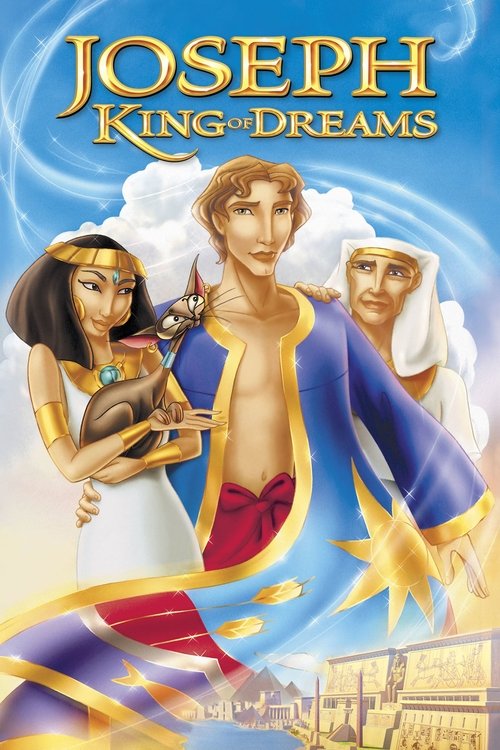
In the early 2000s, DreamWorks Animation was the rowdy new kid in the animation cafeteria, still trying to figure out if it wanted to be the class clown or the moody poet. While Shrek was busy rewriting the rulebook on snark, the studio was also quietly experimenting with something much more traditional and, frankly, riskier: hand-drawn biblical epics. We all know The Prince of Egypt—the sweeping scale, the Hans Zimmer wall of sound, the "Deliver Us" of it all—but tucked away in its massive shadow is a smaller, direct-to-video sibling that most people let slip through the cracks. It’s a film that asks a very 2002 question: Can you make a high-stakes drama about divine providence and sibling rivalry while working with a fraction of a blockbuster budget?
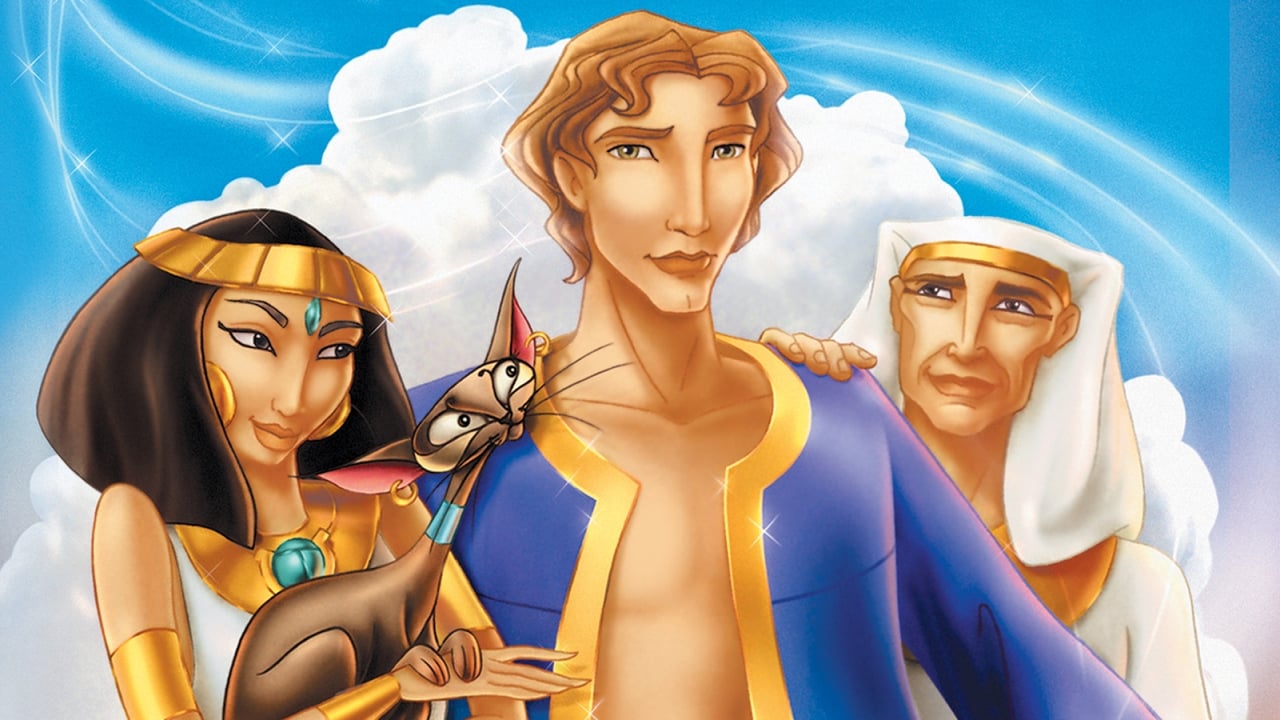
I recently sat down to rewatch Joseph: King of Dreams while nursing a cup of lukewarm peppermint tea that I’m fairly certain had a stray cat hair floating in it, and I was struck by how much this movie swings for the fences. It doesn't have the grand, cinematic weight of its predecessor, but it possesses a strange, intimate sincerity that felt refreshing in an era that was rapidly pivotting toward CGI talking animals and pop-culture references.
The Batman and the Joker Walk into Canaan
The first thing that hits you about Joseph isn't the animation, but the voices. It is a wild artifact of its era to realize that Joseph is voiced by none other than Ben Affleck. This was "Peak Affleck" years—right in that weird transition between Armageddon and the Gigli era—and he brings a curious, breathy vulnerability to the role. He plays Joseph not as a flawless saint, but as a bit of a pampered academic who doesn't realize he’s annoying his brothers until he’s at the bottom of a very deep hole.
Opposite him, we get the legendary Mark Hamill as Judah. If you’re like me and grew up with Hamill’s Joker, hearing that raspy, simmering resentment in Judah’s voice is a treat. He’s the emotional anchor of the antagonist group, and the film actually gives him a redemption arc that feels earned. The chemistry between these two—recorded separately but edited with precision—carries the weight of the family drama. It’s less about "burning bushes" and more about "why does Dad love you more than me?" which is a theme that hits home whether you're in ancient Egypt or a suburban cul-de-sac.
High-Concept Art on a Direct-to-Video Budget

Visually, you can see where the money was saved. The character models are a bit simpler, and the backgrounds don't have that lush, painterly depth that made The Prince of Egypt look like a moving Renaissance gallery. However, the directors, Rob LaDuca and Robert C. Ramirez, made a brilliant choice: they leaned into the "dream" aspect of the title.
Whenever Joseph has a vision, the animation style shifts. It becomes more expressionistic, almost like Van Gogh paintings coming to life with swirling cornstalks and celestial bodies. These sequences are arguably more creative than anything in the "main" film. They captured that Y2K-era obsession with blending 2D and 3D elements—some of the early CGI grain silos look like they were rendered on a Sega Dreamcast, but there’s a charm to that ambition. They were trying to push the boundaries of what "home video" quality meant, proving that "direct-to-video" didn't have to mean "garbage."
The Song That Escaped the Vault
Dramas live or die by their emotional resonance, and for an animated film intended for families, Joseph gets surprisingly heavy. It deals with human trafficking, false accusations of sexual assault (via Judith Light’s surprisingly menacing Zuleika), and the psychological toll of a decade of solitary confinement. It treats its audience like they can handle a bit of complexity.

And then there’s the music. While it doesn't have the star power of Mariah Carey and Whitney Houston, the song "You Know Better Than I" has developed a weirdly massive cult following in the years since. I’ve seen it pop up in countless talent shows and church services because it’s a genuinely well-written piece of musical theater. It’s the moment the movie stops being a Sunday School lesson and starts being a character study about a man who has lost everything and is trying to find a reason to keep breathing. I genuinely think this song is better than half the stuff Disney was putting out in their 'sequel' era.
Interestingly, the film was mostly produced by a team in Glendale while the "A-Team" was finishing The Road to El Dorado. It was intended to be the start of a whole series of "Greatest Hits" from the Bible, but the studio’s shift toward the Shrek model of comedy meant this was the first and last of its kind. It’s a literal "what-if" frozen in time.
Looking back, Joseph: King of Dreams is a testament to a time when studios were still willing to take a "prestige" approach to the home video market. It lacks the polish of a theatrical release, but it makes up for it with a killer voice cast and a script that actually cares about the characters' internal lives. If you can forgive some dated digital effects, it’s a fascinating, soulful little drama that deserves to be more than just a trivia answer. It’s a reminder that sometimes the best stories are the ones that don't need a thousand screens to make an impact.
Keep Exploring...
-

Bambi II
2006
-
The Triplets of Belleville
2003
-
Spirit: Stallion of the Cimarron
2002
-
Feast
2014
-
The Lion King II: Simba's Pride
1998
-
Tarzan
1999
-
Dinosaur
2000
-
101 Dalmatians II: Patch's London Adventure
2003
-

Lady and the Tramp II: Scamp's Adventure
2001
-

The Cat Returns
2002
-
Geri's Game
1997
-

Fantasia 2000
2000
-

For the Birds
2000
-

The Little Mermaid II: Return to the Sea
2000
-
Titan A.E.
2000
-
Jimmy Neutron: Boy Genius
2001
-
Osmosis Jones
2001
-
Shrek
2001
-

Barbie of Swan Lake
2003
-
Holes
2003