One Hour Photo
"Smile for the man in the red vest."
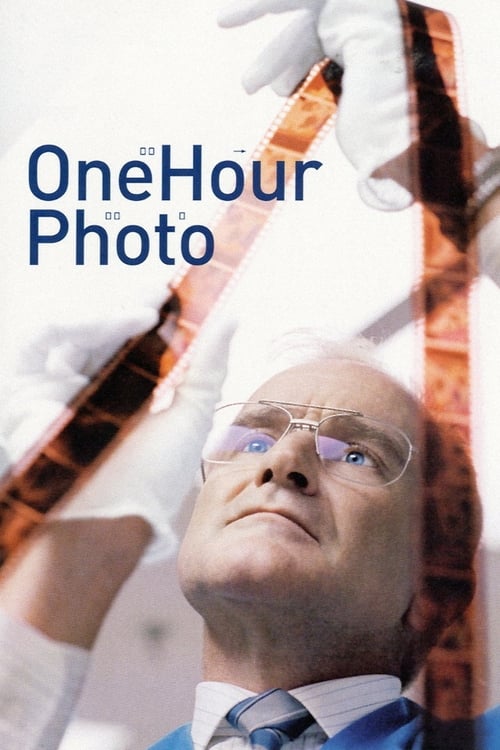
I revisited One Hour Photo yesterday afternoon while sitting on a couch that has a broken spring poking me in the left thigh, and let me tell you, that physical discomfort actually felt like the perfect accompaniment to the movie. Most thrillers try to make you jump; Mark Romanek’s 2002 psychological drama tries to make you want to scrub your skin with steel wool. It is a sterile, quiet, and profoundly sad film that captures a very specific moment in time—the exact sunset of the analog age.
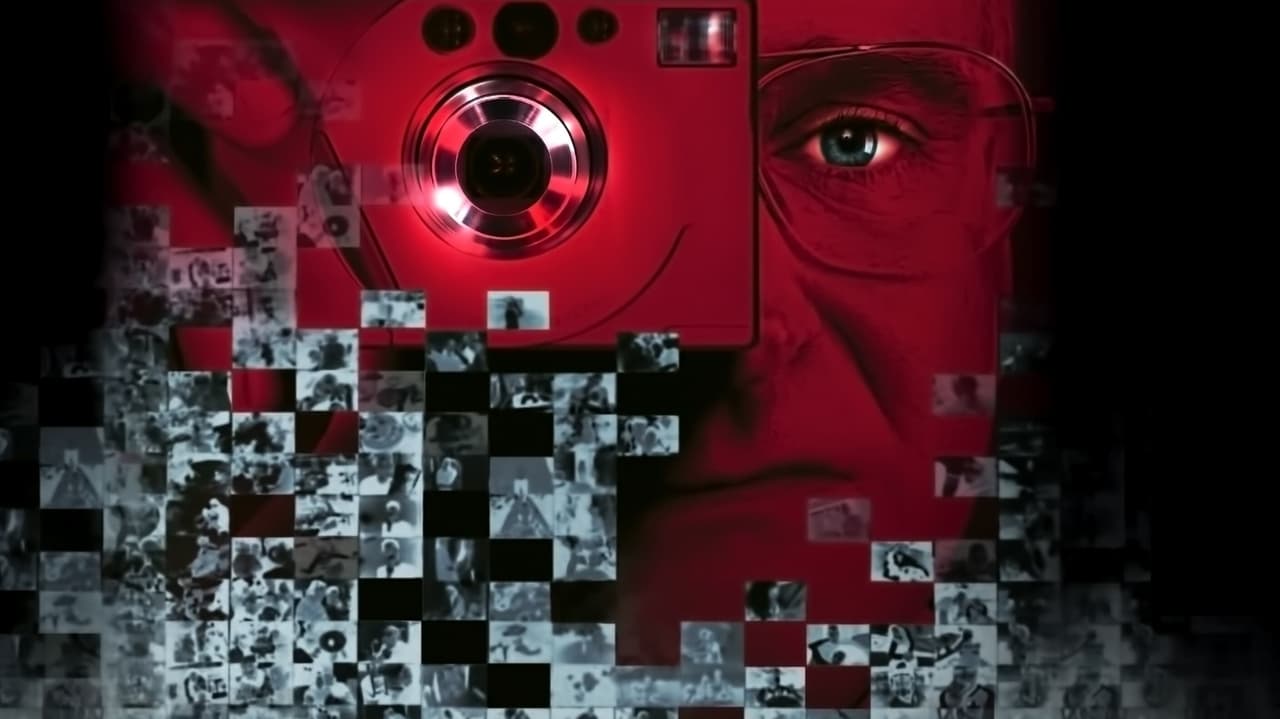
The Patron Saint of Retail Purgatory
When this film came out, Robin Williams was at a fascinating crossroads. We were used to the manic genie or the therapist with the heart of gold, but 2002 was the year he decided to show us his shadow side. Between this, Death to Smoochy, and Insomnia, Williams was clearly exorcising some demons. As Sy "The Photo Guy" Parrish, he delivers a performance so restrained it’s practically microscopic.
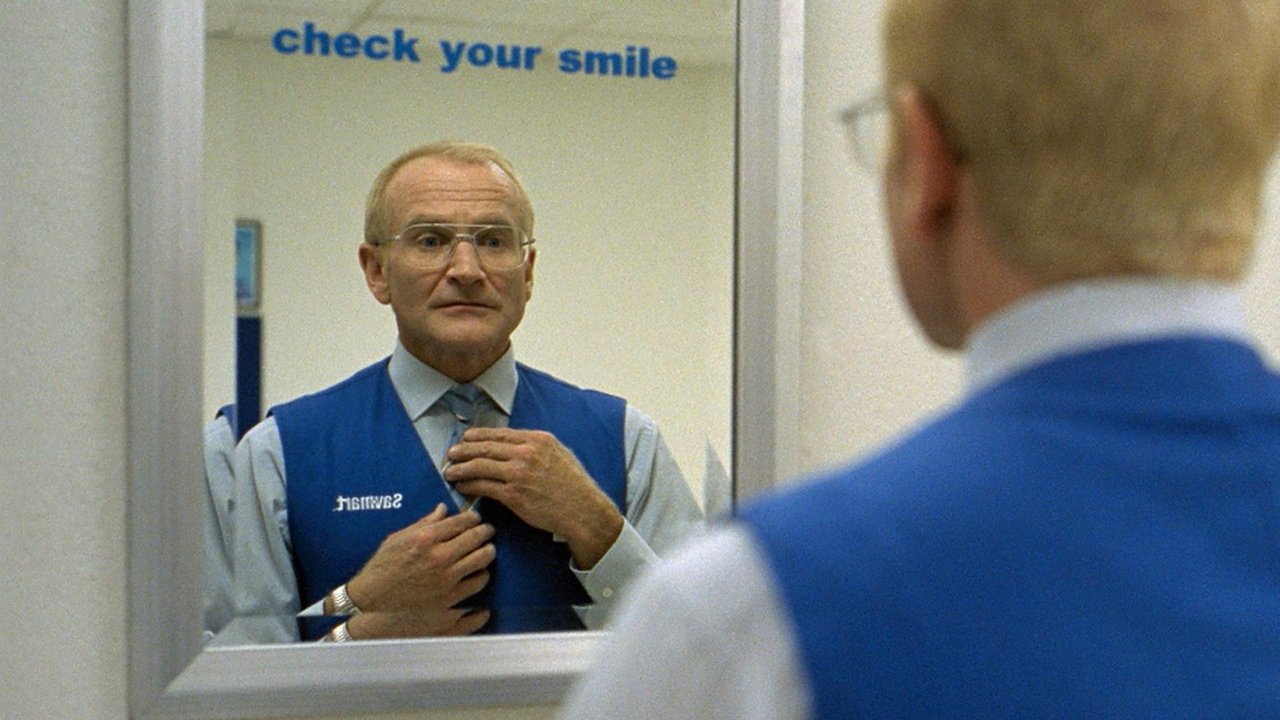
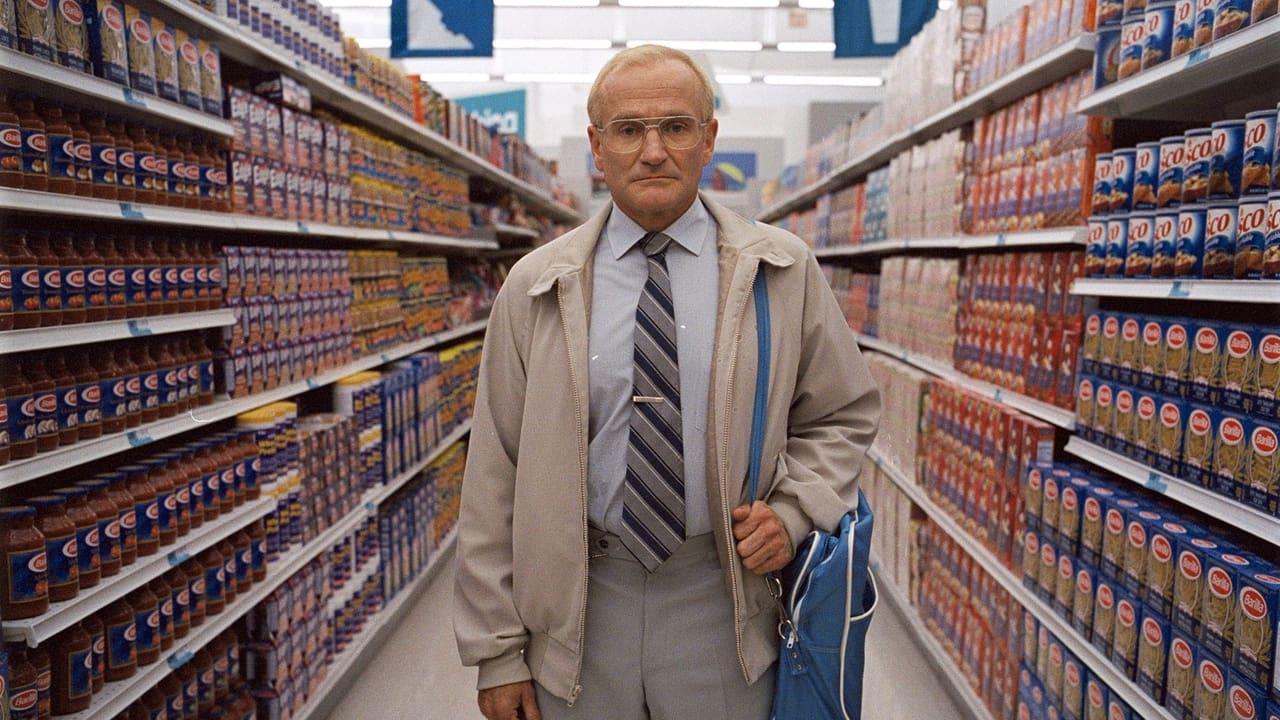
Sy works at a "Sav-Mart," a big-box store that feels more like a spaceship or a surgical suite than a retail outlet. He is the guy who sees your vacations, your birthdays, and your secret shames because he’s the one developing your 35mm film. He’s obsessed with the Yorkin family—Connie Nielsen and Michael Vartan—having developed their photos since their son was a baby. Sy has convinced himself he’s "Uncle Sy," an honorary member of the clan, despite the fact that the Yorkins barely know his last name. Sy Parrish is basically the patron saint of the 'creepy guy at the mall' archetype, but Williams makes you feel an agonizing pity for him. He’s not a slasher; he’s a man who has been deleted from the world and is trying to crop himself back into the frame.
A Masterclass in Sterile Anxiety
Director Mark Romanek (who directed the "Closer" video for Nine Inch Nails, which explains a lot) treats the Sav-Mart like a character. Everything is blindingly white, perfectly symmetrical, and utterly soul-crushing. Most directors would have leaned into a dark, grimy aesthetic for a stalker movie, but Romanek goes the other way. He uses fluorescent lights to expose every bead of sweat on Sy’s upper lip.
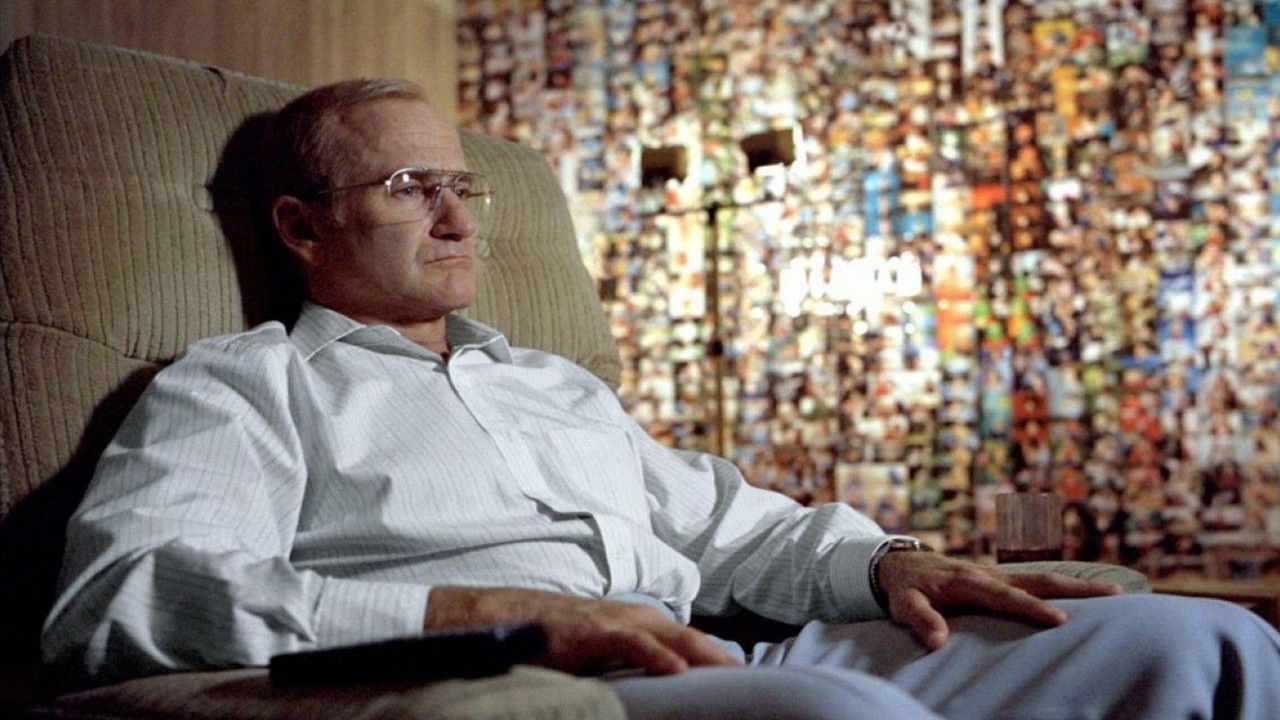
The cinematography by Jeff Cronenweth (who did Fight Club and later The Social Network) is surgical. There’s a scene where Sy is sitting in his apartment—a beige box with no personality—watching The Simpsons, and the contrast between the vibrant, yellow cartoon and Sy’s gray existence is heartbreaking. It’s a film that understands the specific loneliness of the suburbs. The film’s real monster isn't Sy; it’s the blindingly white fluorescent lights of retail purgatory.
I found myself mesmerized by the technical details of the photo lab. Looking back from our era of Instagram and cloud storage, there’s a tactile, mechanical beauty to the way Sy handles the negatives. The movie serves as an accidental time capsule of a lost trade. There was a weird intimacy to handing a roll of film to a stranger at a counter, a social contract that relied on the "Photo Guy" being a professional. Sy breaks that contract, but the movie suggests that our modern digital distance might be just as cold.
The Fragility of the "Perfect" Image
The plot kicks into high gear when Sy discovers that the Yorkin family isn’t as picture-perfect as their 4x6 prints suggest. When he finds evidence of an affair, his fragile psyche shatters. He doesn't just want to watch them; he wants to enforce the happiness he saw in the photos.
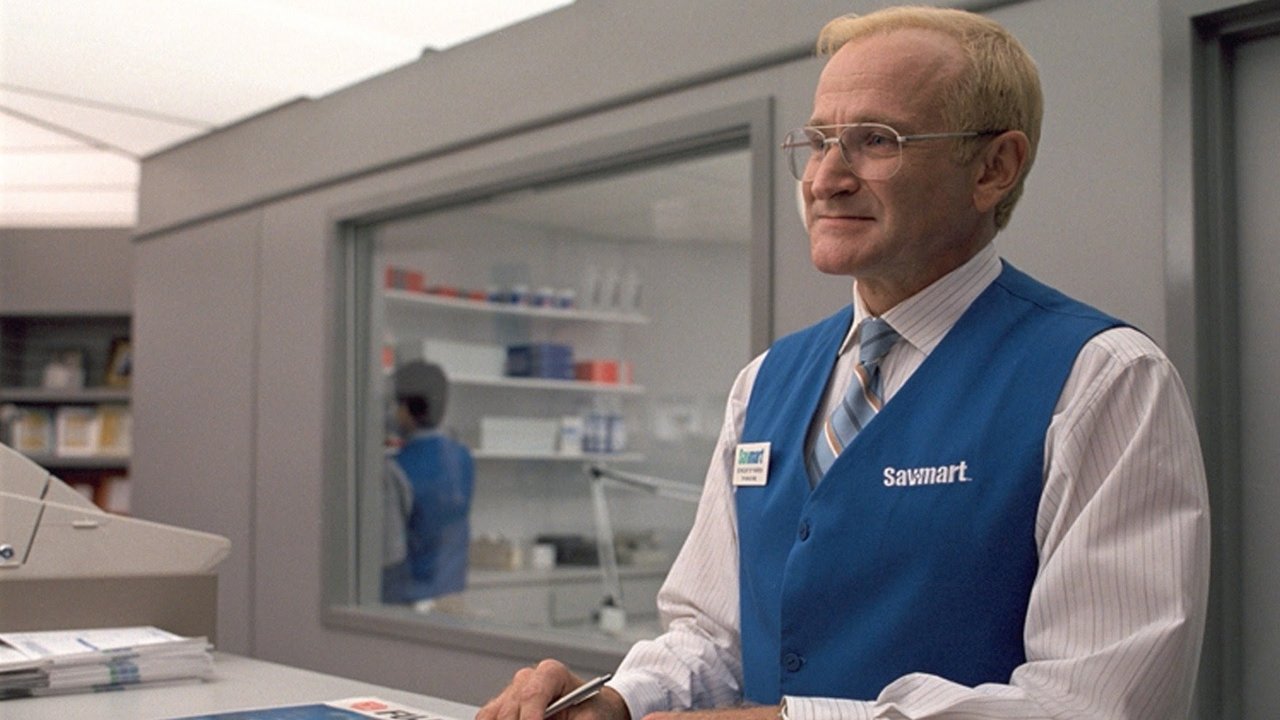
The supporting cast is excellent, particularly Gary Cole as the quintessential middle-manager who smells Sy’s "off-ness" but can’t quite put his finger on it. Clark Gregg also shows up as a detective, providing a grounded reality to the increasingly surreal third act. But make no mistake: this is the Robin Williams show. He uses his voice—that famous, versatile tool—by stripping it of all its usual warmth. He speaks in a soft, flat monotone that sounds like someone reading a manual for a microwave. It’s genuinely chilling because you can see the desperation behind his eyes, a man drowning in a sea of other people’s memories.
In retrospect, One Hour Photo feels like it arrived at the perfect time. It captured the Y2K-era tech-anxiety but focused it on something human rather than something digital. It’s a tragedy disguised as a thriller, and it’s one of those rare films that actually gets better as its technology becomes obsolete. It reminds me that while we can edit our photos to look perfect, the raw negatives are always a mess.
If you only know Robin Williams for his comedy, you owe it to yourself to see this. It’s a quiet, uncomfortable, and visually stunning reminder that the funniest people often understand the deepest darkness. Just be prepared to feel a little weird the next time you look at your old family photo albums. They might look perfect, but someone had to develop them.
Keep Exploring...
-
A Simple Plan
1998
-

The Gift
2000
-
Basic
2003
-
Runaway Jury
2003
-
The Hunted
2003
-
Breakdown
1997
-
Cop Land
1997
-
Kiss the Girls
1997
-
The Rainmaker
1997
-
Fallen
1998
-
Wild Things
1998
-
Arlington Road
1999
-
Behind Enemy Lines
2001
-
Gosford Park
2001
-
Joy Ride
2001
-
The Pledge
2001
-
Changing Lanes
2002
-
Confessions of a Dangerous Mind
2002
-
The Forgotten
2004
-
Walking Tall
2004