Resident Evil
"Alice in Zombieland: High-tech horror with a pulse."

Before the Marvel Cinematic Universe taught us that every movie needs to be a two-hour commercial for the next five movies, there was the 2002 version of Resident Evil. It arrived at a very specific crossroads in cinema history: the point where the grainy, grimy survival horror of the 90s met the sleek, leather-clad "Cool Britannia" aesthetic of the post-Matrix era. I revisited this one recently on a Tuesday night while trying to ignore the fact that I’d accidentally bought "reduced sodium" soy sauce—an ingredient that tastes exactly like sadness—and I was struck by how much this film feels like a time capsule of Y2K anxieties.
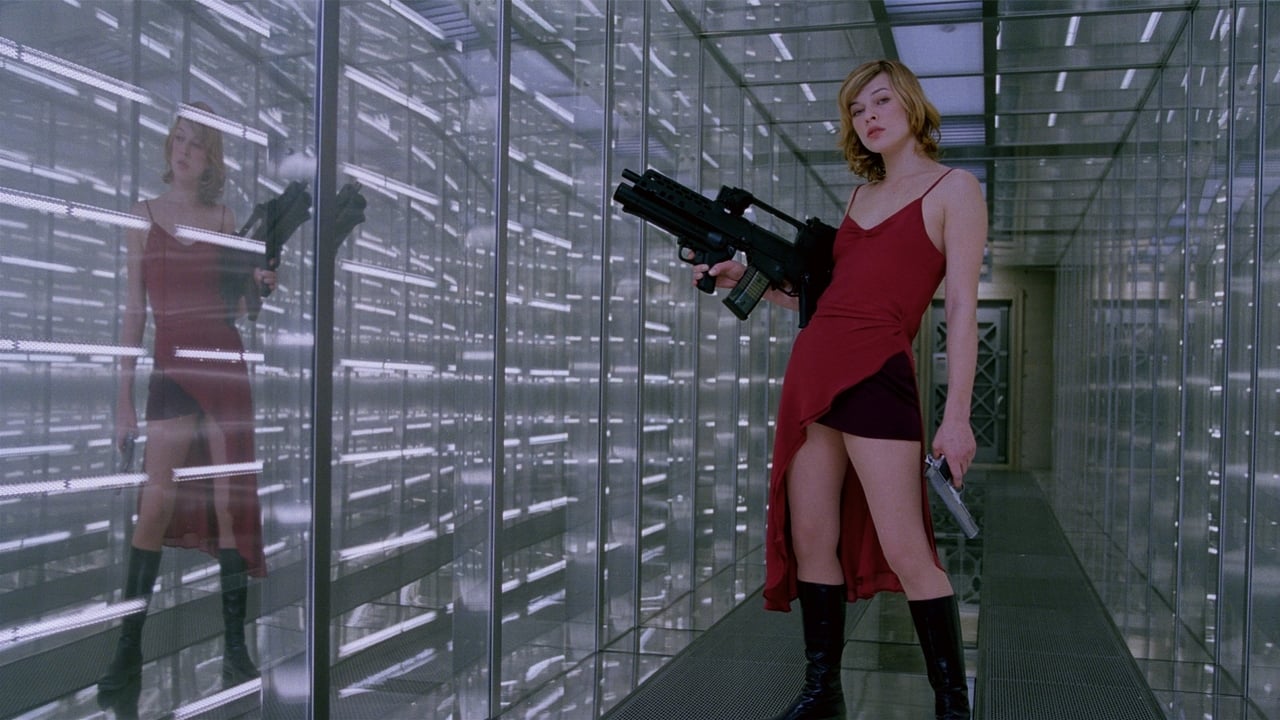
The plot is effectively a techno-gothic fairy tale. A shadowy corporation called Umbrella (the ultimate "too big to fail" villain) has a subterranean lab called The Hive. A viral outbreak turns the staff into zombies, the facility’s AI goes homicidal to contain it, and a team of commandos—plus a conveniently amnesiac Milla Jovovich—has to shut it down. It’s simple, industrial, and surprisingly effective for a movie based on a PlayStation game.
The Industrial Aesthetic of Dread
Director Paul W. S. Anderson doesn’t get enough credit for his spatial storytelling here. The Hive is a character in itself—all cold glass, brushed steel, and fluorescent lights that seem to hum with malice. It’s a far cry from the creaky mansions of the source material, but it captured the era's obsession with "clean" tech hiding dirty secrets. Looking back, this was a pivotal moment in the CGI revolution. We were moving away from the purely practical gore of the 80s toward digital monsters, and while the "Licker" creature at the end looks a bit like a PlayStation 2 cinematic today, the ambition is palpable.
What really anchors the tension, though, isn't the CGI; it’s the score. Marilyn Manson and Marco Beltrami crafted a soundtrack that sounds like a panic attack in a steel mill. It’s all grinding metal and distorted synths that keep you on edge even when nothing is happening. It’s the kind of audio design that makes a simple hallway look terrifying. Speaking of hallways, the "laser corridor" sequence remains a masterclass in tension. It’s the one scene everyone talks about for a reason—it’s clinical, cruel, and perfectly timed. It showed that the film didn't need a thousand zombies to be scary; it just needed a very fast light beam and some clever editing.
Casting the Survivalists
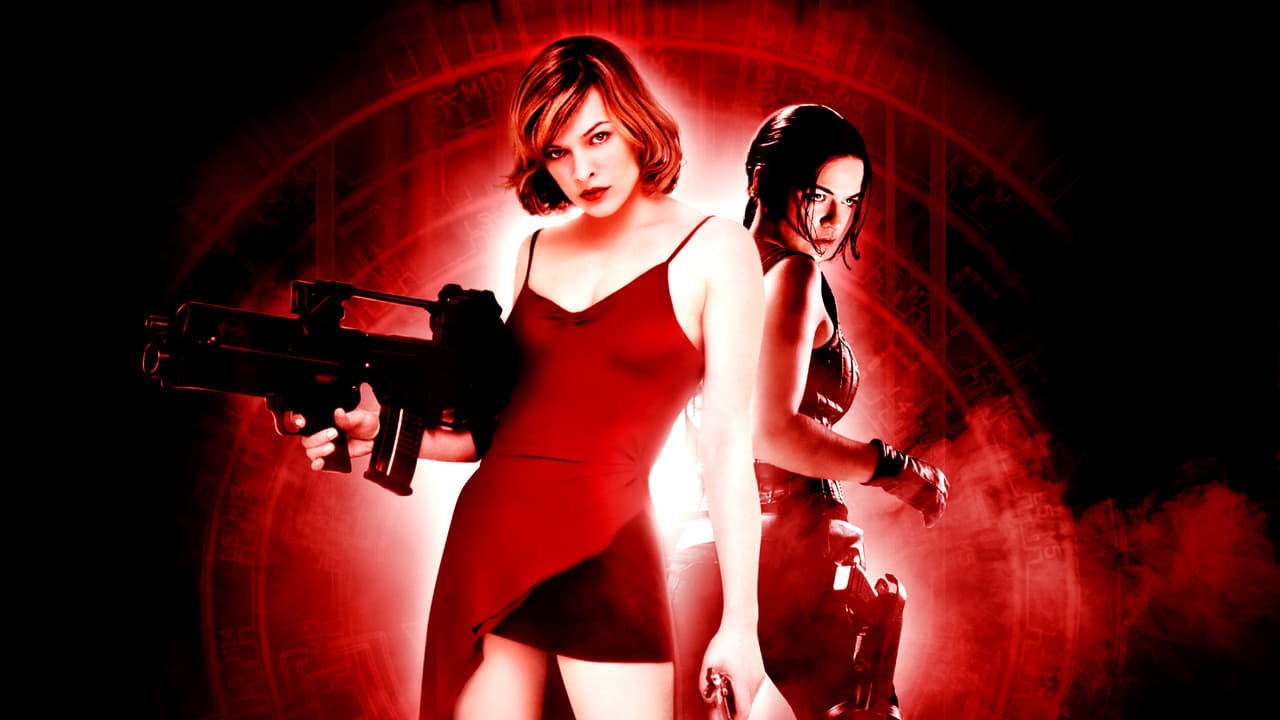
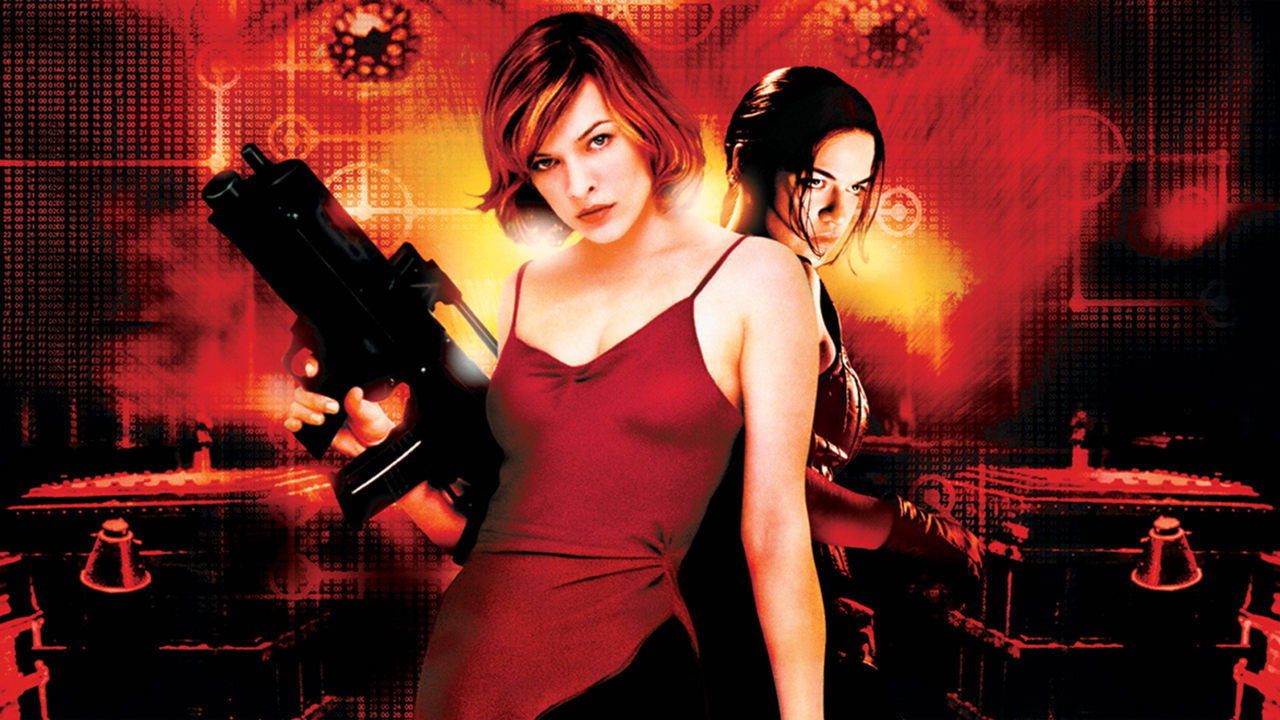
The film rests heavily on the shoulders of Milla Jovovich as Alice. Before she became a superhuman zombie-slaying god in the later sequels, she was just a confused woman in a red dress trying to remember how to break a neck. She has a physical presence that few actors can match, a sort of lithe intensity that makes the action beats feel earned rather than choreographed.
Contrasting her is Michelle Rodriguez as Rain Ocampo. This was peak Michelle Rodriguez—she was essentially the patron saint of "tough-as-nails soldiers who look like they eat cigarettes for breakfast." She brings a grounded, gritty energy to a film that could have easily drifted into camp. The chemistry between the elite task force members, including Colin Salmon as the stoic leader "One," gives the first half of the movie a tactical weight that makes the eventual descent into zombie chaos feel like a genuine failure of a mission rather than just a scripted slaughter.
A Legacy of Greenbacks and Gore
In retrospect, Resident Evil was a massive gamble. At the time, video game movies were considered box office poison (think Super Mario Bros. or Street Fighter). But with a modest budget of $33 million, it managed to claw its way to over $100 million worldwide. It didn't just break the "game movie curse"; it built a franchise that would span six films and nearly $1.3 billion in total revenue. It’s the definition of a blockbuster sleeper hit.
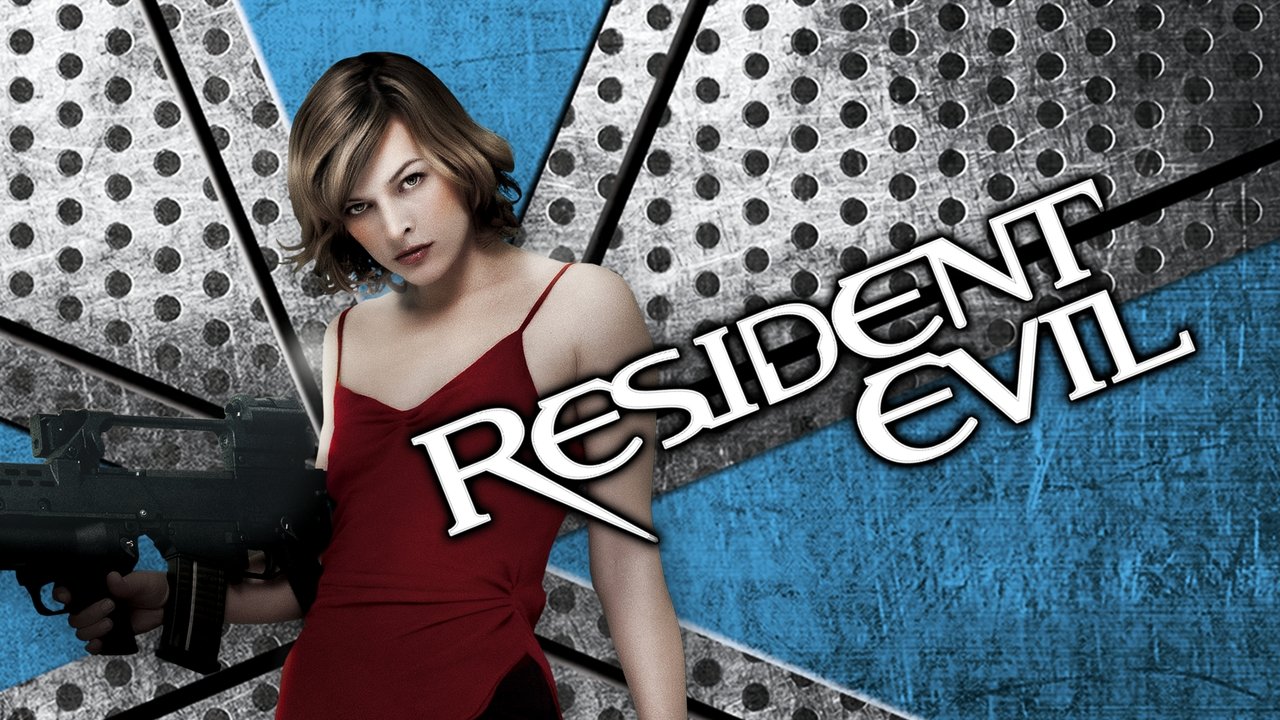
Interestingly, the production was almost a very different beast. Horror legend George A. Romero—the father of the modern zombie—was originally hired to write and direct. His script was a much more faithful adaptation of the game, featuring Chris Redfield and Jill Valentine. However, the producers felt it was too niche, opting instead for Paul W. S. Anderson’s "prequel" approach. While fans of the game were initially annoyed, the decision to create a new protagonist in Alice gave the filmmakers the freedom to surprise the audience. You couldn't rely on game knowledge to know who would survive, which added a layer of genuine unpredictability to the deaths.
The film also captures that early-2000s transition from film to digital. While shot on 35mm, the color grading and the way the shadows are crushed feel very "digital era." It’s a movie that was designed to be watched on a DVD player, complete with those behind-the-scenes featurettes that taught a generation of kids how blue-screen compositing worked.
Resident Evil isn't high art, and it doesn't try to be. It’s a lean, mean, 100-minute exercise in claustrophobia and industrial-grade action. It represents a time when franchises were built on mid-budget risks rather than $200 million committee-approved spectacles. While some of the digital effects haven't aged gracefully, the core tension and the commitment of the cast keep it relevant. If you can look past the 2002-era CGI, it’s a remarkably solid thrill ride that reminds us why we were all so afraid of "The Red Queen" in the first place. Plus, it’s still the best video game adaptation of its decade, mostly because it understands that sometimes, all you need is a good hallway and a terrifying AI.
Keep Exploring...
-
Resident Evil: Retribution
2012
-
Resident Evil: Afterlife
2010
-
Resident Evil: Extinction
2007
-
Resident Evil: The Final Chapter
2016
-
Resident Evil: Apocalypse
2004
-
AVP: Alien vs. Predator
2004
-
Death Race
2008
-
Soldier
1998
-
Species
1995
-
Event Horizon
1997
-
Alien³
1992
-
Lake Placid
1999
-

Mortal Kombat
1995
-
Alien Resurrection
1997
-
Blade: Trinity
2004
-
The Cell
2000
-
Spy Kids
2001
-
Spy Kids 2: The Island of Lost Dreams
2002
-
Dawn of the Dead
2004
-
Pandorum
2009