Return to Never Land
"Faith, trust, and a little bit of shrapnel."
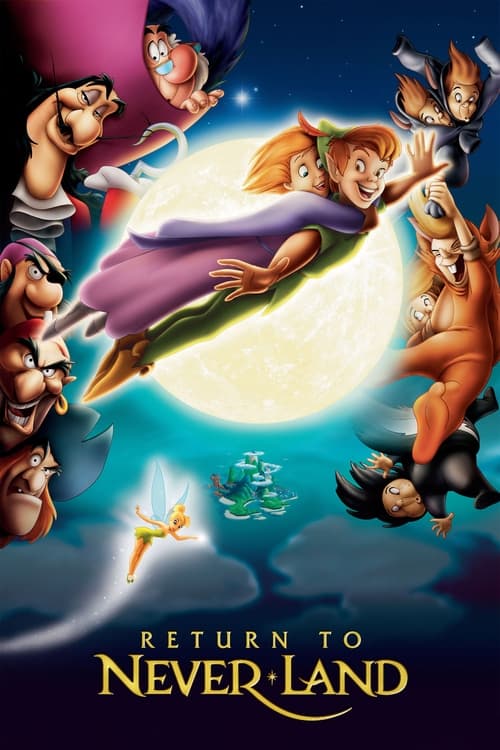
Most Disney sequels of the early 2000s felt like they were made in a basement by people who had only seen the original movie once through a blurry window. We were in the thick of the "Cheapquel" era, where titles like Cinderella II: Dreams Come True arrived on VHS with the visual fidelity of a Saturday morning cereal commercial. But then there’s Return to Never Land. Released in 2002, this was the rare spin-off that managed to escape the direct-to-video gravitational pull, landing in theaters with a surprisingly heavy heart and a much-needed coat of digital paint.

I remember watching this for the first time on a humid Tuesday afternoon while my dog relentlessly barked at a squirrel outside the window, and even through the domestic chaos, the opening hit me. We aren’t in a magical nursery in Edwardian London anymore. We’re in 1940. The Blitz is screaming overhead. It’s a jarring, sophisticated way to start a "kids' movie," and it sets a tone that the rest of the film—for better or worse—tries its best to live up to.
Faith in the Fog of War
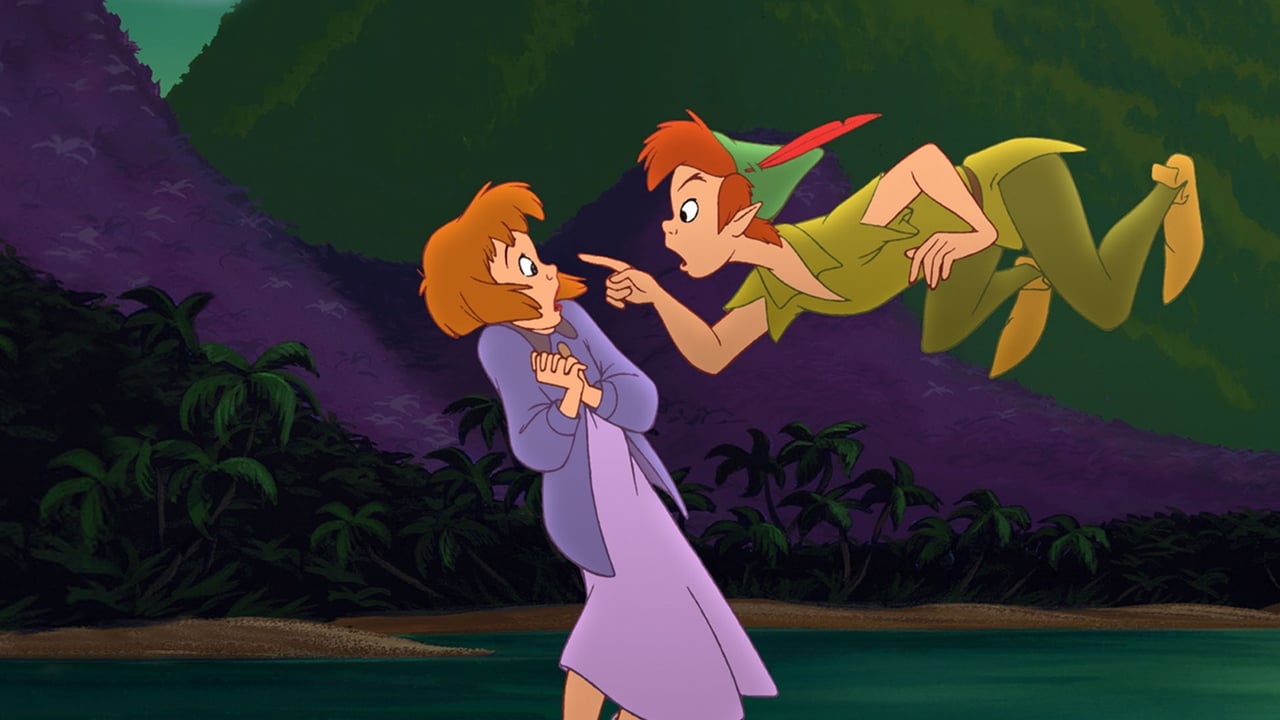
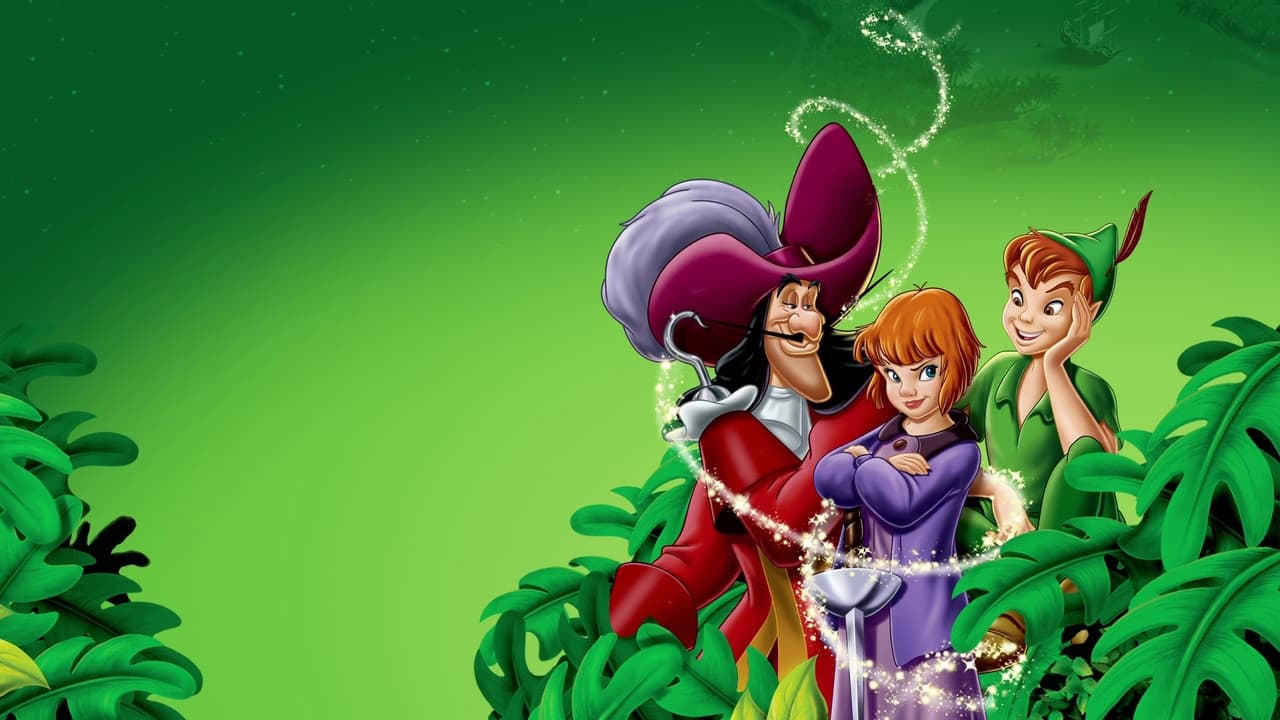
The story follows Jane (Harriet Owen), Wendy’s daughter. Unlike her mother, Jane has no time for "childish" stories about shadows and pixie dust. She’s a "practical" child, a byproduct of a world where her father is off at war and she has to help her mother (Kath Soucie) keep their household together amidst air-raid sirens. Jane is a much more compelling protagonist than Wendy ever was, mostly because her cynicism feels earned. When Captain Hook (Corey Burton) mistakenly kidnaps her, thinking she’s Wendy, her reaction isn’t wonder—it’s annoyance.
This creates a fantastic friction. Peter Pan (Blayne Weaver) is still the same eternal boy, but he’s faced with a girl who looks at a flying boy and asks for the physics report. The film captures that specific Modern Cinema transition where Disney was moving away from the "perfect" heroines of the Renaissance and toward characters with actual chips on their shoulders. Watching Peter try to teach Jane how to "fly" while she’s worrying about the logistics of a war-torn London provides a grounded emotional core that most sequels lack.
Pixie Dust and the CGI Revolution

Technically, Return to Never Land is a fascinating artifact of the turn of the millennium. It was produced by Disney Television Animation, but the quality was bumped up for its theatrical run. You can see the studio grappling with the early 2000s CGI revolution. The backgrounds often use the "Deep Canvas" process popularized by Tarzan (1999), giving Never Land a three-dimensional depth that makes the flight sequences feel more kinetic than the 1953 original.
However, looking back with 2024 eyes, the blend isn't always seamless. The pirate ship occasionally looks like a plastic toy floating in a digital bathtub, but there's a certain charm to that ambition. It’s a snapshot of a moment when traditional hand-drawn animation was desperately trying to prove it could still be "spectacular" in a post-Toy Story world. The score by Joel McNeely also does heavy lifting here, echoing Oliver Wallace’s original themes while adding a sweeping, adventurous scale that makes the 72-minute runtime feel much bigger than it actually is.
The $100 Million "Mistake"
What’s truly wild about this film is its success. Originally, Disney execs intended this for a quiet home video release. Apparently, the "test scores" were so high—and the internal buzz so loud—that Michael Eisner made the call to pivot to a wide theatrical release. It turned out to be a genius business move. Produced on a modest $20 million budget, it went on to gross nearly $110 million worldwide.

To put that in perspective, 2002 was the same year Disney released the experimental Treasure Planet, which cost $140 million and famously tanked. Return to Never Land out-grossed that massive epic by purely leaning into the power of the "Peter Pan" brand. It proved that the "franchise mentality" we see today in the MCU was already a proven survival strategy. It didn’t just survive; it thrived, becoming a staple of the early DVD era, complete with those "choose your own adventure" games in the special features that used to take three minutes to load between every click.
The film does stumble in its comedy—Captain Hook has been declawed into a slapstick punchline, and the octopus (replacing the crocodile) feels like a desperate attempt to find a new "gimmick" for the tick-tock gag. Yet, the ending always gets me. When Peter and the grown-up Wendy finally lock eyes, the film acknowledges the tragedy of growing up in a way that feels genuinely poignant. It’s a short, sweet adventure that respects its predecessor while managing to find its own voice in the rubble of WWII London.
The journey back to Never Land might be a bit shorter than the first trip, but it’s a flight worth taking if you’ve forgotten how to believe in things you can't see. Just don't expect the CGI ship to look as sharp as your memories of it. Still, for a movie that was supposed to go straight to a dusty VHS shelf, it’s got a surprising amount of heart and a lot of nerve.
Keep Exploring...
-
Peter Pan
1953
-
Pokémon: The First Movie
1998
-
Pokémon the Movie 2000
1999
-

The SpongeBob SquarePants Movie
2004
-
Shrek the Third
2007
-

The Jungle Book 2
2003
-
Horton Hears a Who!
2008
-
Shrek Forever After
2010
-

Puss in Boots
2011
-
The Smurfs
2011
-

Frozen
2013
-
Tinker Bell
2008
-
The Road to El Dorado
2000
-

The Cat Returns
2002
-

Sinbad: Legend of the Seven Seas
2003
-
Shrek 2
2004
-

The Polar Express
2004
-
Arthur and the Invisibles
2006
-

The Ant Bully
2006
-
Shrek the Halls
2007