Solaris
"Memory is a ghost that breathes."
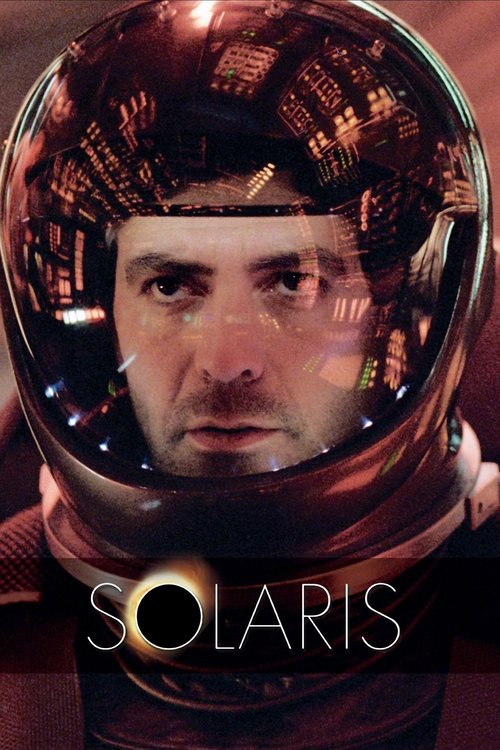
Imagine being a studio executive in 2002. You’ve got George Clooney, the world’s most charismatic man, fresh off the heist-movie high of Ocean’s Eleven. You’ve got James Cameron producing. You’ve got a "science fiction" premise set on a mysterious space station. Naturally, you market it as a sleek, romantic thriller—Gravity meets Ghost. Then the film comes out, and instead of a pulse-pounding adventure, the audience is met with a quiet, devastating tone poem about suicide, grief, and the terrifying realization that we never truly know the people we love.

I watched this recently on a Tuesday afternoon while my neighbor was power-washing his driveway; the distant, rhythmic hum of the water actually blended perfectly with the hypnotic drone of the film’s score. It’s that kind of movie—it doesn't just invite a mood; it enforces one. While the 1972 Andrei Tarkovsky original is a sprawling, three-hour philosophical titan, Steven Soderbergh’s Solaris is a lean, 99-minute surgical strike on the heart. It’s one of the great "forgotten" films of the early 2000s, a victim of bad expectations that deserves a second life.
The Mirror in the Sky
The setup is classic sci-fi: Chris Kelvin (George Clooney), a psychologist mourning his late wife, is sent to a research station orbiting the planet Solaris. The crew—including a wonderfully prickly Viola Davis as Gordon and a twitchy, borderline-unintelligible Jeremy Davies as Snow—is losing their minds. Why? Because the planet is "visiting" them. It scans their sub-conscious and manifests their most intense memories as flesh-and-blood people.
For Kelvin, this means his wife, Rheya (Natascha McElhone), appears in his cabin. She looks like her, smells like her, and remembers their life together, but she isn't her. She’s a copy made of "neutrinos" held together by a sentient planet that doesn't understand human boundaries.
This is where the drama gets heavy. Soderbergh isn't interested in the "how" of the science. He’s interested in the "why" of the grief. George Clooney gives what I’d argue is his most vulnerable performance here. Gone is the smirk and the head-tilt. He looks tired, older, and genuinely haunted. When he looks at this "New Rheya," you see the war behind his eyes: he knows she’s an imitation, but he’s so desperate for a second chance that he’s willing to fall in love with a sentient Polaroid.
A Masterclass in Atmosphere

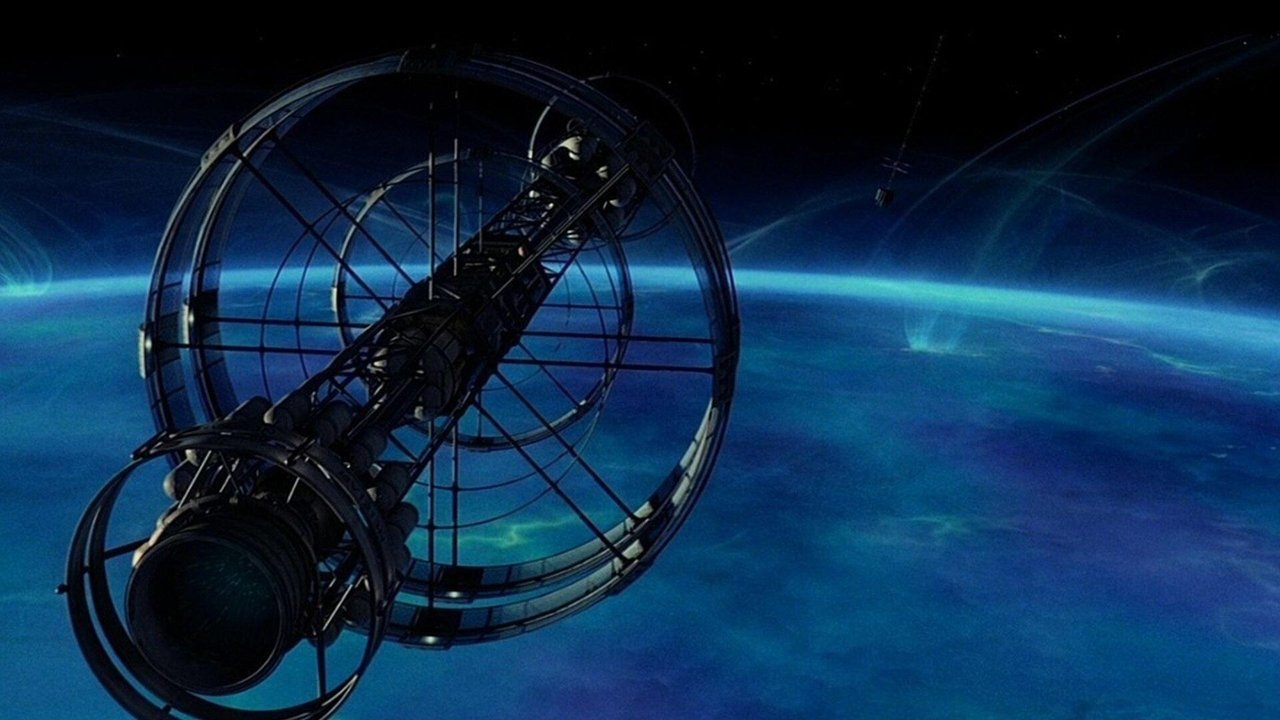
Technically, Solaris is a marvel of the "Modern Cinema" transition. It’s from that specific window where CGI was being used to enhance practical sets rather than replace them. The station feels lived-in, metallic, and cold, which contrasts beautifully with the warm, amber-hued flashbacks of Kelvin’s life on Earth. Soderbergh famously wore multiple hats on this production, acting as his own cinematographer (under the pseudonym Peter Andrews) and editor (as Mary Ann Bernard).
The result is a film that feels singular. The way he uses light—specifically the flickering teals and deep violets of the planet Solaris—creates an almost underwater feeling. But the real MVP is Cliff Martinez. His score is a shimmering, ambient masterpiece of steel drums and synthesizers. It doesn't tell you how to feel; it just suspends you in a state of terminal longing. I’ve probably listened to the soundtrack a hundred times more than I’ve watched the movie, and it never fails to make my living room feel like it’s drifting out of orbit.
Natascha McElhone is the film’s secret weapon. Playing a "Visitor" is a thankless task on paper, but she brings a terrifying existential dread to the role. As this version of Rheya realizes she isn't "real"—that her memories are just things Kelvin remembered about her—the film pivots into a tragic horror story about identity. Marketing it as a romantic thriller was like selling a funeral as a block party, and it’s no wonder 2002 audiences felt cheated. They wanted Star Wars; they got a breakup at the end of the universe.
Why It Vanished (And Why to Find It)
Solaris bombed. It made back barely half its budget and received the dreaded "F" CinemaScore from opening-night audiences. In retrospect, it was a victim of its own era. It arrived in the wake of 9/11, a time when Hollywood was pivotting toward the escapism of the early MCU and the Lord of the Rings trilogy. A somber, quiet movie about the permanence of loss was a tough sell.
But looking back now, it’s aged remarkably well. It doesn't rely on dated tech-gags; it relies on the human face. It asks big, uncomfortable questions: If you could have a dead loved one back, but they were only a version of your memory of them, would that be enough? Or would their presence just be a recurring wound?
It’s a movie that asks for your undivided attention and then uses it to break your heart. If you can handle a film that moves at the speed of a drifting glacier, Solaris is a journey worth taking. It’s a reminder that sometimes the most alien thing in the universe isn't a planet or a monster—it's the person sleeping in the bed next to you.
Soderbergh’s Solaris is an anomaly: a big-budget studio film that dares to be private, poetic, and profoundly sad. It strips away the techno-babble of the genre to focus on the terrifying weight of a second chance. Don't go in expecting explosions or a clear-cut mystery. Go in for the atmosphere, the haunting performances, and a score that will stay in your head for weeks. It’s a beautiful, lonely record of what it means to be haunted by your own heart.

Keep Exploring...
-
The Forgotten
2004
-

The Jacket
2005
-
Out of Sight
1998
-

Blindness
2008
-
Contagion
2011
-

The Informant!
2009
-
The 6th Day
2000
-

Signs
2002
-
Breakdown
1997
-
Kiss the Girls
1997
-
Wild Things
1998
-

The Gift
2000
-

Gosford Park
2001
-
Joy Ride
2001
-

The Pledge
2001
-

S1m0ne
2002
-

The Mothman Prophecies
2002
-
Broken Flowers
2005
-

In the Valley of Elah
2007
-

Michael Clayton
2007