The Legend of Al, John and Jack
"Memory is fleeting. Death is permanent. The sandwiches are great."
I watched The Legend of Al, John and Jack on a scratched-up DVD I found in a bargain bin in Milan, right after eating a panini so large I had to unbutton my jeans just to sit through the opening credits. There is something profoundly right about consuming a movie this thick with Italian-American tropes while actually dealing with a physical carbohydrate-induced crisis.
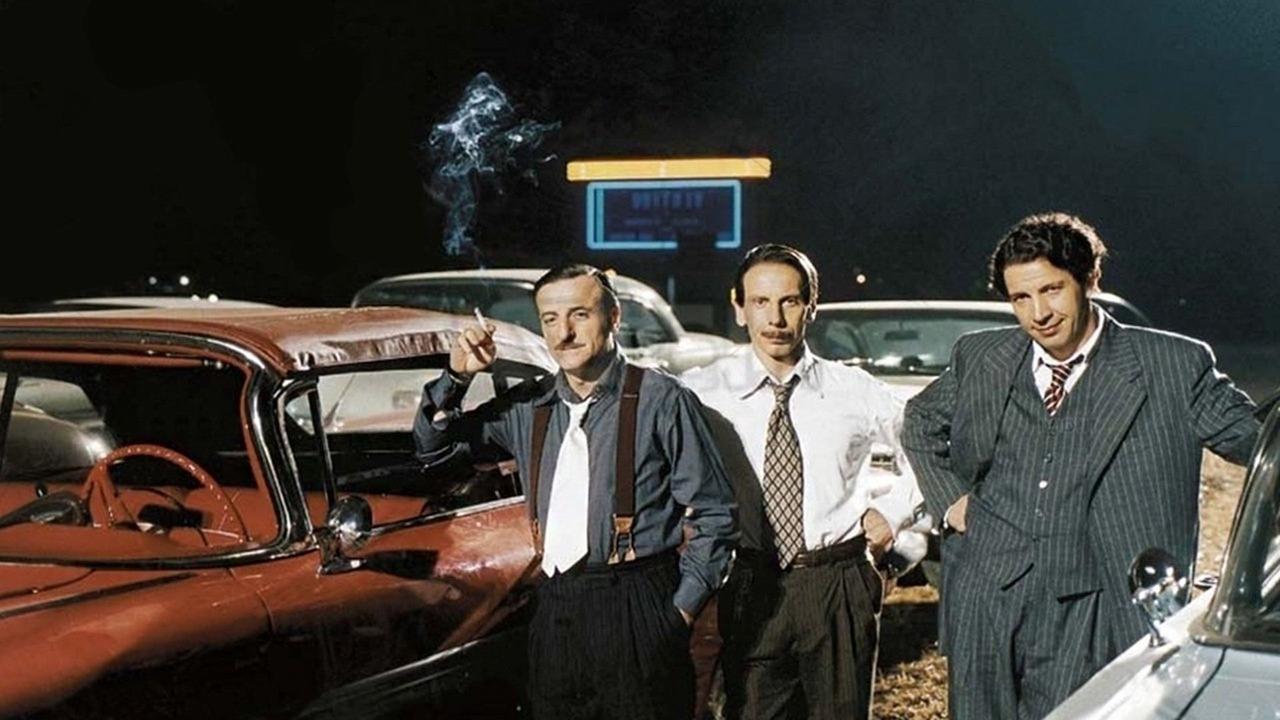
Outside of Italy, the comedy trio of Aldo Baglio, Giovanni Storti, and Giacomo Poretti (collectively known as Aldo, Giovanni, and Giacomo) is a massive unknown. But in 2002, they were the undisputed kings of the Mediterranean box office. With this film, they took a massive swing, trading their usual contemporary Italian settings for a sepia-toned, rain-slicked New York City in 1929. It’s a gangster parody, yes, but it’s played with a surprising amount of atmospheric grit that makes the absurdity land much harder than your standard slapstick.
The Noir of the Forgetful
The film drops us into a world of Fedoras, tommy guns, and shadows long enough to hide a fleet of Buicks. Our protagonists are three of the most incompetent hitmen ever to walk the Lower East Side. They work for a terrifying, larger-than-life boss named Sam Genovese (Aldo Maccione), who has finally reached his limit with their bungling. The stakes aren’t just "you’re fired"; the stakes are "we are currently driving you to the woods to put a bullet in your collective skull."
What sets the plot in motion is a beautifully dark conceit: Al (Aldo Baglio) suffers from severe short-term memory loss. Every few minutes, his brain hits the "reset" button. He forgets who he is, where he is, and most importantly, that he’s currently in the middle of a double-cross involving the FBI. The memory loss gag is actually funnier and more stressful than Memento, mostly because Aldo Baglio plays the confusion with such wide-eyed, frantic sincerity. When he slips into his "Herbert" persona—a harmless, polite version of himself—the frustration on the faces of John (Giovanni Storti) and Jack (Giacomo Poretti) feels genuinely earned.
The direction by the trio along with Massimo Venier leans heavily into the transition-era cinematography of the early 2000s. It’s that sweet spot where digital color grading started to take over, giving the 1920s a saturated, almost suffocating warmth. It feels like a movie made by people who spent their childhoods obsessing over Sergio Leone’s Once Upon a Time in America (1984), but then decided they weren’t nearly cool enough to recreate it seriously.
Rhythms of a Crumbling Empire
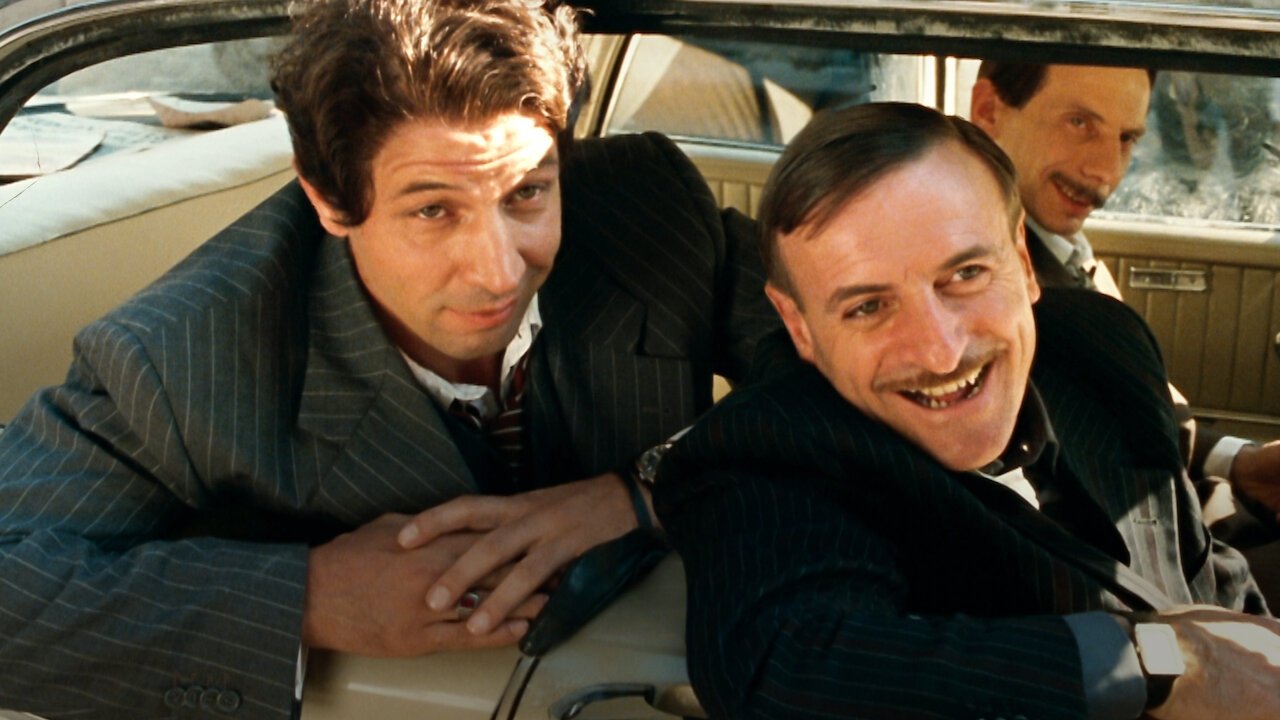
Comedy is, at its heart, a matter of rhythm, and this trio has a metronome built into their DNA. Their bickering is legendary. Giovanni Storti plays the "straight man" who is actually just as neurotic as the others, while Giacomo Poretti is the stressed-out middle manager of this criminal enterprise. The humor isn't just in the punchlines; it's in the way they overlap their speech, a rapid-fire Italian cadence that fits the staccato rhythm of a Prohibition-era shootout.
One of the standout sequences involves a plan to sell their boss to the FBI, which requires Al to remember a specific set of instructions. Of course, he doesn't. The tension in these scenes is real. There’s a griminess to the production design—the greasy spoons, the cramped apartments, the cold, wet streets—that grounds the comedy. The plot is thinner than a slice of cheap prosciutto, but the character dynamics are meaty enough to make up for it.
I’ve always felt that the best parodies are the ones that actually respect the genre they are mocking. The Legend of Al, John and Jack doesn't just make fun of gangster movies; it inhabits them. When Aldo Maccione (a legend of Italian "sexy comedy" from the 70s) shows up as the Boss, he brings a genuine sense of menace. You understand why these three idiots are terrified. It makes the humor feel like a desperate survival mechanism rather than just a series of sketches.
Why the Legend Stayed Local
It’s a mystery why this film never quite broke through internationally. It was released during that early 2000s boom of DVD culture, a time when "World Cinema" was starting to become more accessible through special editions and boutique labels. Perhaps it was too culturally specific, or perhaps the nuances of the trio's banter were lost in translation. Or maybe it was just bad timing, lost in the shuffle of the big Hollywood franchises that were beginning to dominate the global market.
Apparently, the production was a bit of a logistical nightmare. They actually shot parts of it in New York and Chicago to capture the authentic scale of the buildings, a rarity for Italian comedies of that era which usually stuck to the backlots of Cinecittà. You can see that effort on the screen. There’s a scene involving a bridge and a botched execution that feels as "big" as any mid-budget Hollywood thriller of the time.
Turns out, the trio's insistence on high production values is what makes this hold up better than their earlier, more low-fi work. It’s a film that looks like a million bucks but behaves like a three-ring circus. It captures that specific millennium-era ambition—the desire to prove that local cinema could play on a global stage, even if the world wasn't quite looking yet.
The Legend of Al, John and Jack is a strange, charming artifact of 2002. It’s a film that balances the threat of a concrete overcoat with the absurdity of a forgotten sandwich. While it might not have the philosophical weight of the films it parodies, it possesses a frantic, desperate energy that is hard to dislike. If you can find a copy—scratched DVD or otherwise—it’s a trip worth taking, just to see what happens when the funniest men in Italy try to survive the mean streets of a New York that only exists in the movies.
Keep Exploring...
-
That's Life
1998
-
Ask Me If I'm Happy
2000
-
Have You Met Claudia?
2004
-

Three Men and a Leg
1997
-

The Rich, the Pauper and the Butler
2014
-

I Hate Summer
2020
-
Matchstick Men
2003
-

The Santa Claus Gang
2010
-
The Big Lebowski
1998
-

Adaptation.
2002
-
Chicago
2002
-

Kiss Kiss Bang Bang
2005
-
I'm Not Scared
2003
-
Out of Sight
1998
-
Blue Streak
1999
-
Taxi 2
2000
-

Bandits
2001
-

Heartbreakers
2001
-
Super Troopers
2001
-
Confessions of a Dangerous Mind
2002