The Spanish Apartment
"Seven nationalities, one bathroom, and zero privacy."

I watched this on my laptop while trying to ignore a leaky radiator that sounded suspiciously like a rhythm track from a 2002 Daft Punk B-side, and honestly, the ambient noise only added to the experience. The Spanish Apartment (originally L'Auberge Espagnole) is the cinematic equivalent of that one messy, glorious summer you had in your early twenties before "career goals" and "back pain" became your primary personality traits.
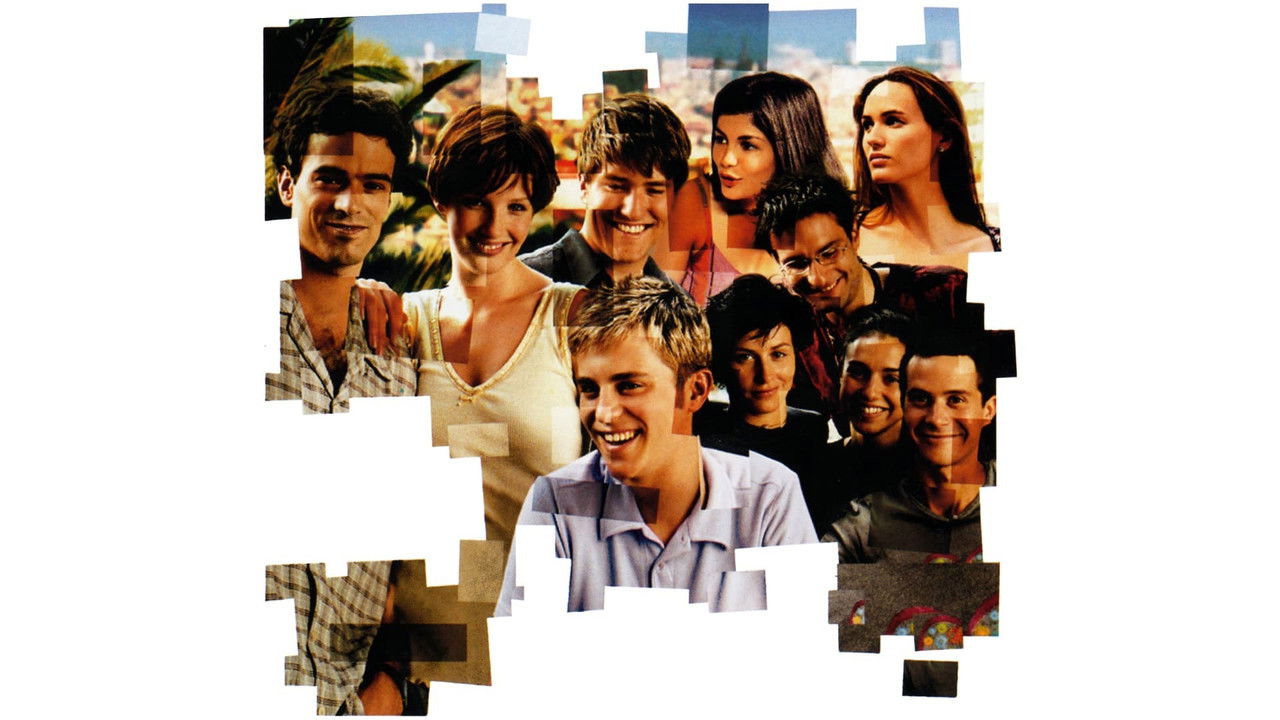
It’s easy to forget now, in our era of hyper-connected social media, just how big the world felt in the early 2000s. Director Cédric Klapisch captured a very specific moment in European history: the peak of the Erasmus exchange program optimism. It was a time when moving to Barcelona didn't mean following a GPS; it meant wandering around with a tattered paper map and hoping your landlord actually spoke the three words of Spanish you’d practiced on the plane.
The Chaotic Geometry of Flat-Sharing
The story follows Xavier, played with a frantic, twitchy charm by Romain Duris (The Beat That My Heart Skipped). Xavier is a strait-laced Parisian economics student who heads to Spain to learn the language and secure a job at the Ministry of Finance. To save money, he moves into a sprawling, cluttered apartment shared by six other students from across the EU.
What follows isn’t a high-stakes plot, but rather a series of beautifully observed "small" moments. We’ve got the English girl Wendy (Kelly Reilly), the lesbian flamencologist Isabelle (Cécile de France), and the perpetually grumpy German, Lars. It’s a linguistic minefield where conversations jump from French to English to Spanish within a single sentence.
I’ve always felt that Xavier is kind of a disaster disguised as a protagonist, and that’s what makes the film work. He’s not a hero; he’s a guy trying to figure out if he actually likes his girlfriend, Martine—played by a post-Amélie Audrey Tautou—or if he just likes the idea of having someone wait for him back home. Audrey Tautou is fascinating here because she’s the antithesis of her whimsical "Amélie" persona; she’s moody, neglected, and eventually, rightfully fed up.
Digital Energy and 2000s Visuals
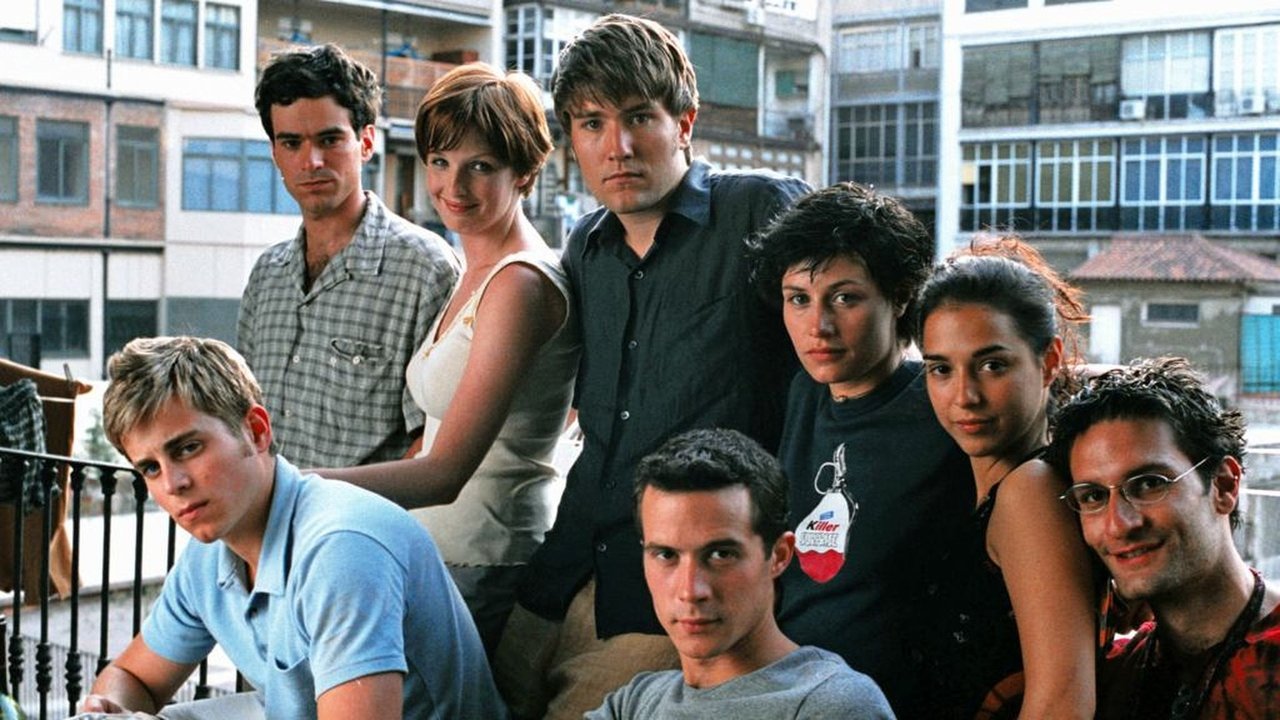
Looking back, the editing style of The Spanish Apartment is a total time capsule of the transition from analog to digital. Cédric Klapisch leans heavily into the "MTV style" that was popular at the turn of the millennium. We get split screens, fast-forwarded sequences of Xavier walking through the streets, and superimposed text. At the time, this felt like the cutting edge of indie filmmaking—the camera finally becoming as mobile and distracted as the characters themselves.
Today, those digital flourishes might seem a bit "IMovie-chic," but they perfectly mirror the sensory overload of being twenty-something in a new city. The film doesn't just show you Barcelona; it tries to make you feel the heat, the noise, and the cramped quarters of a kitchen that has never seen a deep clean.
The breakout star for me, however, wasn't the lead. Cécile de France (High Tension) is magnetic as Isabelle. She brings a grounded, cool-older-sister energy to the flat, teaching Xavier how to seduce women while simultaneously navigating her own complicated love life. There’s a scene involving a frantic, cross-city dash to hide an affair from a returning boyfriend that is choreographed with the precision of a French farce, and it remains one of the funniest sequences in early 2000s comedy.
Why This "European" Gem Got Lost in the Shuffle
If you live in the U.S., you might have missed this one entirely, or found it buried in the "Foreign Language" section of a Blockbuster. It’s a bit of a tragedy that it’s slipped into obscurity because it captures the post-9/11 world without mentioning the tragedy once. It focuses instead on the "Global Village" ideal—the hope that by living together, we might actually understand each other.
The film was shot in just 20 days on digital video, which was a bold choice in 2002 when film stock was still the prestigious standard. That "guerrilla" filmmaking style is exactly why it feels so authentic. It doesn’t look like a polished movie; it looks like your own memories. Klapisch reportedly wrote the script in under two weeks, fueled by his own memories of travel, and that urgency translates to the screen.
It eventually spawned two sequels, Russian Dolls (2005) and Chinese Puzzle (2013), following the same cast as they hit their 30s and 40s. While those are great, there’s something untouchable about the first one. It’s the sound of a door opening to the rest of your life. It’s a drama about the terrifying realization that you might not want the stable, boring life your parents planned for you.
The Spanish Apartment is a messy, vibrant, and deeply empathetic look at the moment we realize the world is much bigger than our hometown. It’s a film that earns its sentimentality by being honest about how annoying your roommates can be. If you’ve ever lived out of a suitcase or shared a fridge with six strangers, this is your cinematic home. It’s a reminder that even if you don't know where you're going, the people you meet on the way are usually worth the detour.
Keep Exploring...
-
EverAfter
1998
-
Blast from the Past
1999
-
Never Been Kissed
1999
-

Casanova
2005
-
The Sisterhood of the Traveling Pants
2005
-
Love Me If You Dare
2003
-

Cashback
2007
-

Heartbreaker
2010
-
Nick and Norah's Infinite Playlist
2008
-
Morning Glory
2010
-

Salmon Fishing in the Yemen
2012
-
High Fidelity
2000
-
About a Boy
2002
-
Punch-Drunk Love
2002
-
First Daughter
2004
-
Stranger Than Fiction
2006
-
Submarine
2011
-
Stuck in Love
2013
-
The Mafia Kills Only in Summer
2013
-
The Triplets of Belleville
2003