Windtalkers
"The code was secret. The carnage was loud."
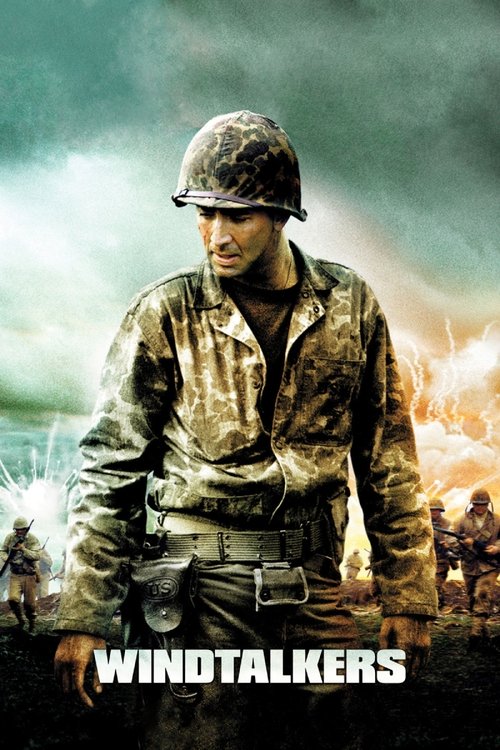
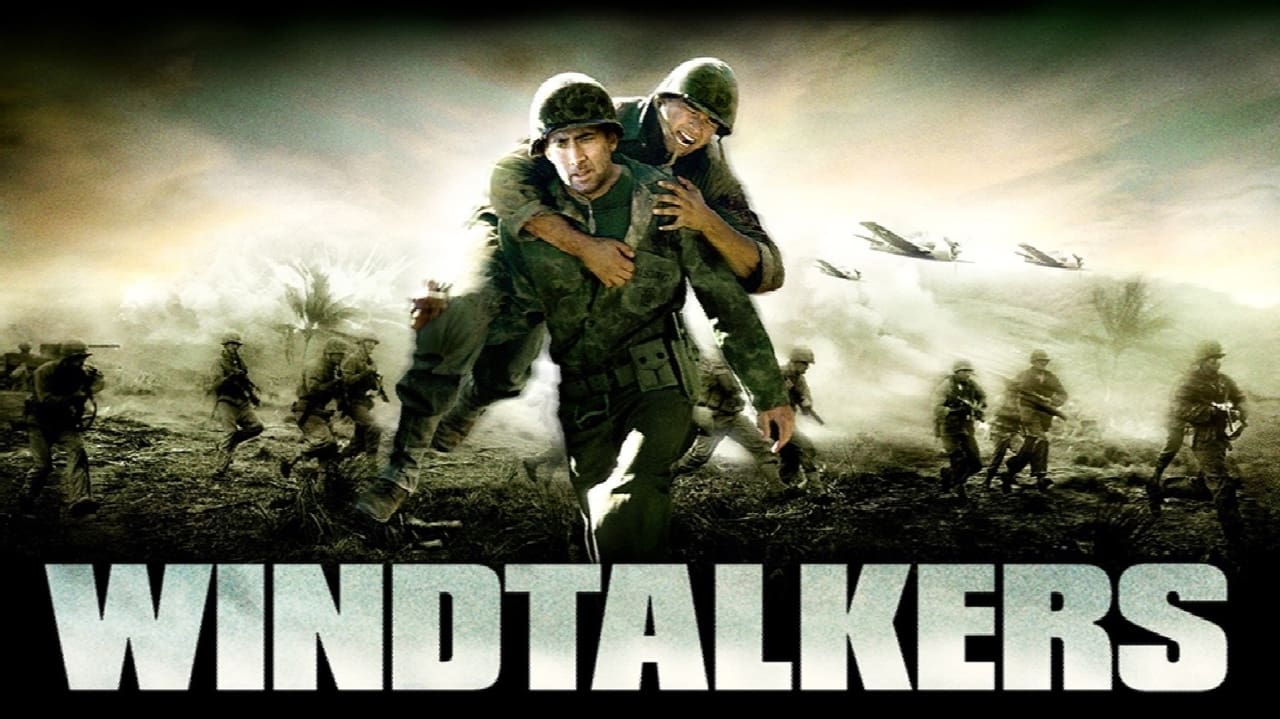
In the early 2000s, there was a specific kind of Hollywood fever dream where studios believed any prestige historical subject could be improved by adding enough C4 to level a small ZIP code. We were living in the immediate wake of Saving Private Ryan, where every war movie felt obligated to be "important," yet we were also in the peak "Hollywood John Woo" era. It was a time when the man who gave us the hyper-stylized gun-ballet of Hard Boiled and Face/Off was handed $115 million and a handful of history books to tell the story of the Navajo Code Talkers.
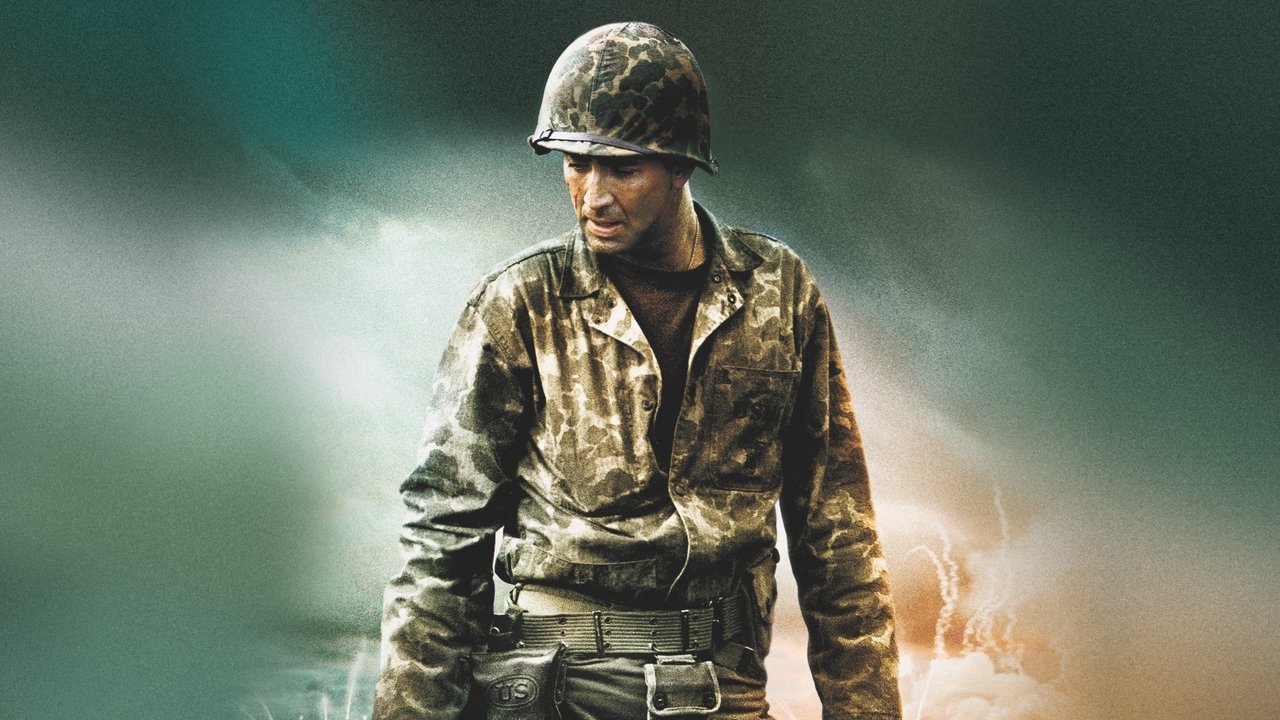
The result is Windtalkers, a film that feels like two completely different movies constantly tripping over each other in a muddy foxhole. On one hand, you have a somber, well-intentioned tribute to the indigenous heroes whose uncrackable code helped win the Pacific Theater. On the other, you have a movie where Nicolas Cage occasionally looks like he’s trying to find a pair of golden pistols in the middle of the Battle of Saipan. I watched this recently while nursing a mild case of food poisoning from a questionable gas station burrito, and honestly, the film’s nauseating camera shakes and erupting dirt clods felt strangely synonymous with my internal state.
The Ballet of the Bayonet
If you go into Windtalkers expecting a nuanced historical drama, you’re in the wrong theater. This is a John Woo joint through and through. Looking back from our current era of sanitized, green-screened Marvel skirmishes, the sheer physical scale of the action here is startling. This was the tail end of the era where "big budget" meant actually blowing up a hillside in Hawaii and hoping the actors ran fast enough.
The cinematography by Jeffrey L. Kimball (who shot Top Gun) captures the chaos with a frenetic energy that felt cutting-edge in 2002 but today feels almost exhausting. There’s a scene where Nicolas Cage’s Sergeant Joe Enders single-handedly clears a Japanese defensive position that is so choreographed, it’s basically Saving Private Ryan as reimagined by a guy who thinks gunpowder is a food group. The practical effects are immense; the ground doesn't just puff with dust—it geysers. Every mortar hit looks like a small volcano. While the CGI of the era was beginning to take over (think Pearl Harbor), Windtalkers leans heavily into the "real stuff," and that tactile grit is probably the thing that holds up best.
A Tale of Two Protagonists

The heart of the film is supposed to be the relationship between Enders and Private Ben Yahzee, played with genuine soul by Adam Beach. The hook is dark: Enders is assigned to protect Yahzee because the code is paramount, but his "protection" includes an order to kill the code talker if there’s any risk of him being captured. It’s a high-stakes moral dilemma that the script, written by Joe Batteer and John Rice, struggles to balance against the body count.
Nicolas Cage is in full "haunted" mode here. This isn't the "not the bees!" shouting Cage, but rather the "I have seen too much and my ears won't stop ringing" Cage. He plays Enders as a man hollowed out by trauma, sporting a prosthetic ear-scar that looks like a piece of dried apricot glued to his head. He’s good, but the movie often forgets that Yahzee is the one we should be following. Adam Beach does incredible heavy lifting, bringing a necessary humanity to a film that often treats its characters like bowling pins. We also get a stacked supporting cast—Mark Ruffalo, Peter Stormare, and Noah Emmerich—all of whom seem to be competing to see who can look the most miserable in a poncho. Mark Ruffalo, in particular, looks like he wandered off the set of a much more quiet, indie drama and is just trying to survive the pyrotechnics.
The Practical Pyrotechnics of 2002
The film’s failure at the box office ($77 million against a $115 million budget) is often blamed on its release delay—it was originally slated for late 2001 but was pushed back after 9/11 changed the American appetite for grim combat. But looking back, the issue might just be the tonal whiplash. John Woo is a master of "heroic bloodshed," a genre built on style and operatic violence. Applying that same "cool" aesthetic to a real-life tragedy where thousands of people died feels, in retrospect, a bit tonally deaf.
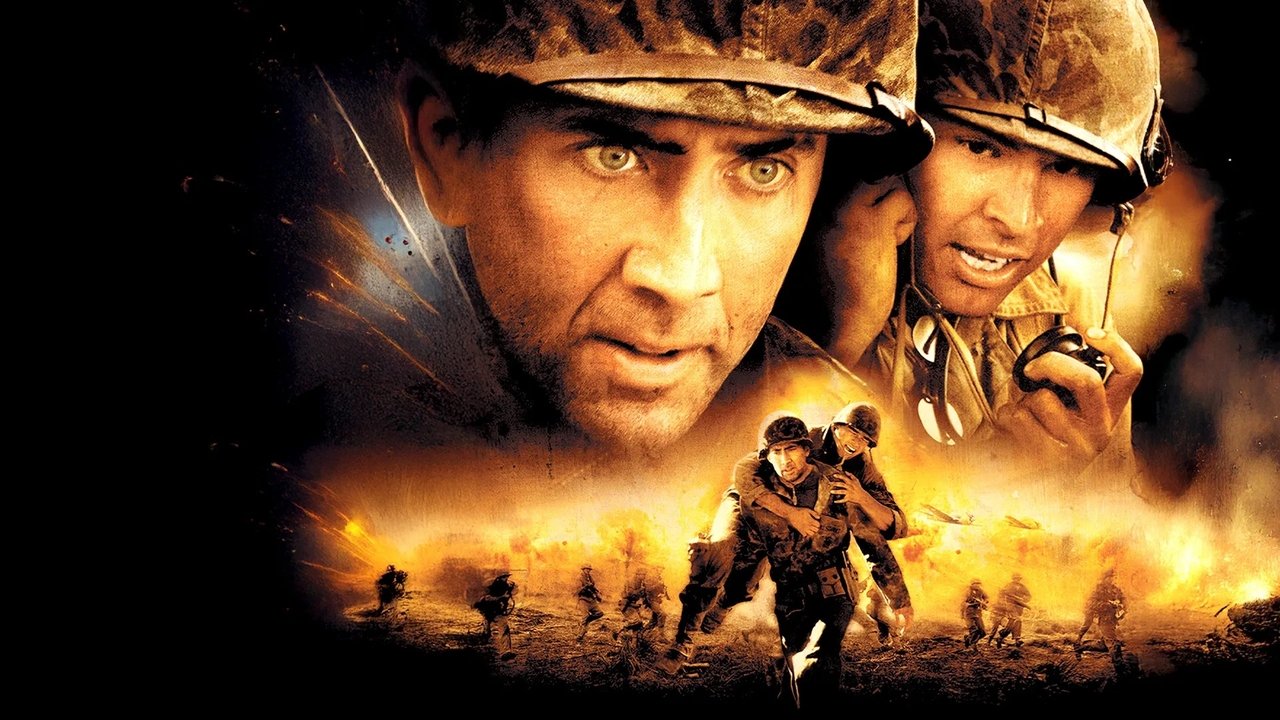
There’s a legendary piece of trivia that John Woo originally wanted a scene with a white dove (his signature) flying through the battlefield, but was eventually talked out of it because, well, it’s Saipan, not a cathedral in Hong Kong. However, you still see his fingerprints everywhere—the slow-motion deaths, the rhythmic editing, and a score by James Horner that tries to force "epic" onto every frame. It’s a fascinating artifact of a time when Hollywood thought they could turn any historical event into a "cool" action vehicle.
Windtalkers isn't a "bad" movie so much as it is a confused one. It wants to honor the Navajo legacy, but it’s too distracted by the next big explosion to truly sit with their story. It’s an over-the-top, loud, and often clunky war epic that serves as a perfect time capsule for the early 2000s’ obsession with "extreme" filmmaking. If you’re a fan of Nicolas Cage’s more somber work or you just want to see what $115 million worth of real-life explosions looks like, it’s worth a look on a rainy Sunday. Just don't expect a history lesson—expect a firework show with a lot of heavy sighing.
Keep Exploring...
-

Paycheck
2003
-
Hard Target
1993
-
Mission: Impossible II
2000
-
U-571
2000
-

Broken Arrow
1996
-
The Messenger: The Story of Joan of Arc
1999
-
Behind Enemy Lines
2001
-
Red Cliff
2008
-
Drive Angry
2011
-
Face/Off
1997
-
The Patriot
2000
-
Pearl Harbor
2001
-
The Last Castle
2001
-
Basic
2003
-
Tears of the Sun
2003
-
Timeline
2003
-

Alexander
2004
-
King Arthur
2004
-
Troy
2004
-
Flags of Our Fathers
2006