A Man Apart
"His wife was the collateral. He’s the consequence."

In the early 2000s, Hollywood was convinced that Vin Diesel was the second coming of the high-octane messiah. He had the chrome-dome charisma of a leading man and the gravel-pit voice of a guy who swallowed a muffler. Between The Fast and the Furious and XXX, he was the poster boy for the "New Hollywood" action star—a bit more urban, a bit more tattooed, and decidedly more "extreme." But tucked between those franchise behemoths is A Man Apart, a film that feels like it’s having a mid-life crisis at age twenty-five. It’s a gritty, rain-slicked revenge noir that arrived at the tail end of the "bullet-time" era but tried desperately to act like a 70s character study.

The film actually sat on a shelf for a couple of years, mostly because the studio became embroiled in a legal cage match with Blizzard Entertainment. The movie was originally titled Diablo, which happens to be the name of a little-known video game franchise you might have heard of. Blizzard sued, the studio blinked, and we ended up with the somewhat generic A Man Apart. I’ve always felt that title change did the movie a disservice; "Diablo" suggests a descent into hell, whereas "A Man Apart" sounds like a brochure for a luxury retirement community.
The Grime and the Gravel
The plot is meat-and-potatoes vengeance. Vin Diesel plays Sean Vetter, a DEA agent who grew up on the mean streets and now uses his "street smarts" to take down cartels. He manages to lock up a kingpin named Memo Lucero (Geno Silva, who played the assassin who finally killed Tony Montana in Scarface), but the victory is short-lived. A mysterious new figure known only as "Diablo" fills the power vacuum and orders a hit on Vetter that ends up killing his wife, Stacy (Jacqueline Obradors).
From there, the movie sheds its police procedural skin and becomes a jagged, sometimes messy hunt for the man at the top. Director F. Gary Gray, who was fresh off the stylish heist vibes of The Italian Job, leans heavily into a saturated, high-contrast aesthetic here. It looks like the movie was washed in coffee and motor oil. It’s that specific 2003 "gritty" look—lots of handheld camera work and sudden zooms. I watched this most recently while my neighbor was power-washing their driveway, and the steady, aggressive drone of the machine outside actually synced up perfectly with the low-frequency hum of the movie’s score. It added a layer of industrial anxiety that I think Gray would have appreciated.
Diesel’s Emotional Heavy Lifting

This was clearly Vin Diesel's attempt to prove he could do more than shift gears and look cool in goggles. He spends a significant portion of the movie in a state of mourning, and while his acting range is often joked about, I found his performance here surprisingly grounded. He’s a big guy who looks genuinely broken. When he’s sitting in his darkened house, staring at the spot where his life fell apart, you feel the weight of him. He’s not a superhero; he’s just a grieving husband who happens to be very good at shooting people.
The real spark, however, comes from the supporting cast. Larenz Tate plays Demetrius Hicks, Vetter’s partner, and he brings a much-needed levity and humanity to the proceedings. Their chemistry feels authentic, like two guys who have spent too many hours in a stale Crown Victoria together. But the absolute scene-stealer is Timothy Olyphant as "Hollywood Jack." Sporting a look that can only be described as "raided a Halloween store with a $50 budget," Olyphant plays a mid-level flamboyant drug dealer with such greasy, over-the-top energy that he feels like he wandered in from a completely different, much funnier movie. Every time he’s on screen, the film’s self-serious gloom lifts for a moment.
A Relic of the Transition
Looking back, A Man Apart is a fascinating time capsule of the "Modern Cinema" transition. It’s a pre-MCU world where action movies were still trying to figure out how to be dark without being nihilistic. The action sequences are largely practical—real cars flipping, real squibs exploding—which gives the shootouts a tactile crunch that today’s CGI-heavy spectacles often lack. There’s a raid on a drug house midway through the film that is chaotic, loud, and genuinely tense because you can tell the actors are actually sprinting through dirt and debris.
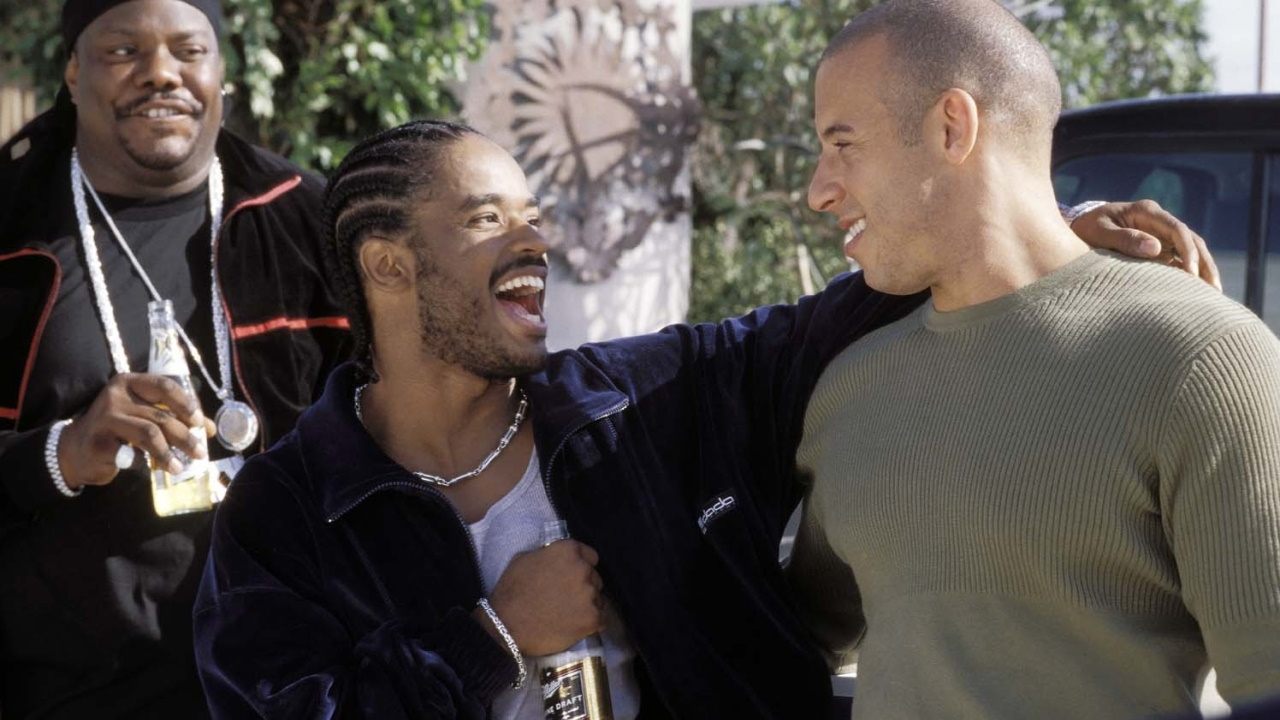
However, the film struggles with its own identity. It wants to be Heat, but it often settles for being a high-budget episode of a cop show. It captures that post-9/11 anxiety where the "rules" of engagement are being tossed out the window in favor of results, a theme that would dominate the decade’s action cinema. Vetter’s descent into extralegal violence is framed as tragic, yet the movie still wants you to cheer when he finally gets his hands on the bad guys. It’s a conflict the script never quite resolves.
A Man Apart isn’t a lost masterpiece, but it’s a rock-solid B-movie that deserves more than its current status as a "seen it on cable once" memory. It’s a window into a moment when Vin Diesel was swinging for the fences, trying to find a balance between action icon and dramatic lead. If you can handle the early-2000s "gritty" filter and a plot you’ve seen a dozen times before, there’s a lot of craft here to enjoy. It’s the kind of movie that reminds you that sometimes, all you need is a growling lead and a really good Timothy Olyphant cameo to make a Friday night worthwhile.


Keep Exploring...
-

The Negotiator
1998
-
Cradle 2 the Grave
2003
-

Street Kings
2008
-

xXx
2002
-

The Siege
1998
-

Payback
1999
-

Basic
2003
-
The Hunted
2003
-
Chaos
2005
-

Running Scared
2006
-
Death Sentence
2007
-

Double Impact
1991
-

Hackers
1995
-
Breakdown
1997
-
Takers
2010
-

Get the Gringo
2012
-

Dead Man Down
2013
-

Sabotage
2014
-
The Score
2001
-

The Italian Job
2003