Big Fish
"Don't let the truth ruin a great story."
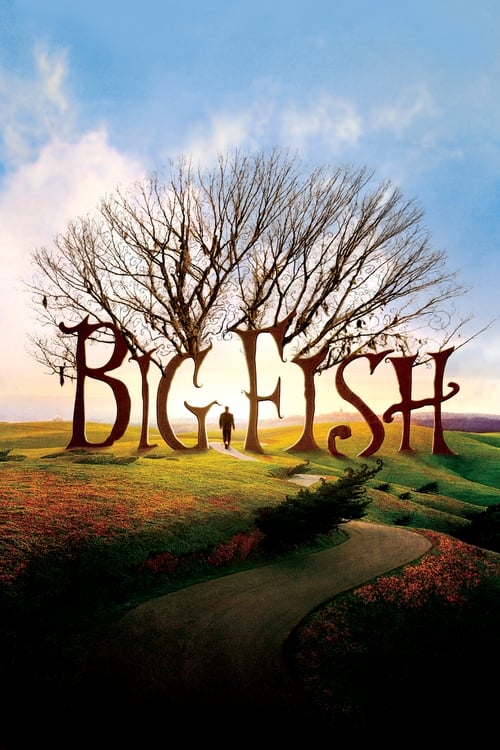
I remember watching my original, heavily-scratched DVD of Big Fish—the kind I rescued from a closing Blockbuster for three dollars—and realizing that the physical skips in the disc during the circus sequence actually made the film feel more authentic. It felt like the film itself was a flickering, unreliable memory, much like the life of Edward Bloom.
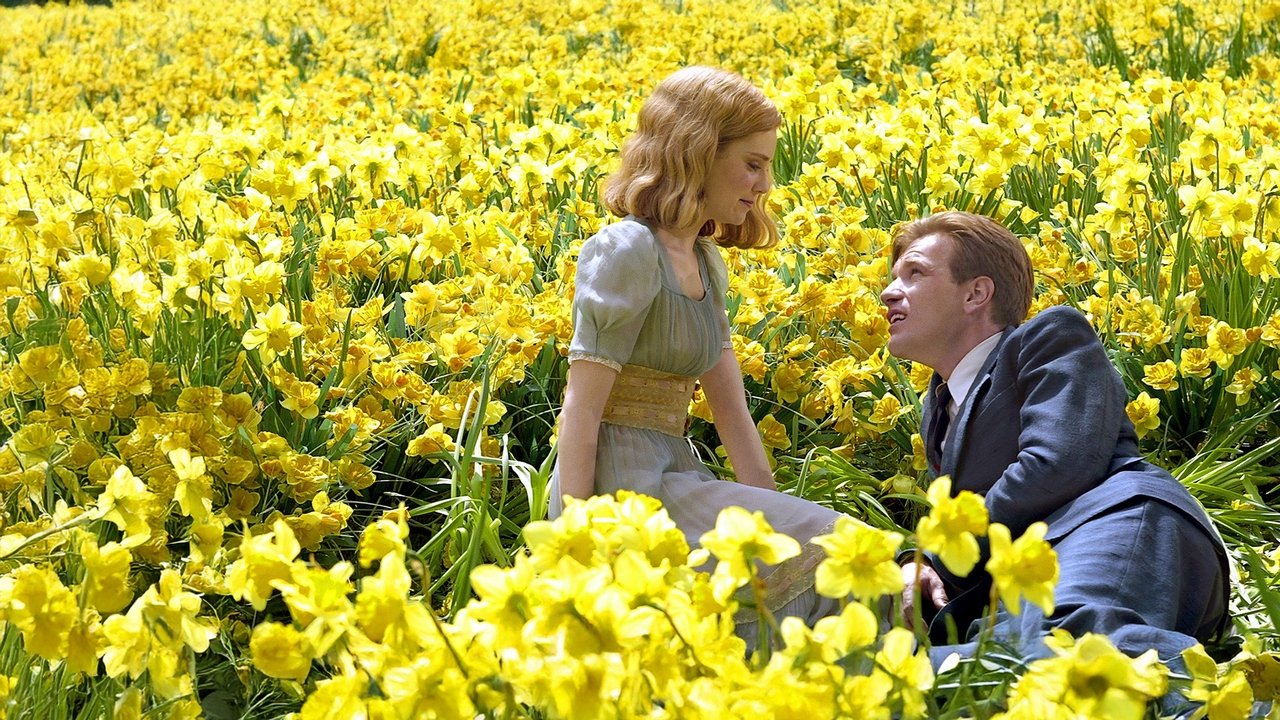
The early 2000s was a strange, transitional pocket for cinema. We were shaking off the cynical, rain-slicked grime of the 90s and staring into a new millennium that felt increasingly digitized and, frankly, a bit frightening. In the wake of 9/11, there was this desperate cultural reach for "authenticity" and "grit." Then along comes Tim Burton, fresh off the mechanical coldness of Planet of the Apes (2001), delivering a film that essentially argues that a beautiful lie is often more "true" than a boring fact. It was a radical stance then, and looking back, it feels even more essential now.
The Alchemy of the Tall Tale
At its heart, Big Fish is a domestic drama dressed in the vibrant, over-saturated robes of a fairy tale. We follow Will Bloom (Billy Crudup), a man who has grown weary of his father’s relentless myth-making. As his father, Edward, lies dying, Will attempts to find the "real" man beneath the stories of giants, witches, and glass eyes.
The genius of the casting lies in the dual-layered performance of Edward. Ewan McGregor captures the younger Edward with a relentless, almost terrifying optimism. He has that Moulin Rouge! (2001) sparkle in his eye, making us believe he really could jump into a river and catch a legendary fish with a gold ring. Opposite him is the legendary Albert Finney, who plays the older Edward with a crusty, stubborn charm. Finney doesn't play him as a liar; he plays him as a curator of a life that was too big for the narrow confines of a sleepy Alabama town.
I’ve always felt that Billy Crudup is kind of a professional buzzkill in this movie, and while that's the point of his character, it’s a testament to his acting that we eventually feel his frustration. He represents the "Modern" era—logic, journalism, facts—clashing against the "Old World" of oral tradition. It’s a philosophical tug-of-war: is a father the sum of his biological actions, or the sum of the stories he leaves behind?
A Bridge Between Practical Magic and Pixels
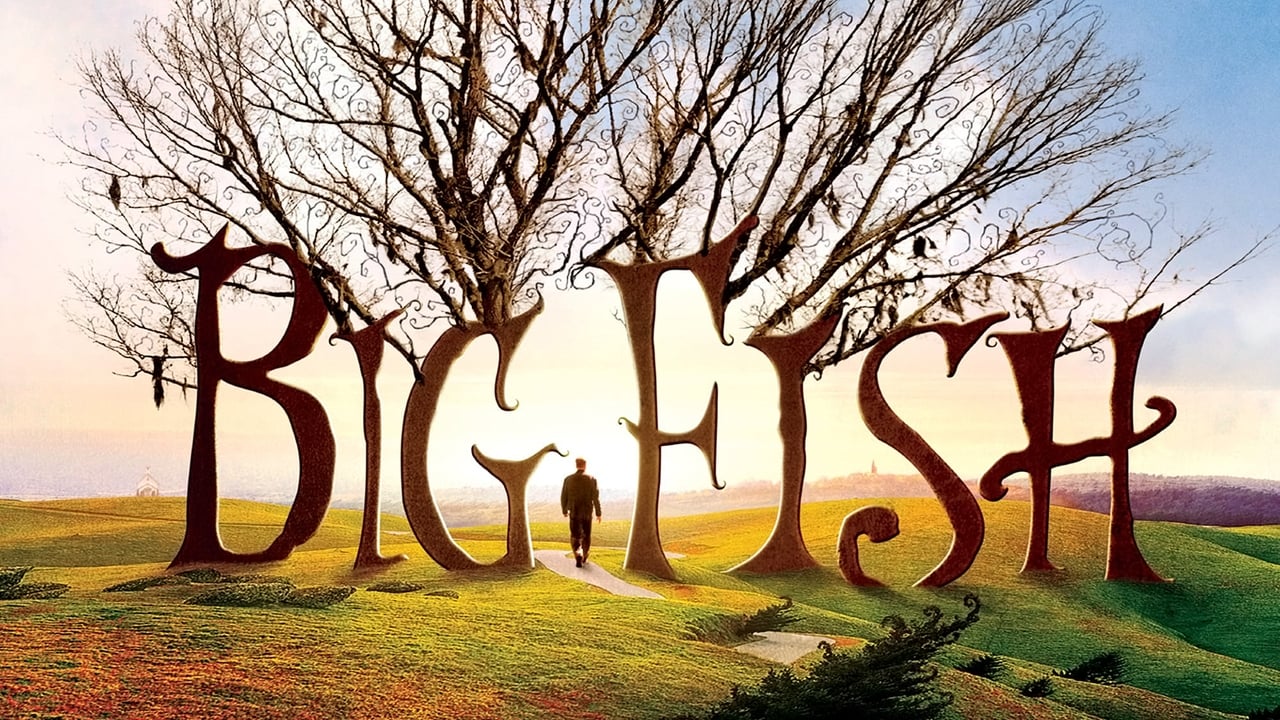
Technologically, Big Fish stands as a fascinating monument to the "CGI Revolution" learning curve. This was 2003—the same year Return of the King swept the Oscars—and you can see Tim Burton playing with the new toy box. However, unlike the often sterile digital landscapes of the 2010s, Big Fish feels grounded because it uses digital effects to enhance physical reality rather than replace it.
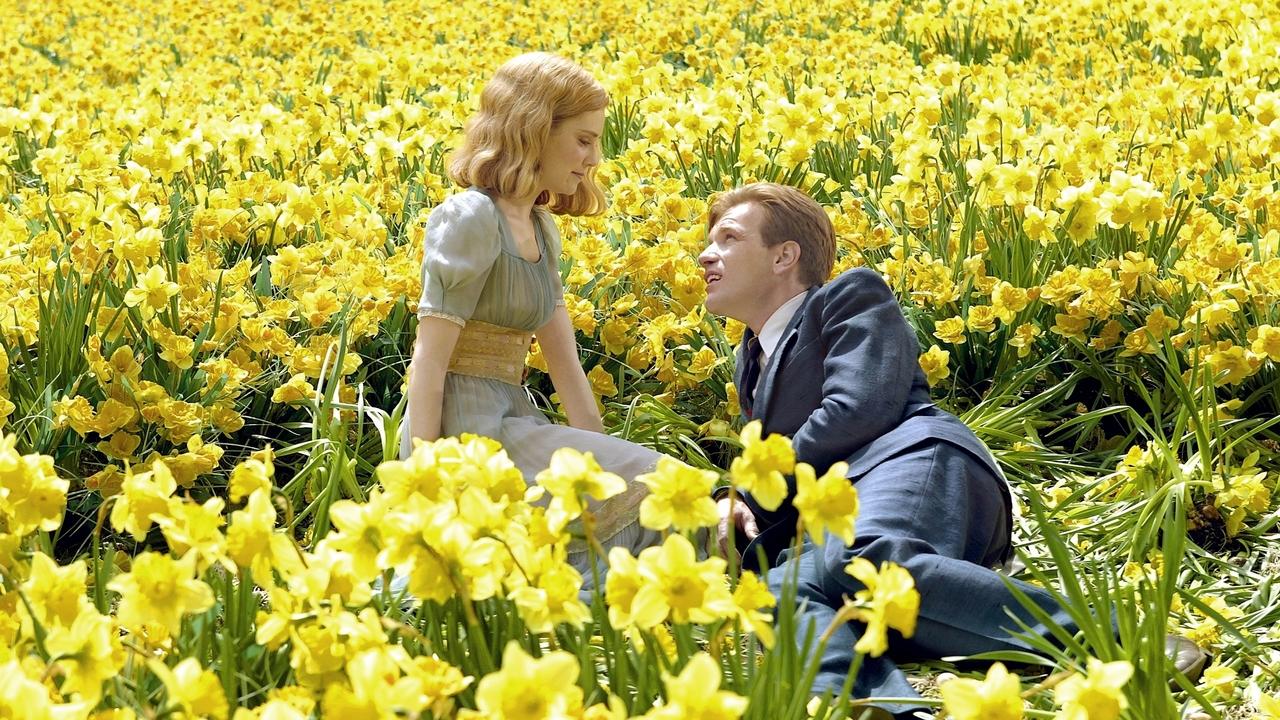
Take Karl the Giant. While there is digital trickery involved to adjust scale, the actor, Matthew McGrory, was a real human being standing 7'6". There’s a weight to their interactions that you just don't get with a purely mo-cap creation. Then there’s the famous field of daffodils. The production actually planted 10,000 real flowers for that shot. When Alison Lohman looks out at Ewan McGregor in that yellow sea, the light hitting those petals is real. It’s that blend of the tactile and the digital that keeps the film from feeling like a screensaver.
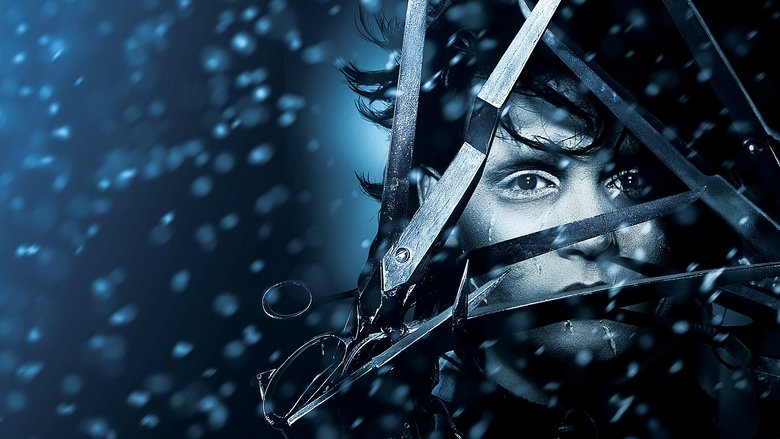
It’s also worth noting the "Burton-ness" of it all. This was the director’s most personal work, filmed shortly after the death of his own father. You can feel him moving away from the "Spooky Outsider" aesthetic of Edward Scissorhands (1990) and into something more emotionally vulnerable. He trades the black-and-white stripes for the golden hues of the American South, and the result is his most mature piece of storytelling.
The Truth in the Exaggeration
Why does this film have such a persistent cult following, especially among those of us who usually find "whimsical" cinema irritating? I think it’s because it respects the audience’s intelligence enough to acknowledge that the stories are exaggerations. When Helena Bonham Carter appears as both the Witch and the lonely Jenny, the film isn't trying to trick us. It’s showing us how we categorize the people in our lives—the villains, the lovers, the mysteries.
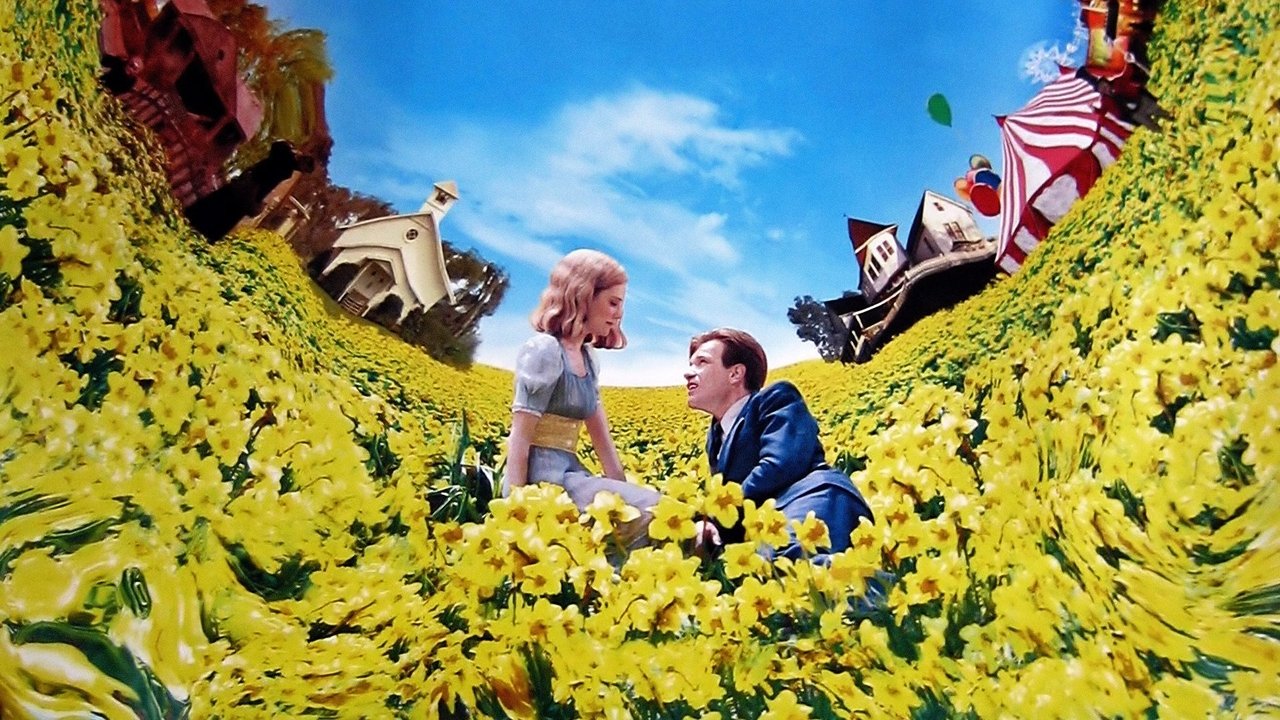
Interestingly, Steven Spielberg was originally set to direct this with Harrison Ford as the elder Edward. While that version might have been a blockbuster juggernaut, I doubt it would have had the same philosophical bite. Burton understands the "weirdness" of the South—the way a town like Spectre can feel like both a paradise and a trap. He captures that Y2K-era anxiety of losing our connection to the past, reminding us that when a storyteller dies, a whole library burns down with them.
Apparently, the town of Spectre was built for real on an island in Alabama, and even after filming ended, the sets were left there. They’ve since become a strange, decaying tourist attraction. There is something deeply poetic about the fact that the "fake" town from the movie has become a "real" place people can visit—it’s the ultimate Edward Bloom move.
Ultimately, Big Fish isn't about whether Edward Bloom actually met a werewolf or worked for a circus for free. It’s about the legacy of the narrative. By the time the final act rolls around—and if you don't shed a tear at the river scene, check your pulse—the film has successfully argued that the "truth" is a secondary concern to the way a story makes us feel. It’s a gorgeous, thoughtful piece of modern cinema that rewards the dreamer and the skeptic in equal measure.
Keep Exploring...
-
Corpse Bride
2005
-
Charlie and the Chocolate Factory
2005
-
Edward Scissorhands
1990
-
Miss Peregrine's Home for Peculiar Children
2016
-

The Fall
2006
-
Spirit: Stallion of the Cimarron
2002
-
Treasure Planet
2002
-
Sleepy Hollow
1999
-
The Secret Life of Walter Mitty
2013
-

The Cat Returns
2002
-
Anastasia
1997
-
The Girl Who Leapt Through Time
2006
-
The Scorpion King
2002
-
The Spiderwick Chronicles
2008
-
The Lion King II: Simba's Pride
1998
-
Sweeney Todd: The Demon Barber of Fleet Street
2007
-
Alice in Wonderland
2010
-
Guillermo del Toro's Pinocchio
2022
-
Ed Wood
1994
-
Meet Joe Black
1998