Cheaper by the Dozen
"Twelve kids. One house. Total chaos."
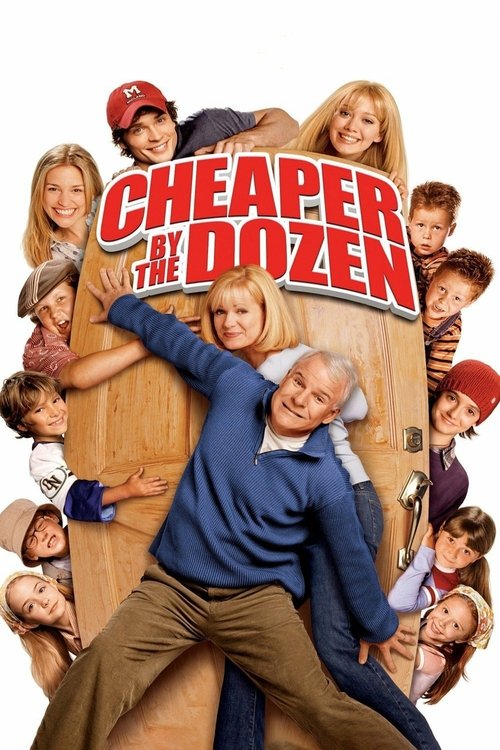
I watched this while sitting on a beanbag chair that was slowly leaking its polystyrene guts across my carpet, which felt like an appropriate metaphor for the Baker household's structural integrity. Re-visiting Cheaper by the Dozen twenty years after its release is a strange experience. In 2003, this was the ultimate "fun for the whole family" blockbuster, a movie that felt as ubiquitous as the Razr flip phone or the smell of Hollister cologne. Looking back at it now through the lens of a seasoned cinema obsessive, it’s a fascinating artifact of a time when Hollywood still believed you could build a $190 million global hit around the simple premise of a man getting hit in the groin with a football.

The Career-Chaos Paradox
While the marketing sold us a slapstick riot, the actual script by Alec Sokolow and Joel Cohen—who also penned Toy Story—attempts something surprisingly grounded. It’s a domestic drama wearing a "Whoops!" hat. The tension doesn't come from the twelve children (though they are loud); it comes from the quiet, simmering resentment of two parents trying to "have it all" at the exact moment their dreams actually come true.
Steve Martin is Tom Baker, a man who finally lands his dream job coaching football at Northwestern University. Simultaneously, Bonnie Hunt’s Kate Baker gets her book published and whisked off on a press tour. I’ve always found Bonnie Hunt to be the secret weapon of this era. She has this weary, sharp-witted maternal energy that feels authentic rather than scripted. She and Martin have a genuine chemistry that makes the stakes feel real; when they argue about the move to Chicago, it’s not just "movie conflict," it’s the recognizable friction of a partnership being stretched to its breaking point. Steve Martin is essentially playing a high-functioning heart attack in a tracksuit, and his transition from the manic energy of The Jerk to the harried-dad-energy of the Father of the Bride era is completed here with aplomb.
A Time Capsule of 2003 Cool
From a production standpoint, the film is a masterclass in the "Modern Cinema" transition. It’s polished to a high-gloss sheen by director Shawn Levy, who would later perfect this brand of chaotic spectacle with Night at the Museum. The cinematography by Jonathan Brown has that bright, saturated, early-2000s "everything is fine" look that feels like a direct response to the grittier aesthetic of the 90s.

Then there’s the cast, which functions as a "Who’s Who" of Y2K stardom. You have Hilary Duff at the absolute peak of her Lizzie McGuire fame, Tom Welling brooding with his Smallville jawline, and a teenage Alyson Stoner showing off the hip-hop dance skills that made her a Missy Elliott video icon. Watching it now, I couldn’t help but chuckle at the fashion—the oversized cargo pants, the highlights, the sheer amount of denim. It’s a visual record of a very specific cultural moment just before the smartphone era changed childhood forever. There’s something almost poignant about seeing kids being "bored" in a way that involves actual mischief instead of just scrolling TikTok.
The film also benefits from a legendary uncredited cameo by Ashton Kutcher as the narcissistic boyfriend, Hank. Kutcher’s performance is the comedic high point, embodying every "actor/model" cliché with a level of commitment that is frankly better than the movie deserves. The film’s physics operate on the logic of a Saturday morning cartoon where gravity only applies once you look down, but Kutcher leans into it with a goofy, self-deprecating swagger.
The Weight of the Baker Brood
Despite the pratfalls and the soaked-meat-in-the-underwear pranks, the film’s "Drama" genre tag is earned in the third act. The "Twelve" aren't just a crowd; they are a collective pressure cooker. The script treats the middle children, like Kevin G. Schmidt’s Henry, with a level of empathy that surprised me. Henry’s feeling of being "lost in the shuffle" provides the emotional pivot the movie needs to stop it from drifting into pure fluff.

Does it all wrap up a bit too neatly? Of course. This was the era of the DVD "Special Edition," where the blooper reel and the happy ending were mandatory features. But looking back, Cheaper by the Dozen is a reminder of when the "Family Film" didn't need to be a CGI-saturated superhero epic to dominate the box office. It just needed a relatable problem, a massive house, and a legendary comedian willing to fall off a ladder for our amusement.
Ultimately, it’s a movie that knows exactly what it is. It’s not trying to be Kramer vs. Kramer, but it’s more than just a series of loud noises. It captures that specific post-9/11 anxiety where the only thing that felt safe was the idea of a large, messy, but ultimately unbreakable family unit. It’s comfort food that’s a little too sugary, but sometimes that’s exactly what you want on a Sunday afternoon. It’s a solid piece of nostalgia that proves that even twenty years later, twelve kids are still way too many kids.


Keep Exploring...
-

Cheaper by the Dozen 2
2005
-

The Pink Panther
2006
-

Night at the Museum
2006
-

Just Married
2003
-
Big Fat Liar
2002
-

The Princess Diaries 2: Royal Engagement
2004
-

High School Musical 3: Senior Year
2008
-
Mrs. Doubtfire
1993
-

The Santa Clause
1994
-

Hannah Montana: The Movie
2009
-

Arthur Christmas
2011
-
This Is Where I Leave You
2014
-
Garfield
2004
-
Jack Frost
1998
-

Holes
2003
-

What a Girl Wants
2003
-
First Daughter
2004
-

Ice Princess
2005
-

Just My Luck
2006
-

High School Musical 2
2007