Dogville
"Kindness is a trap with no walls."
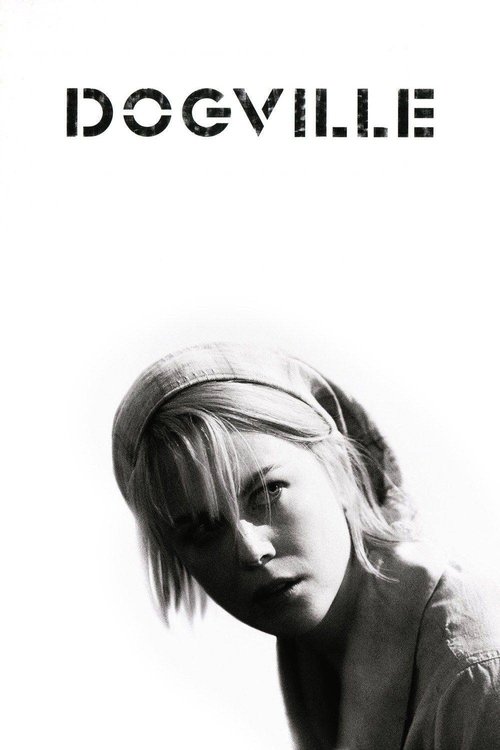
I remember watching Dogville for the first time on a beanbag chair that was slowly leaking its Styrofoam guts across my apartment floor. I had a lukewarm cup of Earl Grey that I’d forgotten to drink because I was too busy staring at the screen, trying to figure out if I was watching a masterpiece or a very expensive practical joke. By the time the credits rolled to the jaunty, almost insulting tune of David Bowie’s "Young Americans," I felt like I’d been scoured clean with steel wool.
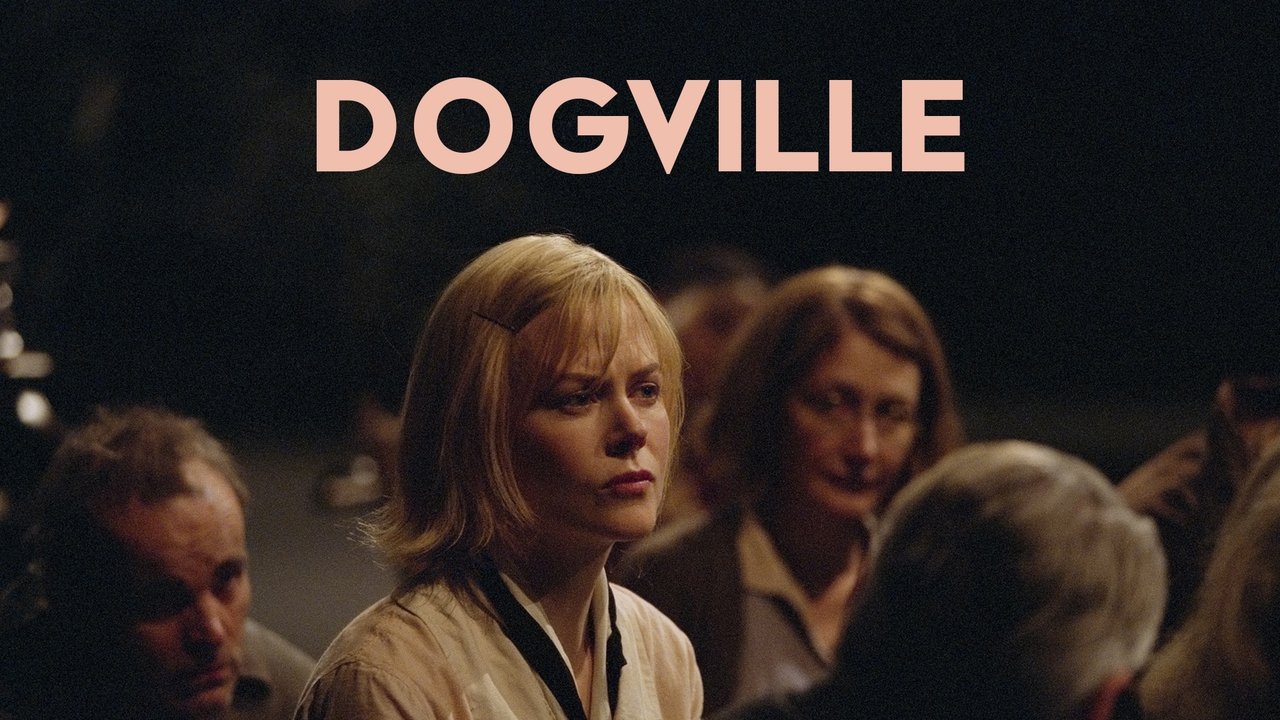
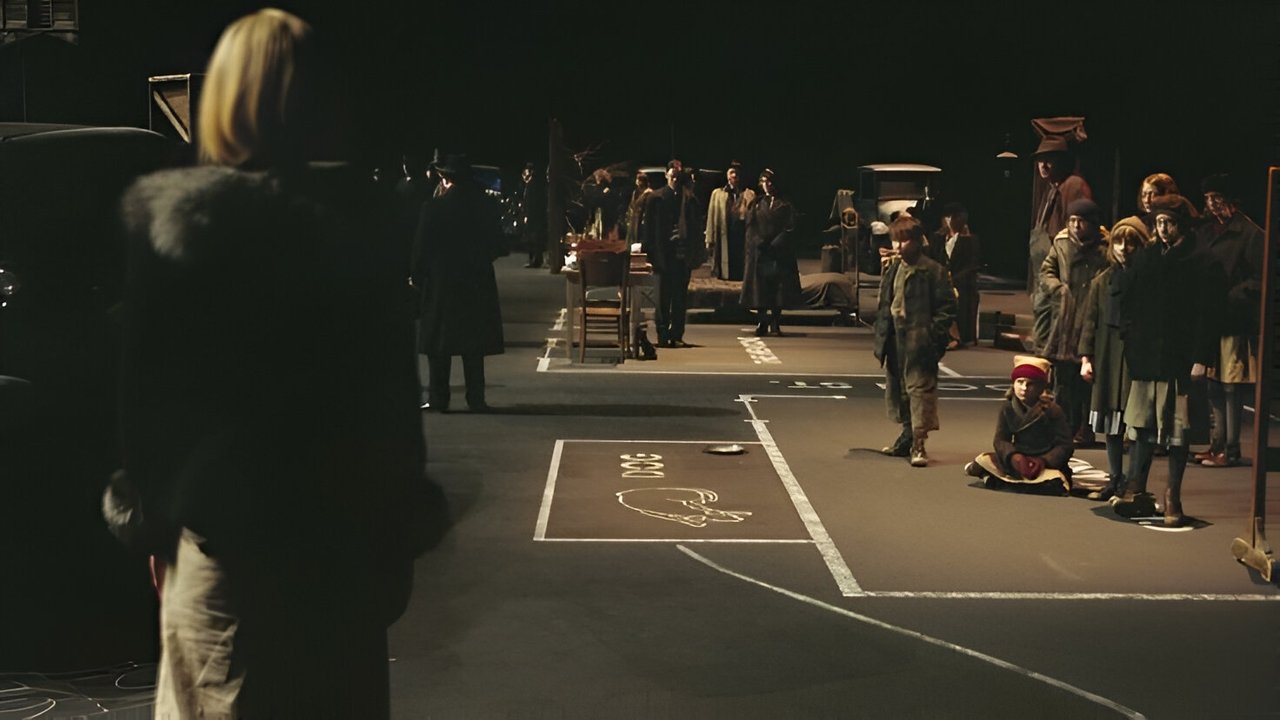
Lars von Trier has always been cinema’s premier provocateur, but in 2003, he did something genuinely insane. He took a stellar cast of A-list actors, put them on a giant soundstage in Sweden, and told them to pretend there were walls where there were only chalk lines on a black floor. No houses, no trees, no actual doors to slam—just the idea of a town. It’s a conceit that sounds like something a pretentious theater student would dream up after one too many absinthes, but on screen, it becomes a psychological pressure cooker that doesn’t let you escape.
The Chalk-Line Crucible
The premise is deceptively simple, almost like a dark fairy tale. A beautiful woman named Grace (Nicole Kidman) arrives in the tiny, isolated town of Dogville while fleeing from mobsters. She meets Tom Edison (Paul Bettany), a self-appointed moral philosopher who convinces the town to hide her. In exchange, Grace must prove her worth by doing chores for the locals.
What starts as a heartwarming story of community spirit curdles into something hideous. Because there are no walls, we see everything. While Grace is being "kindly" integrated into the town, we see the other citizens in the background of the shot, going about their mundane lives, blissfully or willfully ignorant of the abuses starting to take place just a few chalk-lines away. This isn't just a stylistic quirk; it's a direct assault on the audience. Dogville is essentially a three-hour social experiment designed to make you hate your neighbors. It forces you to be a voyeur to human rot, stripped of the visual comfort of architecture.
A Saint in a Den of Wolves
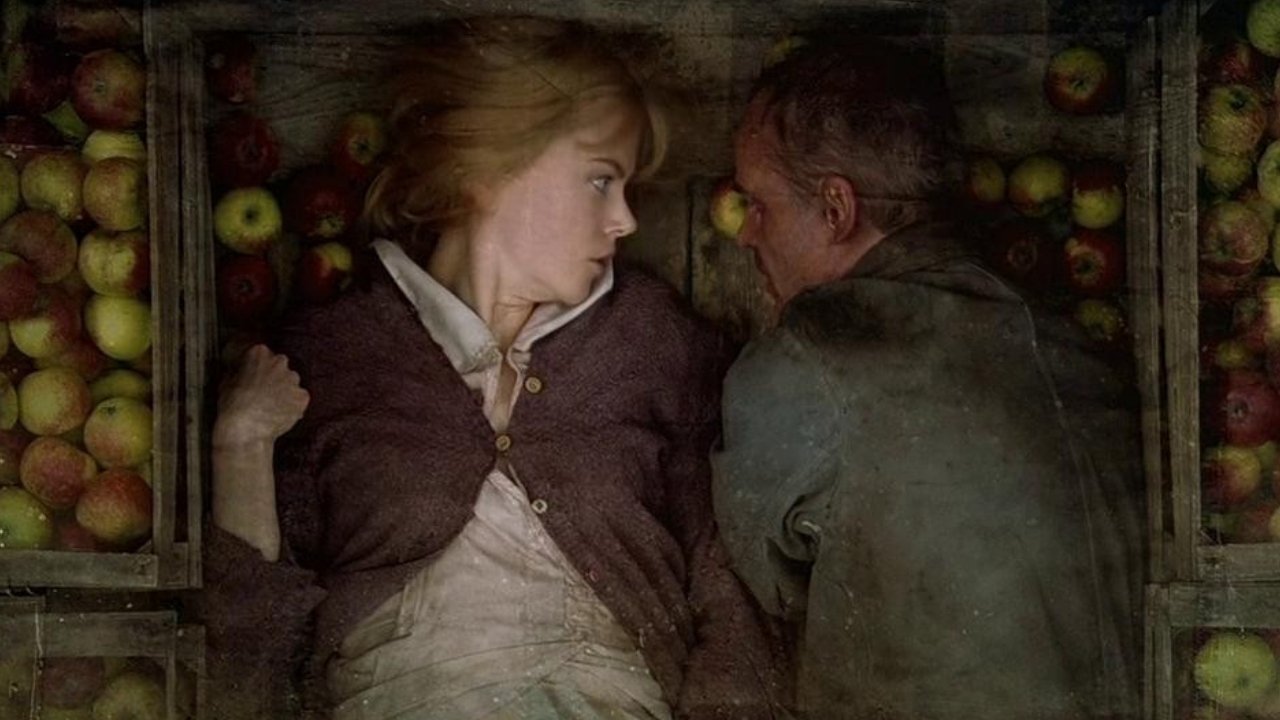
Nicole Kidman gives what I’d argue is the most disciplined and harrowing performance of her career here. Coming off her Oscar win for The Hours (2002), she could have played it safe. Instead, she allows herself to be systematically dismantled. Her Grace is patient, almost maddeningly so, and watching that patience turn into a cold, hard diamond of resentment is a slow-burn thrill.
Opposite her, Paul Bettany is the real villain of the piece. Not because he’s a mustache-twirling baddie, but because he’s a coward who masks his selfishness in the language of "ideals." We’ve all met a Tom Edison—the guy who talks about the "greater good" while making sure he’s the one holding the ledger. The supporting cast is a "who’s who" of character actor royalty: Stellan Skarsgård is terrifyingly mundane as Chuck, and Patricia Clarkson turns a simple scene involving a set of porcelain figurines into a masterclass in petty, domestic cruelty. Even Philip Baker Hall and Lauren Bacall show up to add weight to this strange, minimalist purgatory.
The Ghost in the Machine
Looking back from the digital age, Dogville feels like a pivot point. Shot on early high-definition digital video by Anthony Dod Mantle (who also lensed the frenetic 28 Days Later), the film has a raw, unvarnished look that feels intimate and invasive. There’s no CGI to hide behind, no sweeping Colorado vistas—just the grain of the digital sensor and the sweat on the actors' brows. It was part of Trier's "USA: Land of Opportunities" trilogy, a project born from a director who famously refuses to fly and has never actually set foot in America.

That detachment is exactly what makes the film work. It’s not a literal commentary on a specific place as much as it is a brutal autopsy of the human "gift" for exploitation. The film became a massive cult hit on DVD, largely because it’s the kind of movie you have to talk about for three hours after it ends. It’s the ultimate "did you see that?" film, fueled by a narrator (John Hurt) whose dry, ironic delivery makes the horrors on screen feel even more inevitable.
It’s worth noting that the production was a bit of a nightmare. Nicole Kidman reportedly had a "heart-to-heart" (read: a screaming match in the woods) with Trier to clear the air, and she famously declined to return for the sequel, Manderlay. You can feel that tension in every frame. It’s an exhausting watch, but the final fifteen minutes offer a catharsis so sharp and unapologetic that it makes the previous 160 minutes feel like a bargain.
If you’re looking for a "cozy" movie night, stay far away from Dogville. It is a cold, cynical, and brilliant deconstruction of the myths we tell ourselves about our own goodness. It treats the audience like adults, assuming we can handle the lack of scenery if the emotional stakes are high enough. I’m still not sure if I ever got all that Styrofoam out of my rug, and I’m positive I’ll never look at a chalk drawing the same way again. This is essential cinema, even if it leaves you wanting to lock your doors and never speak to a stranger again.

Keep Exploring...
-

Dancer in the Dark
2000
-

The House That Jack Built
2018
-
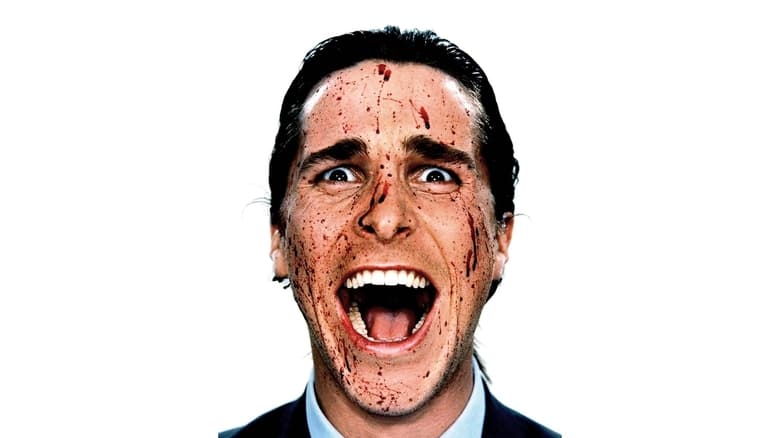
American Psycho
2000
-

The Negotiator
1998
-
John Q
2002
-

21 Grams
2003
-

A History of Violence
2005
-
Lucky Number Slevin
2006
-

Melancholia
2011
-
Road to Perdition
2002
-

Lord of War
2005
-
The Talented Mr. Ripley
1999
-

Falling Down
1993
-
Natural Born Killers
1994
-

Jackie Brown
1997
-
The Next Three Days
2010
-
Drive
2011
-
The Lincoln Lawyer
2011
-

End of Watch
2012
-
Nightcrawler
2014