Dreamcatcher
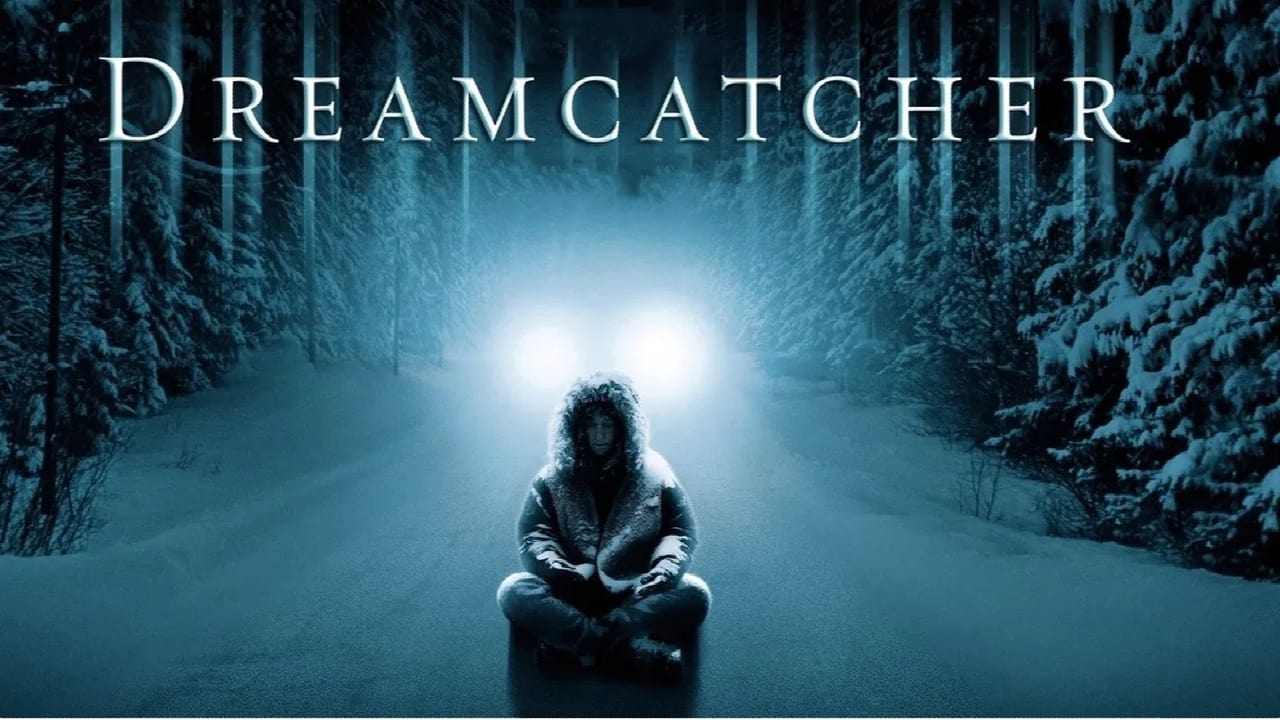
"Evil has a new way in."
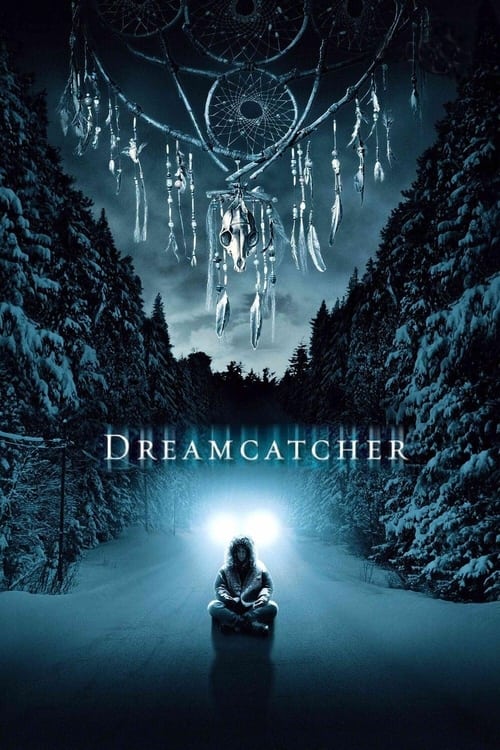
If you sat down in 2003 to watch a film directed by Lawrence Kasdan (the man who gave us The Big Chill and wrote The Empire Strikes Back) and co-written by the legendary William Goldman (The Princess Bride, All the President's Men), you’d reasonably expect a masterclass in prestige storytelling. You certainly wouldn't expect a movie where a group of telepathic friends spends thirty minutes discussing "butt-weasels" in a snowy cabin.
I remember renting this on a scratched DVD from a Blockbuster that smelled faintly of carpet cleaner and desperation, and even as a teenager, I knew I was witnessing something truly singular. Dreamcatcher is the kind of high-budget anomaly that simply doesn’t happen anymore—a $68 million fever dream that feels like it was made on a dare. It’s a Stephen King adaptation that tries to be Stand By Me, The Thing, and Independence Day all at once, and while it doesn't exactly succeed, the sheer audacity of its failure is more entertaining than most "competent" blockbusters.
The A-List Talent in a B-Movie Nightmare
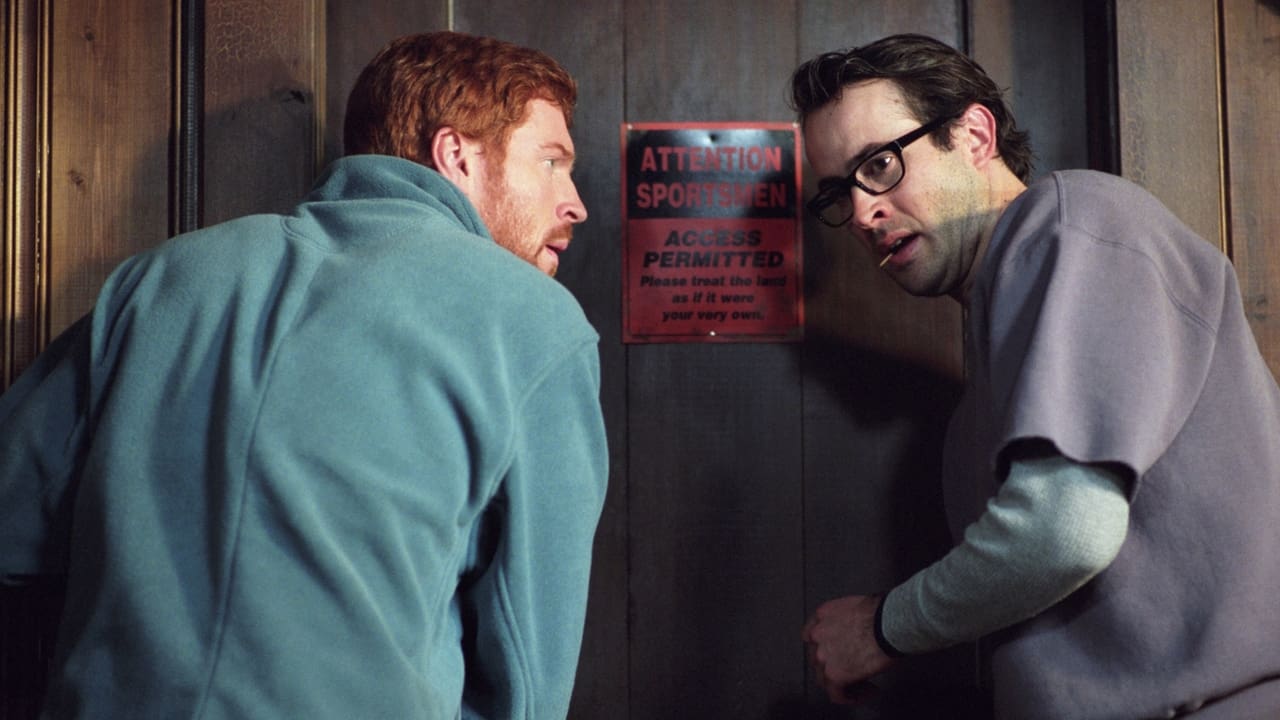
The first half of the film is actually quite effective. It captures that classic King vibe: four childhood friends—Thomas Jane, Jason Lee, Damian Lewis, and Timothy Olyphant—share a psychic bond they received after protecting a boy with Down syndrome, Duddits (Donnie Wahlberg), from bullies. Years later, they reunite at a hunting lodge in Maine, only to find the woods filled with migrating animals and a confused hunter who has a very, very bad stomach ache.
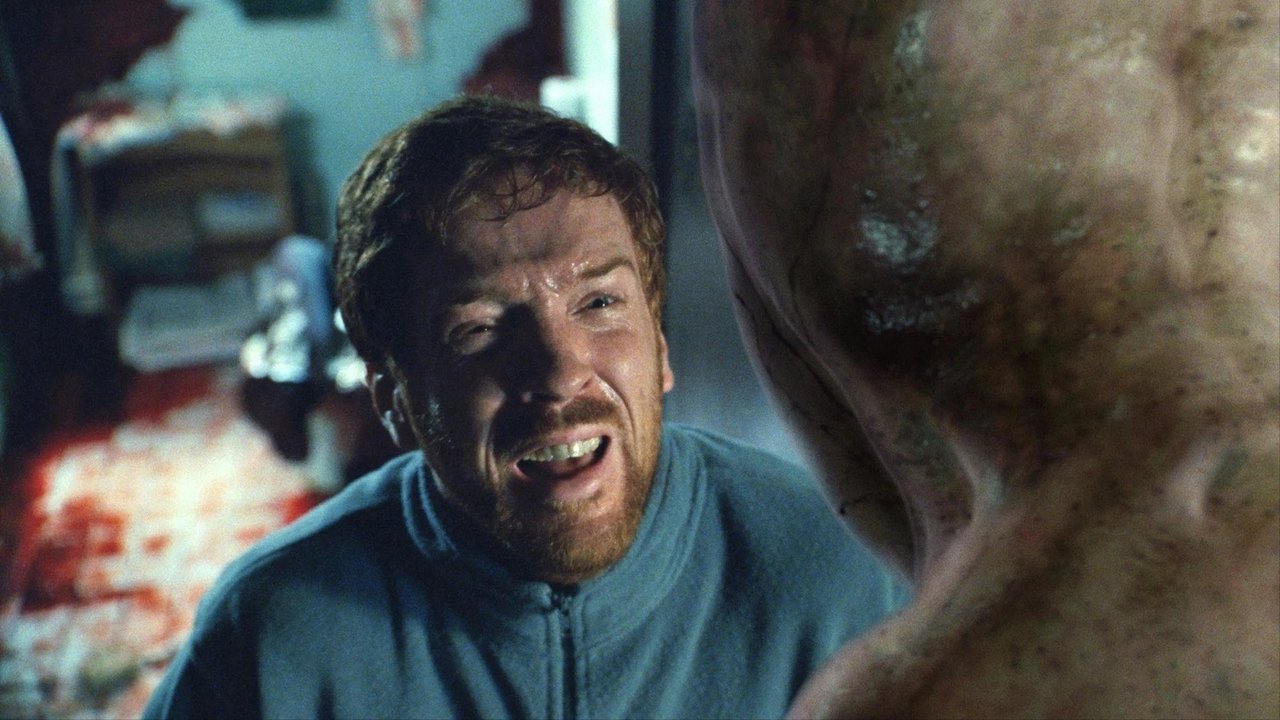
The cast is an absolute "Before They Were Famous" goldmine. Before he was hunting zombies in The Walking Dead, Thomas Jane was the emotional anchor here. Timothy Olyphant displays that twitchy, magnetic energy that would later define Justified, and Damian Lewis pulls off an acting feat that is genuinely the most unhinged thing I’ve seen in a major studio release. At a certain point, his character is possessed by an alien entity named Mr. Gray, and Lewis chooses to play the alien with a posh, menacing British accent while his "human" self watches helplessly from a psychic "memory warehouse" in his mind. It’s bizarre, it’s risky, and I kind of love it.
Practical Slime and Digital Growing Pains
Being a product of 2003, Dreamcatcher sits right at the awkward puberty stage of the CGI revolution. The creatures, designed by the legendary Tom Woodruff Jr. and Alec Gillis of ADI, are fascinatingly gross. Known colloquially as "sh*t-weasels," these lamprey-like monsters are the result of King’s own post-accident recovery period—he famously wrote the novel while on heavy painkillers, and the visceral, bodily anxiety screams through every frame.
The mix of practical puppets and early 2000s digital effects creates a strange dissonance. One moment, you’re looking at a tangible, slimy prop that looks like it stepped off the set of Aliens, and the next, you’re watching a CGI Morgan Freeman lead a military quarantine that looks like it belongs in a video game cutscene. Morgan Freeman’s eyebrows in this movie are a character unto themselves; they are massive, snowy peaks of authority that seem to be trying to escape his face to find a better movie. He plays Col. Abraham Curtis, a man who has spent too long fighting "the greys" and has gone full Captain Ahab. It’s a weirdly cold performance that feels slightly out of sync with the intimate, "boys' club" horror happening in the cabin.
A Beautiful, Telepathic Disaster
The film eventually loses its way in the third act, abandoning the claustrophobic dread for a sprawling military showdown that makes very little sense. However, the cinematography by John Seale (Mad Max: Fury Road) is surprisingly gorgeous. The way he captures the isolating, blinding whiteness of a Maine blizzard gives the film a scale it probably doesn't deserve. And the score by James Newton Howard is sweeping and cinematic, treating the arrival of the "Rip-Peckers" with the same gravity as a historical epic.
I once tried to explain the plot of this movie to a guy at a bus stop, and by the time I got to the part where the alien talks into a gold tooth like a radio, he moved to the other side of the bench. That’s the Dreamcatcher experience in a nutshell. It’s a movie that asks for your total buy-in on concepts like "The Memory Warehouse" and "I Duddits," and if you can’t give it, the film becomes a hilarious comedy. If you can, it’s one of the most unique, big-budget genre experiments of the era.
Ultimately, Dreamcatcher is a fascinating relic of a time when studios would hand massive checks to auteurs to make weird, uncompromising R-rated horror. It captures the transition from the tactile horror of the 80s to the digital spectacle of the 2000s, often stumbling over its own feet in the process. It isn't a "good" movie by traditional standards, but I would much rather rewatch this ambitious, slimy, psychic mess than a dozen bland, formulaic sequels. If you’ve ever wanted to see Jason Lee fight a monster while sitting on a toilet, your ship has finally come in.
Keep Exploring...
-
Carriers
2009
-
The Astronaut's Wife
1999
-
What Lies Beneath
2000
-
Land of the Dead
2005
-

The Invasion
2007
-

Blindness
2008
-
Lake Placid
1999
-

The Gift
2000
-
The Forgotten
2004
-
Quarantine
2008
-
The Eye
2008
-
Untraceable
2008
-

Volcano
1997
-

The Day the Earth Stood Still
2008
-
Flatliners
1990
-
Mary Shelley's Frankenstein
1994
-

Village of the Damned
1995
-
Red Planet
2000
-
The 6th Day
2000
-

The Ring Two
2005