Elf
"The sugar rush that saved New York."

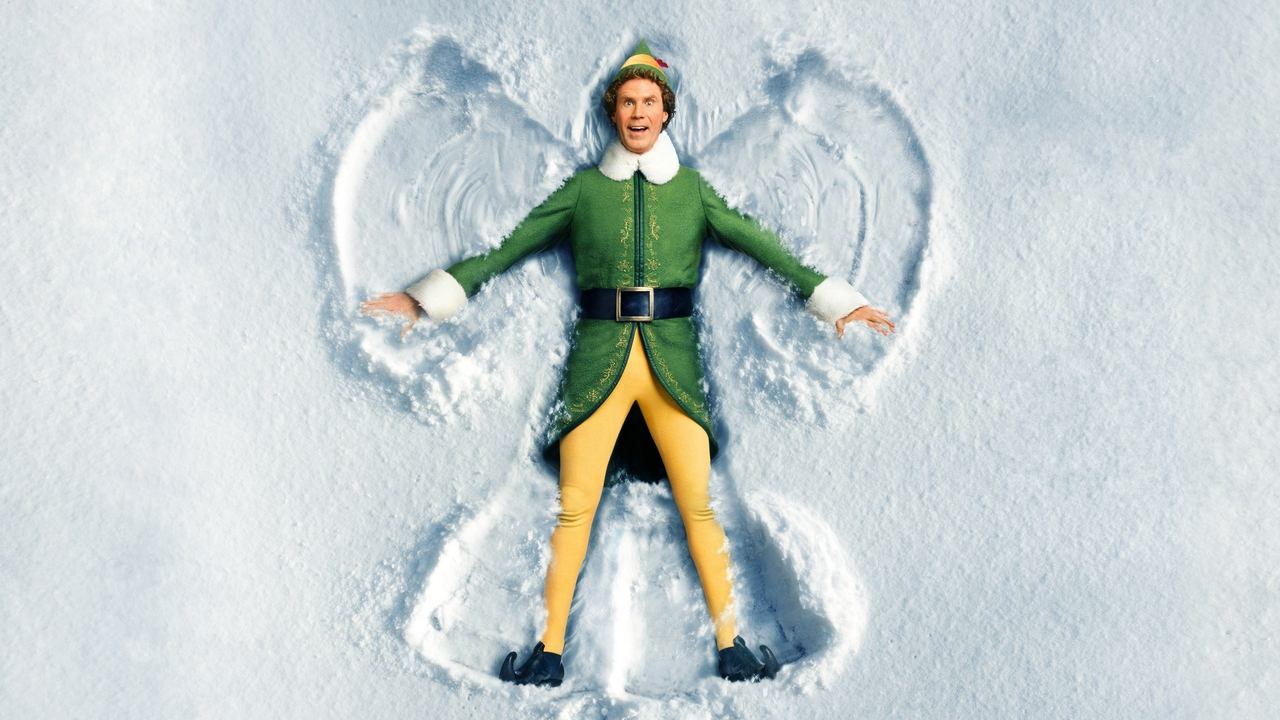
The first time I saw Buddy the Elf scream "SANTA!" at the top of his lungs, I was slumped in a beanbag chair in a basement that smelled faintly of damp laundry and pine-scented floor cleaner. I remember thinking that if a human being could actually embody the sensation of a five-year-old on a massive Pixy Stix bender, it was Will Ferrell. Back in 2003, we were still figuring out what a post-SNL Ferrell career looked like. We’d seen him go "full frat-boy" in Old School, but Elf was the moment he became a tectonic force in American comedy. He didn't just play a character; he weaponized sincerity.
The Antidote to Irony
In the early 2000s, comedy was often defined by a certain "too cool for school" detachment. We were in the era of the "frat pack," where the humor was frequently cynical, raunchy, or steeped in irony. Then came Buddy, a six-foot-three man in yellow tights who genuinely believes that the best way to spread Christmas cheer is singing loud for all to hear. Looking back, Will Ferrell’s performance is a high-wire act of vulnerability. If he had winked at the camera even once—if he’d let us know that he knew how ridiculous he looked—the whole movie would have curdled into a mean-spirited parody.
Instead, he plays it with a wide-eyed sweetness that feels like a warm hug in a cold city. He isn't the butt of the joke; the cynical world around him is. I’ve always found it fascinating how well he plays off James Caan as his biological father, Walter. Caan, the man who gave us Sonny Corleone in The Godfather, plays the ultimate "straight man" here. He’s a workaholic book publisher who is essentially the human embodiment of a Monday morning. The chemistry works because Caan doesn't treat it like a kids' movie; he plays the role with a genuine, weary frustration that makes Buddy’s antics feel all the more chaotic.
Practical Magic in a Digital Dawn
One of the things I appreciate most about Elf in retrospect is how it resisted the siren call of early-2000s CGI. This was the era of the "CGI Revolution," where directors were throwing digital effects at everything just because they could. However, director Jon Favreau—long before he became the architect of the MCU with Iron Man or revolutionized virtual sets with The Mandalorian—opted for old-school trickery.

To make the North Pole scenes work, the production utilized "forced perspective" rather than green screens. They built sets at specific angles and used different-sized furniture to make Will Ferrell look like a giant next to Bob Newhart’s Papa Elf. It’s the same technique Peter Jackson used for the hobbits in The Lord of the Rings, but applied here for a whimsical, storybook aesthetic. There’s a tangible, handmade quality to the North Pole sequences that gives the film a timelessness. While the CGI in other 2003 films often looks like a blurry video game today, Elf looks like it could have been shot yesterday—or fifty years ago.
Even the "Jack-in-the-Box" scene, which I’ve watched probably thirty times, still gets a visceral reaction out of me. It’s a masterclass in comedic timing and editing. Apparently, Favreau had a remote control to trigger the boxes to scare Ferrell at unpredictable times, which explains why those jumps and screams feel so hilariously authentic. He essentially pranked his lead actor into a blockbuster performance.
The Post-9/11 New York Hug
There’s a subtext to Elf that often gets overlooked: its depiction of New York City. Released just two years after 9/11, the film presents a version of Manhattan that is gray, tired, and a little bit grumpy, but ultimately capable of magic. Buddy’s journey from the Lincoln Tunnel to the Empire State Building isn't just a fish-out-of-water story; it’s a reclamation of the city’s joy.

I actually watched this movie once while sitting in a cramped airport terminal during a three-hour delay, eating a bag of slightly stale pretzels, and it was the only thing that kept me from descending into a "Walter Hobbs" level of grumpiness. That’s the film's secret sauce. It’s a $32 million production that grossed over $228 million not just because it was funny, but because it filled a cultural void for pure, unadulterated optimism.
The soundtrack also does heavy lifting here. Zooey Deschanel, long before New Girl, provides a soulful, jazzy vibe that grounds the fantasy. Her bathroom duet of "Baby, It's Cold Outside" with Ferrell is a genuine highlight, proving that Ferrell actually has a decent set of pipes when he isn't busy eating cotton balls—which, by the way, were actually un-dyed cotton candy. Talk about a dental nightmare for the sake of the craft.
Elf has earned its place on the shelf next to A Christmas Story and It’s a Wonderful Life because it understands that comedy is most effective when it’s rooted in something human. It’s a film about the fear of not belonging and the messy, complicated process of finding your people, even if your people happen to be a disgruntled book publisher and a girl who works at Gimbels. It’s a rare "modern classic" that actually deserves the title, reminding us that sometimes, the most revolutionary thing you can do in a cynical world is care about something.
Whether you’re in it for the "four main food groups" (candy, candy canes, candy corns, and syrup) or just to see Ed Asner play the most no-nonsense Santa in cinematic history, this is a film that rewards every rewatch. It’s the ultimate holiday comfort food—sweet, slightly chaotic, and guaranteed to leave you feeling better than when you started. Just maybe skip the syrup on the spaghetti. Trust me, it’s not as good as it looks on screen.
Keep Exploring...
-
Freaky Friday
2003
-

The SpongeBob SquarePants Movie
2004
-
Nanny McPhee
2005
-
Shrek 2
2004
-
Charlie and the Chocolate Factory
2005
-

Night at the Museum
2006
-

Enchanted
2007
-
Horton Hears a Who!
2008
-

Puss in Boots
2011
-
The Santa Clause
1994
-

Babe
1995
-

Chef
2014
-
Hook
1991
-
Casper
1995
-
Aquamarine
2006
-
Hotel Transylvania
2012
-
The Lego Movie
2014
-

Stranger Than Fiction
2006
-
Doctor Dolittle
1998
-

Asterix and Obelix vs. Caesar
1999