Freaky Friday
"High school is hard. Being your mother is harder."
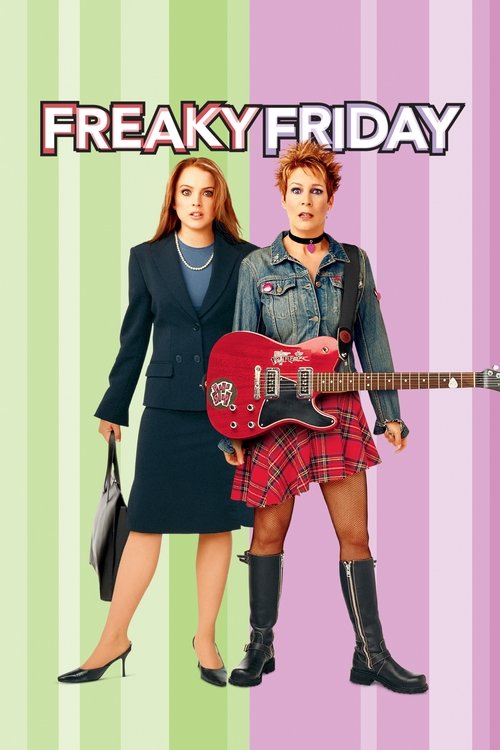
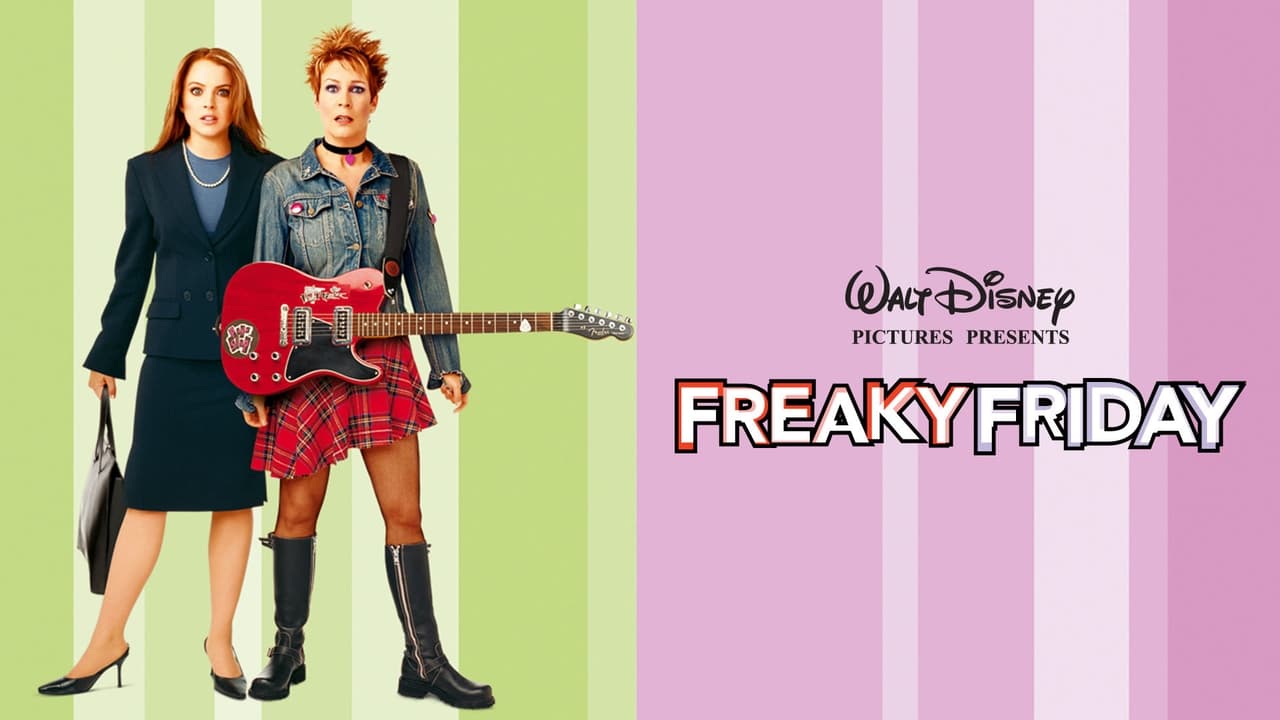
There is a specific, frantic energy that only a 2003 Disney comedy can provide, and it usually involves a Fender Stratocaster, at least three layers of tank tops, and a heavy dose of pop-punk angst. We’ve seen the "body swap" trope beaten into the ground more times than a rental car, but the 2003 iteration of Freaky Friday is the rare specimen that actually improved upon its predecessor. It arrived at the exact moment when Lindsay Lohan was the undisputed queen of the teen scene and Jamie Lee Curtis was ready to remind everyone that she had world-class comedic chops hidden behind her "Scream Queen" pedigree. It’s a film that manages to be both a relic of its TRL-era production and a surprisingly sturdy look at the empathy gap between generations.
The Alchemy of the Swap
The mechanical success of a body-swap movie lives and dies on the actors' ability to mimic one another without descending into caricature. If the performances feel like impressions, the movie fails. Here, the chemistry is borderline miraculous. I watched this most recently on a cross-country flight while the guy in the seat next to me was intensely highlighting a manual on "Professional Alpaca Husbandry," and even with that distraction, I was struck by how much work Jamie Lee Curtis is doing.
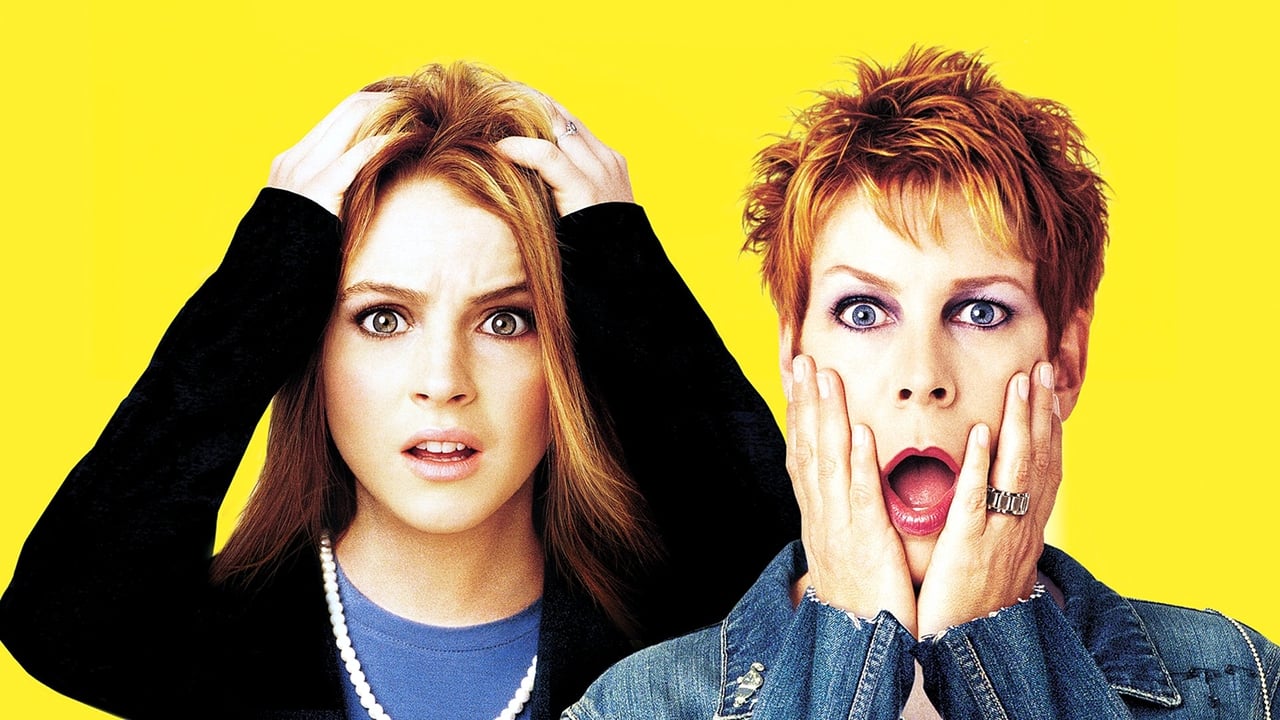
She isn't just "playing a teenager"; she is embodying the specific, loose-limbed, eye-rolling vibration of a 2003 high schooler who just discovered Avril Lavigne. Watching her try to navigate a secret handshake with Chad Michael Murray—who was the pinnacle of "early 2000s heartthrob" with his squinty eyes and moto-jackets—is a masterclass in physical awkwardness. On the flip side, Lindsay Lohan delivers what might be her most disciplined performance. Playing the repressed, Type-A Tess Coleman, Lohan manages to make "being a mom" look like a Herculean task of patience, proving that her early-career comic timing was genuinely top-tier before the tabloids rewrote her narrative.
A Time Capsule of Low-Rise Jeans
Looking back, the film is a fascinating snapshot of the "Modern Cinema" transition. It’s polished but still feels grounded in physical sets and practical locations rather than the green-screen voids of today’s family comedies. Director Mark Waters—who would go on to direct Mean Girls just a year later—understands the rhythm of the high school ecosystem. The soundtrack alone, featuring the likes of Simple Plan and Bowling for Soup, is enough to trigger a Pavlovian response in anyone who owned a Discman.
There’s a charming earnestness to the production that feels very "Casual Friday Productions" (the fittingly named production house). The film doesn't lean on CGI to sell the magic; it relies on a mystical fortune cookie and some shaky-cam earthquake effects. It’s a reminder that you don't need a $200 million budget to make a "fantasy" movie work if the human stakes feel real. Even the "Fortune Cookie" trope itself, which feels a bit culturally dated by today’s standards, is handled with such a brisk, fairy-tale logic that you just roll with it. The real magic isn't the swap; it’s the fact that the Pink Slip song 'Ultimate' is a legitimate garage-rock banger that has no business being this catchy.
The $160 Million Juggernaut
While we often think of these Disney remakes as "filler" entertainment, the financial reality of Freaky Friday was staggering. It wasn't just a hit; it was a bona fide blockbuster. On a modest $26 million budget, it clawed its way to over $160 million at the box office. This wasn't just kids dragging their parents to the theater; it was a cross-generational success. It tapped into a "DVD Culture" goldmine, where the special features (including those deleted scenes and the blooper reel where the cast keeps "corpsing" during the concert scenes) became as essential as the movie itself.
The production trivia is a rabbit hole of "what ifs." Apparently, Annette Bening was originally set to play the mother, but she dropped out at the last minute. While Bening is a legend, it’s hard to imagine her shredding a guitar solo with the same wild-eyed abandon as Curtis. Also, look closely at the background of the school scenes; the film is packed with character actors like Stephen Tobolowsky and Harold Gould, who bring a level of professional gravity to the silliness. It’s these small details—the way the house feels lived-in, the genuine frustration in the dialogue written by Leslie Dixon and Heather Hach—that keep the film from feeling like a disposable piece of corporate synergy.
The 2003 Freaky Friday earns its place in the pantheon of great remakes by refusing to wink at the camera. It treats the central conflict—the fundamental inability of a mother and daughter to see each other as human beings—with genuine heart. It’s a loud, colorful, and occasionally manic ride that reminds me why we loved the early 2000s. Whether you're here for the nostalgia or the surprisingly sharp script, it remains the gold standard for the body-swap genre. Give it a rewatch; it’s aged better than your old low-rise jeans.
Keep Exploring...
-
Just Like Heaven
2005
-
Shrek 2
2004
-
Ghosts of Girlfriends Past
2009
-
Mean Girls
2004
-
Aquamarine
2006
-
Herbie Fully Loaded
2005
-
Bedtime Stories
2008
-

The SpongeBob SquarePants Movie
2004
-
Nanny McPhee
2005
-

Enchanted
2007
-
Charlie and the Chocolate Factory
2005
-

Night at the Museum
2006
-
Shrek the Third
2007
-
Horton Hears a Who!
2008
-
Hercules
1997
-
Just My Luck
2006
-
The Mask
1994
-
The Santa Clause
1994
-

Babe
1995
-
Midnight in Paris
2011