House of 1000 Corpses
"Step inside. The screaming is just part of the tour."
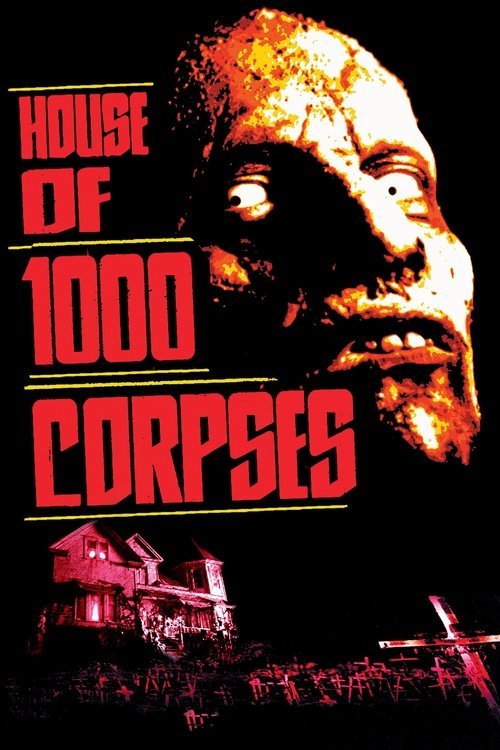
I still remember the first time I saw the poster for House of 1000 Corpses. It was 2003, and the local multiplex felt like it was drowning in the polished, blue-tinted aesthetics of the post-Scream slasher boom. Then, there was Captain Spaulding—a middle-aged man in greasepaint with a look in his eyes that suggested he hadn't washed his hands since the Bicentennial. It didn't look like a "movie" so much as a threat. I watched this most recently while nursing a mild case of food poisoning from a questionable gas station burrito, and honestly, the nausea really complemented the third act's chaotic editing style.
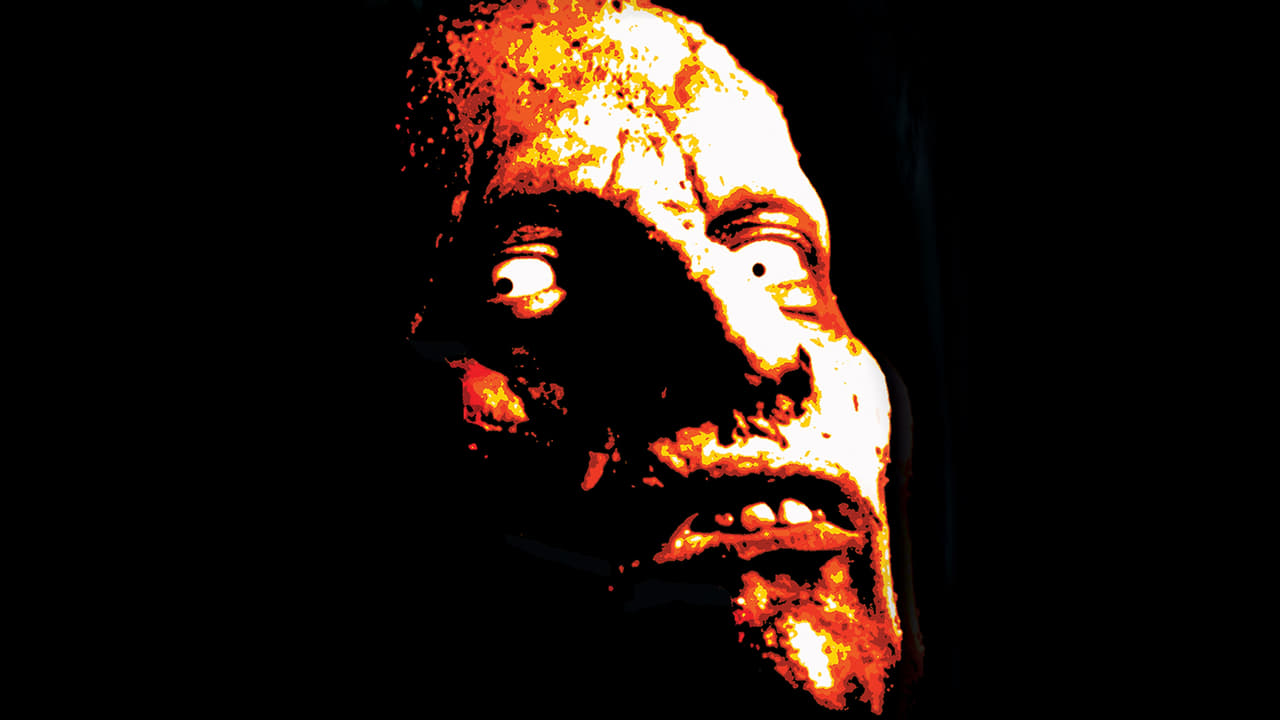
The Shelved Nightmare That Wouldn't Die
Looking back at the early 2000s, it’s hard to overstate how much of a middle finger this movie was to the studio system. Rob Zombie (of White Zombie fame) had spent years building a reputation as the king of "spookshow" rock, and when he finally got the chance to direct, he didn't play it safe. He filmed this back in 2000 for Universal, but the studio famously got cold feet. They saw the finished product and basically ran for the hills, terrified that an NC-17 rating would tarnish their "family-friendly" (or at least corporately acceptable) image.
For three years, House of 1000 Corpses was the stuff of legend on early internet message boards—a "lost" film that was supposedly too intense for human eyes. When it finally clawed its way into theaters via Lionsgate, the reality was something far weirder than a standard slasher. It wasn't just a movie; it was a sensory assault. Rob Zombie utilized the Universal backlot—even using some of the sets from The Grinch—to create a neon-drenched, grimy nightmare that felt like it was edited by someone having a manic episode in a trailer park.
A Technicolor Funhouse of Filth
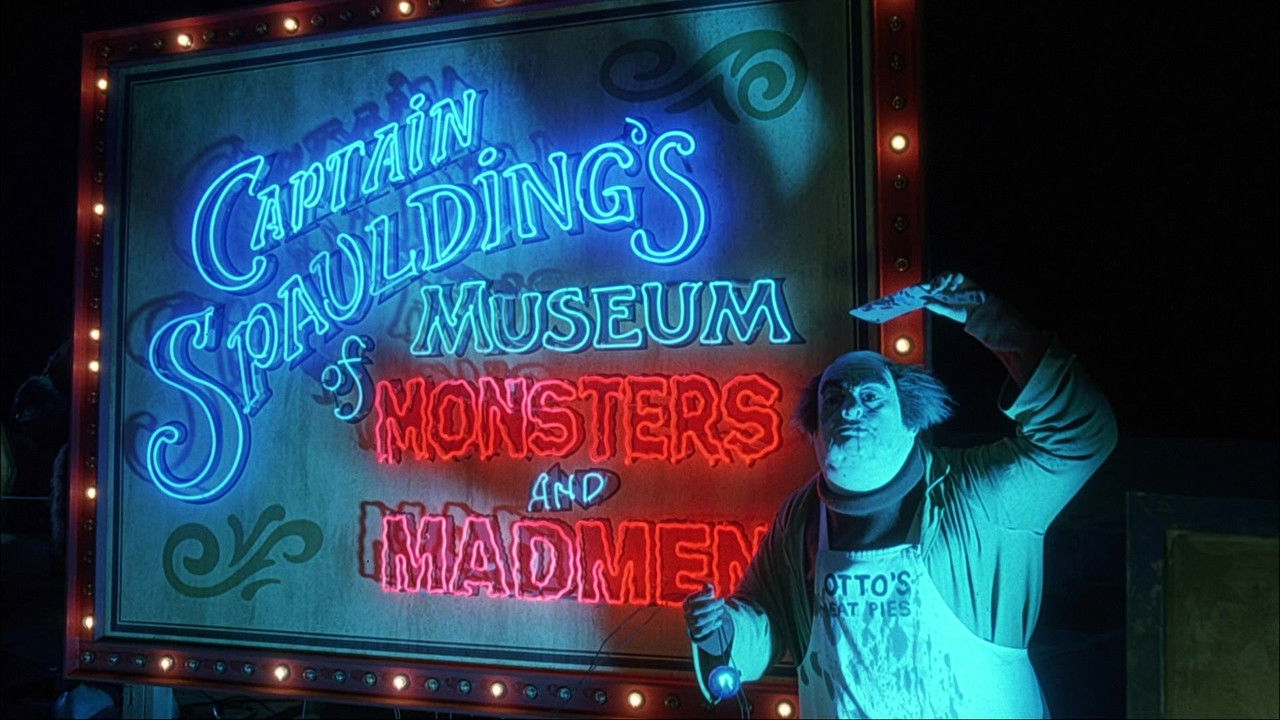
The plot is secondary to the "vibe," but it’s a classic setup: two couples (including a very young Chris Hardwick as Jerry and Erin Daniels as Denise) are on a road trip to document quirky roadside attractions. They run into Captain Spaulding’s Museum of Monsters and Madmen, and before you can say "fried chicken," they’re trapped in the clutches of the Firefly family.
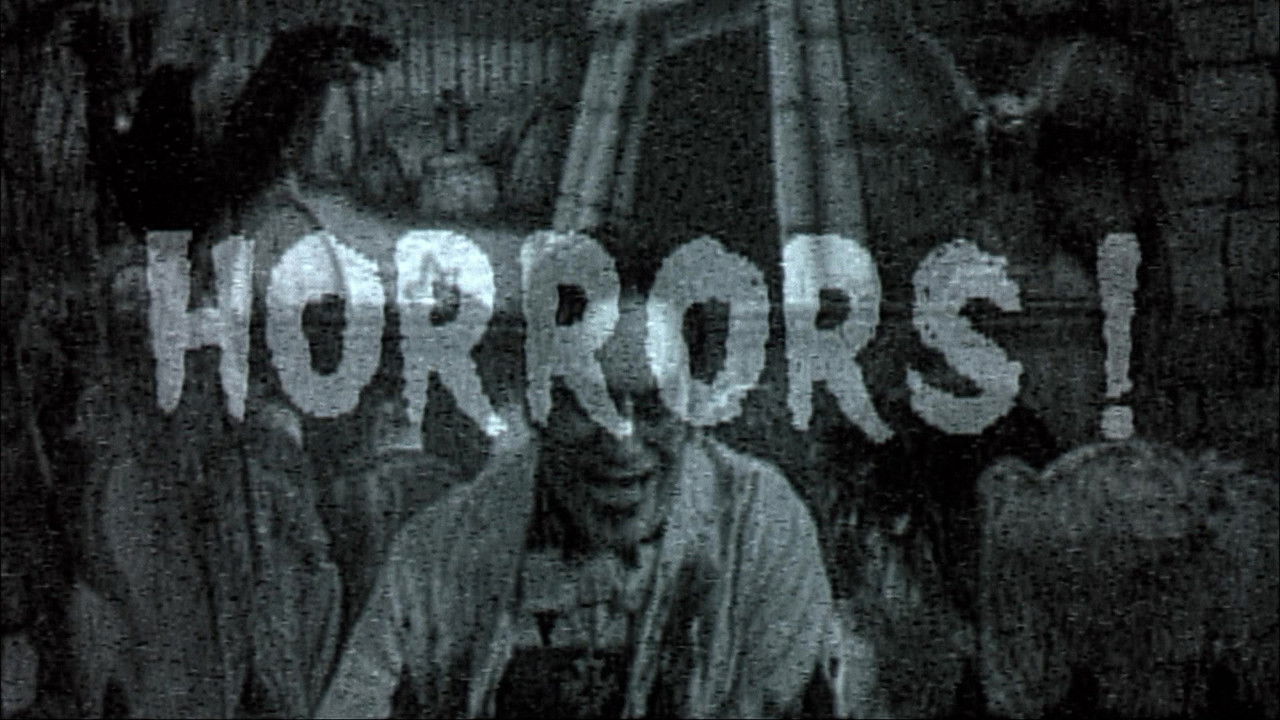
What makes this film stand out from the pack of early 2000s horror is its utter rejection of digital cleanliness. This was the era where CGI was starting to take over, yet Rob Zombie leaned hard into 16mm film inserts, negative-image flashes, and solarized color palettes. It’s basically the cinematic equivalent of a high-budget haunted hayride hosted by people who are definitely on a FBI watchlist. The atmosphere is thick with the smell of damp earth and rot, and the sound design is a cacophony of distorted whispers and industrial grinding. It captured that Y2K-era anxiety of "what's hiding in the dark corners of the internet/countryside" and filtered it through a 1970s grindhouse lens.
The Clown, The Killer, and The Chaos
The real reason we’re still talking about this movie twenty years later is the cast. Sid Haig as Captain Spaulding is one of the greatest horror performances of the modern era. He’s funny, he’s disgusting, and he’s genuinely menacing without ever having to raise his voice. He understood exactly what kind of movie he was in. Then you have Bill Moseley (who played Chop Top in The Texas Chainsaw Massacre 2) as Otis B. Driftwood. Bill Moseley brings a level of cold, intellectual cruelty to the screen that makes the jump-scares feel unnecessary; just looking at him is enough to make you want to lock your doors.
The Firefly family is rounded out by Sheri Moon Zombie as Baby—whose high-pitched laugh is either iconic or an auditory weapon, depending on your patience—and the legendary Karen Black as Mother Firefly. Seeing a New Hollywood icon like Karen Black ham it up in a movie like this was a stroke of genius; it gave the film a weird sense of legitimacy, like it was a direct descendant of the 70s classics it was trying to emulate.
While the first two acts are a relatively coherent "survival" horror story, the final thirty minutes descend into a subterranean psychedelic trip that almost loses the plot entirely. It’s messy, it’s over-indulgent, and it’s clearly the work of a first-time director who wanted to put every single idea he’d ever had onto the screen at once. But in an era of corporate-mandated horror remakes, that kind of unhinged ambition is something I can’t help but respect.
House of 1000 Corpses is a loud, ugly, and vibrant relic of the transition from analog to digital horror. It’s not for everyone—it’s greasy and mean-spirited and refuses to apologize for it—but it’s also a vital piece of the 2000s indie horror boom. It didn't just launch a franchise; it proved that there was still a massive audience for practical effects and "unpleasant" cinema in the age of the PG-13 ghost story. If you can stomach the grime, it’s a trip worth taking at least once.
Keep Exploring...
-
The Devil's Rejects
2005
-
Halloween
2007
-
Halloween H20: 20 Years Later
1998
-
Vampires
1998
-

House on Haunted Hill
1999
-
Lake Placid
1999
-
Stigmata
1999
-

Stir of Echoes
1999
-

The Gift
2000
-
Eight Legged Freaks
2002
-
The Mothman Prophecies
2002
-
Jeepers Creepers 2
2003
-

Seed of Chucky
2004
-
Dark Water
2005
-
Inland Empire
2006
-
The Covenant
2006
-
The Texas Chainsaw Massacre: The Beginning
2006
-
The Hitcher
2007
-
The Reaping
2007
-

Vacancy
2007