Mystic River
"The past is a river that never stops drowning you."

I vividly remember the first time I popped the Mystic River DVD into my player. It was one of those early-2000s Warner Bros. "Two-Disc Special Edition" sets with the snapper case that always felt a bit flimsy compared to the weight of the movie inside. I watched it on an old CRT television that hummed with a faint layer of static electricity, and honestly, that low-frequency buzz felt like it belonged to the movie. It matched the oppressive, gray-blue atmosphere Clint Eastwood spent 138 minutes perfecting.

Looking back, 2003 was a strange, transitional year for cinema. We were moving away from the high-concept gloss of the late 90s and into a period of gritty, grounded realism that felt shaped by a post-9/11 collective anxiety. Mystic River wasn't just a "whodunnit"; it was a "what happened to us?" It took the bones of a Dennis Lehane thriller and turned it into a Greek tragedy set in the salt-stained streets of South Boston.
The Cement That Never Dries
The brilliance of the opening is how it establishes a "sliding doors" moment that feels agonizingly cruel. Three boys—Jimmy, Dave, and Sean—are writing their names in wet cement when a car pulls up. One boy gets in; two don't. That single choice radiates through the next thirty years like a slow-motion car crash. When we meet them as adults, they aren't friends anymore; they are ghosts of the children they used to be, haunted by the fact that Dave Boyle is a walking open wound.
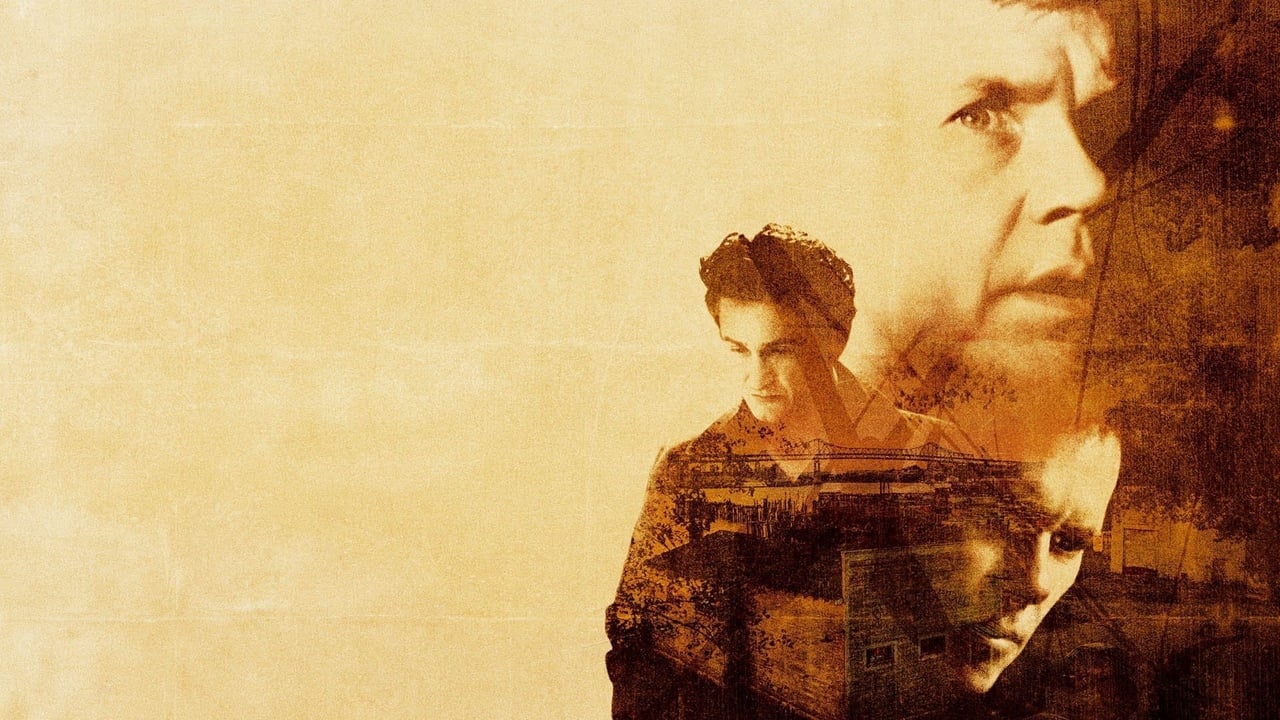
Tim Robbins is utterly shattering here. There’s a specific way he carries his shoulders—slumped, defensive, as if he’s constantly trying to take up less space in a world that already stole his soul. It’s a performance of profound stillness and sudden, jagged edges. Opposite him, you have Sean Penn as Jimmy Markum. If Robbins is a vacuum, Penn is a solar flare. I know some people find Penn’s "Is that my daughter?!" scene a bit much, but I’ve always stood by it. In the context of that neighborhood, where grief is expressed through rage or silence, his operatic breakdown feels earned. He’s a man trying to outrun a past that finally caught his heels.
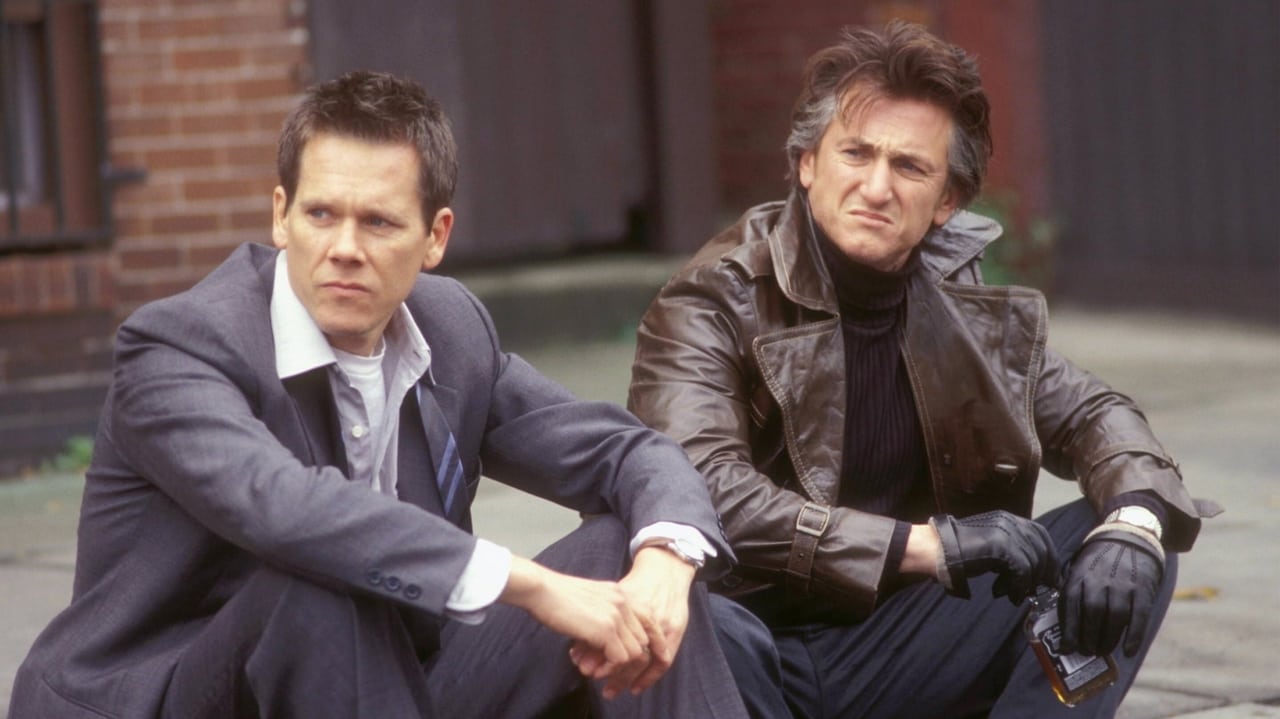
Then there’s Kevin Bacon as Sean Devine. He’s the anchor. While Penn and Robbins get the "Oscar moments," Bacon has the harder job of playing the man who escaped the neighborhood but can’t quite wash the scent of the river off his skin. Sean Devine is the only character in this movie who actually understands how law works, but even he is powerless against the "law" of the streets.
The 39-Day Miracle
One of the things that fascinates me about this era of Clint Eastwood’s career is his legendary efficiency. He famously refuses to do more than two or three takes, and he doesn’t believe in "coverage" for the sake of it. He trusts his actors to show up ready to bleed. This movie was shot in just 39 days on a relatively modest $25 million budget, and yet it feels massive. It went on to gross over $156 million, proving that in the early 2000s, there was still a massive appetite for adult-oriented, mid-budget dramas—a genre that has sadly migrated almost entirely to prestige TV today.
The screenplay by Brian Helgeland (who previously nailed the noir vibe with L.A. Confidential) is a masterclass in tension. He manages to weave the police procedural elements with the domestic horror of Marcia Gay Harden’s Celeste Boyle. Her performance is the secret weapon of the movie. The way her suspicion of her husband curdles into a paralyzing fear is more terrifying than any jump-scare in a horror film. And then there’s Laura Linney’s Annabeth Markum. If you haven’t seen the film in a while, pay close attention to her final scene. It’s a chilling pivot that shifts the movie from a tragedy to something much darker: a justification for tribalism and blood-debt. Annabeth Markum is the Lady Macbeth of Boston, and she scares me more than any of the men.
A Legacy of Shadows
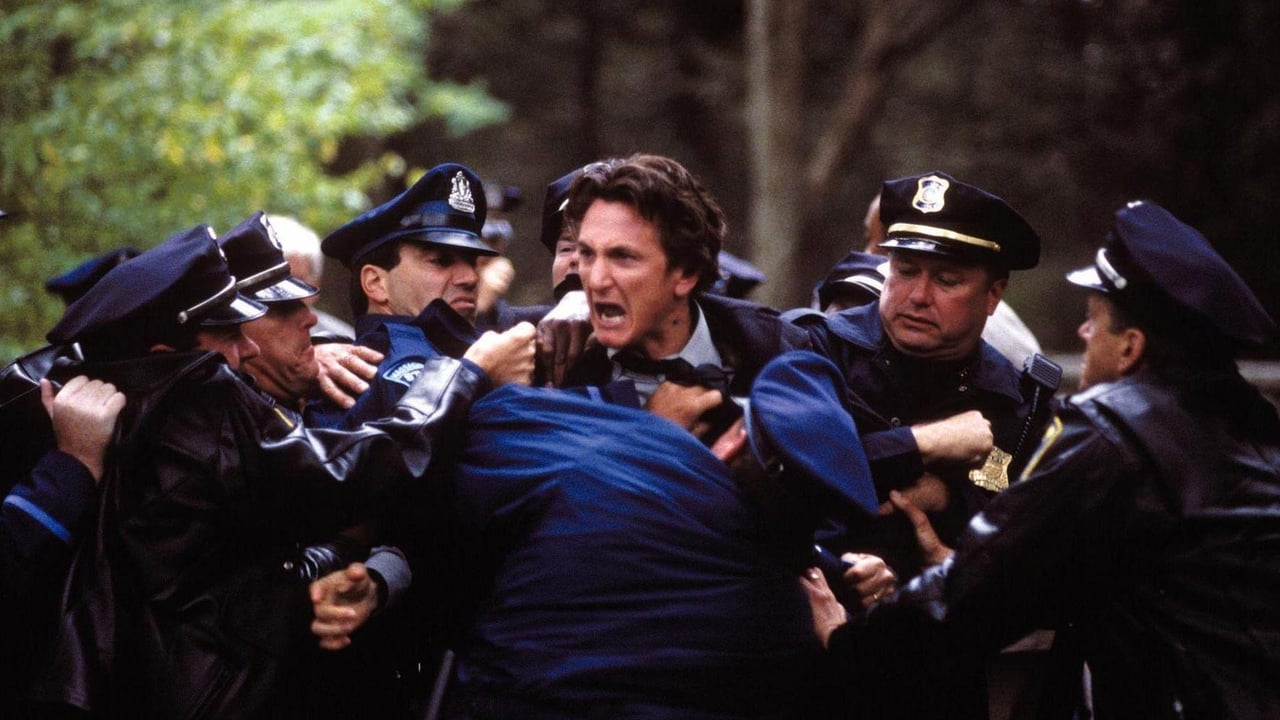
Watching Mystic River now, it reveals its era through its tactile nature. There’s no CGI to speak of; the "effects" are the shadows cast by Tom Stern’s cinematography and the way the Boston wind seems to bite at the actors' faces. It captures a specific moment before smartphones and social media, where a secret could still fester in the dark corners of a bar or a basement for decades.
The score, composed by Eastwood himself, is a simple, melancholic piano melody that feels like it’s weeping. It’s subtle, never telling you how to feel, but rather sitting in the room with you, acknowledging the weight of the story. It doesn't offer the comfort of a resolution. Even though the "mystery" is solved, the tragedy remains unfixable. The film suggests that some sins can’t be washed clean; they just get pushed further down the river until they snag on something else.
This isn't a movie you watch for "fun," but it is one you watch to be reminded of what a perfectly calibrated ensemble can do. It’s a reminder that Clint Eastwood at his peak was a master of restraint, letting the actors and the atmosphere do the heavy lifting. It’s heavy, it’s somber, and it’s one of the few thrillers from the early 2000s that actually gets better the more you know about the ending. It’s a story about the echoes of the past, and twenty years later, those echoes are still loud enough to make you shiver.
Keep Exploring...
-
A Perfect World
1993
-
Arlington Road
1999
-
Primal Fear
1996
-

Changeling
2008
-
L.A. Confidential
1997
-
Lucky Number Slevin
2006
-

The Girl with the Dragon Tattoo
2009
-
21 Grams
2003
-
Unbreakable
2000
-
Infernal Affairs
2002
-

Tell No One
2006
-
The Talented Mr. Ripley
1999
-

Traffic
2000
-

Inside Man
2006
-

I'm Not Scared
2003
-
In the Line of Fire
1993
-
The Bourne Identity
2002
-
Collateral
2004
-
The Bourne Ultimatum
2007
-

Ghost
1990