Open Range
"Quiet men. Loud guns. No way out."
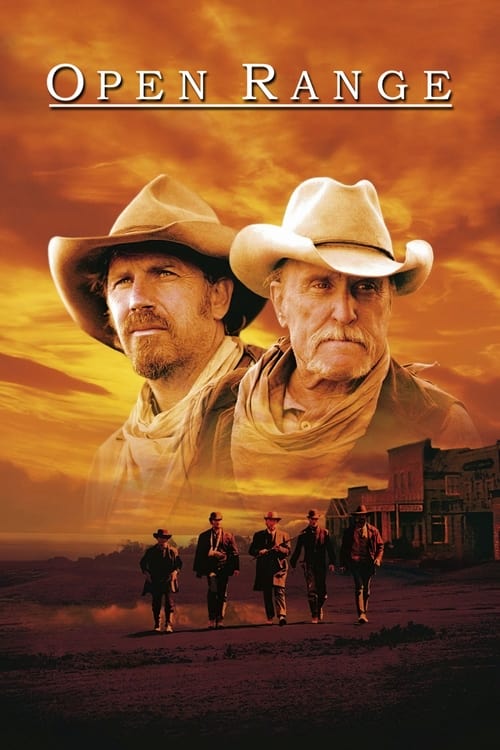
In the summer of 2003, Hollywood was sprinting toward a digital future. The Matrix Reloaded was busy melting our brains with green code, and The Lord of the Rings was proving that CGI armies could actually make us cry. Amidst all that high-tech noise, Kevin Costner—a man who had spent the late 90s in "director’s jail" following the bloated budgets of Waterworld and The Postman—quietly rode back into town with a horse, a hat, and a sack of practical effects.
I watched this film on a Tuesday afternoon while eating a slightly-too-cold ham sandwich, and honestly, the dryness of the bread only added to the dusty, frontier atmosphere. It reminded me that while the rest of the world was obsessed with "bullet time," there was still a lot of mileage left in a good, old-fashioned bullet.
A Patient Kind of Violence
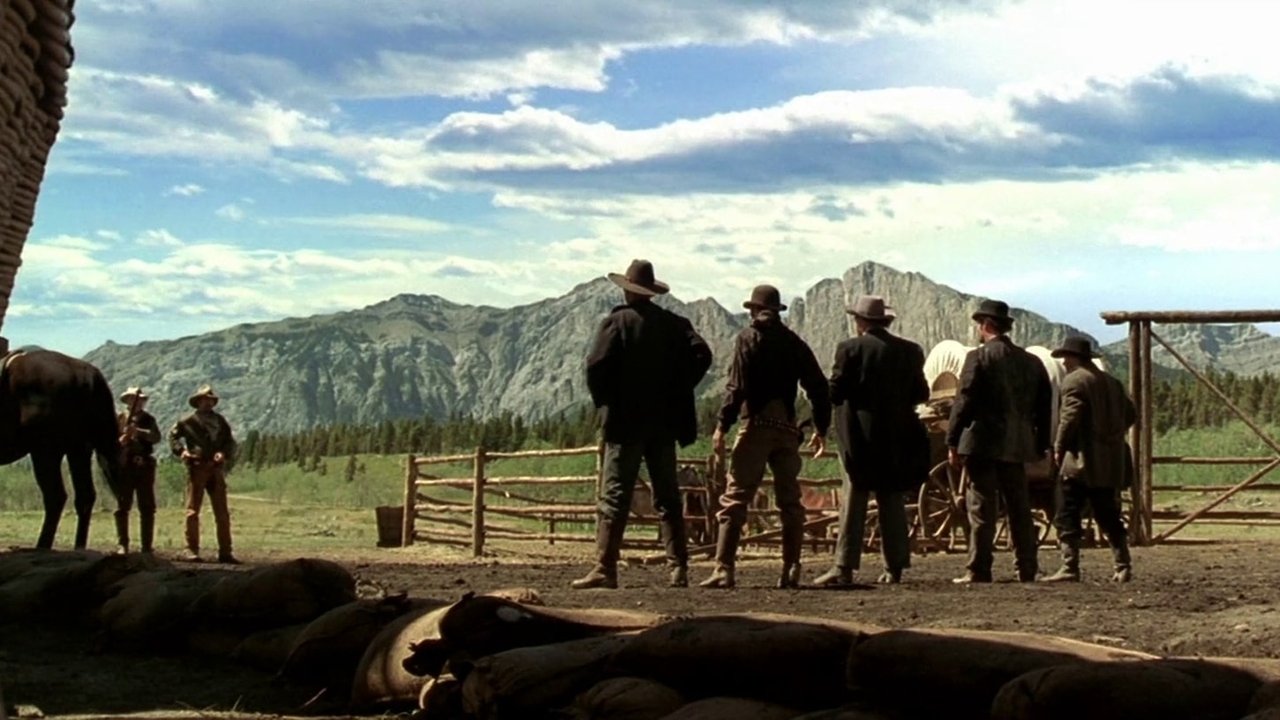
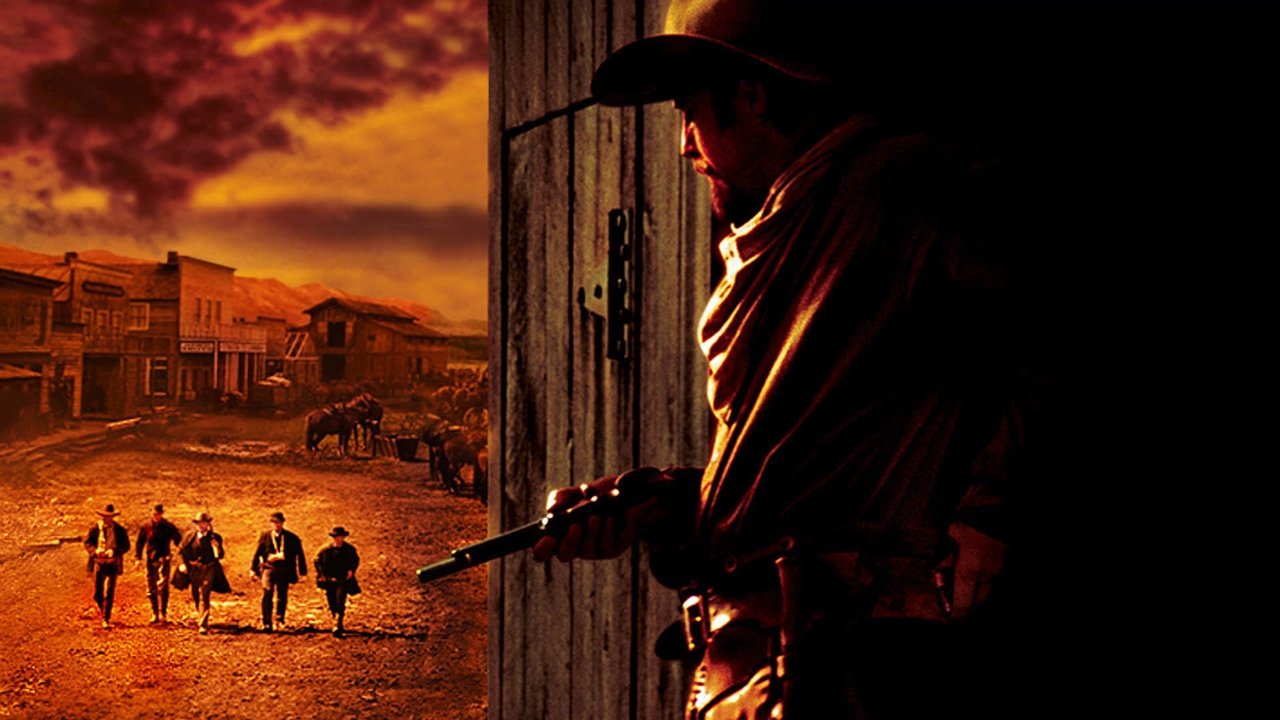
Open Range is what happens when a filmmaker decides to ignore every trend of his era. While the "Bourne" movies were popularizing rapid-fire editing that made you feel like you were trapped in a blender, Costner and his cinematographer, J. Michael Muro, decided to just... let the camera sit there. They captured the vast, rolling hills of the Canadian wild (standing in for Montana) with a clarity that feels like a deep breath of mountain air.
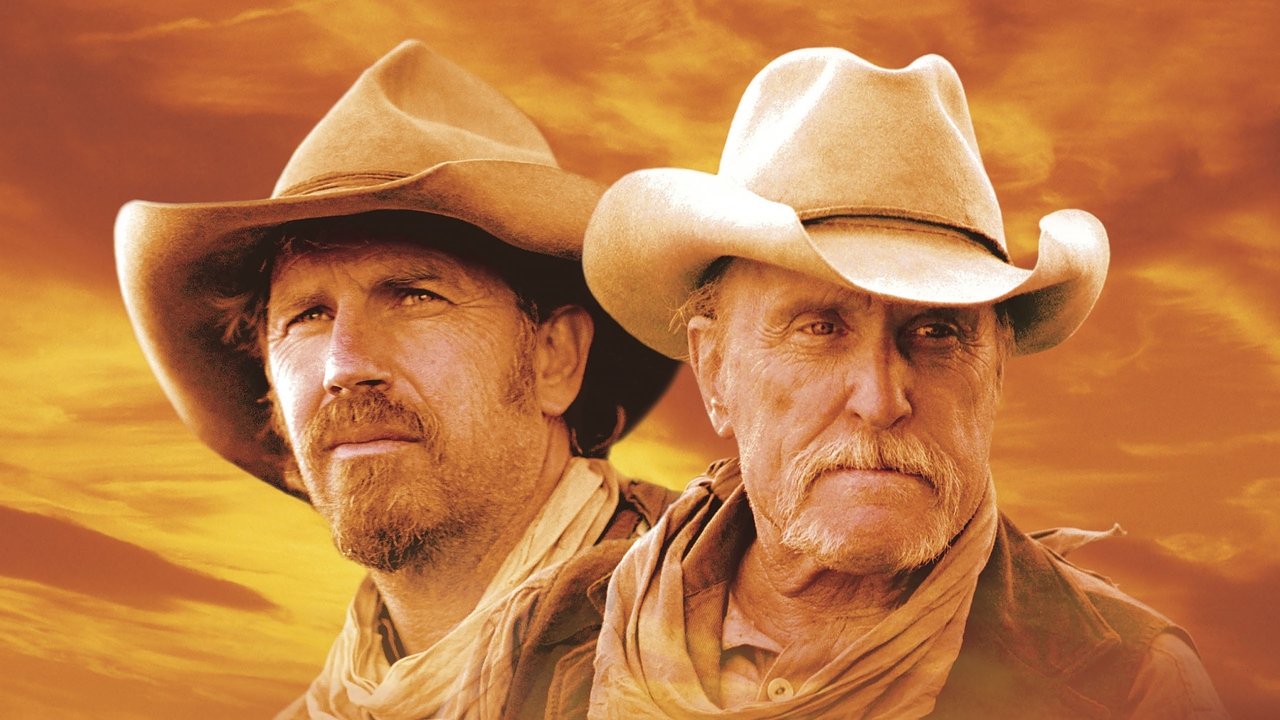
The story is lean, almost prehistoric in its simplicity. Charley (Kevin Costner) and Boss (Robert Duvall) are "free-grazers"—men who drive cattle across the open plains, answering to no one but the weather. Their peaceful existence is shattered when they wander into the territory of Denton Baxter (Michael Gambon, our beloved Dumbledore playing a truly loathsome snake), a land baron who thinks the "open" in Open Range doesn't apply to people he doesn't like.
What makes this work isn't the plot; it’s the lived-in exhaustion of the characters. Robert Duvall is a titan here. He plays Boss Spearman with a mix of grandfatherly warmth and the terrifying stillness of a man who has buried a lot of bodies. When he talks about his tea or his cattle, you believe he’s been doing this since the dawn of time. Costner’s Charley Waite is essentially a human bruise that learned how to aim a Colt .45, a man with a dark past who just wants to be left alone but knows deep down that he doesn't deserve the peace he's found.
The Sound and the Fury
If you bought the DVD back in 2004—and I highly recommend finding a copy if only for the making-of features—you’ll know that Costner was obsessed with the sound design. In most 2000s action movies, gunshots sounded like cinematic percussion, rhythmic and polished. In Open Range, when a gun goes off, it sounds like a literal crack of thunder. It’s bone-shaking.
This leads us to the climax, which is widely considered one of the greatest shootouts in cinema history. The final shootout is the only cure for the ‘shaky-cam’ headache that dominated the early 2000s. It’s not a choreographed dance; it’s a chaotic, terrifying, and surprisingly clumsy mess. People miss. They fumble with their reloads. They hide behind thin wooden planks that offer zero protection. It lasts for what feels like twenty minutes, and it earns every single second of that runtime.
There’s a specific moment involving a shotgun and a shack that actually made me drop my sandwich. It’s the kind of practical stunt work that feels dangerously real—a far cry from the weightless digital ragdolls that were starting to populate blockbuster cinema at the time. It’s the climax of a slow-build tension that Costner masterfully ratchets up, proving that he hadn't lost his Dances with Wolves touch; he had just refined it.
A Relic of the Analog Soul
Looking back, Open Range feels like a "last stand" for a certain type of filmmaking. It was one of the last major Westerns before the genre became the playground for "prestige" deconstruction or hyper-violent stylization. It’s a film that respects the tropes—the crooked sheriff (James Russo), the kind-hearted doctor’s sister (Annette Bening), the loyal young hand (Diego Luna)—without feeling like a parody.
It’s also surprisingly touching. The score by Michael Kamen (who sadly passed away shortly after the film's release) avoids the bombast of a typical action movie, opting for something more melodic and melancholy. It captures that post-9/11 anxiety of wanting to protect your home and your people from a world that suddenly feels much more violent than you remembered.
Why did this film fade into the background? It did well at the box office, but it didn't spawn a franchise, and it wasn't a "game changer" in the way The Matrix was. It was just a perfectly made movie. In an era of transition, Open Range was a stubborn reminder that you don't need a hundred million dollars of CGI to tell a story about honor, mud, and the sound of a revolver clicking into place.
If you’ve missed this one, or only remember it as "that long Costner movie," give it another look. It’s a masterfully paced drama that understands that for an action scene to matter, you have to care about the people holding the guns. It’s a beautiful, dusty, and incredibly loud piece of craftsmanship that deserves a permanent spot on your shelf. Grab a sandwich—maybe a warm one—and settle in for the best gunfight you’ve never seen.

Keep Exploring...
-
Dances with Wolves
1990
-
The Guardian
2006
-
The Quick and the Dead
1995
-
Wyatt Earp
1994
-
The Postman
1997
-
Maverick
1994
-
The Siege
1998
-
Behind Enemy Lines
2001
-
The Count of Monte Cristo
2002
-
Walking Tall
2004
-
Undisputed II: Last Man Standing
2006
-
United 93
2006
-
Appaloosa
2008
-
Defiance
2008
-
Street Kings
2008
-

Legends of the Fall
1994
-

Robin Hood: Prince of Thieves
1991
-

The Bodyguard
1992
-
Soldier
1998
-
Payback
1999