Paycheck
"Forget the future, survive the items in your pocket."

There is a specific kind of 2003 "Future Tech" that now looks as ancient as a stone tablet, yet remains oddly charming in its bulky, translucent-plastic optimism. Watching Paycheck today feels like unearthing a time capsule from an era when we were obsessed with Philip K. Dick adaptations but weren't quite sure if we wanted them to be high-concept philosophy or just an excuse to see Ben Affleck ride a motorcycle through a fireball. This film arrived at the tail end of the "Bennifer" tabloid explosion, sandwiched between the catastrophic Gigli and the equally maligned Daredevil, effectively burying what is actually a perfectly serviceable, high-concept B-movie.
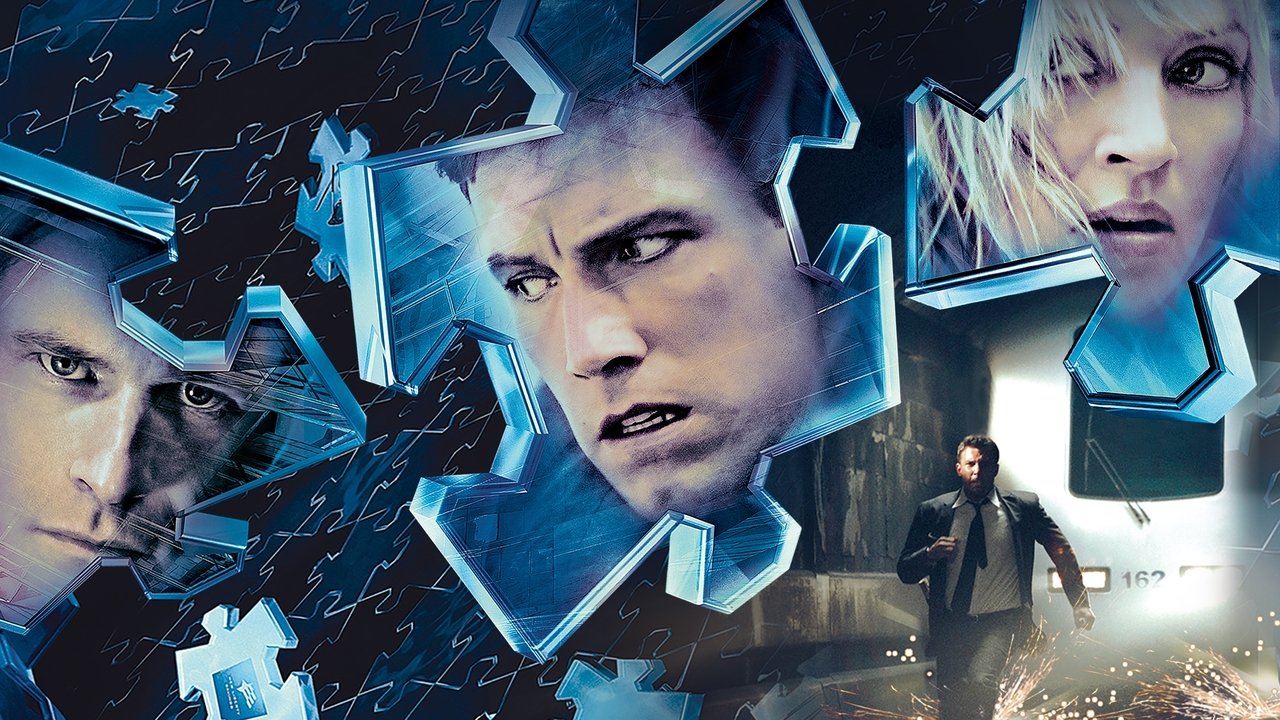
I watched this recently on a DVD I picked up for two dollars at a garage sale—the kind of disc that still has a "Return to Blockbuster" sticker partially peeled off the front—and honestly, the physical act of inserting a spinning piece of plastic felt like the perfect ritual for a movie about 20-year-old gadgetry.
A Bag of Trash as a Treasure Map
The premise is pure Dickian gold: Michael Jennings (Ben Affleck) is a "reverse engineer" who steals tech secrets, has his memory wiped for security, and gets paid millions. After a grueling three-year stint for a shadowy billionaire played by a delightfully smug Aaron Eckhart (The Dark Knight), Jennings wakes up to find he’s waived his $92 million fee. In its place? A manila envelope containing twenty mundane items: a bus ticket, a diamond ring, a fortune cookie, and some hairspray.
It’s essentially MacGyver meets Memento. As the FBI and corporate goons close in, Jennings realizes he didn't lose his paycheck; he traded it for a survival kit based on his own stolen glimpses of the future. The way the film uses these items is the real hook. Every time Jennings reaches into the bag, it’s a "Chekhov’s Paperclip" situation. Affleck plays Jennings with a sort of weary, blue-collar genius energy, though his attempt at looking like a "brilliant engineer" mostly involves him staring intensely at a computer screen while sweating through a series of very nice sweaters.
The John Woo "Lite" Experience
By 2003, director John Woo had already conquered Hollywood with Face/Off and Mission: Impossible 2, but Paycheck feels like the moment the studio system finally managed to put a leash on him. You still get the hallmarks: the Mexican standoffs, the slow-motion debris, and yes, the mandatory white pigeon that flutters across the screen for absolutely no reason other than to let you know whose movie this is.

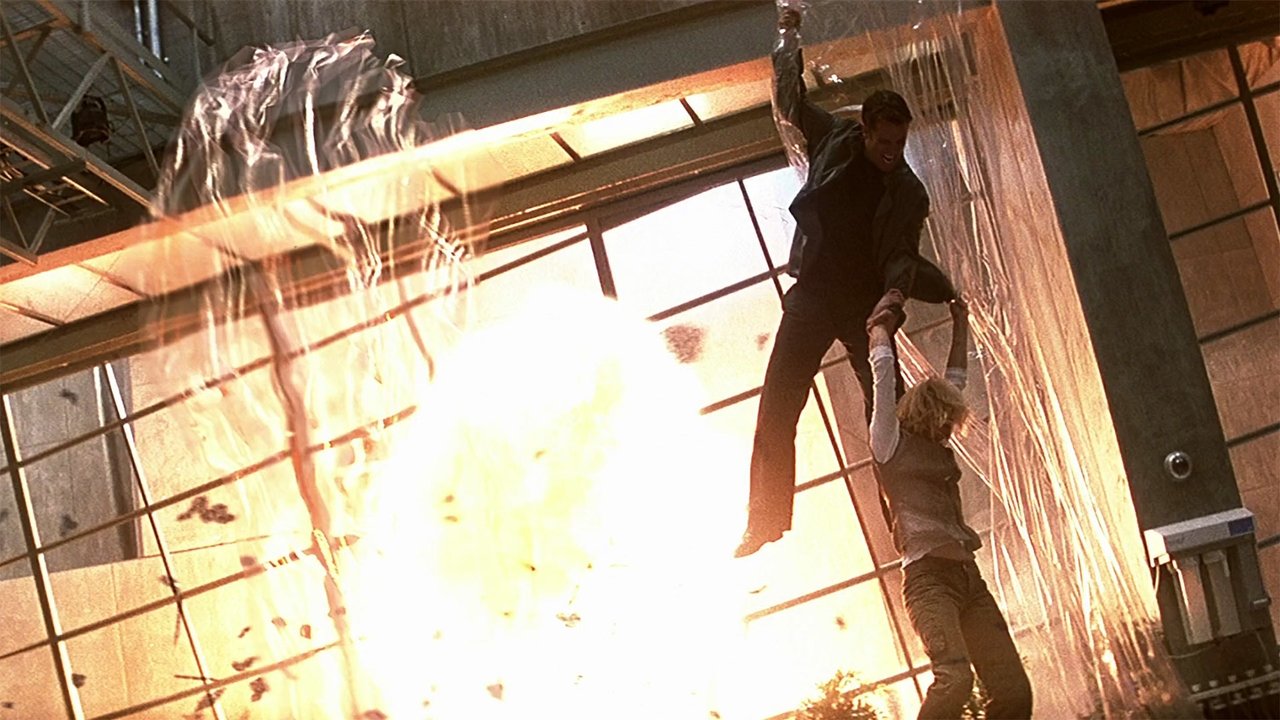
The action is remarkably clean, a refreshing contrast to the "shaky cam" craze that The Bourne Identity (2002) had just unleashed on the world. The motorcycle chase, featuring a sleek BMW R1150R, is a genuine highlight. It’s staged with a geometric precision that modern CGI-heavy spectacles often lack. However, you can feel the PG-13 constraints chafing against Woo's natural instincts. The violence is bloodless, and the stakes feel curiously low-impact, even when things are blowing up. It’s "Action Jazz"—technically proficient and pleasant to watch, but it lacks the punk-rock soul of his earlier Hong Kong work like Hard Boiled.
The Supporting Cast Heavy-Lifters
What keeps Paycheck from dissolving into total obscurity is the supporting cast, who seem to be having much more fun than the lead. Paul Giamatti (Sideways) appears as Shorty, Jennings’ only friend, and he provides the much-needed human friction in a movie full of cold glass and steel. He brings a frantic, neurotic energy that makes the memory-wipe stakes feel real.
Then there’s Uma Thurman as Rachel Porter. Coming off the high of Kill Bill, she’s unfortunately relegated to the "supportive love interest" role, but she manages to inject a level of gravitas into the romance that the script doesn't quite earn. Watching her and Affleck try to navigate a "will-they-won't-they" plot when one of them literally cannot remember the last three years of their relationship is a tall order, but they have enough chemistry to keep the mid-section from dragging. Colm Feore (The Umbrella Academy) also deserves a shout-out as the world’s most efficient corporate assassin; he has a face built for calculating the trajectory of a bullet, and he uses it well here.
Why the Memory Faded
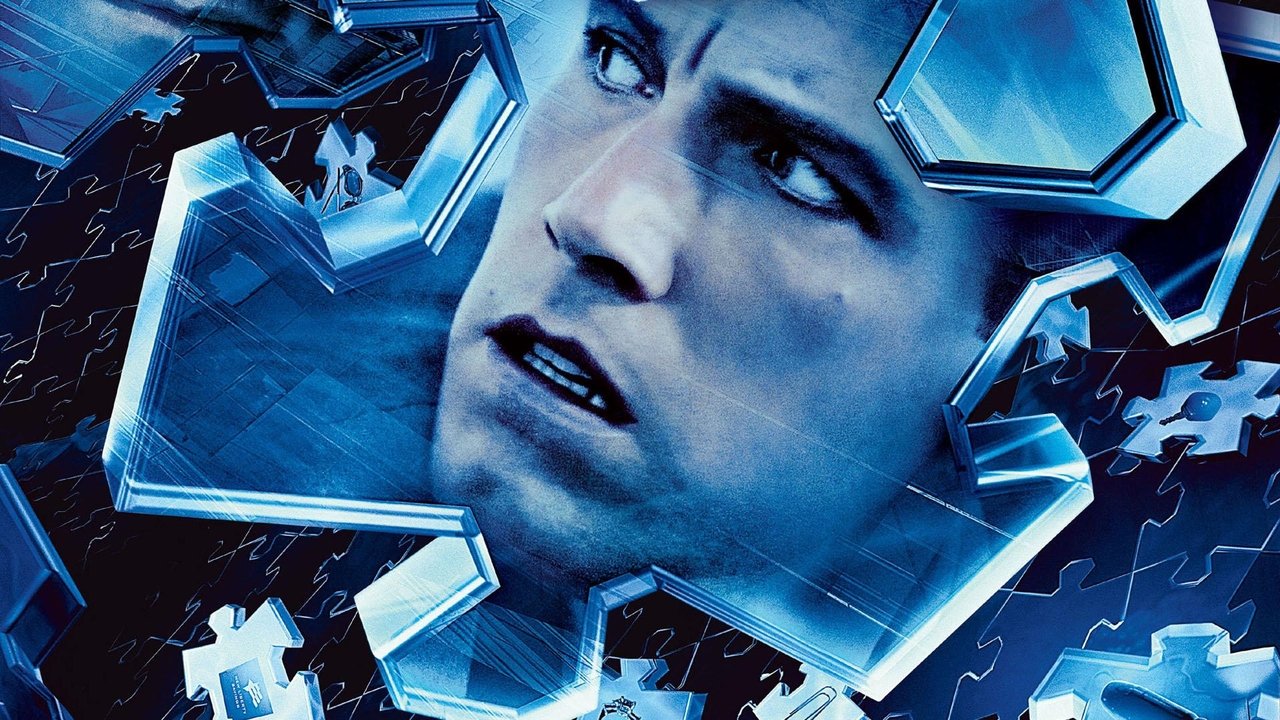
So, why did Paycheck disappear? It was caught in a perfect storm of bad timing. It was released during the "Affleck Fatigue" peak, and it lacked the dark, gritty realism that audiences were beginning to crave post-9/11. It’s a sunny, stylized thriller in a decade that was turning increasingly moody. Looking back, it’s a fascinating bridge between the practical stunt-work of the 90s and the digital world-building of the 2010s. The CGI used for the "future-seeing machine" is... well, it’s very 2003. It looks like a high-end screensaver, but there's a tangible quality to the sets that makes the world feel lived-in.
It isn't a masterpiece, and it’s certainly not the best Philip K. Dick adaptation (that trophy is still a fight between Blade Runner and Total Recall), but it’s a tight, inventive thriller that respects the viewer's intelligence enough to make the puzzle pieces fit. It’s a movie designed to be enjoyed with a large bucket of buttered popcorn and zero expectations of a life-changing epiphany.
Ultimately, Paycheck is a reminder of a time when "original" sci-fi thrillers (even those based on short stories) were the bread and butter of the winter box office. It’s a slick, well-paced diversion that doesn't overstay its welcome. If you find it in a bargain bin or buried in the depths of a streaming service on a rainy Tuesday, give it a shot. You might find that, like Jennings’ bag of trinkets, it contains exactly what you need to kill two hours.
Keep Exploring...
-

Sky Captain and the World of Tomorrow
2004
-

Star Trek: Insurrection
1998
-

Mission: Impossible II
2000
-

Final Fantasy: The Spirits Within
2001
-

Star Trek: Nemesis
2002
-
Planet of the Apes
2001
-

Escape from L.A.
1996
-

The Saint
1997
-

Race to Witch Mountain
2009
-

Armageddon
1998
-

The 6th Day
2000
-

Jurassic Park III
2001
-

The Matrix Reloaded
2003
-
The Matrix Revolutions
2003
-

National Treasure
2004
-

The Island
2005
-

X-Men: The Last Stand
2006
-
National Treasure: Book of Secrets
2007
-

Babylon A.D.
2008
-
The Losers
2010