Spring, Summer, Fall, Winter... and Spring
"Life moves in circles, even when we run."

The first time I sat down to watch Spring, Summer, Fall, Winter... and Spring, I was in a cramped studio apartment with a neighbor who seemed determined to mow his lawn for three consecutive hours. The aggressive, mechanical drone of the mower should have ruined a movie this quiet, but within ten minutes, the screen simply swallowed the noise. I didn't just watch this film; I felt like I was breathing with it.

It’s easy to forget, amidst the bombast of the early 2000s—the birth of the MCU, the CGI revolution of The Lord of the Rings—that South Korean cinema was undergoing its own massive, albeit quieter, explosion. While Park Chan-wook was making us wince with hammers in Oldboy, Kim Ki-duk was building a floating temple on Jusanji Pond. He created a world so physically contained yet spiritually vast that it makes most modern blockbusters look like they’re filmed in a shoebox.
The Architecture of a Soul
The premise is deceptively simple: an old monk (Oh Young-soo) and his young protege live on a small wooden temple that floats in the middle of a mountain-rimmed lake. There are no walls to the monastery, only doors. This is one of the film’s most brilliant visual puns—the characters often walk through a free-standing door in the middle of a room despite there being no walls to stop them. It’s a subtle nudge to the audience: we are all prisoners of rules we make up for ourselves.
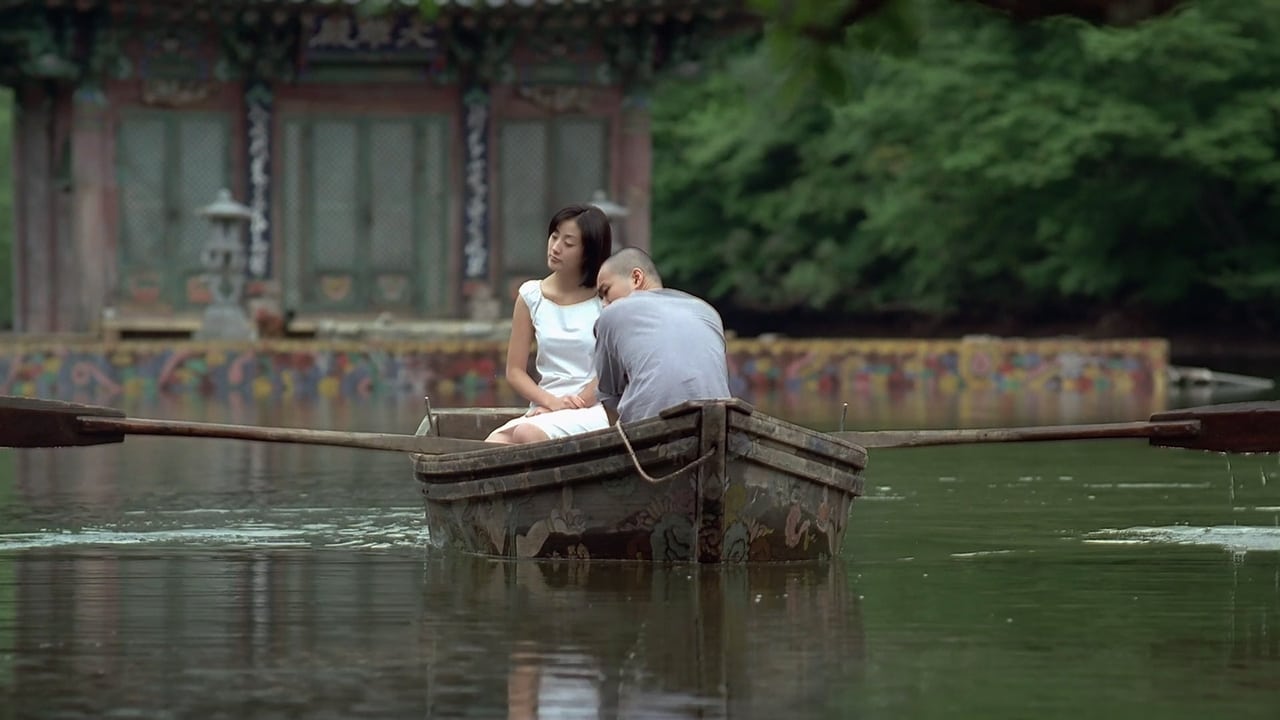
The film is divided into five segments, each representing a season of the year and a stage of the young monk's life. In "Spring," he’s a child (Kim Jong-ho) learning the weight of cruelty by tying stones to fish and frogs. By "Summer," he’s a teenager (Seo Jae-kyeong) discovering the frantic, destabilizing heat of lust when a young girl (Ha Yeo-jin) arrives at the temple for healing.
What makes this drama resonate isn’t some high-minded sermonizing. It’s the performances. Long before he became a household name in Squid Game, Oh Young-soo delivers a performance of incredible, weathered stillness. He doesn’t "act" like a wise man; he simply is the lake. When he punishes the boy, he doesn’t do it with anger, but with a weary, karmic inevitability that hurts much worse than a lecture.
The Weight of the Stone
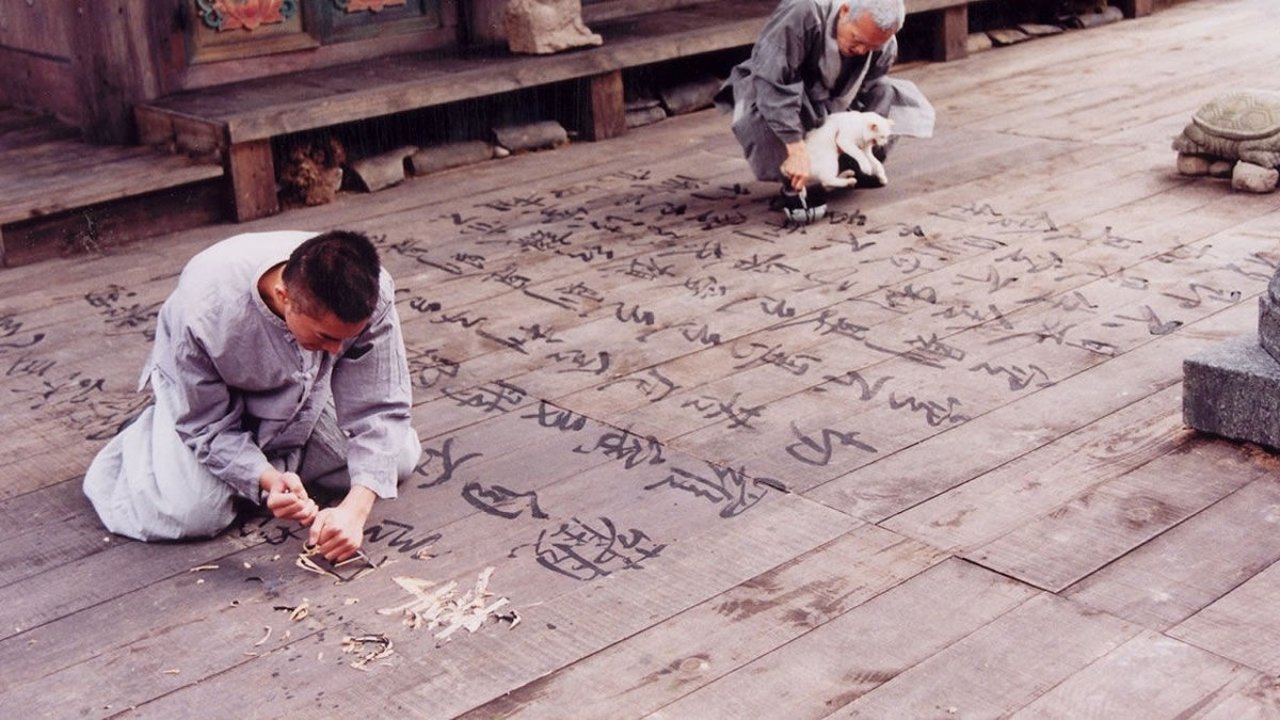
As the seasons turn to "Fall" and "Winter," the film takes a darker, more visceral turn. The young adult monk (Kim Young-min) returns to the temple as a fugitive, his heart poisoned by the very passion that seemed so sweet in the summer. It’s here that the film’s cerebral nature really kicks in. It asks a terrifying question: Can we ever truly shed our past, or are we just doomed to repeat the same mistakes under different weather?
Director Kim Ki-duk eventually puts himself in front of the camera as the adult monk in the "Winter" segment. Seeing the creator of this world physically struggling to haul a massive stone soul-cross up a mountain is a meta-commentary that actually works. It’s a raw, physical performance. Watching him perform martial arts on the ice, his breath visible in the freezing air, you realize this isn't just a "pretty" movie—it’s a grueling one.
The cinematography by Baek Dong-hyeon is legendary for a reason. In an era where digital color grading was starting to make everything look like a plastic toy, this film feels tactile. You can smell the wet wood of the temple and feel the bite of the mountain wind. The lake itself is a character, shifting from a shimmering emerald mirror to a desolate, frozen wasteland.
A Masterpiece in the Shadows
It’s a bit of a tragedy that this film has slipped into the "obscure" category for many casual fans. Because it lacks the high-octane violence of other Korean New Wave hits, it’s often relegated to the "meditative arthouse" bin. But don’t let that label fool you. This isn't a boring movie where people stare at clouds. It’s a film about murder, sex, betrayal, and the crushing weight of guilt. It just happens to be told with the grace of a poem.
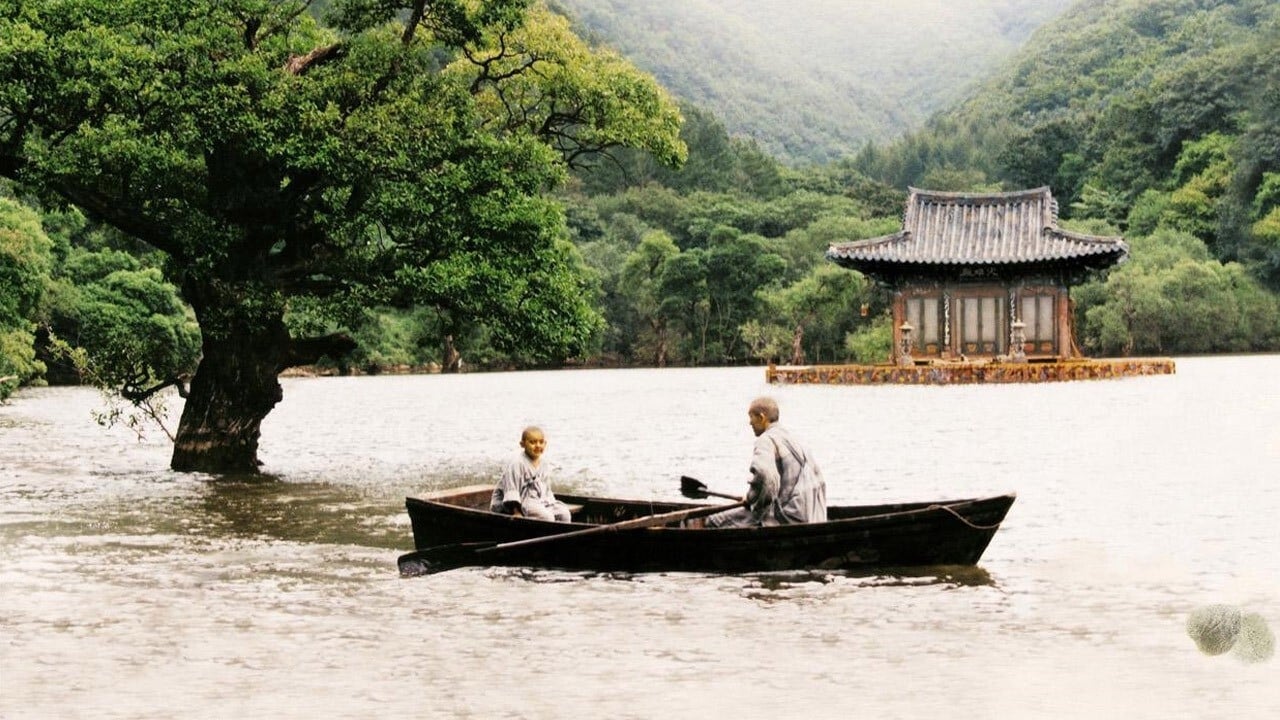
The trivia behind the production adds to its mystique. The floating temple was a real structure built specifically for the film, and because the pond is part of a protected national park, the crew had to be incredibly careful not to disturb the ecosystem. They ended up creating a landmark that looks like it has been there for a thousand years, only to dismantle it when they were done. There’s something beautifully ironic about that—a movie about the impermanence of life destroyed its own most permanent-looking set.
Looking back from our current era of "content" and endlessly connected devices, Spring, Summer, Fall, Winter... and Spring feels even more essential. It’s a 103-minute digital detox. It reminds me that silence isn't the absence of sound; it's the space where we finally have to listen to ourselves.
If you’re tired of films that try to explain every character's motivation with a five-minute flashback or a teary monologue, give this a spin. It trusts you to understand the human heart through nothing more than a look, a gesture, and the changing color of the leaves. It’s a cycle you’ll be glad you stepped into, even if the ending leaves you staring at your own reflection in the dark screen for a few minutes after the credits roll. I promise you won't even notice the neighbor's lawnmower.
Keep Exploring...
-
3-Iron
2004
-
October Sky
1999
-
The Straight Story
1999
-
A Dog's Will
2000
-
Millennium Actress
2002
-
Talk to Her
2002
-
The Sea Inside
2004
-
Fearless
2006
-

The Fall
2006
-
Control
2007
-

Evangelion: 1.0 You Are (Not) Alone
2007
-
The Diving Bell and the Butterfly
2007
-
Departures
2008
-
Il Divo
2008
-
Synecdoche, New York
2008
-

Malcolm X
1992
-
My Cousin Vinny
1992
-

In the Name of the Father
1993
-
Three Colors: Blue
1993
-

Three Colors: Red
1994