S.W.A.T.
"Everyone has a price. They have a job."
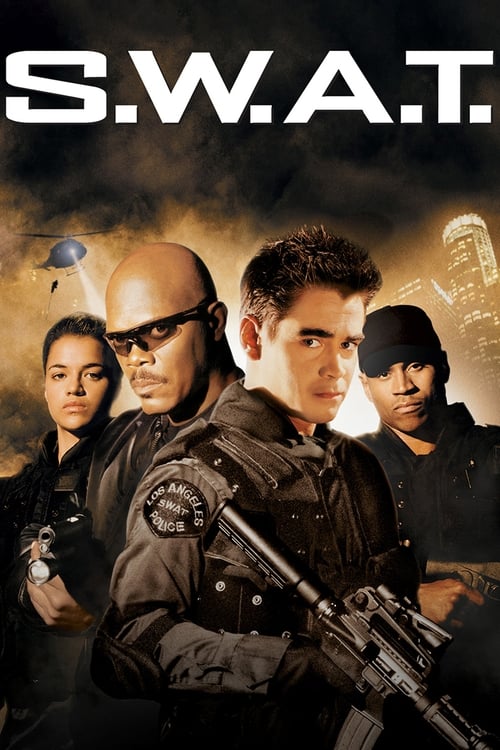
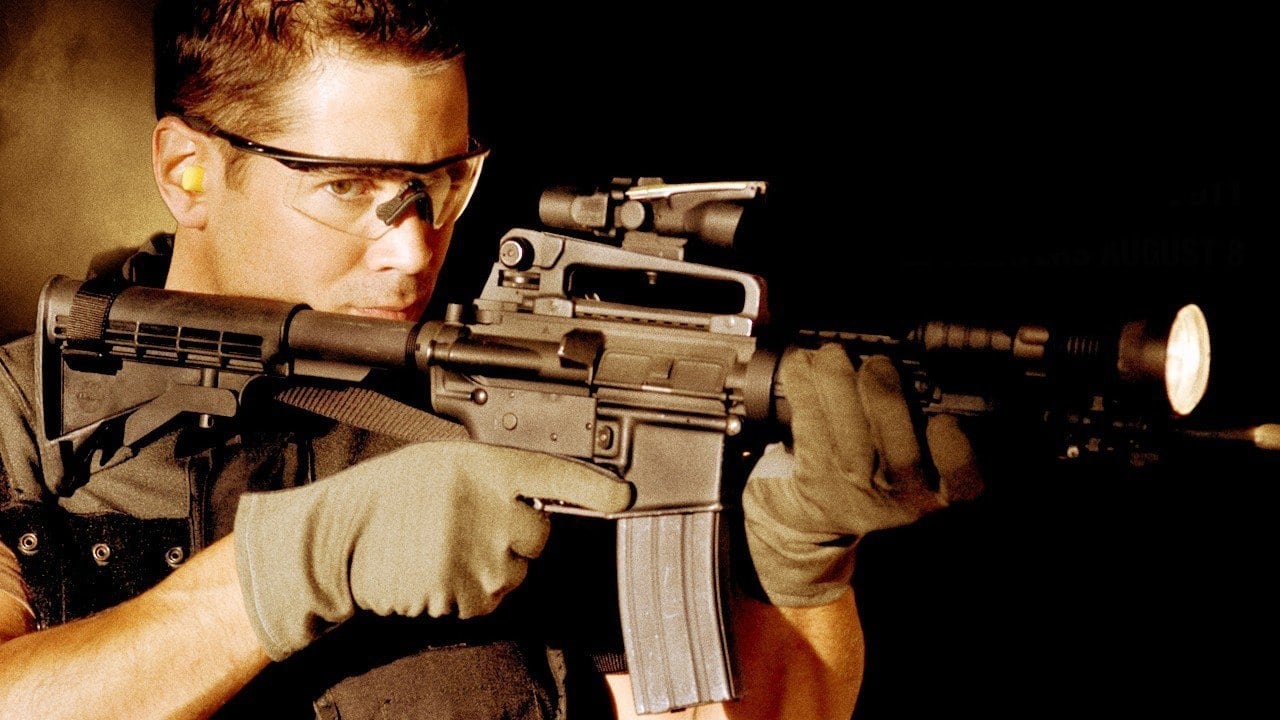
If you close your eyes and think of 2003, you can almost feel the specific texture of a heavy-duty cargo pant. This was the year of "Tactical Chic," a brief window where Hollywood decided that the only thing cooler than a lone-wolf hero was a group of highly disciplined professionals in matching Kevlar vests. S.W.A.T. didn't just participate in this trend; it was the gold standard for it.
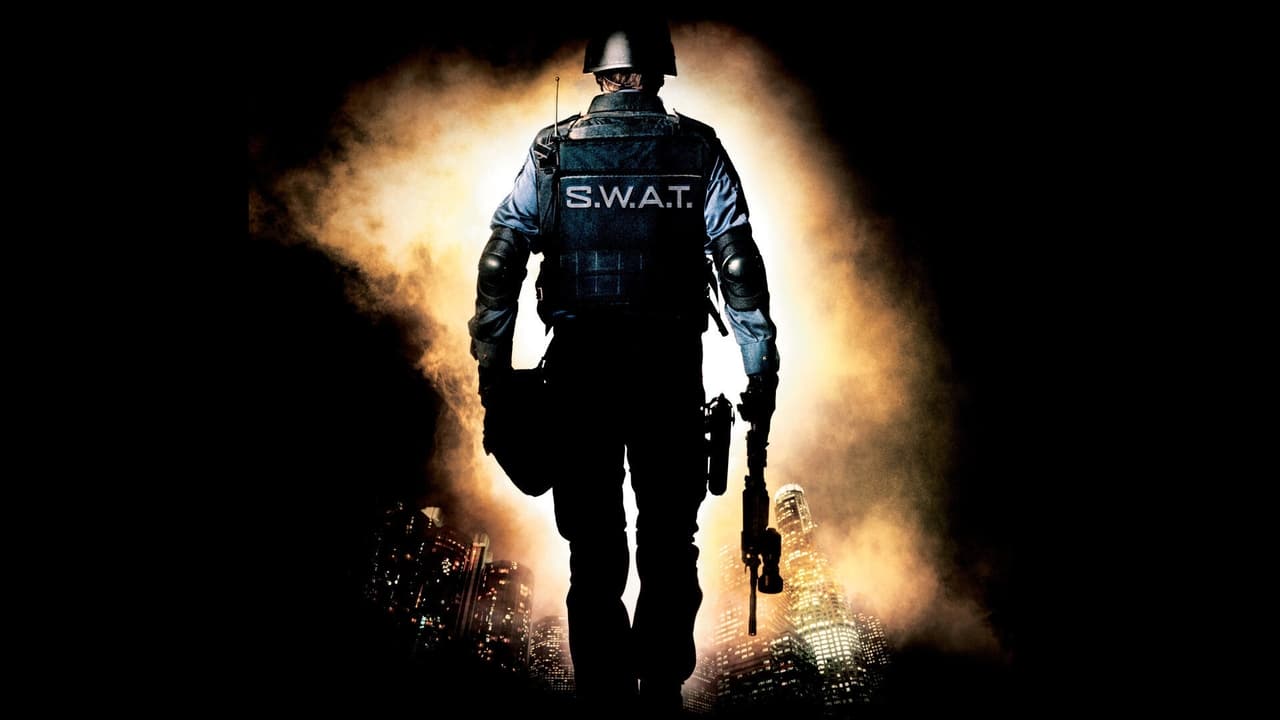
I recently revisited this one on a rainy Tuesday afternoon while struggling to assemble a flat-pack IKEA nightstand. I found that the rhythmic, percussive sound of blank-firing MP5s and Samuel L. Jackson’s authoritative barking actually provided the perfect tempo for my Allen wrench work. It’s a "professionalism" movie—a film about people who are very good at a very specific, dangerous job—and there is something deeply satisfying about that, even twenty years later.
The Bridge Between Two Eras
Looking back, S.W.A.T. sits at a fascinating crossroads in action cinema history. We were moving away from the physics-defying, leather-trenchcoat aesthetic of The Matrix and heading toward the gritty, shaky-cam realism that The Bourne Supremacy would soon cement. Director Clark Johnson, fresh off the success of The Shield, brought a blue-collar, street-level energy to the proceedings. He swapped out the glossy, slow-motion ballets of the 90s for something that felt more like a high-budget police procedural.
The plot is a masterpiece of David Ayer-penned simplicity: A French drug lord (Olivier Martinez) offers $100 million to anyone who can spring him from police custody. Suddenly, every gang, mercenary, and disgruntled citizen in Los Angeles is taking a shot at the transport convoy. It’s a brilliant "reverse heist" setup that turns the entire city into a shooting gallery. The script is essentially a gear-head's wet dream disguised as a thriller, and it works because it stays lean.
A Casting Director’s Time Capsule

The real joy of watching S.W.A.T. today is the "Before They Were Famous" bingo game you get to play with the cast. In 2003, Colin Farrell was being pushed as the next massive leading man, and he brings a twitchy, eager energy to Jim Street. He’s the classic "talented kid with a chip on his shoulder," but he’s anchored by the sheer gravity of Samuel L. Jackson’s Sgt. Hondo Harrelson. This is Jackson in his most comfortable gear—cool, measured, and capable of making a line about a "Dunkin' Donuts run" sound like a tactical command.
Then you have Michelle Rodriguez, who was already perfecting the "I will break your nose if you look at me wrong" archetype she’d ride through the Fast & Furious franchise, and LL Cool J, who provides surprisingly grounded heart as Deke. But the real standout—and my personal favorite retrospective delight—is a pre-stardom Jeremy Renner as Brian Gamble. Renner plays the villain like a man who has been caffeinating exclusively on spite, and his chemistry with Farrell makes you wish the movie had spent more time on their fractured brotherhood and less on the logistics of a transport plane landing on a bridge.
Practical Grunt and Trivia Junk
What really earns the 5-minute test for S.W.A.T. is the commitment to the physical. In an era where we were starting to see some truly questionable CGI (looking at you, Die Another Day), this film mostly sticks to the real stuff. That climax involving a plane landing on the Sixth Street Bridge? That wasn't a digital fabrication. The production actually shut down the bridge and used a real, modified aircraft. It gives the final act a sense of weight and "clunk" that you just don't get with modern green-screen spectacles.
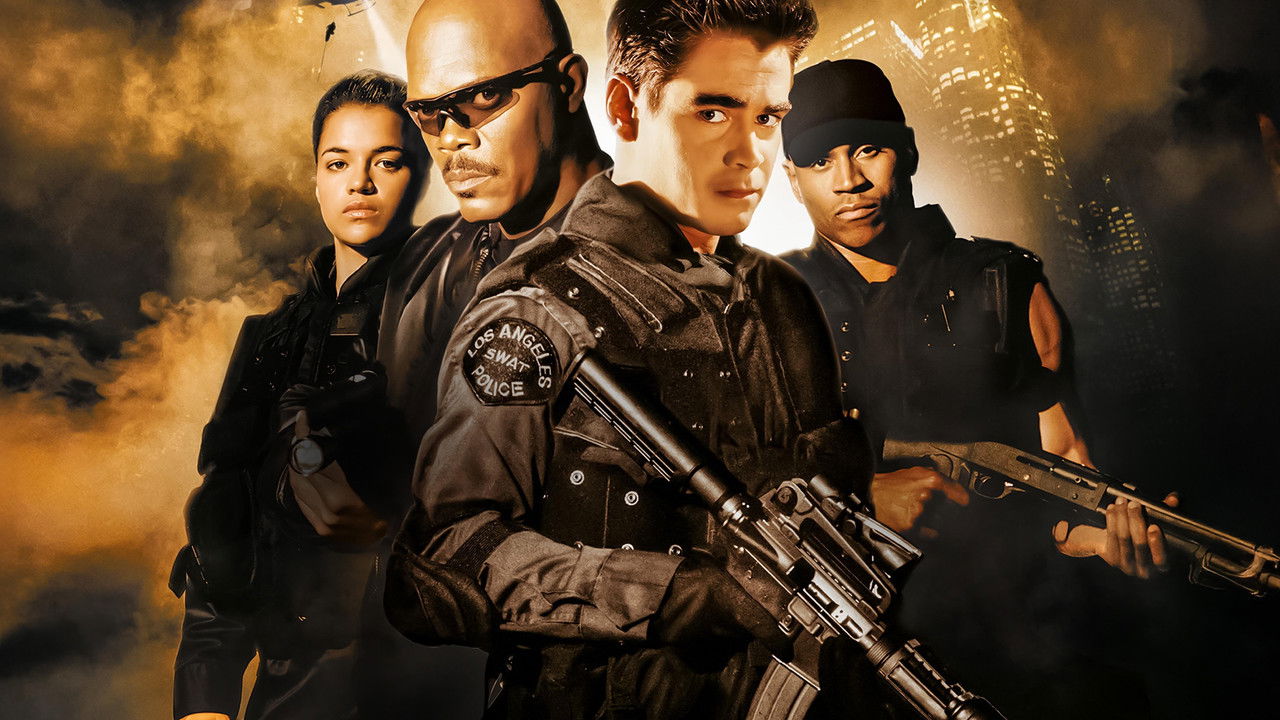
Apparently, the cast didn't just show up and play dress-up, either. To get the "S.W.A.T. look" right, the actors went through a rigorous tactical boot camp. Colin Farrell and the team trained with actual LAPD S.W.A.T. officers to ensure their room-clearing and weapon-handling looked authentic. In a fun bit of meta-trivia, Steve Forrest, the lead of the original 1970s S.W.A.T. TV show, makes a cameo as the driver of the S.W.A.T. van. It’s a nice nod to the film’s DNA, though the 2003 version is a much more cynical, post-9/11 beast than its predecessor.
Another cool detail: Samuel L. Jackson reportedly took the role specifically because he was a fan of the original show as a kid. You can tell he’s having a blast, even when the dialogue leans into those early-2000s action tropes.
Ultimately, S.W.A.T. is the ultimate "7/10" movie—and I mean that as a high compliment. It’s a sturdy, well-built machine that doesn't try to reinvent the wheel, but it keeps those wheels spinning at a high velocity. It’s a relic of a time when you could gather a group of rising stars, give them some heavy weaponry, and let a simple high-concept premise carry the day. It might not be a "masterpiece," but it’s an incredibly efficient piece of entertainment that rewards a rewatch, especially if you’re nostalgic for a time when action movies felt like they were made of steel and cordura rather than pixels.
It’s the kind of film that made me want to go out and buy a tactical vest, even though the most dangerous thing in my immediate vicinity was a stray LEGO brick and a half-assembled nightstand. Sometimes, that’s all you need from a movie.
Keep Exploring...
-
The Sentinel
2006
-

The Negotiator
1998
-
The Fast and the Furious
2001
-
Lethal Weapon 4
1998
-
Ronin
1998
-
Gone in Sixty Seconds
2000
-
Spy Game
2001
-
Swordfish
2001
-

16 Blocks
2006
-

The Fast and the Furious: Tokyo Drift
2006
-
Shaft
2000
-
Once Upon a Time in Mexico
2003
-
Cellular
2004
-
Crank
2006
-
Quantum of Solace
2008
-

Basic
2003
-
Con Air
1997
-
The Jackal
1997
-
The Taking of Pelham 1 2 3
2009
-
Gangster Squad
2013