The Hunted
"The teacher becomes the target."
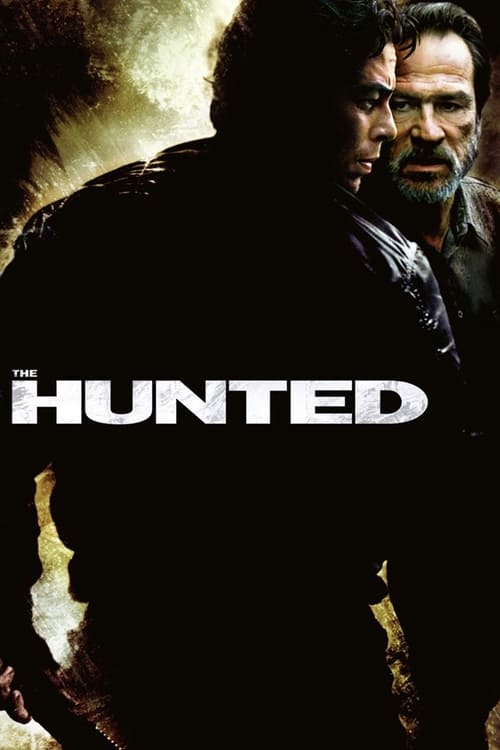
Most directors in their late sixties are looking for a comfortable chair and a legacy project, but William Friedkin decided to spend 2003 dragging Tommy Lee Jones through the freezing mud of the Pacific Northwest. There is a specific kind of intensity that only Friedkin brings—a jagged, restless energy that treats every frame like a crime scene. Looking back at The Hunted, it feels like a stray dog that wandered into a high-society gala. In a year dominated by the digital polish of The Return of the King and the burgeoning superhero craze, this movie arrived like a piece of rusted flint: sharp, primitive, and entirely uninterested in making friends.

I watched this recently on a Tuesday night while eating a bowl of cereal that had gone slightly soggy, and honestly, the dampness of the flakes paired perfectly with the constant, drizzling rain of the film’s Oregon setting. You can almost smell the wet wool and the pine needles through the screen.
The Art of the Primal Chase
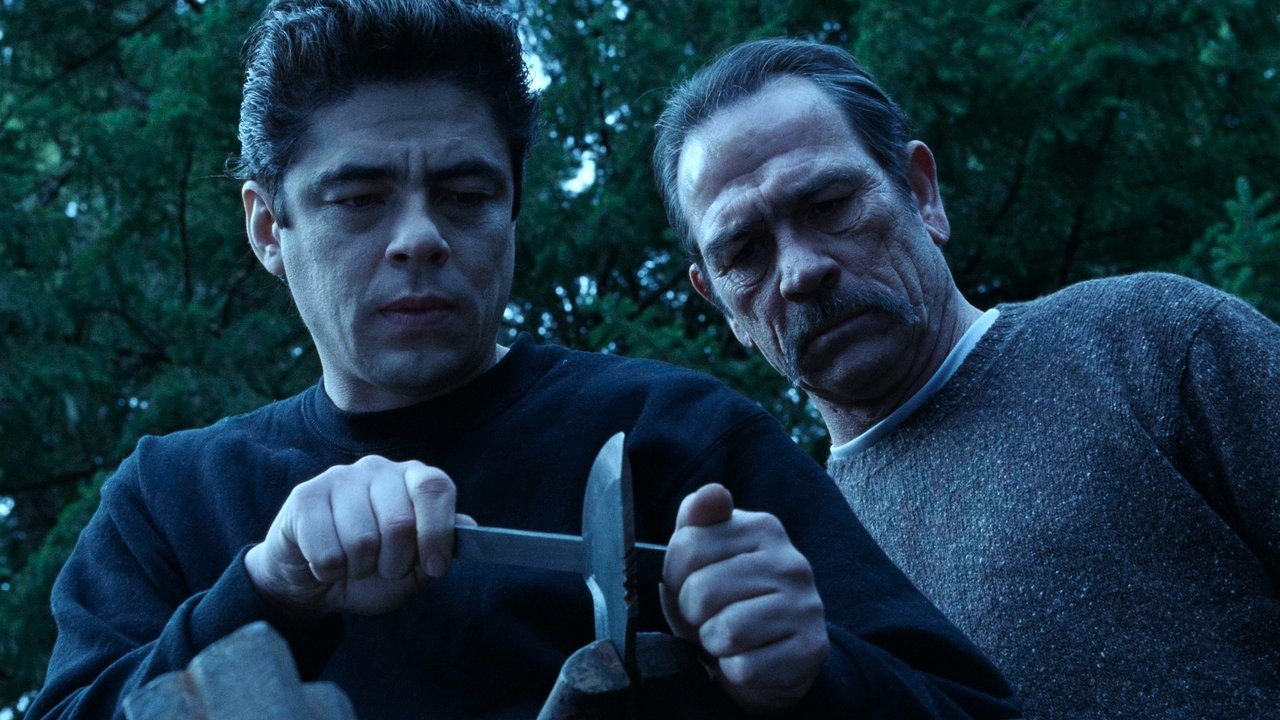
The plot is deceptively simple, echoing the DNA of First Blood without the 1980s chest-thumping. Benicio del Toro plays Aaron Hallam, a Special Operations assassin who has "gone rogue"—a polite way of saying his psyche was shredded by the horrors he witnessed in Kosovo. He’s hiding in the woods, hunting hunters with a terrifying, surgical efficiency. Enter L.T. Bonham (Tommy Lee Jones), the man who taught Hallam how to kill but never taught him how to live with it.
What follows isn’t a series of witty quips or high-tech gadgetry. It’s a tracking exercise. Jones plays Bonham with that signature weary gravity he perfected in The Fugitive (1993) and No Country for Old Men (2007), but here, he’s stripped of his badge and his irony. Tommy Lee Jones’s L.T. Bonham is basically a version of Sam Gerard who finally stopped caring about the law and started caring about the dirt. He’s a man who communicates through broken twigs and flattened grass.
The film captures a very specific post-9/11 anxiety. It deals with the "discarded warrior" trope, but it frames the government as a cold, bureaucratic machine that creates monsters and then asks the janitor to clean up the mess. In 2003, this felt grounded; today, it feels like a prophetic look at the mental health toll of the "Forever Wars."
Knives, Not Guns
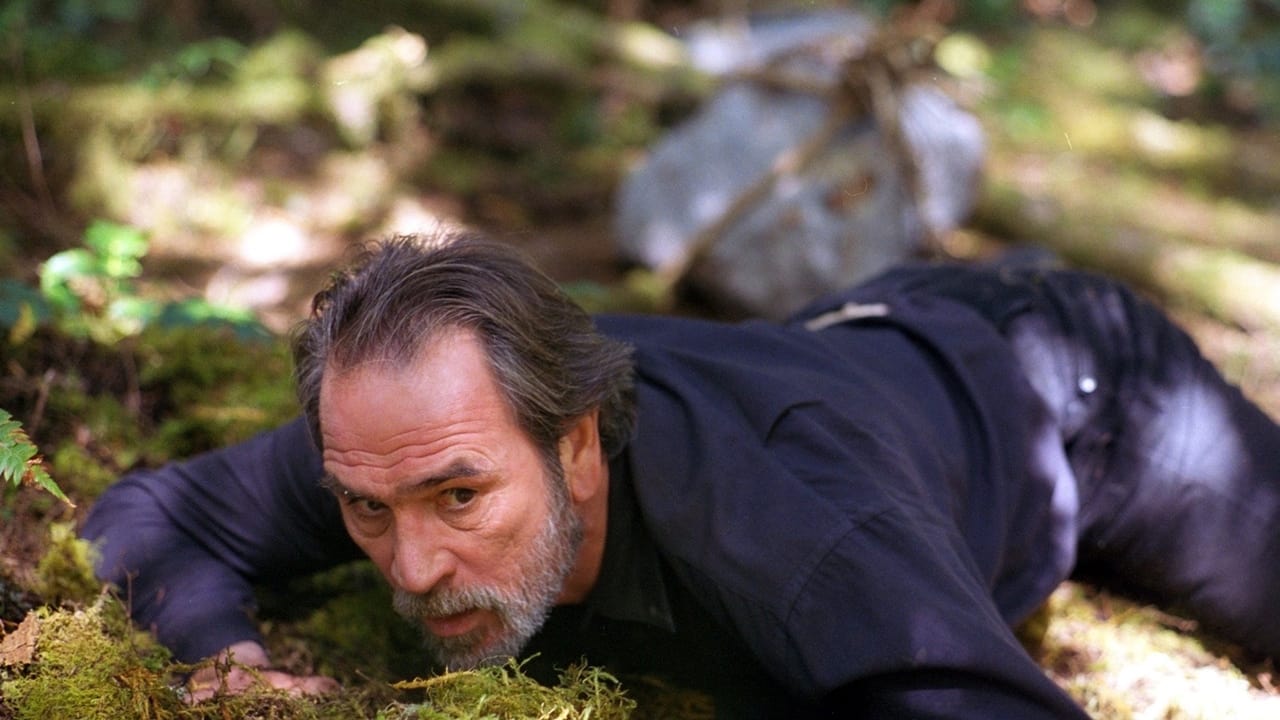
If you’re looking for the stylized gun-fu of the John Wick era, you’re in the wrong forest. The action choreography here is centered around Sayoc Kali, a Filipino martial art focused on knife fighting. Friedkin avoids the "shaky-cam" chaos that would soon plague the Bourne sequels, opting instead for a clarity that makes every slice feel deeply uncomfortable.
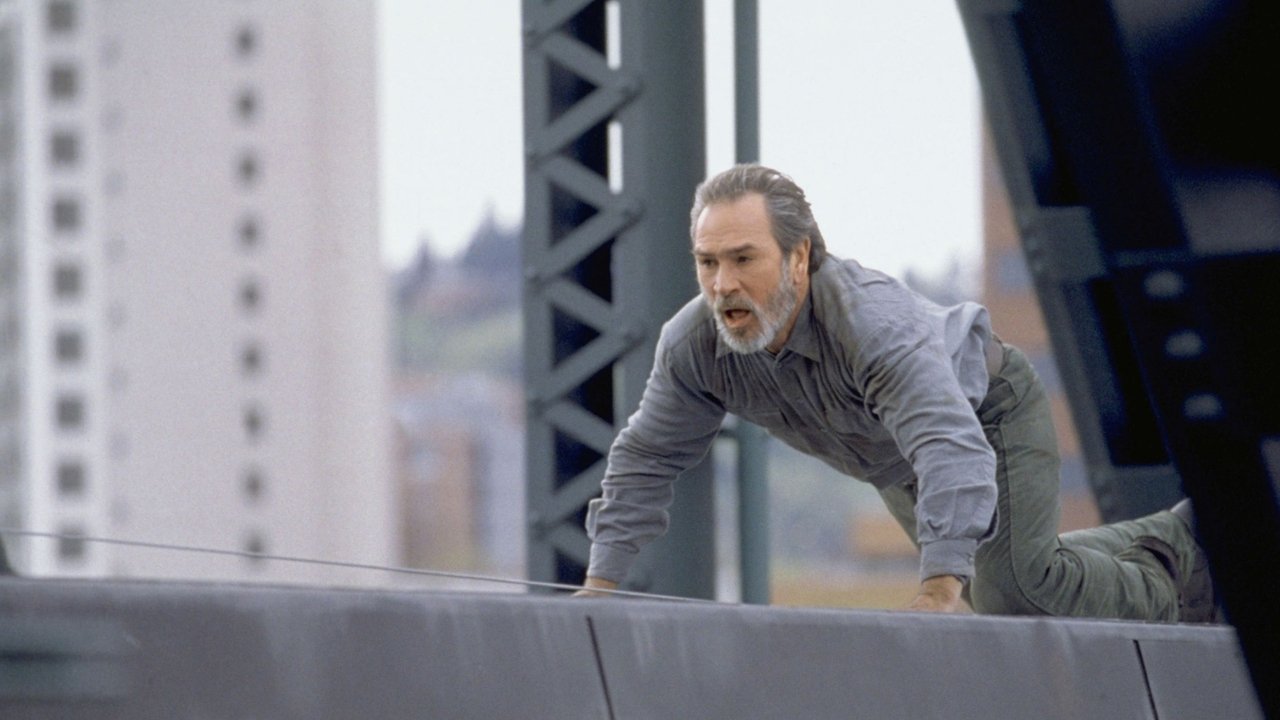
The practical execution is where The Hunted really earns its keep. There is a sequence involving a chase through the Portland MAX light rail system that feels like a spiritual successor to the legendary car chase in Friedkin's own The French Connection (1971). It’s tactile and heavy. When these men hit a concrete floor, you feel the impact in your own joints. The cinematography by Caleb Deschanel (who lensed The Right Stuff) manages to make the lush greenery of the Northwest look oppressive and gray, a labyrinth of shadows where the "civilized" world is just a thin veneer over something much older and more violent.
The film's centerpiece—a brutal knife fight by a waterfall—was filmed with a commitment to physical reality that we rarely see anymore. Del Toro and Jones reportedly did a significant amount of their own stunt work and training, and it shows. The fight isn't a dance; it’s a frantic, desperate struggle between two men who are both too tired to be doing this.
The Beauty of the "In-Between" Era
The Hunted sits in that fascinating "Modern Cinema" transition period. You can see the shift from 1990s practical effects to the early 2000s digital era, but Friedkin stays firmly planted in the mud. The film had a hefty $55 million budget, and while it flopped at the box office, every cent of that money is on the screen in the form of grueling location shoots and intricate practical set pieces. It’s the kind of mid-budget "adult thriller" that has almost entirely vanished from the theatrical landscape, replaced by streaming filler or $200 million spectacles.
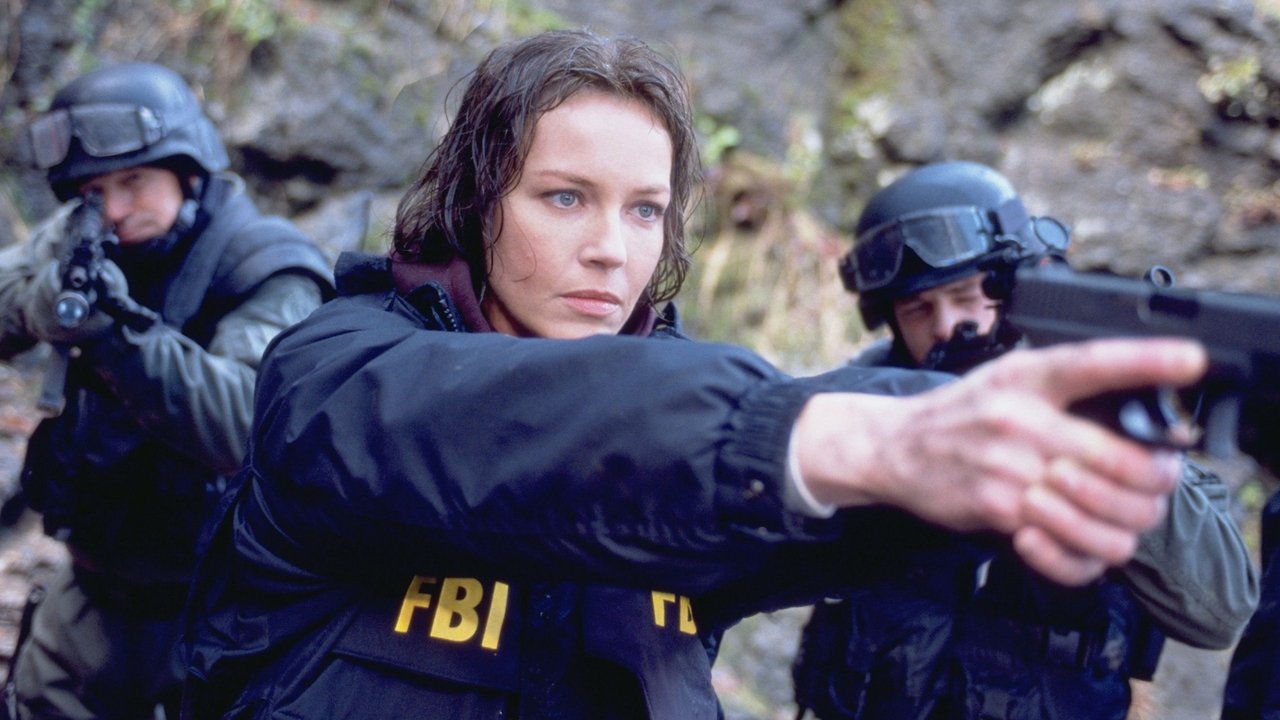
Interestingly, the film’s DVD release became a minor cult favorite among survivalists and knife enthusiasts. The special features, which I remember devouring, detailed the involvement of real-life tracker Tom Brown Jr., who served as the technical advisor. Brown’s influence is all over the movie, from the way Hallam forges his own knife over an open fire to the "wolf crawl" movement patterns used during the hunt. It’s these tiny, authentic details that elevate The Hunted from a generic thriller to a fascinating procedural about the art of disappearing.
While the script by Art Monterastelli and David Griffiths is lean—bordering on skeletal—it works because it trusts its actors and its director to fill the silences. It doesn't over-explain Hallam's trauma; it just shows us the drawings in his notebook and the vacant stare in del Toro’s eyes.
Ultimately, The Hunted is a movie that knows exactly what it is: a 94-minute pursuit that never lets up. It isn't a masterpiece, and it doesn't try to reinvent the wheel, but it is a masterclass in tension and practical filmmaking from a director who refused to mellow out with age. It’s a grim, rainy, and thoroughly engaging piece of cinema that deserves a spot on your "underrated 2000s" watchlist. If you enjoy watching two world-class actors treat a game of hide-and-seek like a Shakespearean tragedy, this is the one for you.
Keep Exploring...
-
Basic
2003
-
The Siege
1998
-
Payback
1999
-
Killer Joe
2012
-

U.S. Marshals
1998
-
The Score
2001
-

Domino
2005
-
United 93
2006
-
Street Kings
2008
-
Breakdown
1997
-

Collateral Damage
2002
-
Backdraft
1991
-
In the Valley of Elah
2007
-
The Protector
2005
-
Running Scared
2006
-
Death Sentence
2007
-
Volcano
1997
-

Double Impact
1991
-

Hackers
1995
-
Mercury Rising
1998