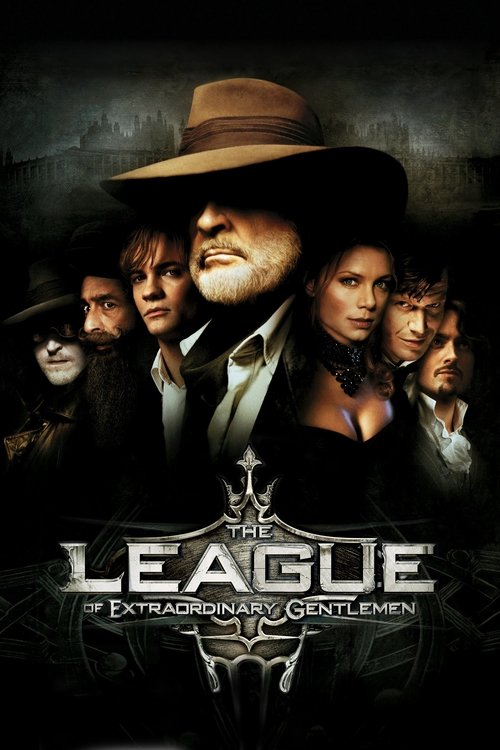
The League of Extraordinary Gentlemen
"Victorian legends join forces to save a sinking century."
I watched this film last Tuesday while my neighbor was power-washing his driveway, and the rhythmic, aggressive drone of the water hitting concrete actually synced up perfectly with the Nautilus’s engine hum. It was the most immersive experience I’ve had in years.
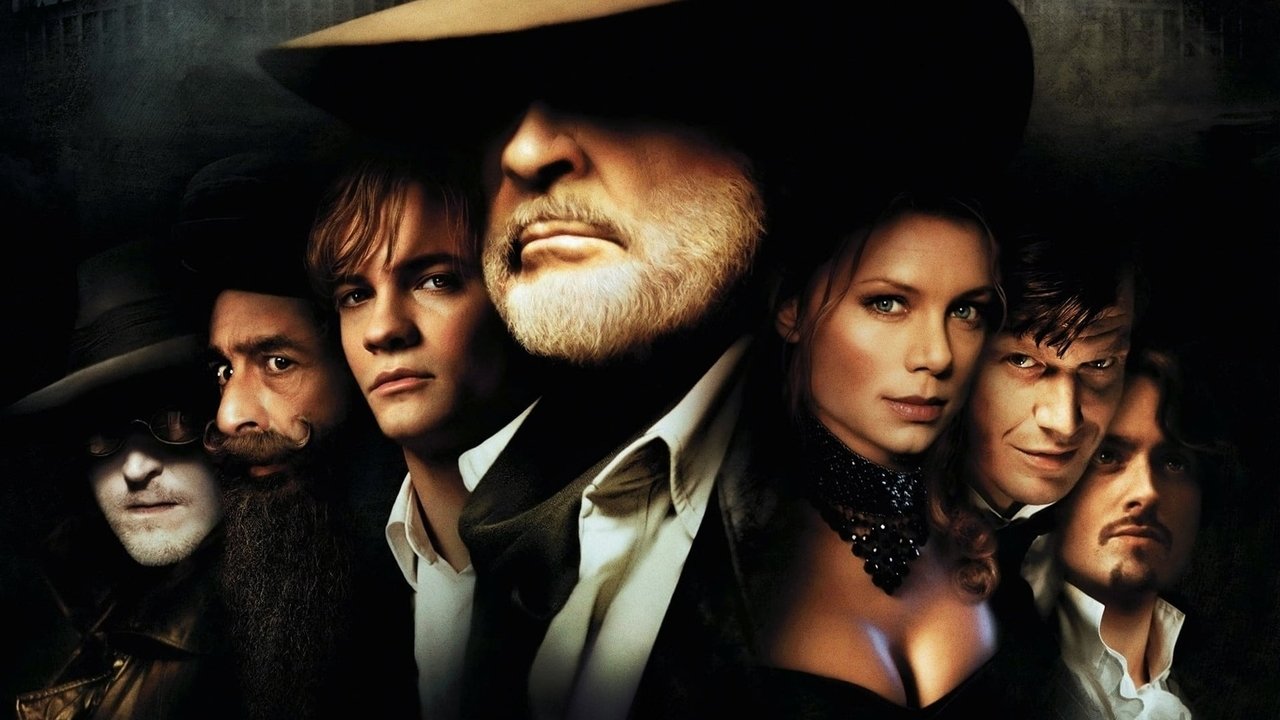
There is a specific kind of early-2000s chaos that you just don't see anymore. It was a time when studios were throwing massive budgets at "high-concept" properties, desperate to find the next X-Men or Lord of the Rings, but before the Marvel formula turned blockbuster filmmaking into a predictable science. The League of Extraordinary Gentlemen—or LXG if you were a cool teen in 2003—is the poster child for this era. It is loud, visually cluttered, historically nonsensical, and, in my opinion, a total blast if you’re in the right headspace.
The Steampunk Avengers
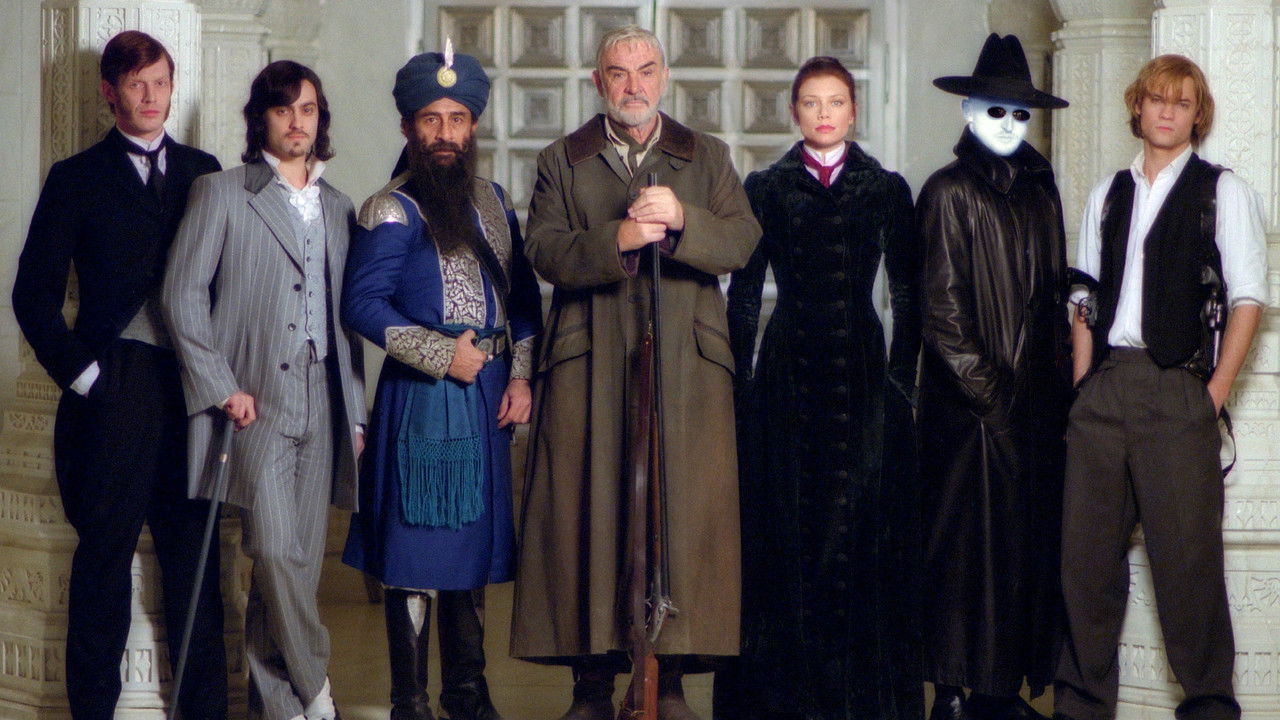
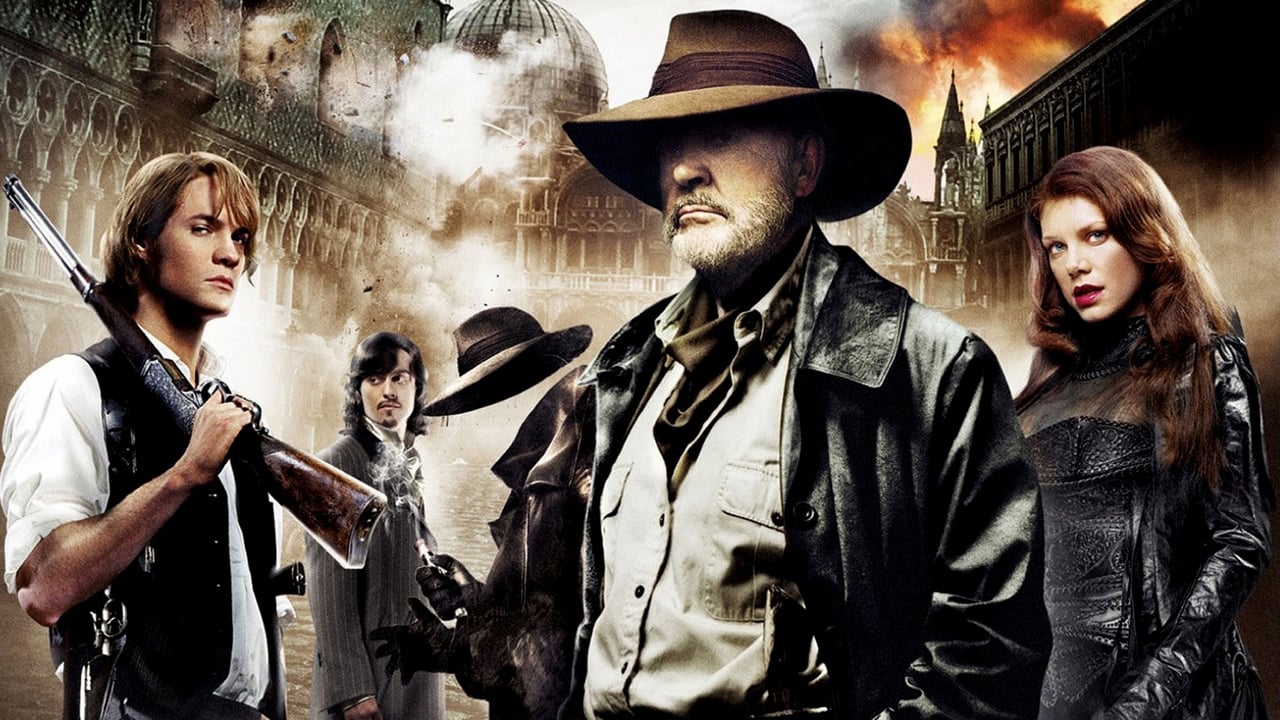
The premise is a literary geek’s fever dream: take the greatest characters of Victorian fiction and turn them into a Victorian-era SWAT team. You’ve got Sean Connery as the weary hunter Allan Quatermain, Naseeruddin Shah (bringing some much-needed gravitas) as a martial-arts-expert Captain Nemo, Peta Wilson as a vampiric Mina Harker, and Shane West as a gun-toting American version of Tom Sawyer.
The addition of Tom Sawyer was a classic studio move of the time—the "American audience needs an American lead" trope—which feels hilarious in retrospect. Why is a grown-up Tom Sawyer a Secret Service agent? Don't worry about it. Why does Stuart Townsend’s Dorian Gray have a painting that makes him immortal but also apparently grants him the ability to engage in high-speed sword fights? Just go with it.
Looking back, this film captures that frantic transition from practical effects to digital. The Nautilus is essentially a high-speed skyscraper that ignores the laws of displacement, and while it looks stunning in wide shots, it feels completely untethered from reality. Then you have the digital effects, specifically Jason Flemyng’s transformation into Edward Hyde. The CGI Hyde is a hulking, balloon-muscled mass that hasn’t aged gracefully, but there’s an ambition to the creature design that I find more interesting than the polished, weightless pixels we see in modern superhero movies.
A Production Cursed by God and Man
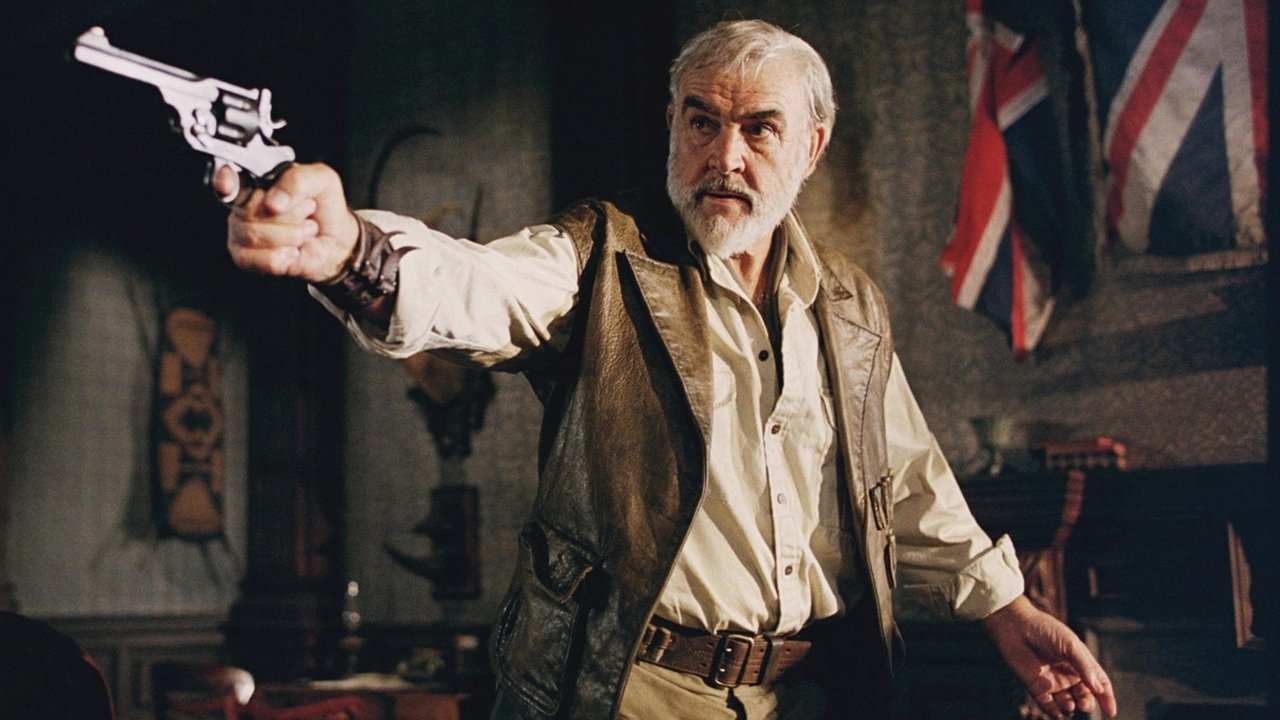
The real story of LXG is often more dramatic than what ended up on screen. This was the film that effectively sent Sean Connery into retirement. The legendary actor famously clashed with director Stephen Norrington (Blade). Rumors from the set suggested they nearly came to blows, and Connery later admitted he was fed up with the "idiots" running Hollywood.
The production was also plagued by literal disaster. While filming in Prague, the worst floods in over a century hit the city, destroying $7 million worth of sets. You can almost feel that exhaustion radiating off the screen. Sean Connery looks like he’d rather be literally anywhere else, including a dentist’s chair, yet his natural charisma still anchors the movie. Even when he’s grumbling through a ridiculous scene involving a bullet-proof tank in Venice, he’s still Sean Connery.
There’s also the Alan Moore of it all. The legendary comic creator famously disowned this adaptation, and while the movie shares almost nothing with the subversive, dark tone of the graphic novel, I’ve found that treating the film as its own "Elseworlds" adventure makes it much more palatable. It’s not trying to be a deconstruction of Victorian imperialism; it’s trying to be a movie where the Invisible Man (played with sleazy charm by Tony Curran) cracks jokes while blowing things up.
The Joy of the Beautiful Mess
So, why do people still talk about this movie? Why does it have a persistent cult following? I think it’s because it represents the end of an era. This was one of the last big-budget gambles that felt truly weird. Before every franchise was sanded down by focus groups to fit a "cinematic universe" mold, we got things like the "Auto-Mobile"—a six-wheeled Victorian convertible that looks like it was designed by a madman.

The action choreography is surprisingly punchy, likely thanks to Stephen Norrington’s background in practical effects and stunts. The final showdown in the snowy fortress has a kinetic energy that reminds me of the 90s action era, even if the plot logic is thinner than a piece of parchment. It’s a movie that tries to do everything at once—espionage, horror, superheroics, and period drama—and while it trips over its own feet constantly, I can’t help but admire the hustle.
It’s the kind of film that rewards a Sunday afternoon viewing with a bowl of cereal. You’ll laugh at the bad CGI, you’ll roll your eyes at the "Americanized" Tom Sawyer, but you’ll also find yourself genuinely digging the chemistry between this ragtag group of outcasts.
Ultimately, The League of Extraordinary Gentlemen is a fascinating relic. It’s a reminder of a time when Hollywood was still figuring out how to make superheroes work, resulting in a film that is equal parts visionary and catastrophic. It may have driven Sean Connery to the golf course for good, but it left us with a steampunk spectacle that is far more memorable than the safe, boring blockbusters that replaced it. If you haven't revisited it since the days of Blockbuster rentals, give it another spin—just don't expect it to make any sense.
Keep Exploring...
-

Final Fantasy: The Spirits Within
2001
-

Underworld: Evolution
2006
-
Death Race
2008
-
Godzilla
1998
-

Hollow Man
2000
-

The 6th Day
2000
-
The Tuxedo
2002
-

Terminator 3: Rise of the Machines
2003
-
The Matrix Revolutions
2003
-

Æon Flux
2005
-

The Brothers Grimm
2005
-

The Island
2005
-

X-Men: The Last Stand
2006
-

Ghost Rider
2007
-

Next
2007
-

Babylon A.D.
2008
-

Race to Witch Mountain
2009
-

Small Soldiers
1998
-

Atlantis: Milo's Return
2003
-

Underworld
2003