The Matrix Reloaded
"Upgrade your reality. The prophecy is only the beginning."
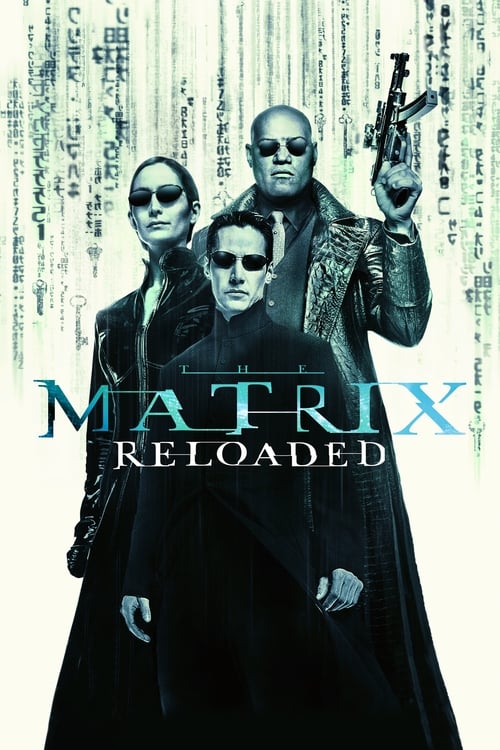
I remember the summer of 2003 like it was a glitch in my own personal timeline. The anticipation for The Matrix Reloaded wasn't just "movie hype"—it was a cultural fever. Every PC in my college library was running that green cascading code screensaver, and we were all convinced that Lana and Lilly Wachowski were about to drop a sequel that would fundamentally alter our DNA. I actually watched this for the first time in a theater where the air conditioning had died, and the sheer humidity of a hundred people in denim and black cotton made the leather seats squeak every time Keanu Reeves landed a punch. Somehow, that sticky, oppressive atmosphere actually made the digital dystopia feel more real.
The Burly Brawl and the Digital Frontier
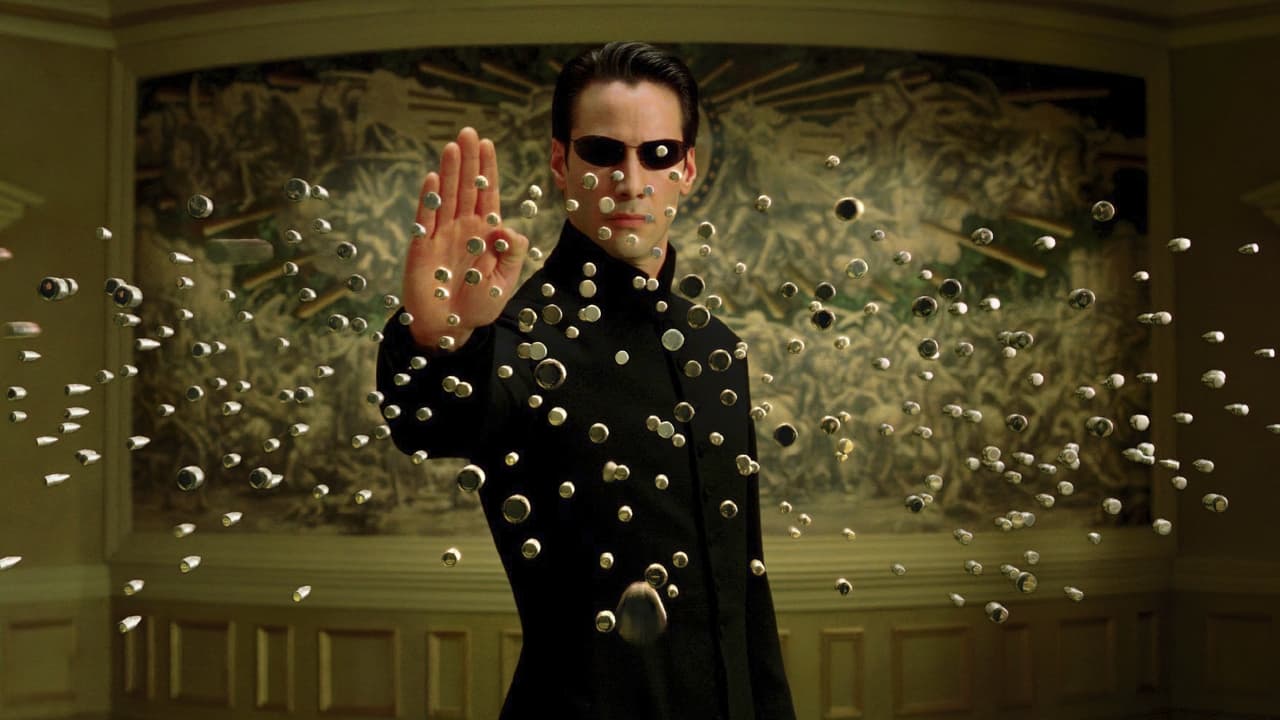
Looking back, Reloaded is the definitive "bridge" movie of the early 2000s CGI revolution. It stands right on the line between the tactile, gritty practical effects of the 90s and the "everything is possible" digital era. The famous "Burly Brawl"—where Neo fights a literal army of Agent Smiths—was the talk of every playground and breakroom. At the time, seeing Hugo Weaving’s face mapped onto a hundred different stuntmen felt like magic.
Today? It’s a bit of a mixed bag. There are moments where the digital doubles lose their "weight" and start to look like a high-stakes fight between sentient rubber bands. But I refuse to judge 2003 tech by 2024 standards. The ambition is what matters. The Wachowskis weren't just making a sequel; they were trying to invent a new way to film motion. They used "virtual cinematography," a process where they captured Keanu Reeves' movements and then reconstructed him in a computer so the camera could pull off angles that would be physically impossible for a human operator. It’s the kind of swing-for-the-fences filmmaking that you just don't see in the assembly-line blockbusters of today.
1.5 Miles of Pure Adrenaline
If the Burly Brawl is the film’s experimental heart, the highway chase is its muscular soul. This sequence is, quite simply, one of the greatest pieces of action cinema ever put to film. To get it right, the production actually built a 1.5-mile loop of freeway on the old Alameda Naval Air Station because no city would let them shut down a real highway for the months required to film it.
The result is breathtaking. When Carrie-Anne Moss weaves that Ducati 996 through oncoming traffic, you feel the speed in your chest. There’s a physical reality to the metal crunching and the wind whipping that balances out the film's more esoteric digital moments. It’s a masterclass in pacing, moving from a fistfight on top of a moving semi-truck to a high-speed shootout without ever losing the audience's orientation. The score by Don Davis, blended with the pulse-pounding electronics of the era, turns the whole thing into a high-speed opera. This wasn't just a scene; it was a $40 million investment in pure adrenaline.
Philosophers in Trenchcoats
Where Reloaded usually loses people is the talk. Oh boy, the talk. By the time we get to Zion—a subterranean city that looks like a cross between a rave and a construction site—the movie leans hard into its own mythology. We get long monologues about causality, choice, and the nature of control. Laurence Fishburne brings a Shakespearean gravity to Morpheus that keeps things grounded, but even he struggles with some of the more "galaxy brain" dialogue.
Then there’s the Architect. I’ll be honest: the first time I saw this, I had no idea what that guy was talking about. It felt like being lectured by a high-end IKEA manager with a god complex. But revisiting it now, the complexity is actually what makes it hold up. In an era of sequels that just repeat the first movie's beats, Reloaded had the guts to tell the audience that the "Hero’s Journey" they cheered for in the first film was actually just another layer of the machine's control. It’s cynical, dark, and intellectually demanding. It’s a post-9/11 movie through and through—steeped in the anxiety that the systems we trust are actually rigged against us.
The Legend of the Keymaker
The film’s legacy is also tied to the birth of the "transmedia" franchise. This was the era of the DVD "Special Edition" (I still have the two-disc set with the green tinted slipcase), and the Wachowskis tried to tell the story across movies, the Animatrix shorts, and a video game called Enter the Matrix. If you didn't play the game, you missed why Jada Pinkett Smith’s character, Niobe, was so important. It was a bold strategy that paved the way for the "everything is connected" cinematic universes we see now, even if it felt a bit like homework at the time.
Ultimately, The Matrix Reloaded is a glorious, messy, over-engineered marvel. It’s a film that refuses to be small. Whether it’s the sheer scale of the sets or the depth of the philosophical rabbit holes, it demands your full attention. It might not have the lean, perfect structure of the original 1999 masterpiece, but it has a chaotic energy and a visual splendor that still puts modern CGI-fests to shame.
The Matrix Reloaded is the ultimate "more is more" sequel. It doubles down on the action, the philosophy, and the leather, creating a viewing experience that is as exhausting as it is exhilarating. While the digital effects have aged and the dialogue can be a bit much, the highway chase alone is worth the price of admission. It’s a fascinatng relic of a time when blockbusters were allowed to be weird, dense, and experimental. Turn off your phone, jack in, and enjoy the ride.

Keep Exploring...
-
The Matrix Revolutions
2003
-
The Matrix
1999
-
The Matrix Resurrections
2021
-
The Hunger Games
2012
-
Star Trek: First Contact
1996
-

V for Vendetta
2006
-
Armageddon
1998
-

Jurassic Park III
2001
-
Serenity
2005
-
Minority Report
2002
-

Starship Troopers
1997
-

Speed Racer
2008
-
Casino Royale
2006
-

Star Trek VI: The Undiscovered Country
1991
-
Mission: Impossible
1996
-
The Rock
1996
-
Mission: Impossible - Ghost Protocol
2011
-
Rise of the Planet of the Apes
2011
-
Dawn of the Planet of the Apes
2014
-
Star Trek: Generations
1994