The Matrix Revolutions
"The war ends in the rain."
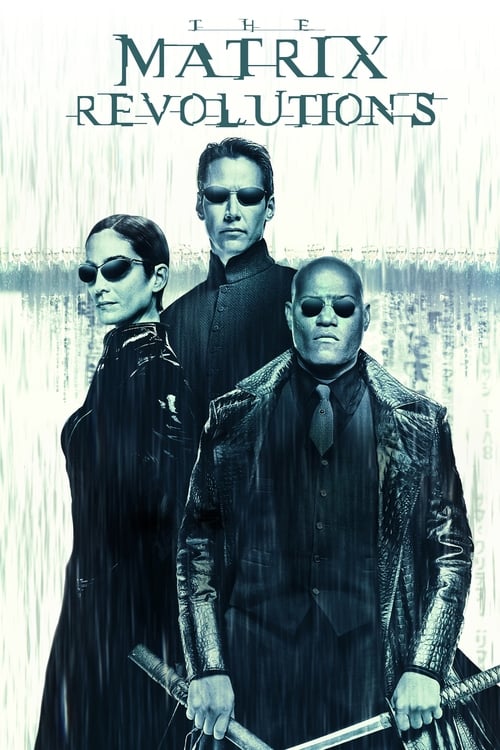
I remember the lobby of the AMC on opening night in 2003. There was a guy three seats down from me who brought his own Tupperware of lukewarm spaghetti, and the smell of cheap marinara somehow became the permanent olfactory soundtrack to my first viewing of The Matrix Revolutions. Looking back, that feels appropriate. This is a messy, heavy, carb-loaded conclusion to a trilogy that started as a sleek, leather-clad revolution. It’s the "difficult" third album of cinema, the one where the Wachowskis (who also gave us the wild Speed Racer) decided to stop asking "What is the Matrix?" and started asking "How many Sentinels can we fit on a screen before the computer explodes?"

The Metal and the Mud
By the time Revolutions arrived, the Y2K tech-anxiety that fueled the 1999 original had shifted into something grittier. We were in a post-9/11 world, and the slick, green-tinted philosophy was being replaced by the gray, industrial dread of the war on Zion. I’ve always felt that Revolutions gets a bad rap because it abandons the "simulation" for the "real world," which, let’s be honest, is a lot of corrugated metal and sweaty people in sweaters.
The centerpiece of the film—the massive machine invasion of Zion—is a fascinating relic of the early 2000s CGI revolution. While The Lord of the Rings: The Return of the King was using massive crowds of Orcs that same year, the Wachowskis went for a swarm of "squiddies." It’s an incredible sequence of scale, but looking at it now on a 4K screen, you can see the digital seams. Yet, there’s a physical weight to the APUs (those big walking mech-suits). You can feel the recoil of the guns and the clatter of the empty shell casings. Jada Pinkett Smith as Niobe brings a much-needed grounded energy here; she’s one of the few characters who feels like she’s actually driving a vehicle rather than just navigating a plot point.
The Smith Pandemic
If the first half is a war movie, the second half is a Gothic superhero showdown. Hugo Weaving as Agent Smith remains the undisputed MVP of this entire franchise. By this point, Smith isn’t just a rogue program; he’s a virus that has consumed the entire simulation. Weaving’s performance is a masterwork of scenery-chewing, delivering every line with a rhythmic, staccato disdain that makes you root for the villain just a little bit.
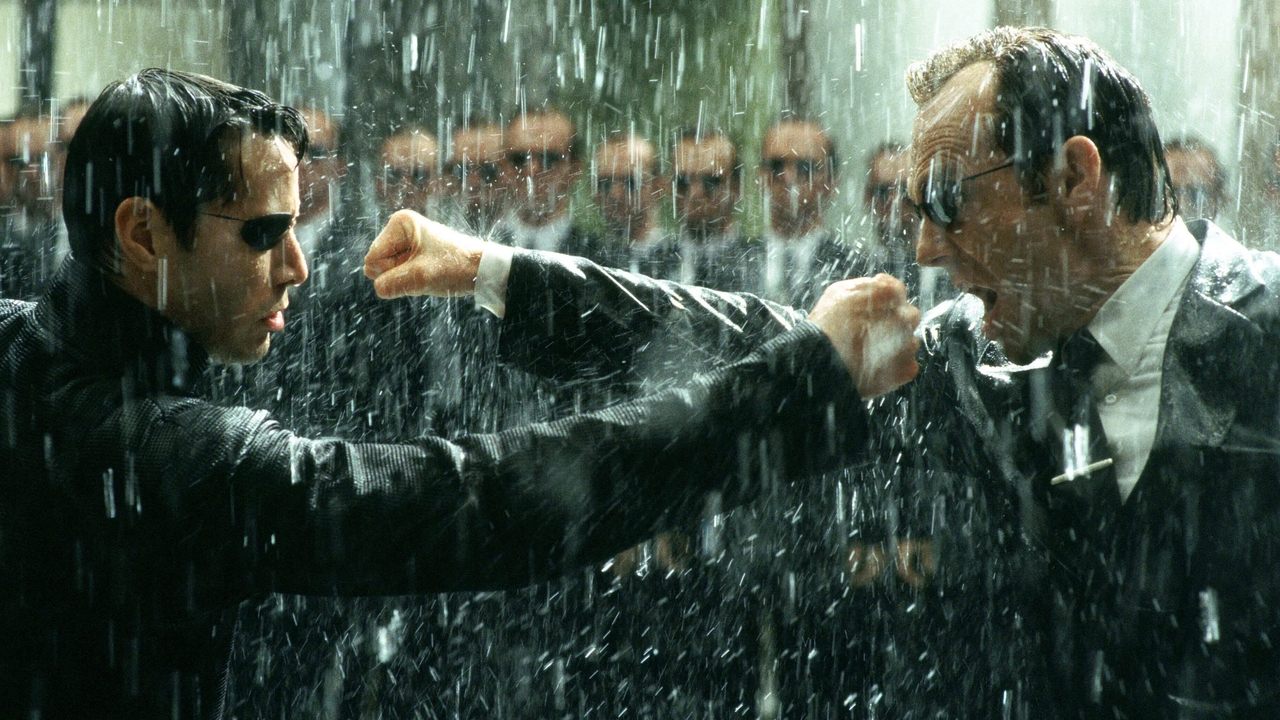
Apparently, Hugo Weaving studied Keanu Reeves's own speech patterns to better mimic him for the moments where they mirror each other, which adds a layer of eerie symmetry to their final encounter. That "Super Burly Brawl" in the pouring rain was a logistical nightmare that took eight weeks to film. It turns out the "rain" had to be thickened with a food-grade gelling agent so it would show up clearly under the high-intensity lights, which meant the actors were basically punching each other inside a giant, freezing-cold bowl of transparent gravy.
It’s over-the-top, sure. Neo goes blind and basically becomes Daredevil in a bathrobe, and the final fight involves two gods throwing each other through skyscrapers. But there’s a sincerity to it that I’ve grown to appreciate. In an era before the MCU turned every climax into a quip-filled light show, Revolutions was dead serious about its myth-making.
The Oracle’s New Face
One of the most poignant behind-the-scenes stories involves the Oracle. The original actress, Gloria Foster, passed away before she could complete her scenes for the third film. The Wachowskis cast Mary Alice to take over, and they wrote the change directly into the script as a consequence of the Merovingian’s meddling. It’s a rare moment where real-world tragedy forced a creative choice that actually deepened the lore. It reinforced the idea that in this digital world, the "shell" is temporary, but the purpose remains.
The film also feels like the end of an era for the "Director’s Commentary" culture. I remember pouring over the "Ultimate Matrix Collection" DVD set, which had more hours of behind-the-scenes footage than the actual movies. We were obsessed with how they did it—the "Bullet Time," the motion capture, the philosophy. Revolutions was the peak of that DVD-era transparency, where we were invited to see every wire and blue screen.
Looking back, the Zion battle is basically a high-budget game of Space Invaders, and the ending—where Neo bargains for peace rather than "winning" in the traditional sense—still feels surprisingly subversive for a blockbuster. It didn't give fans the easy catharsis they wanted in 2003, which is exactly why it’s aged into a cult curiosity. It’s a film about the exhaustion of war, released when the world was just starting one.
While it lacks the tight, focused genius of the first film, The Matrix Revolutions is a fascinating, flawed capstone. It’s a movie that prioritizes spectacle and heavy-handed symbolism over the "cool" factor that made the franchise famous, but I’ll take its ambitious messiness over a safe, corporate sequel any day. It’s the sound of a massive budget being used to chase a very specific, very strange vision to the very end of the line.
I still can't smell marinara sauce without thinking of Sentinels.
---


Keep Exploring...
-

The Matrix Reloaded
2003
-
The Matrix Resurrections
2021
-
The Matrix
1999
-
The Island
2005
-

X-Men: The Last Stand
2006
-

Serenity
2005
-

G.I. Joe: The Rise of Cobra
2009
-
I Am Number Four
2011
-

Battleship
2012
-
RoboCop 2
1990
-
Armageddon
1998
-
Star Trek: Insurrection
1998
-
Final Fantasy: The Spirits Within
2001
-

Jurassic Park III
2001
-
Planet of the Apes
2001
-
Star Trek: Nemesis
2002
-

Paycheck
2003
-
Sky Captain and the World of Tomorrow
2004
-
9
2009
-
Cloud Atlas
2012