The Triplets of Belleville
"A bicycle-pump symphony of grotesque delight."
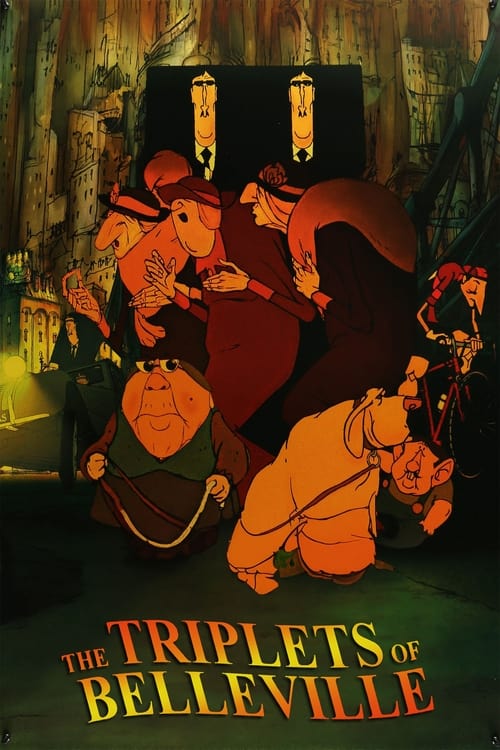
When the 2004 Academy Awards rolled around, everyone expected the Best Animated Feature trophy to be a coronation for Finding Nemo. Pixar was the new king, CGI was the shiny future, and hand-drawn animation was supposedly packing its bags for the retirement home. Then along came a bizarre, nearly silent French film about a club-footed grandmother, an obese dog, and three elderly singers who eat frogs. While it didn't win the Oscar, it did something better: it proved that the "old" way of making movies could still be weirder, bolder, and more human than anything coming out of a computer lab in Emeryville.
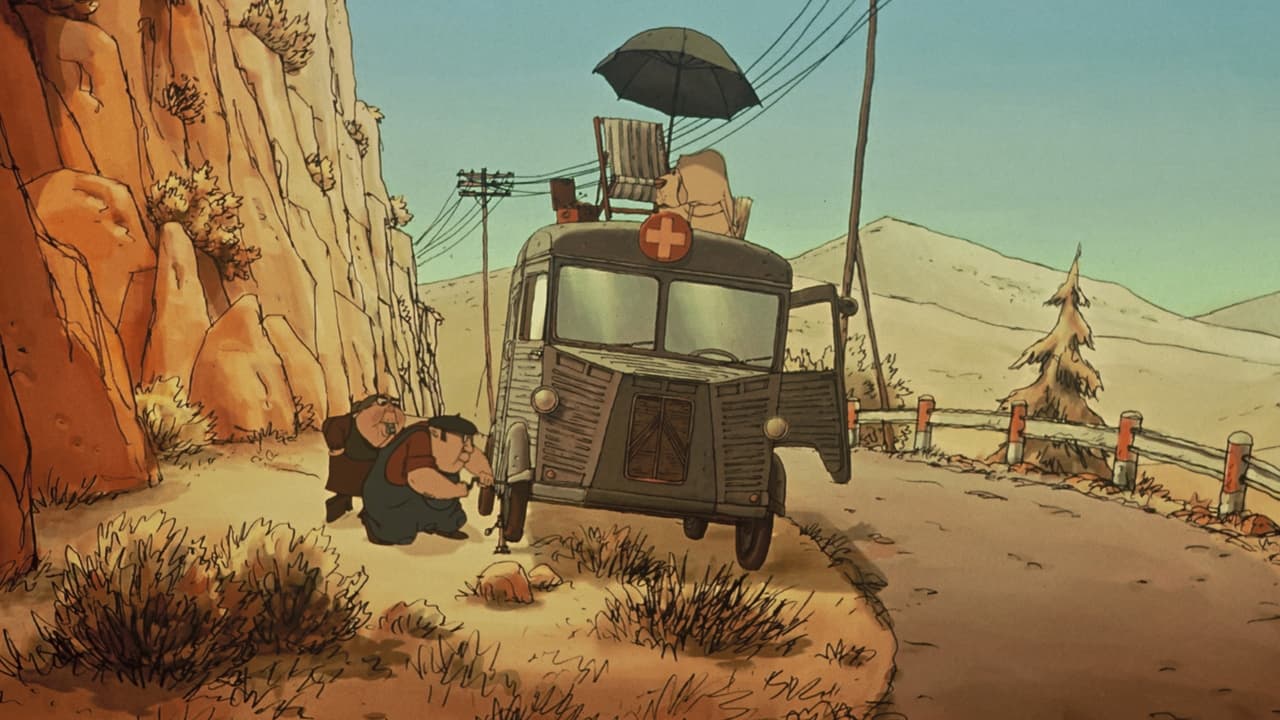
I first watched this on a laptop with a cracked screen that made the distorted animation look even more jagged and surreal, which, honestly, felt like the intended way to see it. It’s a film that thrives on the gritty, the lumpy, and the misshapen.
A Noisy Kind of Silence
Director Sylvain Chomet—who later gave us the equally charming The Illusionist—crafted a movie that is technically a "drama" because of the stakes, but it plays like a jazz improvisation. The plot is simple: Madame Souza’s grandson, Champion, is a melancholy cyclist kidnapped by the French Mafia during the Tour de France. She crosses the Atlantic in a pedal-boat to rescue him, aided by her dog, Bruno, and the titular Triplets of Belleville, a trio of former music-hall stars.
What makes this work so brilliantly isn’t just the story, but the total commitment to visual storytelling. There are maybe five lines of intelligible dialogue in the entire 80 minutes. Instead, we get a soundscape designed by Benoît Charest that treats every squeaky bicycle pump, barking dog, and snapping finger like a lead instrument. It’s a bold move that forces you to pay attention to the characters' faces. Madame Souza doesn't need to give a monologue about her grief; her determination is written in the way she relentlessly whistles and adjusts her grandson’s bike seat. The French Mafia has never looked more like a group of square-shouldered refrigerators, and their silent, rhythmic movements are genuinely more menacing than any dialogue-heavy villain of that era.
The 2D Revolution in a 3D World

Looking back at 2003, we were in the thick of the "CGI Revolution." Digital was taking over, and The Triplets of Belleville felt like a defiant stand for the pen and ink. However, Sylvain Chomet was smarter than to just ignore the new tech. He actually integrated early 3D models for the cars and the bicycles. At the time, this was a massive talking point in animation circles—the way the sleek, rigid lines of the 3D vehicles contrasted with the rubbery, exaggerated hand-drawn characters.
Today, that blend still holds up remarkably well. It emphasizes the scale of the world. The ocean liners and the skyscrapers of "Belleville" (a satirical mash-up of New York, Paris, and Montreal) feel cold and mechanical compared to the warm, lumpy humanity of the protagonists. The character designs are deliberately "ugly" by Disney standards. The cyclists look like mutated, sweat-soaked insects, their legs bulging with impossible muscles. It’s grotesque, sure, but it’s also undeniably alive. It captures the physical toll of the sport better than a photorealistic documentary ever could.
Frogs for Dinner and a Dog Named Bruno
The comedy here is pitch-black and wonderfully surreal. My favorite sequence involves the Triplets "fishing" for dinner by tossing a hand grenade into a swamp and catching the falling frogs with umbrellas. It’s the kind of playful absurdity that reminds me of Jacques Tati’s Playtime or the silent comedies of Buster Keaton. There’s a warmth to these three old women who have been forgotten by time but still have enough rhythm in their bones to make music with a vacuum cleaner and a refrigerator shelf.

And then there’s Bruno. Bruno is the most relatable character in cinema history because he just wants to bark at things that move. His recurring dream sequences, involving a black-and-white train, are some of the most inspired moments of character psychology I’ve ever seen in an animal character. He isn't a "talking dog" sidekick; he’s just a dog, and the film respects him for it.
The movie captures a very specific Y2K-era anxiety about the loss of the "handmade" world. As we moved toward the corporatization of everything in the early 2000s, Belleville represented the bloated, consumerist future, while Madame Souza and her bicycle pump represented the stubborn, analog past. It’s a film that asks us to find beauty in the dented, the rusted, and the eccentric.
The Triplets of Belleville is a scrap-heap masterpiece that demands to be seen by anyone who thinks animation is just for kids or that movies need dialogue to tell a deep story. It’s a weird, jazzy, frog-eating fever dream that has only grown more precious as we’ve moved further into the digital age. If you missed it during the DVD era, find a copy, turn up the volume, and let the rhythm of the bicycle pump carry you away. It’s the best workout you’ll ever get while sitting on your couch.

Keep Exploring...
-
Feast
2014
-
Holes
2003
-

Arthur Christmas
2011
-
A Monster in Paris
2011
-
Asterix: The Mansions of the Gods
2014
-

For the Birds
2000
-
Tokyo Godfathers
2003
-

Barbie as The Princess & the Pauper
2004
-
Mickey, Donald, Goofy: The Three Musketeers
2004
-
Lilo & Stitch 2: Stitch Has a Glitch
2005
-
Presto
2008
-

DuckTales: The Movie - Treasure of the Lost Lamp
1990
-

The Muppet Christmas Carol
1992
-
A Goofy Movie
1995
-
Winnie the Pooh
2011
-

An American Tail
1986
-

All Dogs Go to Heaven
1989
-
A Close Shave
1996
-
Geri's Game
1997
-
Chicken Run
2000