Timeline
"History is about to be rewritten. Literally."
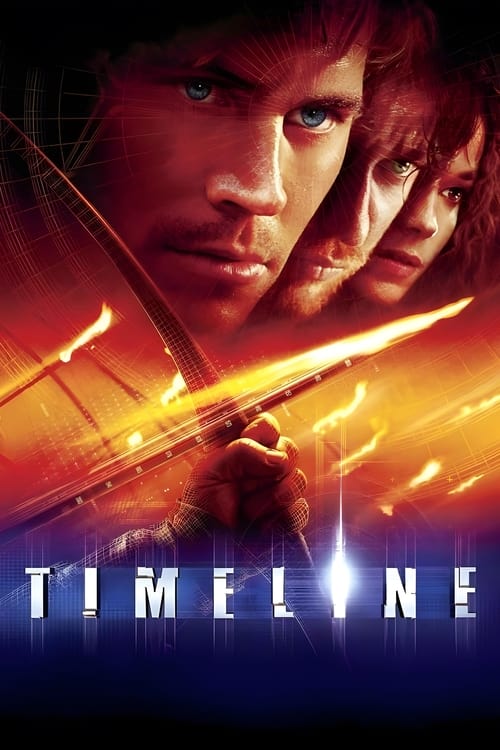
If you ever wanted to see a movie that feels like it was discovered in a time capsule buried behind a Blockbuster in 2003, Timeline is your holy grail. I recently revisited this one on a scratched DVD I found at a thrift store—the kind of disc that has that distinct "basement" smell—and it transported me back to a very specific era of Hollywood. It was a time when we were obsessed with Michael Crichton novels, convinced Paul Walker was the next great leading man, and still trying to figure out how to make CGI look like something other than a PlayStation 2 cutscene.

Timeline is an fascinatng failure. It’s directed by Richard Donner—the man who gave us Superman and Lethal Weapon—and yet it feels strangely untethered, like a big-budget student film where the students accidentally had access to $80 million and a castle in Quebec.
The Crichton Conundrum
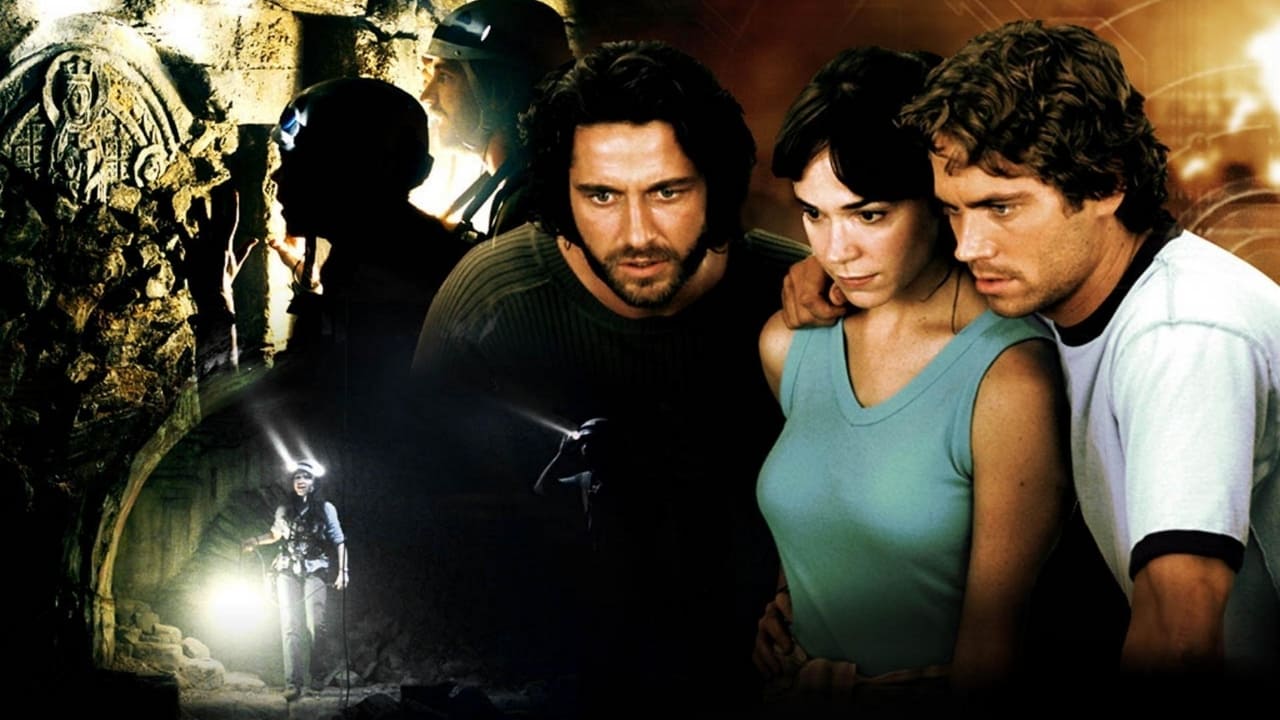
The setup is classic Crichton: "Science goes wrong in a very expensive way." A group of archeologists, led by the perpetually earnest Frances O'Connor and a pre-megastardom Gerard Butler, are excavating a medieval site in France. They discover their professor (Billy Connolly) has gone missing, only to find a 600-year-old parchment with his signature on it. Naturally, they head to a shadowy tech firm run by a delightfully slimy David Thewlis, who explains they’ve invented a way to "fax" people to the 14th century.
I watched this movie while eating a slightly stale bag of pretzels, and honestly, the dry crunch of the pretzels was more consistent than the film’s internal logic. The "wormhole" they travel through looks like a kaleidoscopic screensaver from Windows 98. It’s that early-2000s digital sheen that hasn't aged gracefully. While The Lord of the Rings was proving that CGI could be breathtaking, Timeline was proving that it could also look like a bowl of translucent spaghetti.
Surfers in the Middle Ages
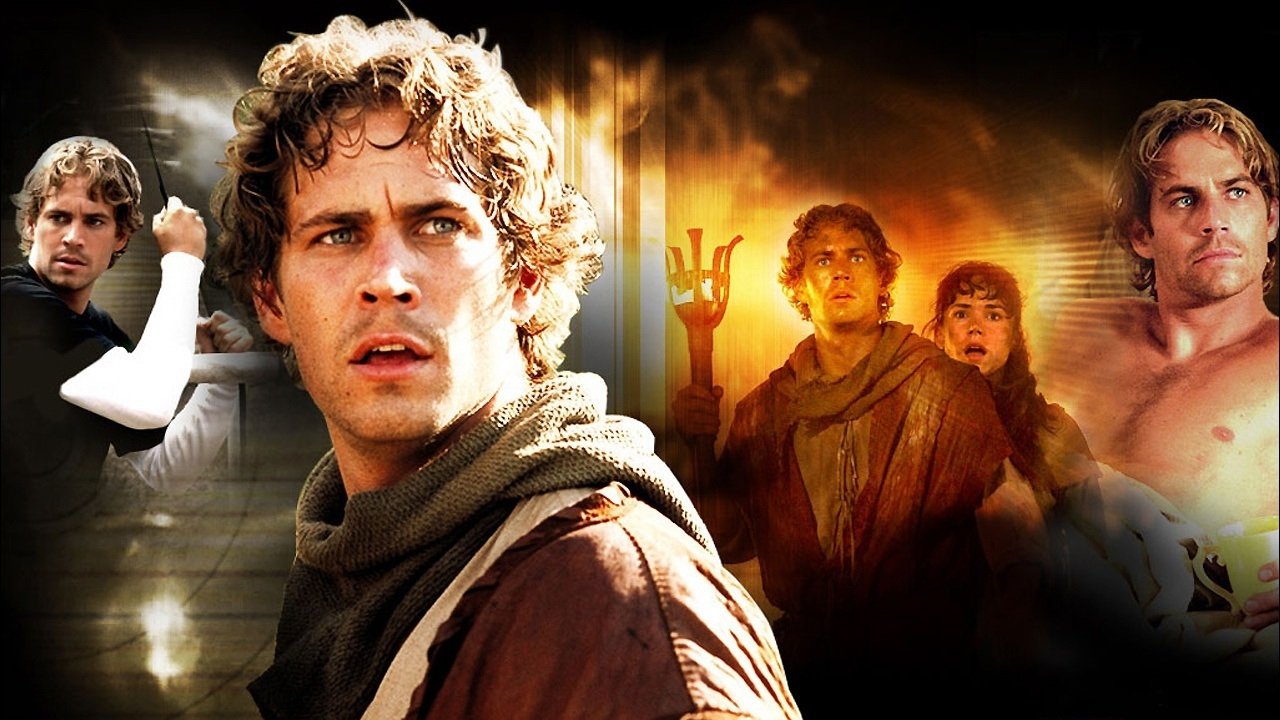
The real joy (or agony, depending on your mood) lies in the casting. Paul Walker plays Chris Johnston, and bless his heart, he looks like he’s constantly searching for a surfboard in the middle of the Hundred Years' War. His performance is so Californian that you half expect him to call a French knight "dude" before a swordfight. Opposite him, Gerard Butler as Andre Marek is clearly in a different movie. Butler is doing the work here, leaning into the grit and the history, proving even then that he had the "action hero" DNA that would eventually explode in 300.
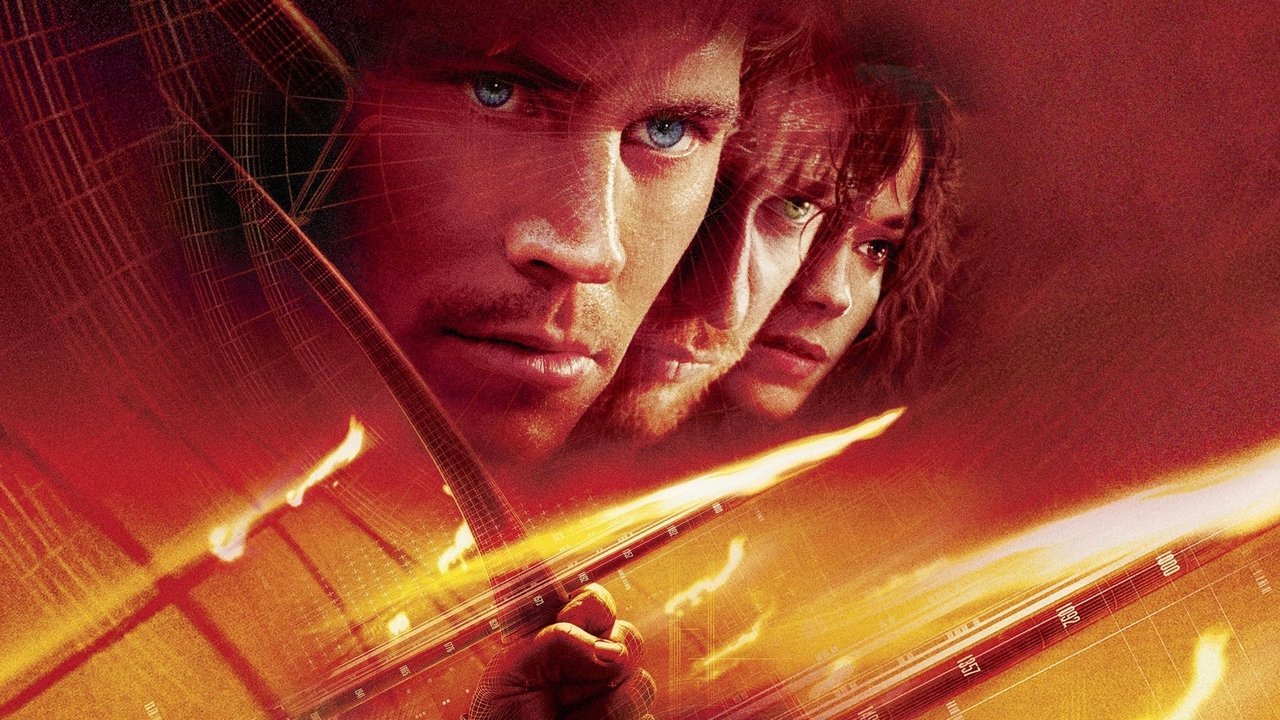
Then there’s Anna Friel as Lady Claire. She’s tasked with being the "historical" heart of the film, and she does an admirable job, but the script gives her so little to do other than look distressed in a bodice. The chemistry between the modern-day scientists and the medieval locals is about as natural as a vegan burger at a Texas BBQ. You can see the gears grinding as the film tries to balance "hard sci-fi" with "historical epic," and it frequently stalls in the middle.
The Donner Touch and Practical Grit
Where Timeline actually wins some points is in its physical production. Richard Donner was a "practical effects" guy at heart, and when the movie stops worrying about the time-travel "fax machine" and just focuses on the siege of Castelgard, it picks up steam. There are real sets here—massive, stone-cold structures that feel heavy and dangerous. The stunt work, involving actual horses and hundreds of extras in chainmail, provides a weight that the digital effects lack.
The battle sequences are staged with a clarity that many modern directors have traded for "shaky-cam" chaos. You know where everyone is, you understand the stakes of the catapult fire, and the sound design of the flaming arrows and clashing steel is genuinely satisfying. It’s just a shame that these sequences are interrupted by the "present day" plot, which feels like a low-rent techno-thriller. David Thewlis is essentially playing a Bond villain whose only crime is being a jerk to his employees, and his subplot feels like it belongs in a different time zone entirely.
Why It Vanished

Why don't we talk about Timeline anymore? For one, it was released in the shadow of The Return of the King. You can't put out a "medieval" movie in 2003 and expect people not to compare it to Peter Jackson’s masterwork. Timeline felt small and plastic by comparison. It also suffered from a script that stripped away the most interesting parts of Crichton’s book—the actual quantum physics—leaving us with a generic "save the princess" plot.
In retrospect, Timeline is a relic of that transitional period where Hollywood was over-reliant on big names and big concepts without a clear vision of how to marry them. It’s an "in-between" movie. It’s too silly to be a serious epic, but too expensive to be a cult B-movie. Yet, there’s a charm to its clumsiness. It’s the kind of film you watch on a rainy Sunday afternoon when you want to see Gerard Butler look cool and Paul Walker look confused.
Timeline is a bizarre artifact of the early 2000s that never quite figures out if it wants to be Jurassic Park or Braveheart. It fails at both, but the practical stunts and the sheer "how did this get made?" energy of the casting make it a fascinating watch for cinema completionists. It’s not "good" in a traditional sense, but as a snapshot of an era where $80 million could be spent on a time-traveling fax machine, it’s a total trip.
Keep Exploring...
-
Assassins
1995
-
Star Trek: Insurrection
1998
-
Final Fantasy: The Spirits Within
2001
-
Osmosis Jones
2001
-
Star Trek: Nemesis
2002
-

Paycheck
2003
-
Into the Blue
2005
-
Escape from L.A.
1996
-
The Postman
1997
-
The Saint
1997
-
Race to Witch Mountain
2009
-
Teenage Mutant Ninja Turtles II: The Secret of the Ooze
1991
-
Lethal Weapon 4
1998
-

Mystery Men
1999
-

Star Wars: Episode I - The Phantom Menace
1999
-
Titan A.E.
2000
-

Jurassic Park III
2001
-
Planet of the Apes
2001
-

Star Wars: Episode II - Attack of the Clones
2002
-
The Time Machine
2002