Tokyo Godfathers
"Miracles can be found in the strangest places."
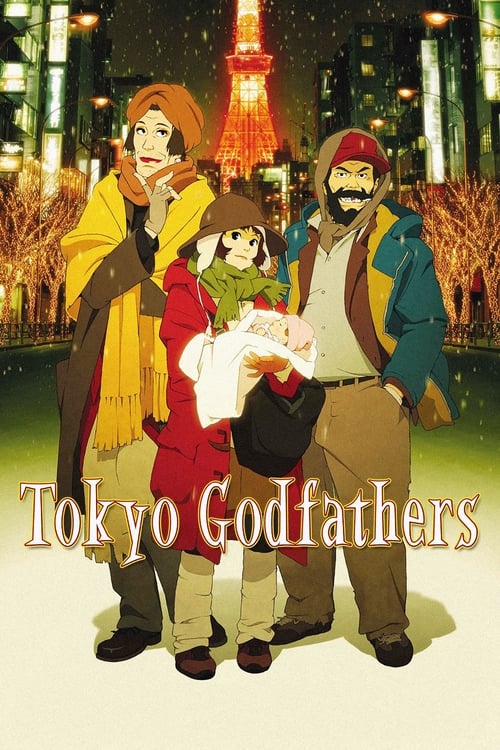
Tokyo is usually presented to us in one of two ways: a shimmering neon labyrinth of the future or a sterile, polite metropolis of the salaryman. But when I sat down to watch Tokyo Godfathers for the first time, I wasn't greeted by skyscrapers or high-tech gadgetry. I was greeted by a pile of trash. I watched this while my neighbor was loudly practicing the tuba, which strangely added to the chaotic energy of the opening scene, and within ten minutes, I had completely forgotten about the brass-heavy rendition of "Flight of the Bumblebee" next door.
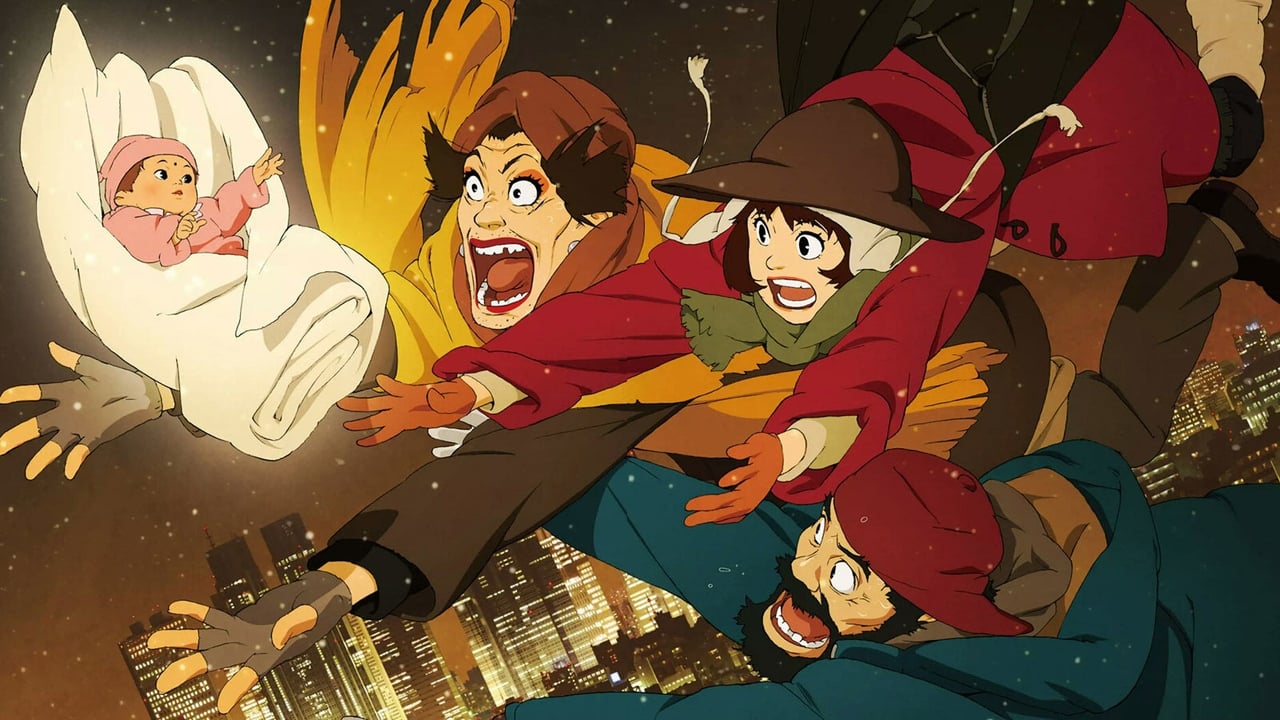
Released in 2003, this was Satoshi Kon taking a hard left turn. After the psychological fractured-identity nightmare of Perfect Blue and the cinematic time-loop of Millennium Actress, nobody expected him to deliver a heartwarming Christmas comedy about three homeless people and a dumpster baby. Yet, here we are. It’s a film that manages to be gritty, cynical, and deeply sentimental all at once—a "Modern Classic" that I’d argue is the most human thing Satoshi Kon ever put to paper.
A Trio of Beautiful Disasters
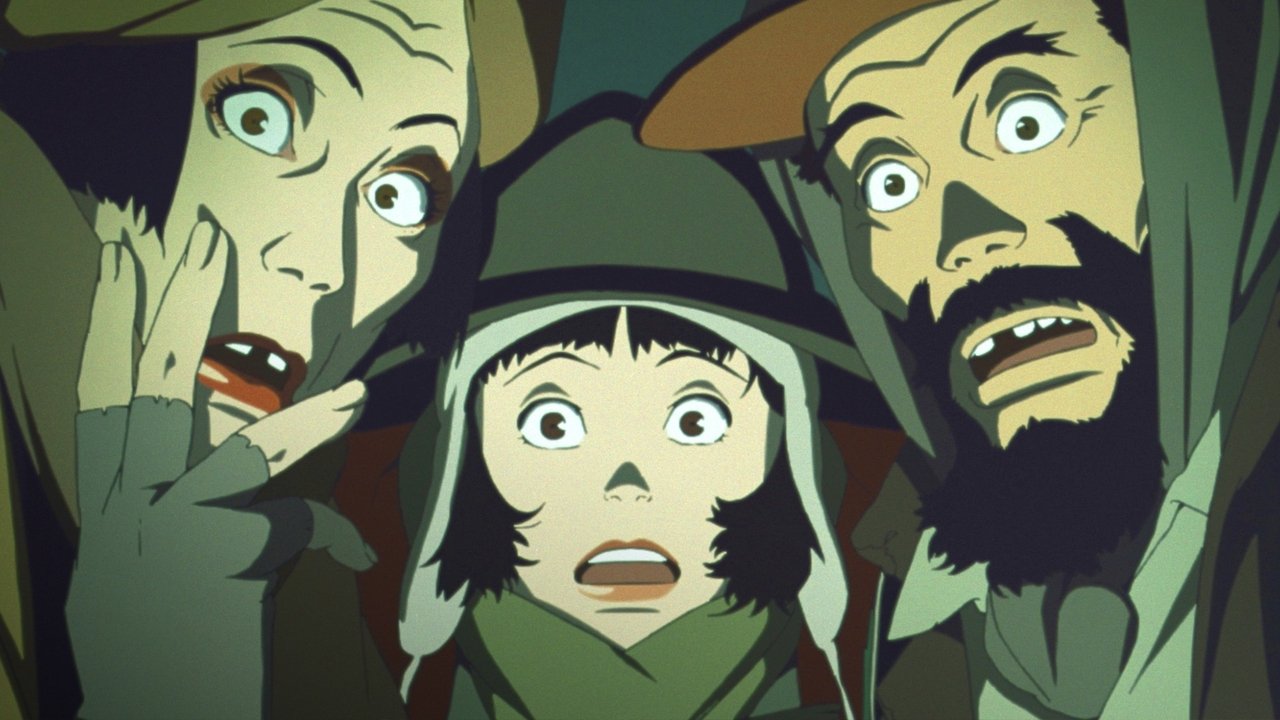
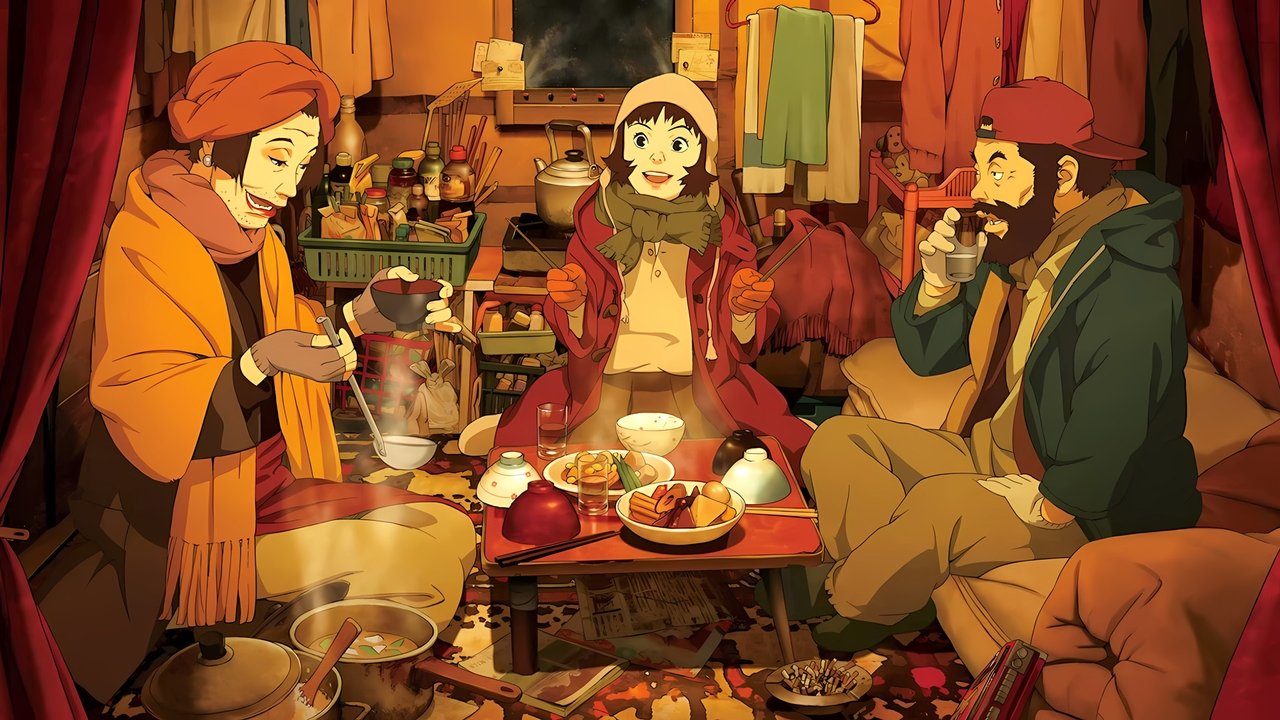
The heart of the film beats within its central "family," a term I use as loosely as possible. You’ve got Gin (Tohru Emori), a middle-aged alcoholic who claims to be a former cyclist; Hana (Yoshiaki Umegaki), a transwoman and former drag queen with a heart of pure gold; and Miyuki (Aya Okamoto), a runaway teenager with enough angst to power a small electrical grid.
They are loud, they smell, and they argue constantly. This isn't the sanitized version of homelessness you see in Oscar-bait dramas. They are deeply flawed people who have made terrible choices. Anime usually treats trans characters as punchlines, but Hana is the soul of the movie, and Yoshiaki Umegaki gives her a vocal performance that is equal parts operatic and devastatingly vulnerable. When they find an abandoned newborn on Christmas Eve, their bickering shifts from "who stole the booze" to "how do we save this kid," and the chemistry between these three is better than almost any live-action ensemble from the same era.
The Kon Method: Grime and Grandeur
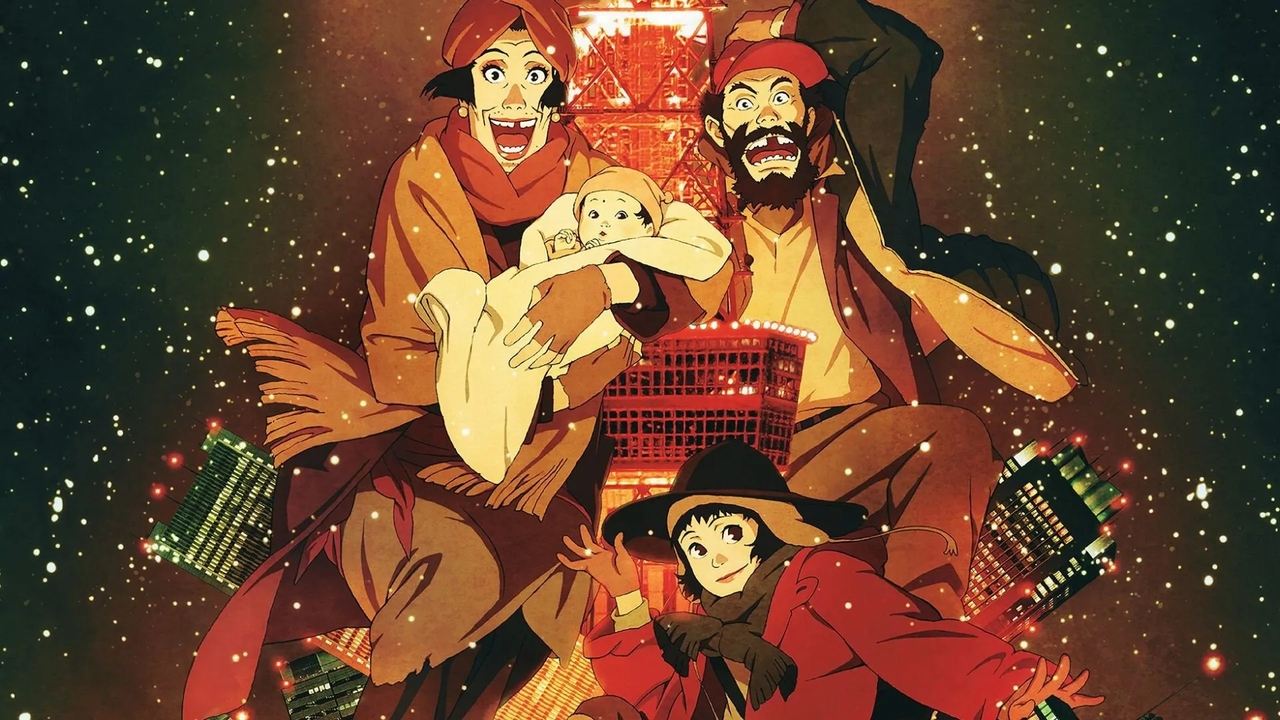
Looking back at the early 2000s, this was a pivotal moment for animation. We were right in the thick of the "CGI revolution." Finding Nemo and Shrek 2 were dominating the box office, and traditional hand-drawn animation was starting to feel like a relic to studio executives. But Satoshi Kon and the team at Madhouse (who also gave us the frenetic Redline) proved that 2D wasn't going anywhere.
The detail in Tokyo Godfathers is staggering. The way the light hits the snow, the discarded ramen bowls, the cluttered interior of a drag bar—it’s all rendered with a tactile quality that CGI still struggles to replicate. Kon’s background in manga is evident in the character acting; the facial expressions are wildly exaggerated for comedic effect, yet the film can pivot to a moment of quiet, heartbreaking realism in a single frame. It’s a masterclass in tone management. Satoshi Kon was the only director who knew how to make a city feel like a character without being a pretentious jerk about it.
A Miracle Made of Coincidence
The plot is essentially a series of increasingly improbable coincidences. Our trio stumbles from one "miracle" to the next, encountering Yakuza bosses, Latin American assassins, and long-lost relatives. The sheer amount of luck in this script makes Han Solo look like the unluckiest man in the galaxy.
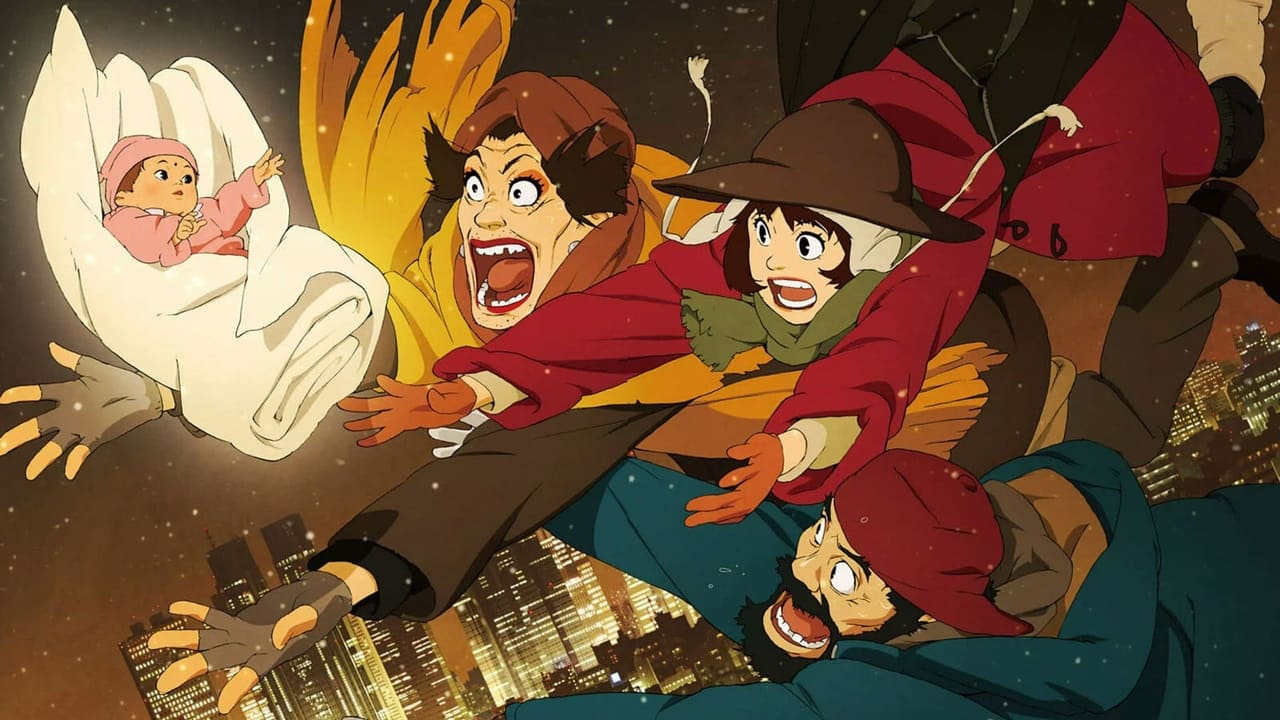
In any other movie, this would be lazy writing. Here, it’s the point. The screenplay, co-written by Keiko Nobumoto (the genius behind Cowboy Bebop), treats these coincidences as "Christmas Miracles"—the universe finally cutting these forgotten people a break. It leans into the Dickensian "found family" trope but keeps it grounded with sharp, cynical dialogue.
Despite its brilliance, the film only pulled in about $600,000 at the box office. It’s one of those oddities that got lost in the shuffle of the early 2000s DVD boom. I remember seeing the Sony Pictures DVD on the "Indie/Foreign" shelf at Blockbuster, sandwiched between obscure French dramas and martial arts flicks. It never got the massive marketing push of a Ghibli film, which is a tragedy because it’s arguably more accessible to a general audience than something like Spirited Away.
It’s a movie that asks us to look at the people we usually walk past on the street and imagine they have a story worth telling. It doesn't ask for pity; it asks for empathy. And it does it all while being one of the funniest, most kinetic adventure movies of the decade.
Tokyo Godfathers is the ultimate antidote to the sugary, corporate Christmas specials that clutter our screens every December. It’s loud, messy, and occasionally smells like a dumpster, but its heart is massive. Whether you’re an anime devotee or someone who wouldn't know a "waifu" from a "waffle," this story of three losers and a baby is a testament to the fact that family isn't something you're born into—it's something you find while looking for a place to sleep. If you can find the old DVD with the making-of featurettes, do yourself a favor and watch Kon’s storyboarding process; it’s a reminder of a visionary director we lost far too soon.
Keep Exploring...
-
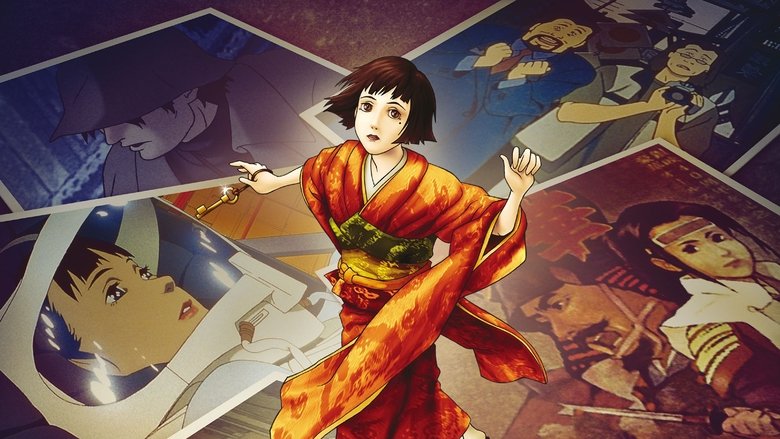
Millennium Actress
2002
-

Paprika
2006
-
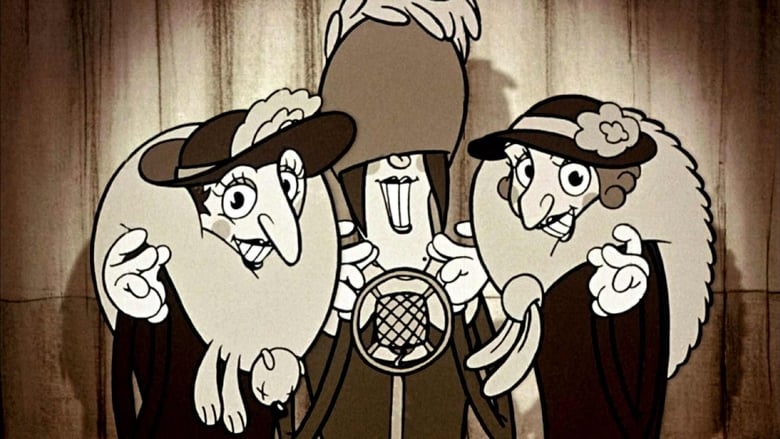
The Triplets of Belleville
2003
-
Feast
2014
-
EverAfter
1998
-

Pleasantville
1998
-

For the Birds
2000
-
The Spanish Apartment
2002
-
Love Me If You Dare
2003
-

Barbie as The Princess & the Pauper
2004
-

Cashback
2007
-
Presto
2008
-
Mary and Max
2009
-
Ghost in the Shell 2: Innocence
2004
-

The Muppet Christmas Carol
1992
-
The Player
1992
-
A Goofy Movie
1995
-
A Close Shave
1996
-
Geri's Game
1997
-
Partly Cloudy
2009