Zatoichi
"Justice is blind, but the rhythm is lethal."
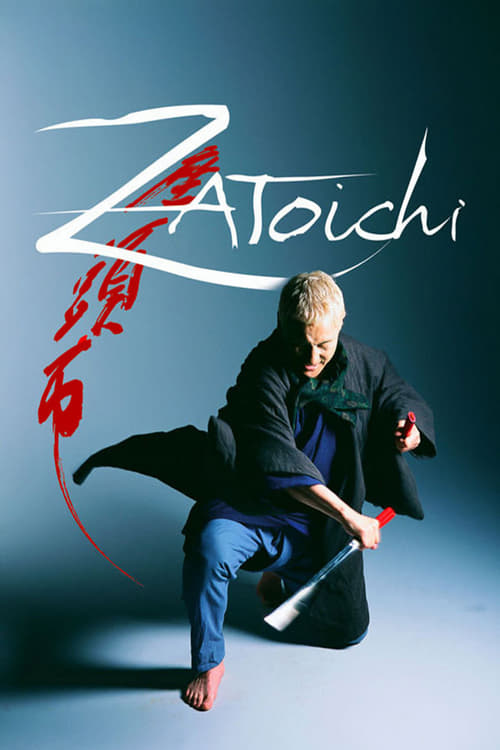
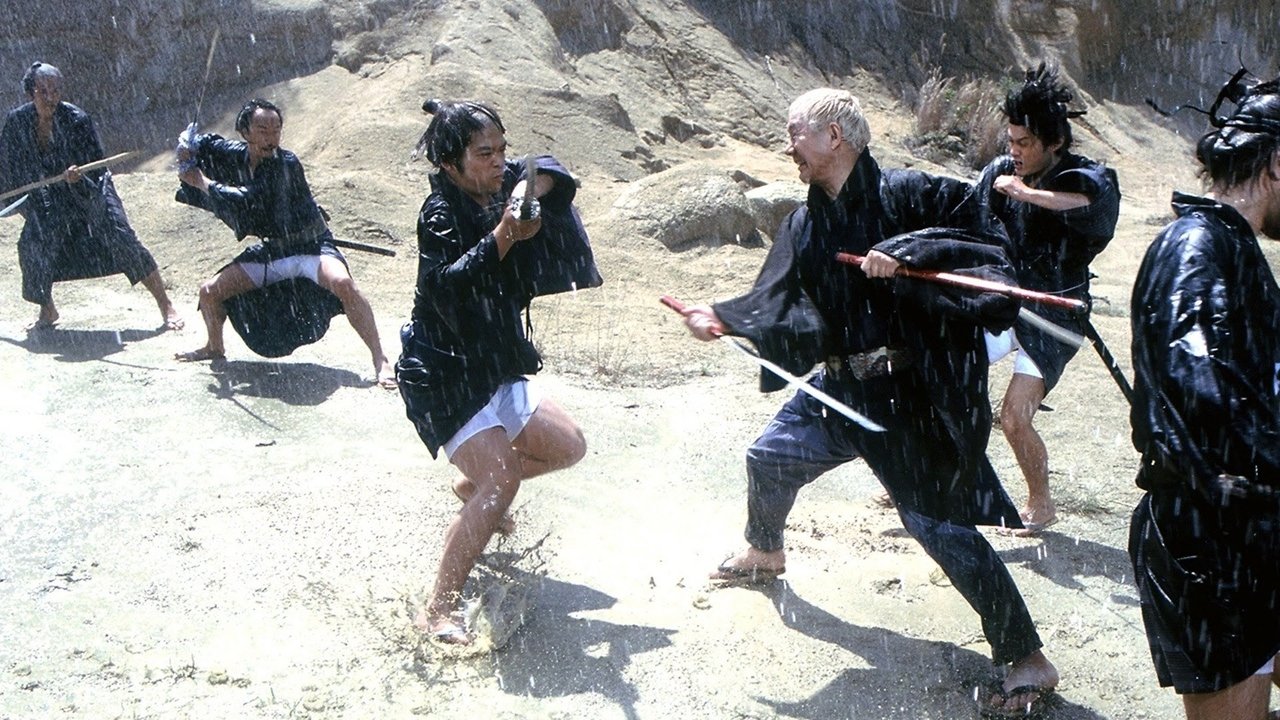
If you were browsing the "International" section of a Blockbuster in the early 2000s, you likely saw a DVD cover featuring a man with bleached-blonde hair, a crimson cane, and a look of supreme boredom. That man is Takeshi Kitano (often credited as Beat Takeshi), a Japanese polymath who decided to take one of Japan’s most sacred cinematic cows—the blind swordsman Zatoichi—and give him a neon-tinted, tap-dancing makeover. It shouldn't work. On paper, it sounds like a disaster of "edgy" early-aughts tropes. Yet, Zatoichi remains one of the most delightfully idiosyncratic action films of its era, proving that sometimes you have to break a legend to truly honor it.
I watched this recently while my neighbor was seemingly trying to learn the recorder in the apartment next door, and remarkably, the film’s rhythmic editing actually managed to sync up with his screeching. It was a strange, accidental symphony that felt perfectly in line with Kitano's weirdly percussive directing style.
Splatter, Pixels, and Practical Magic
The first thing that hits you about Zatoichi is the blood. In 2003, we were in the wild west of the CGI revolution. Filmmakers were ditching the squibs and corn syrup for digital gore that often looked like flying strawberry jam. Kitano leaned into this with zero hesitation. When Ichi unsheathes his blade, the blood doesn't flow; it sprays in digital arcs that look like calligraphy. While some critics at the time bemoaned the "fake" look, I’ve always felt the CGI blood spray is basically the cinematic equivalent of a loud Hawaiian shirt—it’s bold, intentional, and adds to the film’s hyper-real, storybook quality.
The action itself is lightning-fast. Unlike the drawn-out duels of the 1960s Zatoichi films starring Shintaro Katsu, Kitano’s fights are over in seconds. It’s all about the draw and the first strike. The choreography by the legendary Takeshi Kitano (who also edited the film) emphasizes economy of motion. There’s a standoff between Ichi and the ronin Hattori, played by the perpetually cool Tadanobu Asano (Ichi the Killer, Thor), that builds tension with the precision of a ticking bomb. Asano brings a weary, tragic weight to his role that provides a necessary anchor to Kitano’s more playful, trickster-god performance.
The Million-Dollar Gamble
This was an independent production through Office Kitano, and you can feel the creative freedom in every frame. With a budget of only $2.5 million—about what a Marvel movie spends on its craft services table today—Kitano managed to create a lush, period-accurate world. He didn't have the backing of a major Hollywood studio, which meant he didn't have to answer to a committee. This independence allowed him to cast his long-time collaborator Guadalcanal Taka (who provides the necessary bumbling comic relief) and take massive tonal risks.
The film serves as a perfect time capsule of the "World Cinema" boom. This was the era when audiences were discovering that the best action wasn't happening in Los Angeles, but in places like Japan, South Korea, and Hong Kong. Zatoichi feels like it was made specifically for the DVD generation—the kind of movie you’d show your friends to prove you had "sophisticated" taste, right before you all argued about whether the digital effects were cool or distracting.
A Symphony of Swords and Shovels
What truly separates Zatoichi from your standard revenge flick is its obsession with sound. The score by Keiichi Suzuki is built around the ambient noises of the village. Farmers tilling the earth, carpenters hammering wood, and rain hitting the ground all form a percussive backbone for the story. It’s a rhythmic masterpiece that culminates in a final sequence so unexpected it usually leaves first-time viewers blinking in disbelief: a full-cast tap-dance breakdown.
Kitano brought in the Japanese tap troupe The Stripes for the finale, and the ending is a glorious middle finger to the self-serious tropes of the samurai genre. It’s a reminder that cinema can be a celebration, not just a series of grim deaths. Looking back, this sequence captures that Y2K-era desire to mash up traditional cultures with modern, urban energy. It’s the same spirit that gave us Cowboy Bebop or Samurai Champloo.
Ultimately, Zatoichi is a film that rewards your attention without demanding you take it too seriously. Kitano’s deadpan is the eighth wonder of the world, and his ability to balance slapstick comedy with brutal swordplay is a feat few other directors could pull off. It’s an indie gem that masquerades as a blockbuster, a period piece that feels modern, and a bloody action movie that ends with a dance party. If you’ve never seen it, find the oldest DVD copy you can—bonus points if it has the director’s commentary—and enjoy the rhythm.
Keep Exploring...
-
Battle Royale
2000
-

The Man in the Iron Mask
1998
-
The Messenger: The Story of Joan of Arc
1999
-

Crouching Tiger, Hidden Dragon
2000
-

Gladiator
2000
-

The Perfect Storm
2000
-
A Knight's Tale
2001
-

Hero
2002
-
The Count of Monte Cristo
2002
-
House of Flying Daggers
2004
-
King Arthur
2004
-
Walking Tall
2004
-

King Kong
2005
-
Kingdom of Heaven
2005
-
Red Cliff
2008
-
Run Lola Run
1998
-
Sympathy for Mr. Vengeance
2002
-
Felon
2008
-

13 Assassins
2010
-
Days of Thunder
1990