Alfie
"Looking for love in all the wrong mirrors."
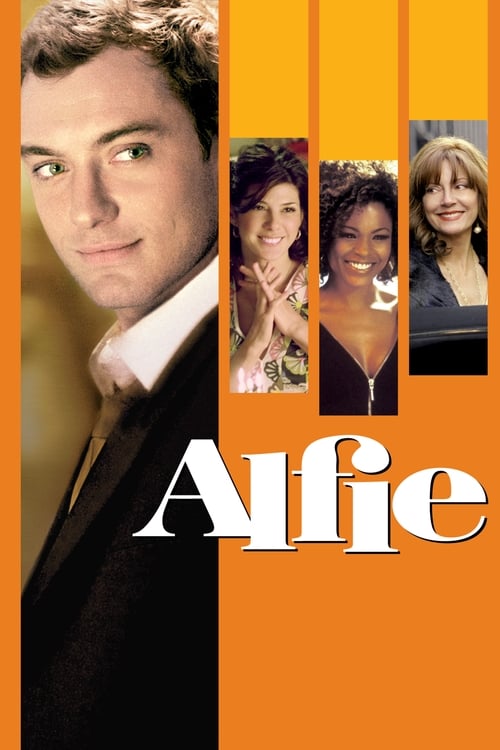
If you stepped into a movie theater in 2004, you were legally required to look at Jude Law’s face for at least two hours. Between Closer, The Aviator, Sky Captain and the World of Tomorrow, and I Heart Huckabees, the man was more ubiquitous than the iPod Mini. But the centerpiece of his "Year of Jude" was Alfie, a glossy, high-fashion remake of the 1966 Michael Caine classic that tried to transplant 1960s London "Swinging Bird" energy into post-9/11 Manhattan.
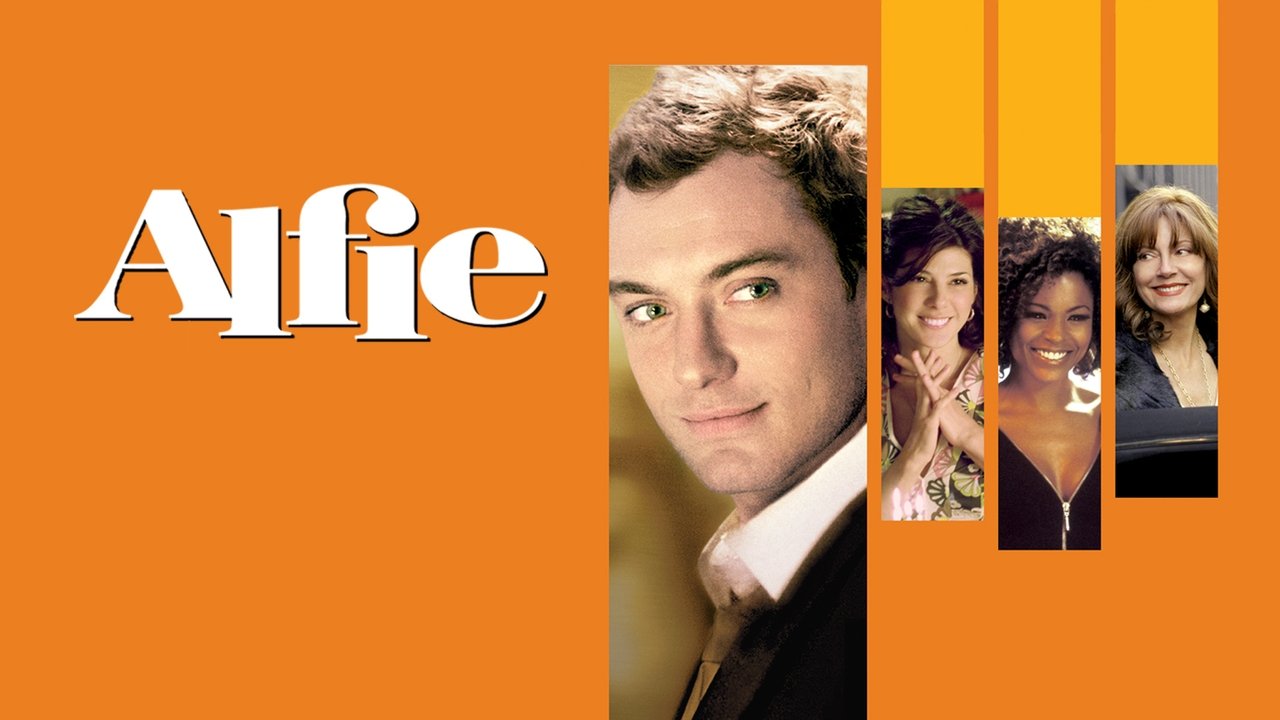
It didn't exactly work—the film famously cratered at the box office, earning back barely half of its $60 million budget—but looking back at it now, it’s a fascinating time capsule of a very specific moment in cinema. It’s a movie from that awkward transitional phase where Hollywood was still trying to figure out how to make a "character study" feel like a blockbuster. I rewatched this while wearing a moth-eaten hoodie that smells faintly of woodsmoke, and seeing Jude Law navigate New York in pristine Gucci suits made me feel like a particularly unkempt forest creature.
The Man Who Knew Too Little
The 2004 Alfie isn't a romantic comedy, even though the marketing tried to trick us into thinking it was. It’s a drama about a man who is essentially a sentient haircut. Jude Law plays Alfie Elkins, a limousine driver who spends his days talking directly to the camera, breaking the fourth wall to explain his philosophy on women, fashion, and the avoidance of "baggage."
Law is actually perfect for this. He has that dangerous, predatory charm that makes you understand why every woman in the movie lets him into their apartment, but he also carries a hollowed-out look in his eyes that suggests there’s nothing behind the curtain. He’s a "metrosexual"—a term we were obsessed with in 2004—who treats life like a series of wardrobe changes. Director Charles Shyer (who gave us the cozy vibes of the Father of the Bride remake) shoots New York like it’s a giant department store window. Everything is backlit, saturated, and expensive-looking. It’s basically a high-fashion commercial that slowly realizes it has a soul, and that realization is deeply uncomfortable.
The Women Who Actually Matter

While Alfie is busy checking his reflection in every passing Vespa mirror, the film’s actual weight comes from the women he discards. This is where the movie earns its keep. Marisa Tomei is, as usual, the best thing on screen as Julie, a struggling single mother who represents the "stability" Alfie is terrified of. Her performance is so grounded and vulnerable that it makes Alfie look like a cartoon character, which I suspect was the point.
Then there’s Jane Krakowski—pre-30 Rock—who brings a manic, desperate energy to a character who just wants to feel seen, and Nia Long, who plays the girlfriend of Alfie's best friend, Marlon (Omar Epps). The scene where Alfie and Lonette cross the line is the only moment in the film that feels genuinely dangerous. Susan Sarandon also shows up late in the game as a high-powered executive who essentially out-Alfies Alfie. It’s a brutal, necessary ego check that marks the beginning of the film's downward spiral into the "sad consequence" phase of the story.
A Soundtrack for the Ages (and the Aged)
One of the strangest and most delightful things about Alfie is the score. Mick Jagger and Dave Stewart (of Eurythmics fame) teamed up to write a suite of songs that are arguably better than the movie they inhabit. Jagger’s "Old Habits Die Hard" actually won a Golden Globe, and the bluesy, swaggering music provides a bridge between the 1960s origins of the story and the 2000s setting.

Looking back, the film’s failure makes sense. It was too cynical for the rom-com crowd and too slick for the serious drama crowd. It’s a movie about a guy who is fundamentally unlikable, and unlike the 1966 original, it doesn't have the "Kitchen Sink" realism to make the ending feel truly tragic. Instead, it feels like a very stylish mid-life crisis. Yet, there’s something about the way Charles Shyer uses split screens and quick-cuts that feels purely "Early Digital Era." It captures that pre-social media New York where everyone was still looking for connection but was too busy staring at their Razr flip-phones to find it.
Ultimately, Alfie is a gorgeous failure that’s worth a revisit just to see Jude Law at the absolute height of his powers. It’s a film that tries to be a cautionary tale while simultaneously being obsessed with how good its protagonist looks in a pink shirt. It doesn't quite stick the landing—the ending feels more like a whimper than a bang—but as a document of 2004’s obsession with style over substance, it’s oddly compelling. It’s not a masterpiece, but it’s a stylish, well-acted curiosity that reminds us that even the prettiest people eventually have to pay the bill.
Keep Exploring...
-
Elizabethtown
2005
-
Casanova
2005
-
Father of the Bride
1991
-
Four Christmases
2008
-
Blast from the Past
1999
-
Never Been Kissed
1999
-

S1m0ne
2002
-
What a Girl Wants
2003
-
First Daughter
2004
-
Jersey Girl
2004
-

In Her Shoes
2005
-
The Family Stone
2005
-
The Sisterhood of the Traveling Pants
2005
-

A Good Year
2006
-
Just My Luck
2006
-
Dan in Real Life
2007
-
The Nanny Diaries
2007
-
Ghost Town
2008
-
Nick and Norah's Infinite Playlist
2008
-
Wild Child
2008