Around the World in 80 Days
"One bet. Three misfits. A thousand cameos."
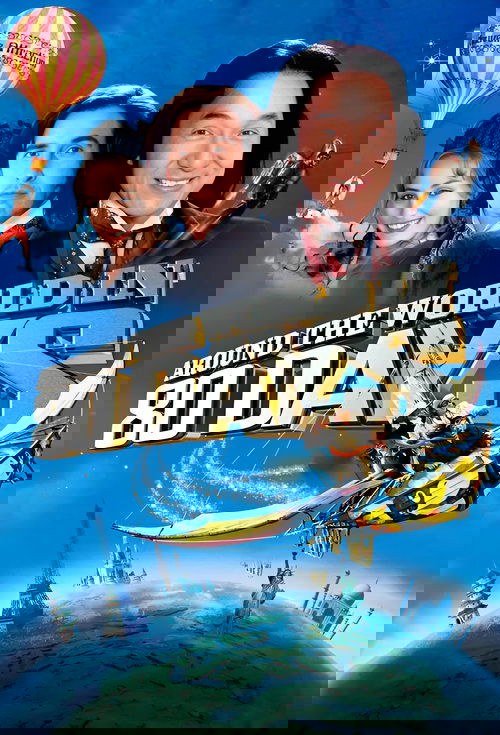
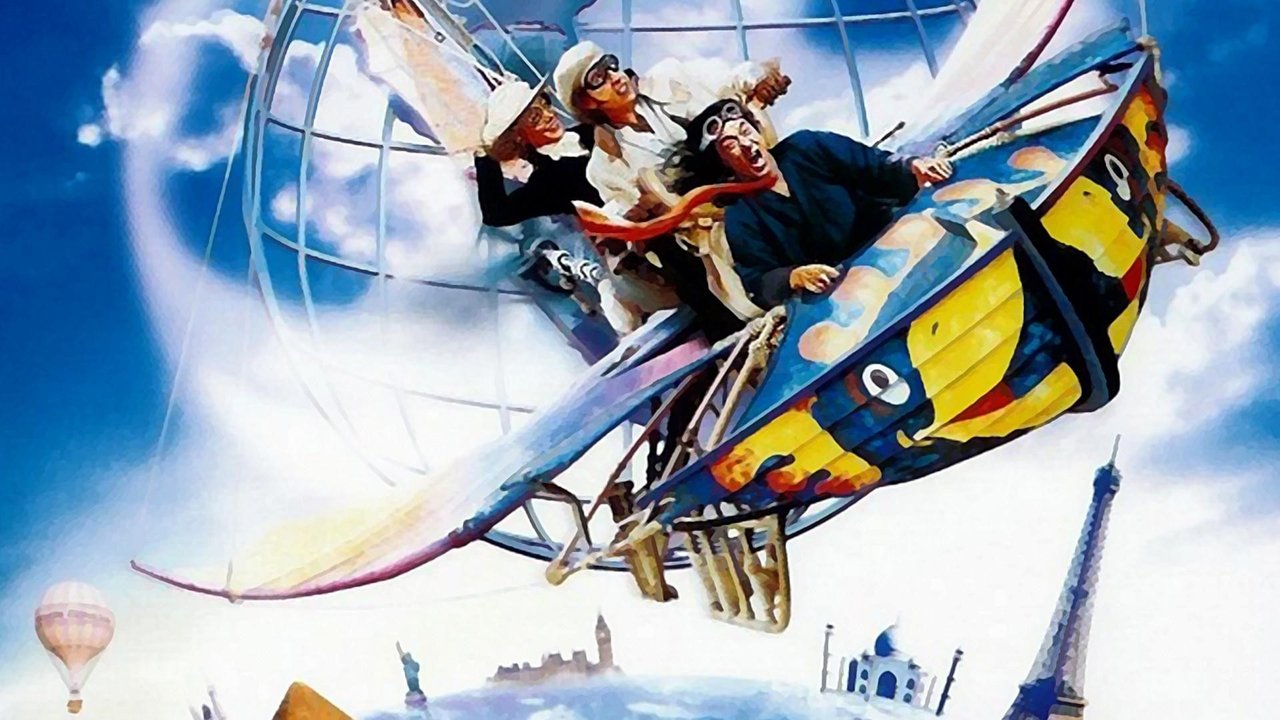
Imagine a boardroom in 2003 where an executive suggested spending $110 million—more than the budget of The Fellowship of the Ring—to turn a classic Victorian travelogue into a martial arts slapstick comedy starring a British sitcom legend and the king of Hong Kong cinema. It sounds like the setup to a punchline, but Around the World in 80 Days is the glorious, messy reality of that pitch. It is a movie that feels like it was directed by a sugar-crazed toddler with a limitless credit card, and yet, two decades later, it remains one of the most fascinating artifacts of the pre-MCU blockbuster era.
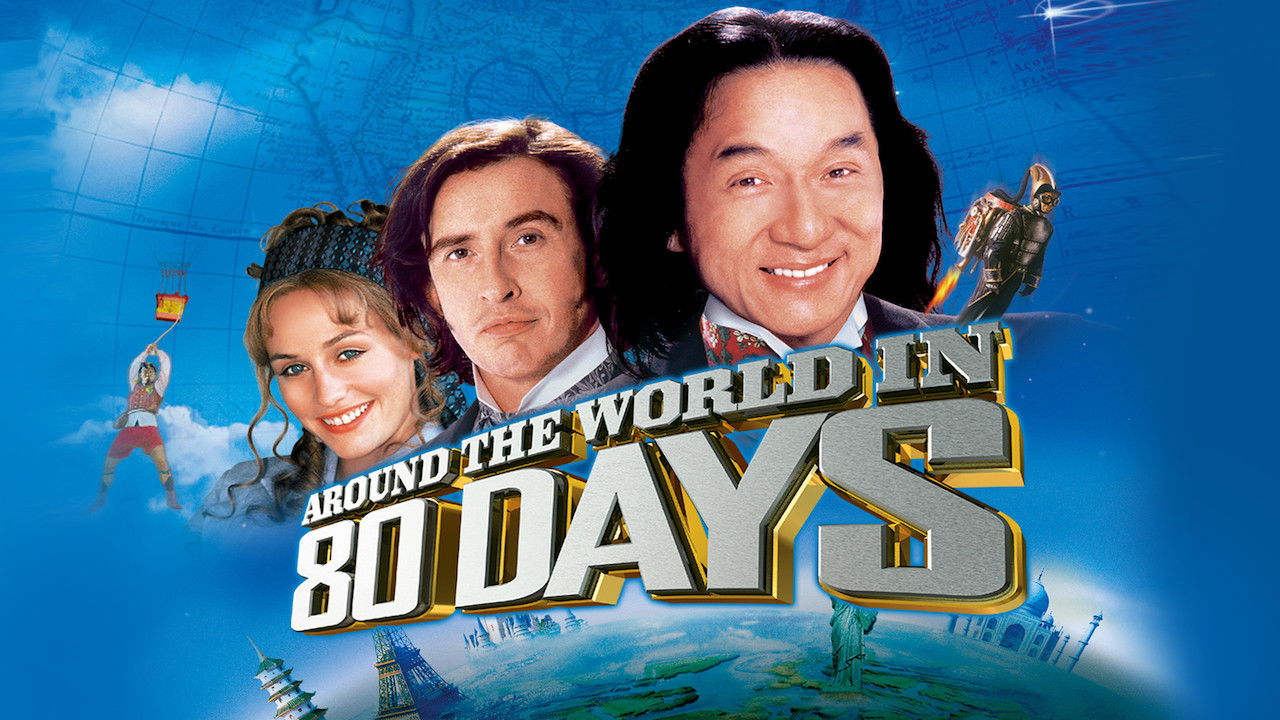
I watched this recently while eating a bag of slightly stale pretzels I found in the back of my pantry, and honestly, the aggressive crunching added a nice percussive layer to the fight scenes. This film is the cinematic equivalent of those pretzels: a bit salty, arguably past its prime, but strangely addictive if you’re in the right mood.
The Kitchen Sink School of Filmmaking
The first thing that hits you about Frank Coraci’s adaptation isn’t the plot—which is a very loose suggestion based on Jules Verne’s novel—but the sheer volume of "stuff" happening on screen. It’s an Action-Adventure-Comedy-Martial-Arts-Historical-Fantasy-Cameo-Fest. In the early 2000s, Hollywood was obsessed with the "four-quadrant" hit, trying to be everything to everyone at once. Here, that manifests as Steve Coogan (playing Phileas Fogg as a high-strung, proto-Alan Partridge inventor) being paired with Jackie Chan (as Passepartout, who is secretly a village guardian named Lau Xing).
The tonal whiplash is enough to give you permanent neck damage. One minute we’re in a dry British comedy about the Royal Academy of Science, and the next, Jackie Chan is doing a ladder-stunt fight that feels like it was ripped straight out of Project A. It shouldn't work. By most traditional metrics of "cohesive storytelling," it doesn't. But looking back at this era of cinema, there’s something undeniably charming about a movie that refuses to pick a lane. It’s a relic of a time when studios were still throwing massive amounts of money at weird, standalone ideas rather than just plugging characters into a multiversal spreadsheet.
Jackie Chan’s Victorian Vaudeville
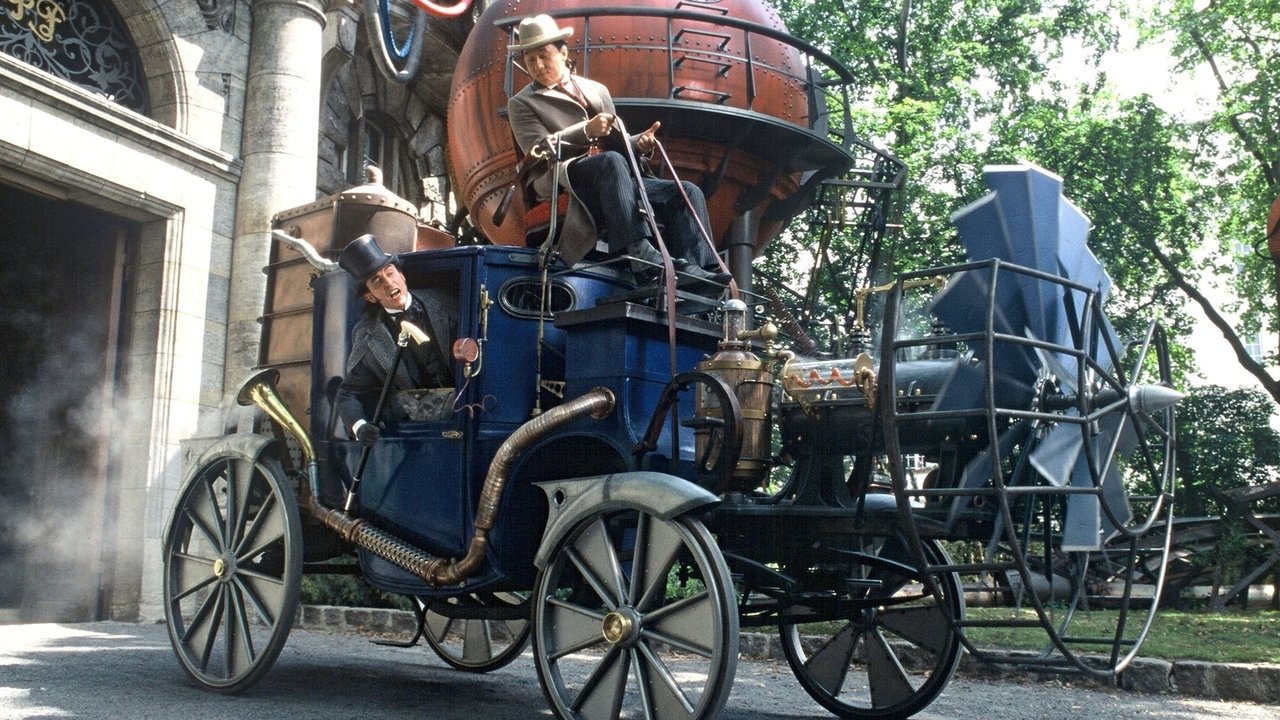
While Steve Coogan handles the verbal sparring with a delightfully arrogant Jim Broadbent (Lord Kelvin), the heavy lifting—literally—is left to Jackie Chan. This was arguably the tail end of Chan’s peak Hollywood period, and even though he was nearing 50, his choreography here is inspired. There’s a sequence in a Parisian art gallery where he uses canvases and wet paint to fend off attackers that is pure visual poetry. It’s kinetic, funny, and reminds me why Jackie Chan is a genre unto himself.
The film also serves as a secret "Who’s Who" of the early 2000s. The cult status of this movie is largely sustained by its bizarre cameo list. You’ve got Luke Wilson and Owen Wilson playing the Wright Brothers in a desert, Macy Gray showing up for no apparent reason, and most famously, Arnold Schwarzenegger as Prince Hapi. This was actually Schwarzenegger’s final role before he put his acting career on ice to become the Governor of California. Seeing him in a giant wig, preening over a statue of himself, is the kind of fever dream that only a $110 million budget can buy.
Why It Lingers in the Cultural Basement
Despite its massive budget, the film was a spectacular flop, earning just $72 million and becoming a punching bag for critics who found it too "cartoony." But in retrospect, that cartoonishness is its greatest strength. The production design by Studio Babelsberg is lavish, and the cinematography by Phil Meheux gives the whole world a saturated, storybook glow that feels much warmer than the grey, desaturated CGI landscapes we see in modern tentpoles.

The DVD release was where I, and many others, really found this film. It was a staple of the "3 for $20" bins at Blockbuster, and the special features revealed the genuine effort put into the practical stunts. For instance, the fight on the half-constructed Statue of Liberty wasn't just a green-screen void; they built massive sections of the lady in the harbor. Apparently, Jackie Chan even took over the direction of the fight sequences himself when the pacing wasn't hitting the right beats, which explains why the action feels so much more tactile than the rest of the film's frantic energy.
I’ll also never forget the casting of Sammo Hung, Chan's real-life "big brother" from the Peking Opera School, as Wong Fei-hung. For a mainstream American comedy to include a legendary figure from Chinese folk history was a cool, if overlooked, nod to martial arts cinema fans.
Around the World in 80 Days is far from a masterpiece, but it is an incredibly earnest piece of entertainment. It’s a movie that wants you to have a good time so badly it practically trips over its own feet trying to entertain you. If you can forgive the occasionally dated CGI and the frantic pacing, there is a core of genuine sweetness and impressive stunt work that makes it worth a revisit on a lazy Sunday. It’s a loud, expensive, well-meaning mess that reminds me of a time when blockbusters weren't afraid to be a little bit ridiculous.
Keep Exploring...
-
Shanghai Noon
2000
-
Shanghai Knights
2003
-
Night at the Museum: Battle of the Smithsonian
2009
-
Charlie's Angels
2000
-
The Brothers Grimm
2005
-
The Tuxedo
2002
-

Rush Hour 3
2007
-
Journey to the Center of the Earth
2008
-
The Rundown
2003
-
Lethal Weapon 4
1998
-

Mystery Men
1999
-
Osmosis Jones
2001
-

Sahara
2005
-

Night at the Museum
2006
-

Wild Hogs
2007
-
Tropic Thunder
2008
-

Sinbad: Legend of the Seven Seas
2003
-
Taxi 2
2000
-
Spy Kids 2: The Island of Lost Dreams
2002
-
Johnny English
2003