First Daughter
"She wanted a degree; he was on the clock."
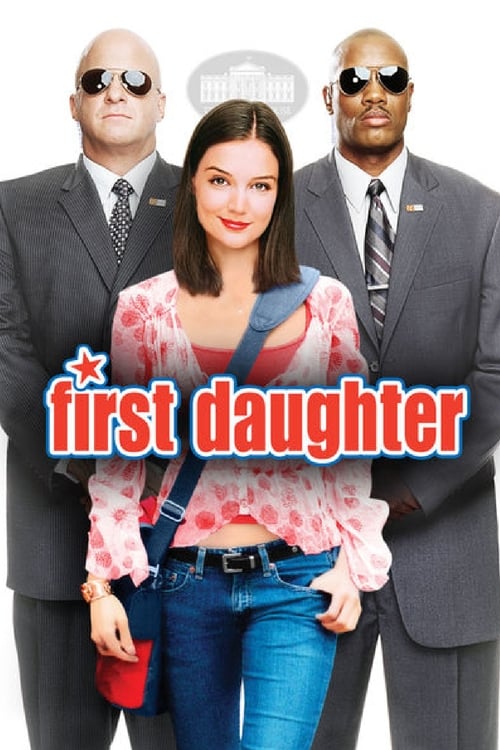
In the grand tradition of Hollywood "twin films"—those weird moments where two studios release the exact same premise within months of each other—2004 gave us the Battle of the Presidential Offspring. First, we had Mandy Moore in Chasing Liberty, and then, trailing behind like a Secret Service tail, came Katie Holmes in First Daughter. I recently revisited this one on a rainy Tuesday while trying to ignore a stack of unpaid bills, and I realized that while the world has largely scrubbed this film from its collective hard drive, there is something fascinatingly quaint about its existence.

Directed by Forest Whitaker (yes, the Academy Award-winning Last King of Scotland guy), First Daughter is a film caught between two worlds. It wants to be a sparkling, Princess Diaries-style fairy tale for the DVD generation, but it also carries a weirdly somber weight about the price of public life. It’s an artifact of that specific mid-2000s transition where we were moving from the bubblegum pop of the late 90s into a more cynical, post-9/11 world where "security" wasn't just a word—it was a constant, stifling presence.
The Girl Who Tried to Fit In
The plot is about as predictable as a stump speech. Samantha MacKenzie (Katie Holmes) is the First Daughter, and she’s headed to Redmond University with more baggage than a transatlantic flight. By baggage, I mean a phalanx of agents in dark glasses who ruin her chance at a normal "keggers and midterms" experience. Eventually, her father, played with a surprising amount of gravitas by Michael Keaton, agrees to pull the detail. Except, because this is a movie, he secretly embeds a young, handsome agent named James (Marc Blucas) into the student body to watch over her.
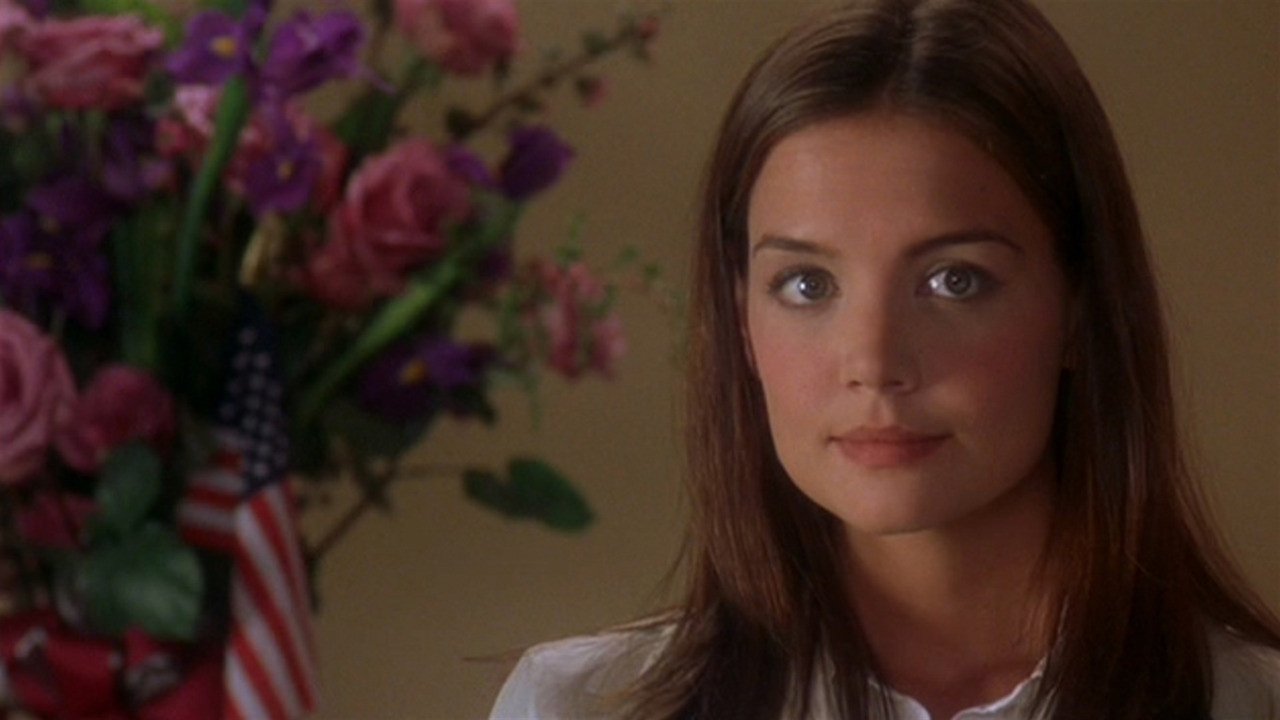
Katie Holmes is genuinely the best thing about this movie. Coming off Dawson’s Creek, she had perfected a specific brand of vulnerable, "side-mouth-smile" charm that works perfectly here. You actually feel for Samantha. She isn't a brat; she’s just a girl who wants to eat a slice of pizza without it being scanned for explosives. When she finally starts falling for James, you want it to work, even though it’s basically a security-clearance version of Never Been Kissed without the undercover journalism.
The chemistry between Holmes and Blucas is... fine. It’s "CW-pilot" fine. It’s the kind of romance that feels like it was designed by a committee to be safe enough for a 10-year-old’s slumber party but romantic enough to sell a soundtrack. Speaking of the soundtrack, we get a supporting turn from R&B star Amerie as Samantha’s roommate, Mia. She brings a much-needed jolt of energy to the dorm scenes, even if her character is the "sassy best friend" archetype that the era leaned on far too heavily.
A Masterclass in Mid-Aughts Gloss
What struck me most during this rewatch—aside from the fact that I spent twenty minutes looking for my cat who had fallen asleep inside a dresser drawer—is how expensive this movie looks despite its simple story. The $30 million budget is right there on the screen. The production design is lush, the lighting is golden and honey-hued, and Forest Whitaker directs the hell out of scenes that probably didn't require that much effort.
There’s a sequence involving a high-stakes ball where Samantha shows up in a dress that probably cost more than my first car, and the way it’s shot feels almost operatic. But that’s the problem: the film is often too "big" for its own boots. It fluctuates between slapstick comedy (the Secret Service "duck" code) and high-stakes emotional betrayal. When the "twist" finally lands—you know the one, where she finds out James is an agent—the movie treats it like a Shakespearean tragedy. In reality, it’s just a slightly awkward HR violation.
Why Did This One Get Recalled?

Looking back, it’s easy to see why First Daughter vanished. It’s a movie so aggressively 'pleasant' it almost threatens your blood sugar levels. It was released at a time when audiences were starting to crave something a bit grittier or, conversely, something much weirder. It made a measly $10 million at the box office, failing to even recoup its production costs, let alone the marketing.
It also suffered from being the "second" version of a story people had already seen earlier that year. By the time it hit theaters, the "President's daughter wants to be normal" trope had been thoroughly exhausted. It’s a shame, because Michael Keaton is actually doing some interesting work here as the President. He’s not a caricature; he’s a father who is genuinely terrified of losing his daughter to the world, and his scenes with Margaret Colin (playing the First Lady) have a warmth that the rest of the movie lacks.
Today, First Daughter lives in that weird limbo of basic cable afternoon slots and the "Because you watched The Princess Diaries" row on streaming services. It’s not a lost masterpiece, but it’s a cozy, well-acted relic of a time when Hollywood still believed you could build a blockbuster around a girl just wanting to go to a frat party.
If you’re looking for a dose of pure, unadulterated 2004 nostalgia—complete with flip phones and questionable highlights—you could do much worse. Katie Holmes carries the film with a level of sincerity it probably doesn't deserve, and Michael Keaton adds a layer of class that keeps it from being totally disposable. It’s a gentle, harmless watch that reminds us of a time before the MCU took over the world, when a "big" movie could just be about a girl, a boy, and a guy with an earpiece hiding in the bushes.

Keep Exploring...
-
Aquamarine
2006
-

What a Girl Wants
2003
-
Just My Luck
2006
-
Blast from the Past
1999
-

Never Been Kissed
1999
-

S1m0ne
2002
-
Are We There Yet?
2005
-

Casanova
2005
-

Ice Princess
2005
-

Nick and Norah's Infinite Playlist
2008
-

Camp Rock
2008
-

Princess Protection Program
2009
-

Morning Glory
2010
-

The Odd Life of Timothy Green
2012
-

What to Expect When You're Expecting
2012
-

The Princess Diaries 2: Royal Engagement
2004
-

Cashback
2007
-

High School Musical 2
2007
-

High School Musical 3: Senior Year
2008
-

Hannah Montana: The Movie
2009