Hellboy
"He’s big, he’s red, and he’s got a job to do."
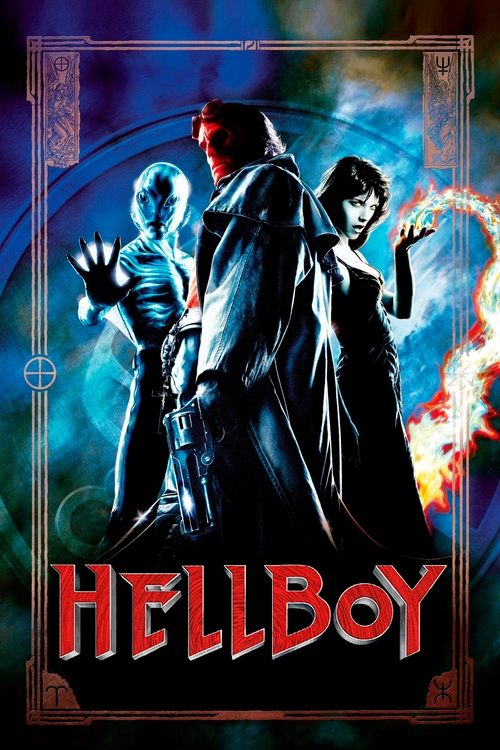
The first time I saw Ron Perlman as the big red guy, I was sitting in a theater that smelled faintly of damp carpet and over-salted popcorn, struggling to keep a handful of Raisinets from falling into my hoodie pocket. I failed—those Raisinets eventually melted into a sticky, chocolatey glob that haunted that sweatshirt for three winters—but it didn't matter. From the moment Hellboy hopped onto a rainy rooftop, lit a cigar, and complained about his job, I was hooked.
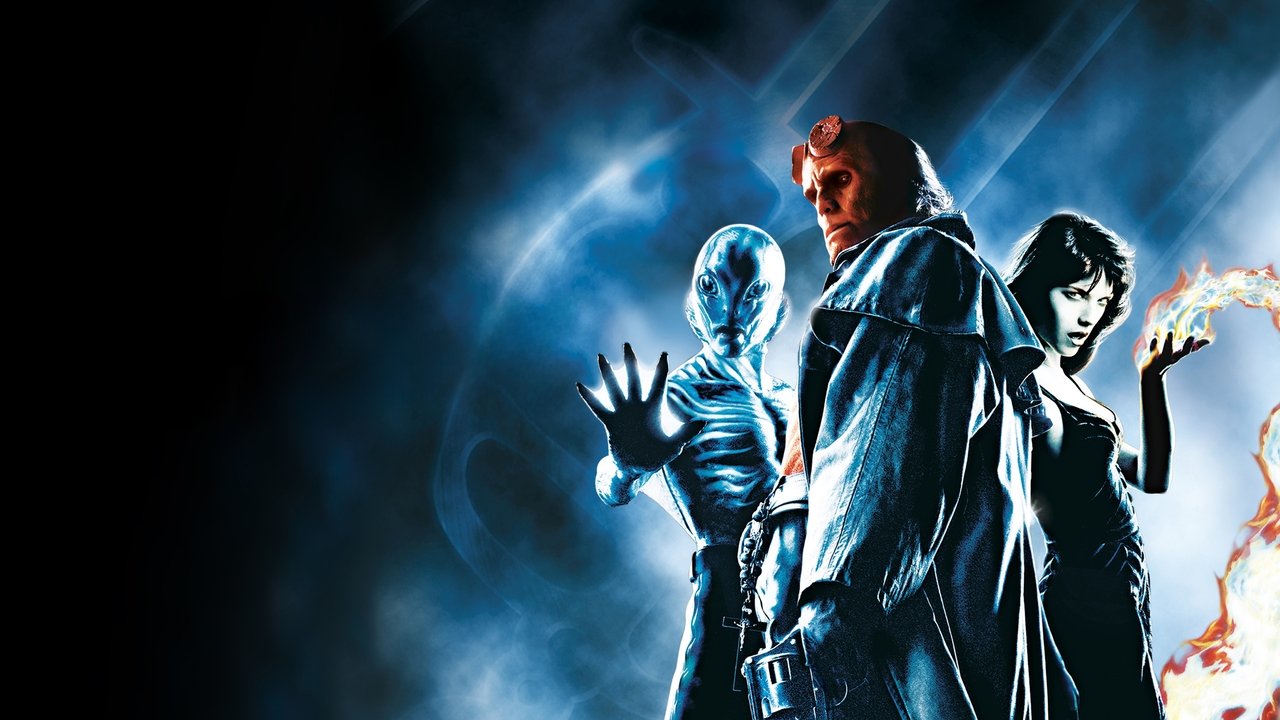
In 2004, the superhero genre was still finding its legs. We had the earnestness of Sam Raimi’s Spider-Man and the leather-clad brooding of the X-Men, but we hadn't yet been crushed by the relentless, homogenized machinery of a "cinematic universe." Then came Guillermo del Toro, fresh off the stylish Blade II, bringing with him a pulpy, occult-drenched vision of a blue-collar demon who just wanted to hang out with his cats and eat some nachos.
The Blue-Collar Demon
What strikes me looking back at Hellboy is how un-superheroic it feels. Hellboy isn't a god or a billionaire; he’s basically a cranky garbage man who happens to be from Hell. Ron Perlman was born for this role—literally, as creator Mike Mignola and del Toro both refused to make the movie unless Perlman was the lead. He brings a heavy, granite-slab charm to the character. Under layers of foam latex, Perlman communicates more with a sigh or a shrug than most actors do with their entire bodies.
The action isn't about grace; it’s about weight. When Hellboy swings the "Right Hand of Doom," you feel the masonry crumble. Take the subway fight against Sammael, the "Desolate One." It’s messy, loud, and physically punishing. There’s a tangible reality to the fight choreography that feels lost in today's era of weightless CGI figures bouncing off green-screen walls. Guillermo del Toro treats his monsters with more respect than the humans, and it shows. Sammael isn't just a digital asset; he’s a slimy, multi-limbed nightmare that feels like he occupies actual space.
Practical Magic in a Digital Dawn

We were right at the cusp of the CGI revolution here. While Hellboy certainly uses digital effects—the final showdown with the "Behemoth" is a bit of a pixel-heavy swirl—the film lives and breathes through its practical work. The makeup on Doug Jones as Abe Sapien is a masterclass in character design. Jones, who would go on to work with del Toro in Pan's Labyrinth and The Shape of Water, gives Abe a fluid, aquatic elegance that feels entirely alien yet deeply empathetic.
The production design by Stephen Scott is equally staggering. The B.P.R.D. (Bureau of Paranormal Research and Defense) headquarters feels lived-in, cluttered with occult artifacts and library stacks that look like they've been gathering dust since the 1940s. It’s a "used future" but for magic. I particularly love the clockwork assassin, Karl Ruprecht Kroenen. With his gas mask, sand-filled veins, and wind-up heart, he remains one of the most visually arresting henchmen in cinema history. He’s what happens when a Swiss watchmaker loses his mind and joins a death cult.
A Cult Found on DVD
It’s easy to forget that Hellboy wasn't a massive smash at the box office. It did okay, but it really found its soul in the DVD era. I remember the three-disc "Director's Cut" being a prized possession for film nerds. The special features revealed the sheer grit of the production—like the fact that Guillermo del Toro turned down a massive paycheck for Harry Potter and the Prisoner of Azkaban just to make this weird, red passion project.
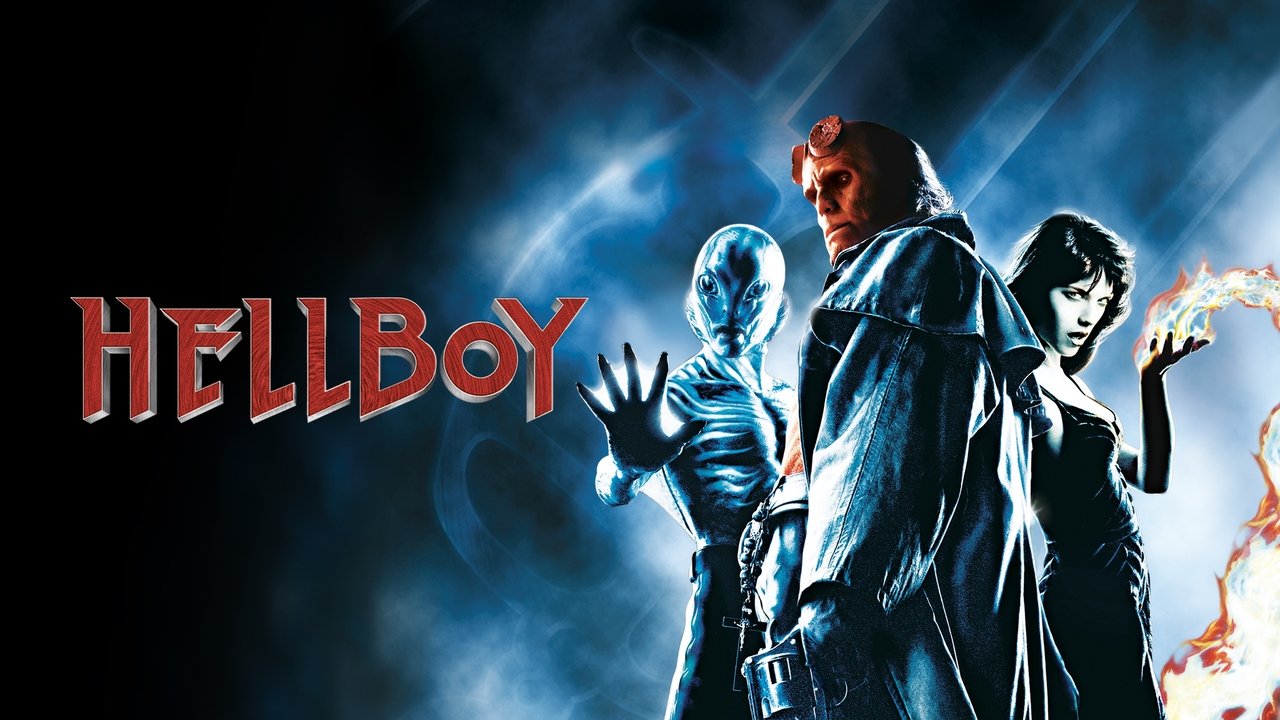
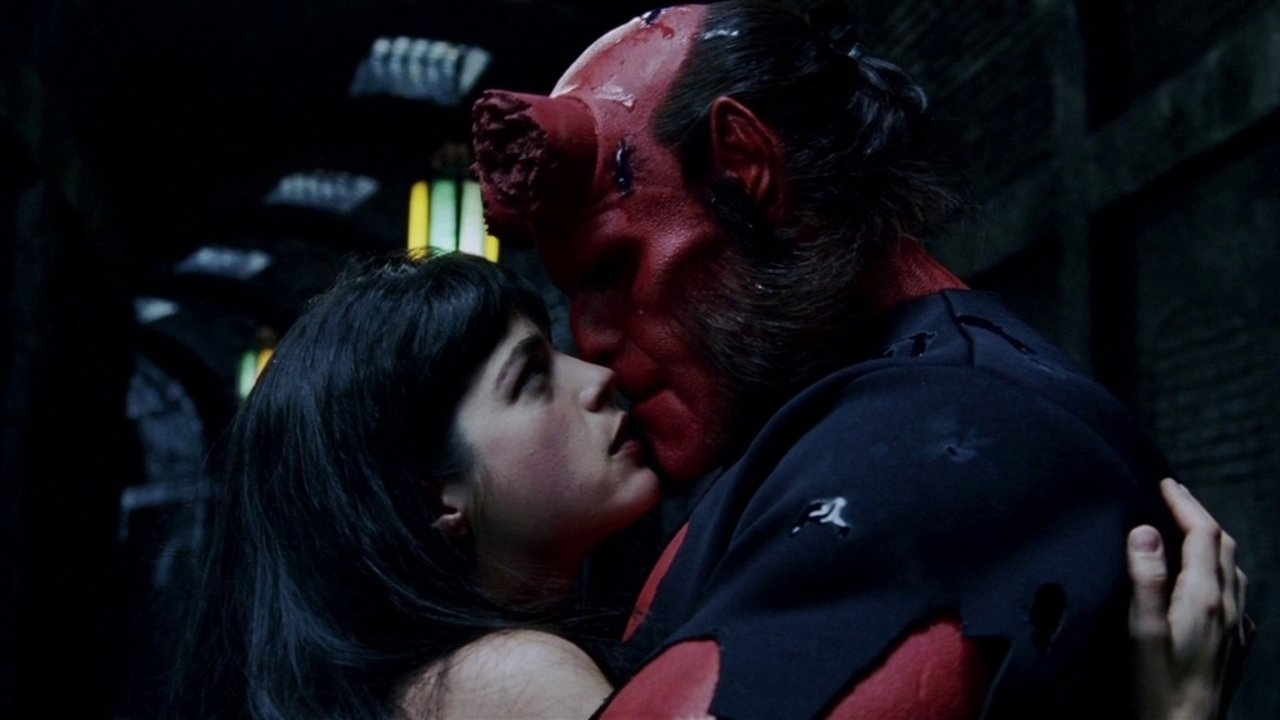
That passion is what makes it a cult classic. It’s a movie that feels hand-crafted. Even the "Subjective Irrelevance" of the casting—like Jeffrey Tambor playing the quintessential annoying middle-manager, Tom Manning—adds a layer of mundane human friction to the supernatural chaos. The romance between Hellboy and Selma Blair’s Liz Sherman is tragic and quiet, anchored by John Hurt’s fatherly warmth as Professor Broom.
There’s a specific scene where Hellboy is tailing Liz and the "normal" guy, John Myers (Rupert Evans), across the rooftops. He’s eating a box of cookies and throwing pebbles, looking like a jealous teenager in a seven-foot demon’s body. It’s ridiculous, it’s tender, and it’s something you’d never see in a modern, focus-tested blockbuster. It's a movie with a heart as big as its protagonist's stone hand.
Looking back twenty years later, Hellboy stands as a reminder that the best genre films aren't built on "IP" or "brand synergy"—they’re built on the specific, eccentric obsessions of a filmmaker who loves monsters enough to make them human.
Ultimately, Hellboy succeeds because it refuses to be cynical. It embraces the absurdity of its premise—a Nazi-fighting demon who loves Baby Ruth bars—and treats it with absolute sincerity. It’s a gorgeously shot, physically impactful piece of fantasy-action that rewards repeat viewings, mostly because you'll always find some new, weird artifact hidden in the background of Professor Broom’s office. If you haven't revisited it since the mid-2000s, it’s time to head back to the dark side. Just watch out for the Raisinets.
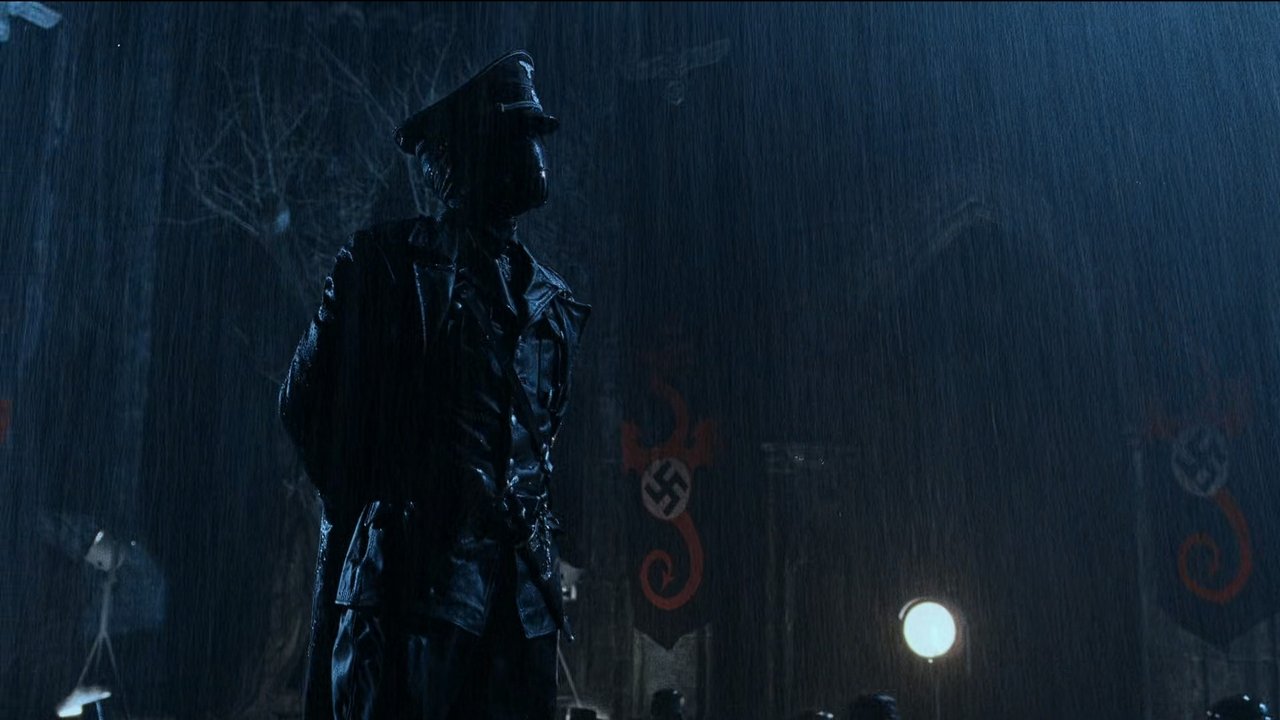
Keep Exploring...
-

Hellboy II: The Golden Army
2008
-

Blade II
2002
-
Pacific Rim
2013
-

Pan's Labyrinth
2006
-

Underworld: Evolution
2006
-

The Devil's Backbone
2001
-

Lara Croft: Tomb Raider
2001
-

Lara Croft: Tomb Raider - The Cradle of Life
2003
-

Sinbad: Legend of the Seven Seas
2003
-
Constantine
2005
-
Night at the Museum: Battle of the Smithsonian
2009
-

Reign of Fire
2002
-

Underworld
2003
-

The Brothers Grimm
2005
-
Underworld: Rise of the Lycans
2009
-
Last Action Hero
1993
-
DragonHeart
1996
-
Prince of Persia: The Sands of Time
2010
-

The Sorcerer's Apprentice
2010
-
Priest
2011