Howl's Moving Castle
"Love moves in mysterious, clanking ways."
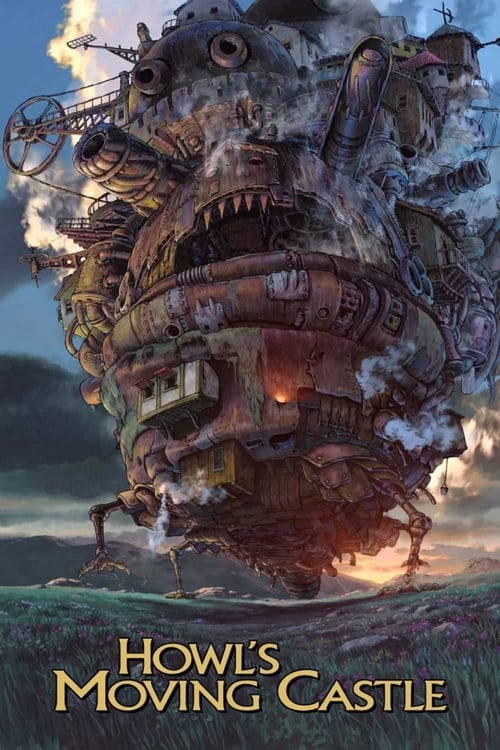
The first time I saw the castle, it wasn't the magic that got me—it was the noise. It’s a wheezing, groaning architectural disaster, a steampunk junk-pile that looks like it was assembled by a giant with a hobby for collecting tea kettles and Victorian row houses. In an era where 2004 audiences were being increasingly fed the smooth, friction-less surfaces of early DreamWorks and Pixar CGI, Hayao Miyazaki handed us a heap of clanking iron that felt heavy, dirty, and utterly alive.
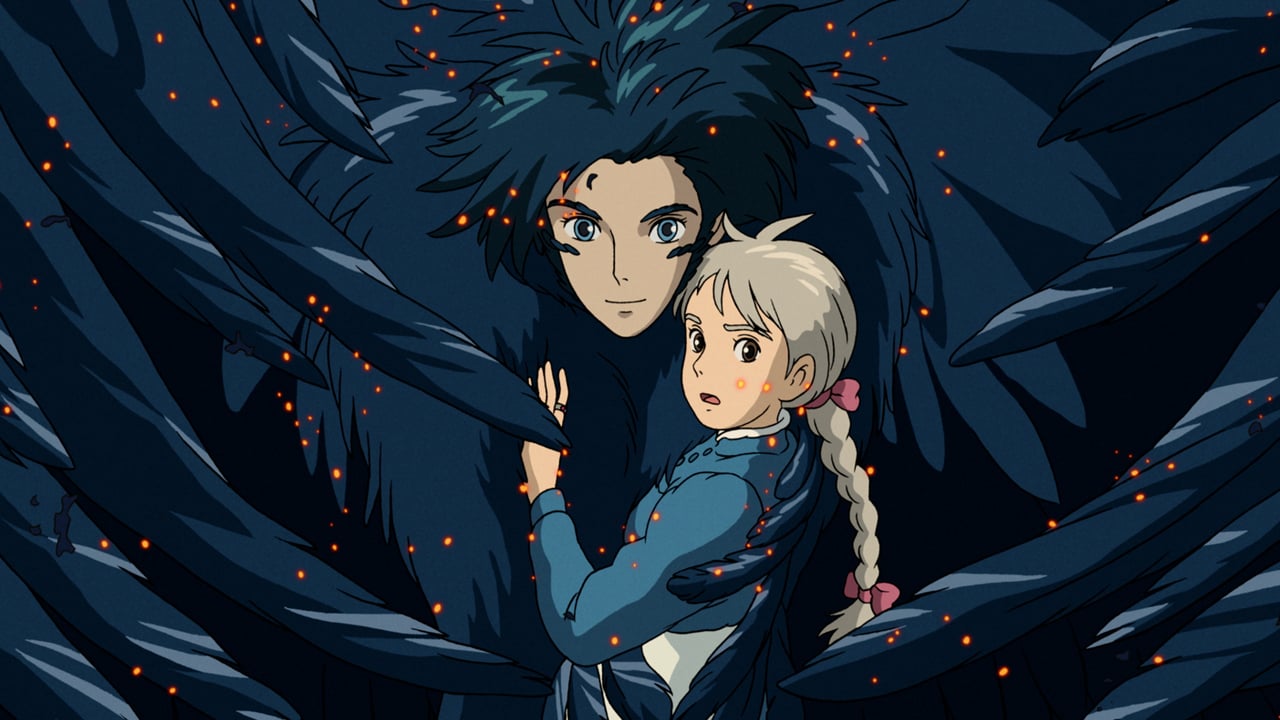
I remember watching this for the first time on a scratched-up DVD I borrowed from a friend who lived in a house that smelled perpetually of over-steeped Earl Grey tea. Every time the castle shifted on screen, I expected to smell the coal smoke and the sizzling bacon. That’s the Miyazaki magic: he doesn't just animate a world; he builds a sensory trap that you can’t help but fall into.
The Junk-Heap Heart
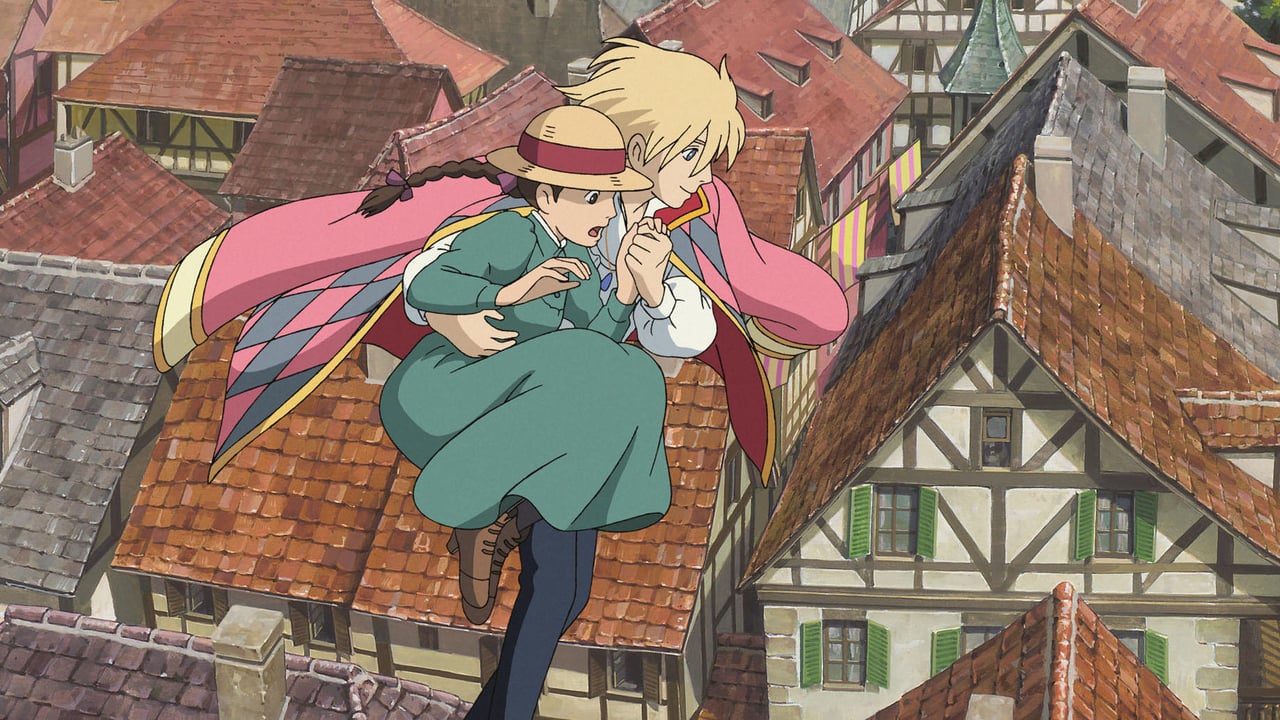
At its core, Howl’s Moving Castle is a classic "road movie" where the road is a war-torn dreamscape and the car is a sentient building powered by a fire demon. Sophie (Chieko Baisho), a quiet milliner, is cursed by the Witch of the Waste (Akihiro Miwa) and transformed into a ninety-year-old woman. Instead of panicking, she simply realizes that being old is quite liberating—your bones ache, sure, but you stop caring what people think.
She hitches a ride with Howl (Takuya Kimura), a wizard who is essentially a magical boy-band lead with a severe vanity streak and a disappearing heart. The adventure isn’t about finding a legendary treasure or slaying a dragon; it’s about the domestic chaos of a makeshift family trying to survive while the world outside burns. It’s intimate adventure, where the stakes are as much about whether the house is clean as they are about the encroaching warships.
Analog Soul in a Digital Shift
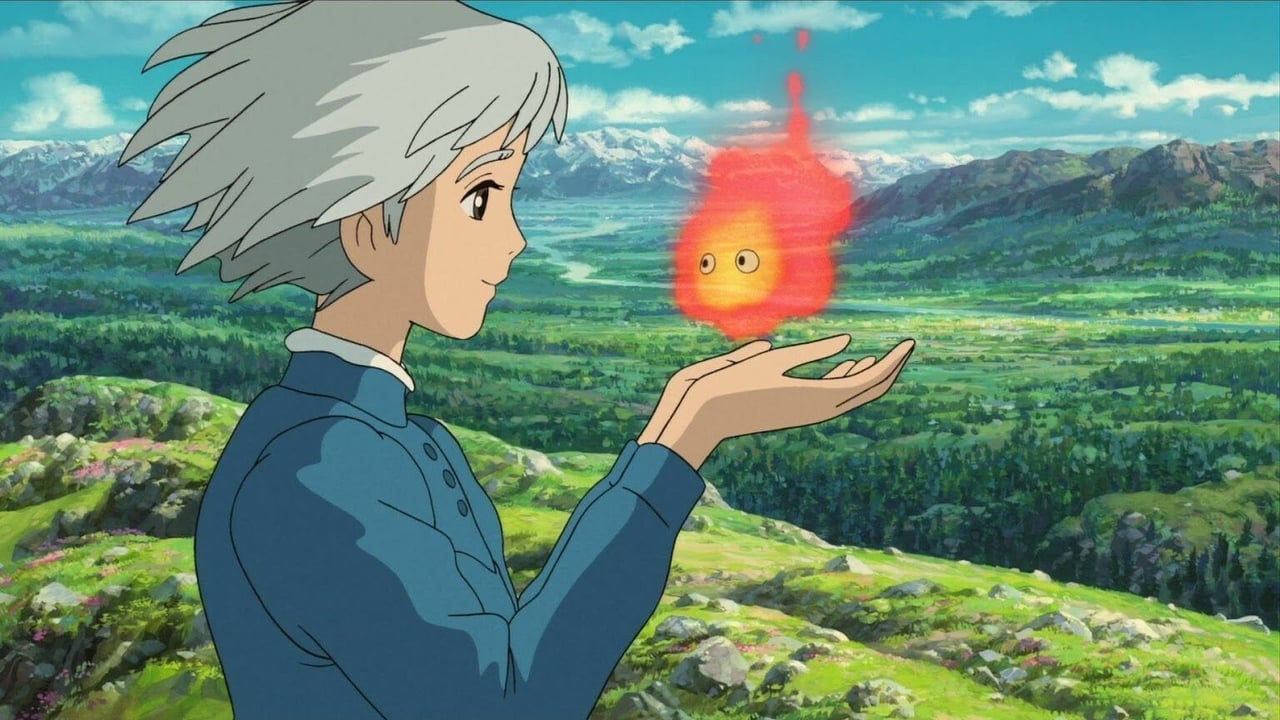
Looking back from our current AI-saturated landscape, Howl’s Moving Castle stands as a pivotal moment in the "Modern Cinema" era (1990–2014). This was the decade where the industry was aggressively pivotting to digital. While Disney was shuttering its hand-drawn departments, Studio Ghibli was proving that the "old ways" still had the most soul.
However, Miyazaki wasn’t a Luddite. He used digital technology to enable the impossible movement of the castle itself—thousands of moving parts that would have been a nightmare to hand-animate in every frame—but he layered it under hand-painted textures that kept it grounded. It’s a perfect bridge between eras. It’s the visual equivalent of a vinyl record played through high-end modern speakers. The film is so densely detailed that it makes most modern blockbusters look like they were rendered on a graphing calculator.
The production was famously frantic. Miyazaki took over the director's chair after Mamoru Hosoda (who later gave us Mirai) left the project, and the resulting film feels like a beautiful, barely-contained explosion of ideas. The budget was a hefty $24 million—huge for hand-drawn animation at the time—but it paid off, raking in over $235 million worldwide. It wasn't just a movie; it was a cultural event that proved global audiences were hungry for something that didn't follow the "talking animal sidekick" formula of the West.
The Shadow of the Real World
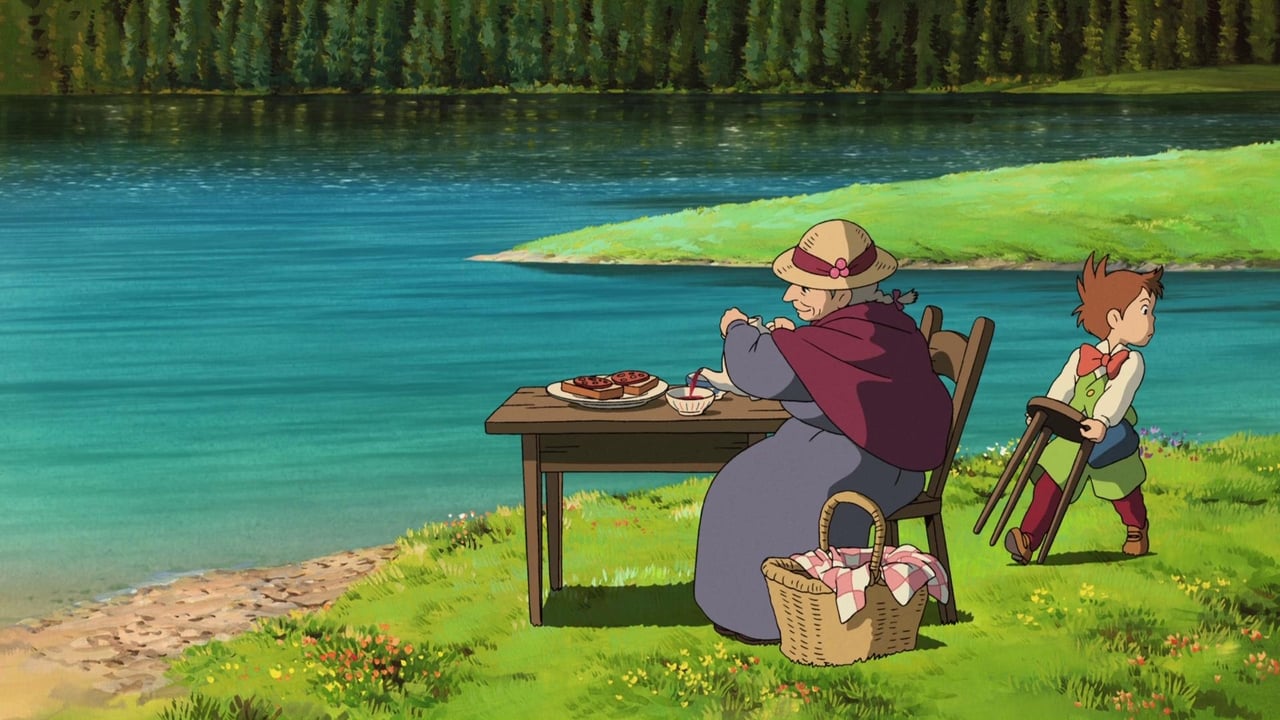
We can’t talk about this film’s legacy without mentioning the post-9/11 anxiety that haunts its periphery. Miyazaki was deeply opposed to the Iraq War, and he poured that frustration into the film’s senseless, aestheticized violence. The warships in Howl aren't sleek or cool; they are bloated, terrifying monsters that bleed black oil.
Unlike the source novel by Diana Wynne Jones, which focuses more on the subversion of fairy tale tropes, Miyazaki’s film is a sprawling anti-war statement. It captures that early-2000s feeling of a world tilting off its axis, where technology meant to connect us is instead being used to rain fire from the sky. Yet, amidst that darkness, we have Calcifer (Tatsuya Gashûin), a fire demon who just wants someone to feed him eggshells and keep him from going out.
The camaraderie between Sophie, the boy apprentice Markl (Ryunosuke Kamiki), and the "Turnip Head" scarecrow is what keeps the film from sinking into nihilism. It’s a testament to the idea that even when the world is ending, someone still needs to put the kettle on. The third act is a beautiful, incoherent fever dream that stops making sense if you blink, but by then, you’re so invested in the emotional logic that the plot's "hows" and "whys" barely matter.
In an age of franchises that feel like they were assembled by a committee in a boardroom, Howl’s Moving Castle feels like it was built by a madman in a garden shed. It’s messy, overstuffed, and occasionally confusing, but it’s also undeniably human. It reminds me that the best adventures aren't the ones where we find a New World, but the ones where we find a way to make the old world feel like home again. It’s a film that earns its wonder, one clanking, wheezing step at a time.

Keep Exploring...
-

Spirited Away
2001
-
Princess Mononoke
1997
-
Porco Rosso
1992
-
Ponyo
2008
-
The Boy and the Heron
2023
-
The Wind Rises
2013
-
Nausicaä of the Valley of the Wind
1984
-
Castle in the Sky
1986
-
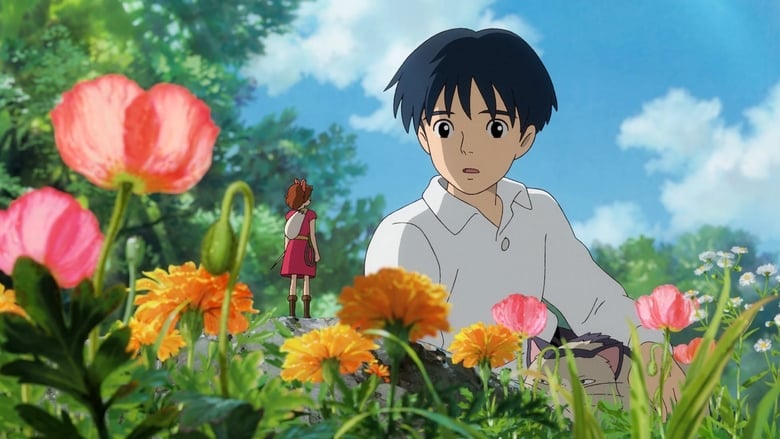
The Secret World of Arrietty
2010
-
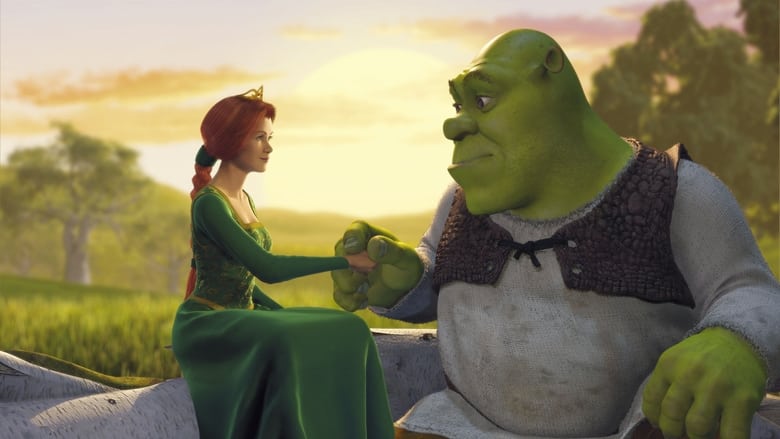
Shrek
2001
-
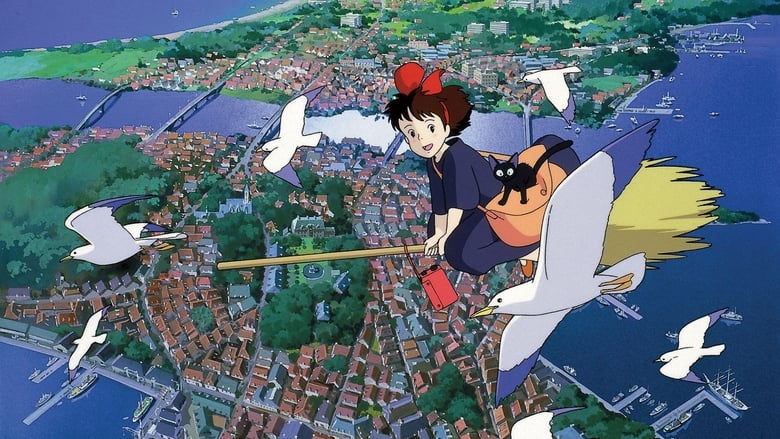
Kiki's Delivery Service
1989
-

Aladdin
1992
-
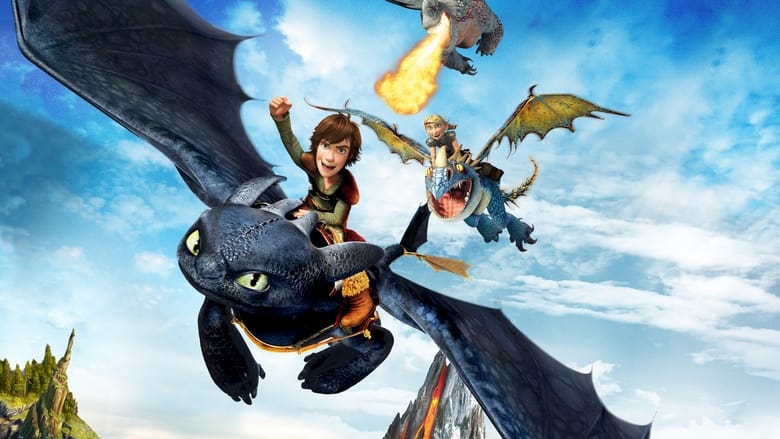
How to Train Your Dragon
2010
-
How to Train Your Dragon 2
2014
-
The Lego Movie
2014
-
The Castle of Cagliostro
1979
-

The SpongeBob SquarePants Movie
2004
-

The Emperor's New Groove
2000
-
Treasure Planet
2002
-
My Neighbor Totoro
1988