New York Minute
"Double the trouble, half the box office."

There was a time when you couldn’t walk into a Walmart without tripping over the Ashley Olsen and Mary-Kate Olsen brand. From dolls and perfumes to a direct-to-video empire that seemingly funded the entire economy of the late 90s, the twins were inescapable. But by 2004, the "Dualstar" machine was grinding toward a halt, and New York Minute arrived as the glossy, frantic, $30-million swan song to their shared cinematic career. Watching it today isn't just a trip down memory lane; it’s a bizarre artifact of a very specific moment in pop culture when we tried to turn "twin-ship" into a viable action-comedy subgenre.

I watched this while sitting in a chair that was slightly too small for me, which felt appropriate because New York Minute constantly feels like it’s trying to squeeze a massive, chaotic energy into a very tiny, teen-magazine-shaped box.
A Pop-Punk Time Capsule
Directed by Dennie Gordon (who also helmed the similarly breezy What a Girl Wants), the film follows the classic "Odd Couple" template. Jane Ryan (Ashley Olsen) is the high-achieving, planner-obsessed sister heading to Manhattan for a scholarship competition. Roxy Ryan (Mary-Kate Olsen) is the rebellious, drum-playing slacker hoping to sneak backstage at a video shoot for the band Simple Plan. Naturally, their paths collide, leading to a series of escalating disasters involving a corrupt limousine driver played by Andy Richter and a truant officer played with baffling commitment by Eugene Levy.
Looking back, the film is an absolute museum of 2004 aesthetics. We’re talking about the peak of low-rise jeans, chunky highlights, and the transition from the polished pop of the 90s to that sanitized "pop-punk" rebellion. The cameo by Simple Plan is the ultimate era-marker; it’s the kind of synergy that only existed in a pre-streaming world where being featured in a teen movie was the gold standard of marketing. The film vibrates with a kinetic, almost exhausting energy, moving from one slapstick set piece to another with the logic of a Saturday morning cartoon.
The Eugene Levy Factor
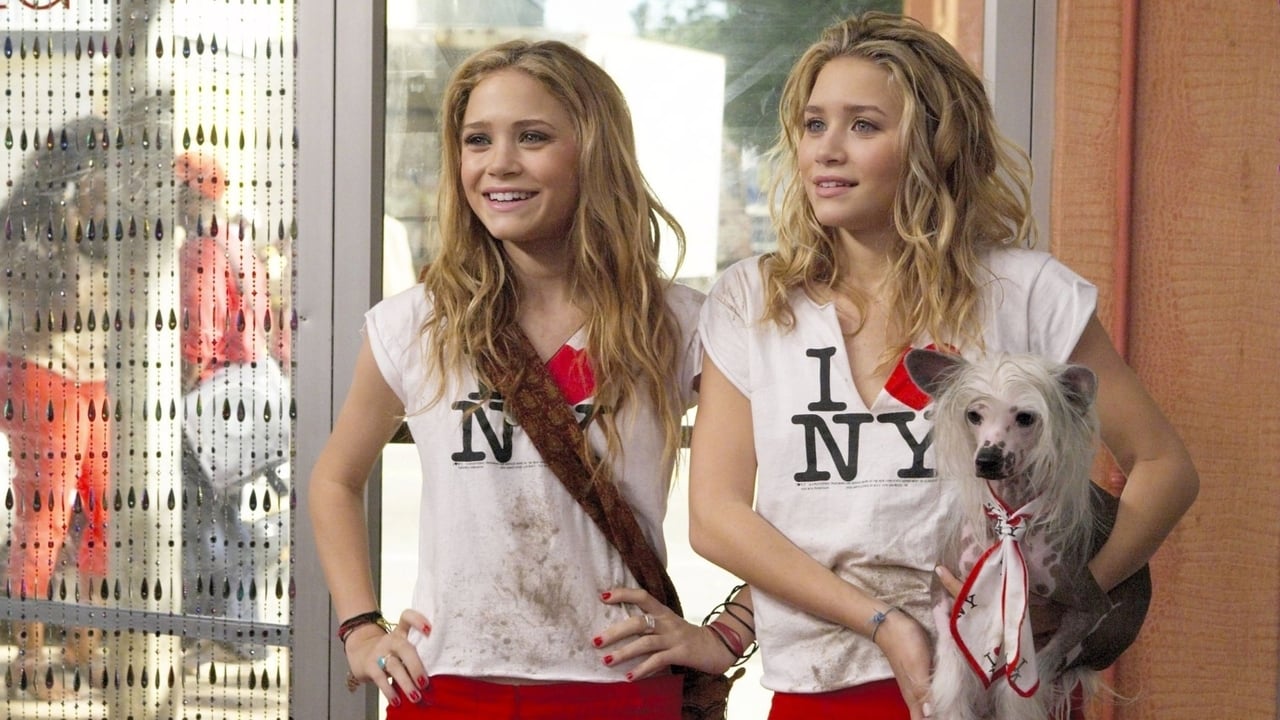
If there is a reason to revisit this film beyond pure curiosity, it’s the supporting cast. Eugene Levy, fresh off his American Pie resurgence, plays Max Lomax, a man whose entire personality is "truant officer." It’s a role that requires a level of sincerity that the script doesn't deserve, and Levy gives it his all, treating a chase through the streets of New York with the gravity of a high-stakes thriller.
Then there’s the "hunkalicious" factor. We get a young Jared Padalecki (just before he became a Supernatural icon) as Trey Lipton and Riley Smith as Jim. Their roles are purely functional—to look good and provide the sisters with someone to flirt with between escapes—but their presence reminds you of how Hollywood used these films as a farm system for upcoming CW talent. The chemistry between the twins themselves is, predictably, the film's strongest asset. They had spent a decade and a half finishing each other's sentences on screen, and even when the dialogue is clunky, their timing is telepathic.
Why the Minute Stopped
So, why did this film essentially end the Olsen cinematic era? In 2004, the cultural tectonic plates were shifting. Mean Girls had been released just one week prior, and it changed the language of teen cinema overnight. Audiences were moving toward sharper, more cynical, and more grounded stories. New York Minute, with its slapstick smugglers and Andy Richter's over-the-top villainy, felt like a holdover from the 90s. It was a movie made for fans who were growing up faster than the scripts were.

The film's obscurity today is partly due to its "in-between" status. It wasn't quite a "Modern Classic" and it wasn't a total disaster; it was just a franchise finale that missed its window. The CGI used for some of the stunts hasn't aged particularly well, and the "New York" on display is a strange, sanitized version of the city (much of it was actually shot in Toronto). Yet, there’s a charm in its sincerity. It’s a movie that believes, wholeheartedly, that a sister is the best friend you’ll ever have, even if she ruins your scholarship interview.
Ultimately, New York Minute is a fascinating relic of the Dualstar era. It’s loud, nonsensical, and it’s basically a fever dream sponsored by a bubblegum factory, but it’s never boring. If you’re looking for a heavy dose of early-2000s energy or want to see Eugene Levy treat a truant-officer role like he’s chasing down Al Capone, it’s worth the 91-minute investment. It might not have changed the world in a New York minute, but it certainly closed a chapter on one of the most successful child-star runs in history.
Keep Exploring...
-

What a Girl Wants
2003
-

American Pie Presents: Beta House
2007
-
Semi-Pro
2008
-
Deuce Bigalow: Male Gigolo
1999
-
Never Been Kissed
1999
-

28 Days
2000
-
How High
2001
-

The Wedding Planner
2001
-
National Lampoon's Van Wilder
2002
-
S1m0ne
2002
-

The Sweetest Thing
2002
-

Duplex
2003
-
Legally Blonde 2: Red, White & Blonde
2003
-

The Lizzie McGuire Movie
2003
-

Uptown Girls
2003
-

Confessions of a Teenage Drama Queen
2004
-
First Daughter
2004
-
Jersey Girl
2004
-

Seed of Chucky
2004
-
Taxi
2004