Resident Evil: Apocalypse
"Raccoon City is closing. Permanent evacuation starts now."
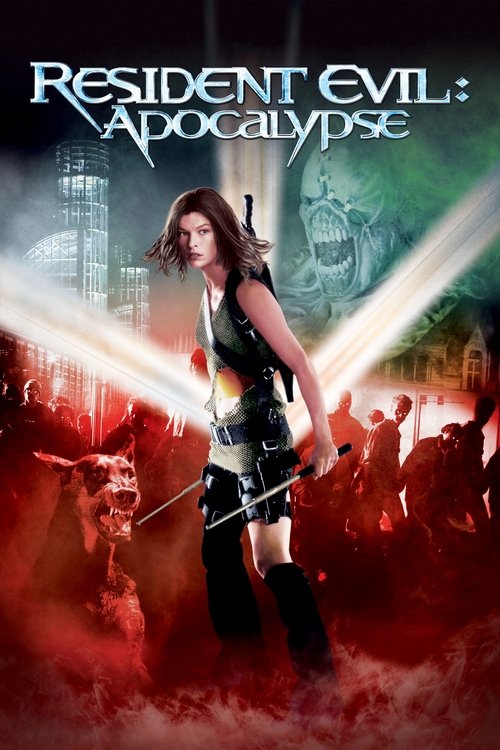
There is a very specific shade of "action-movie blue" that dominated the early 2000s—a metallic, cold tint that promised leather jackets, dual-wielded pistols, and a soundtrack heavy on industrial rock. I call it the Underworld palette, but Resident Evil: Apocalypse (2004) might actually be its purest ambassador. It’s a film that arrived right at the intersection of the DVD boom and the peak of video game adaptation anxiety, and looking back, it feels like a glorious time capsule of an era when movies weren't trying to build "universes" so much as they were trying to look like the coolest thing on a GameStop shelf.
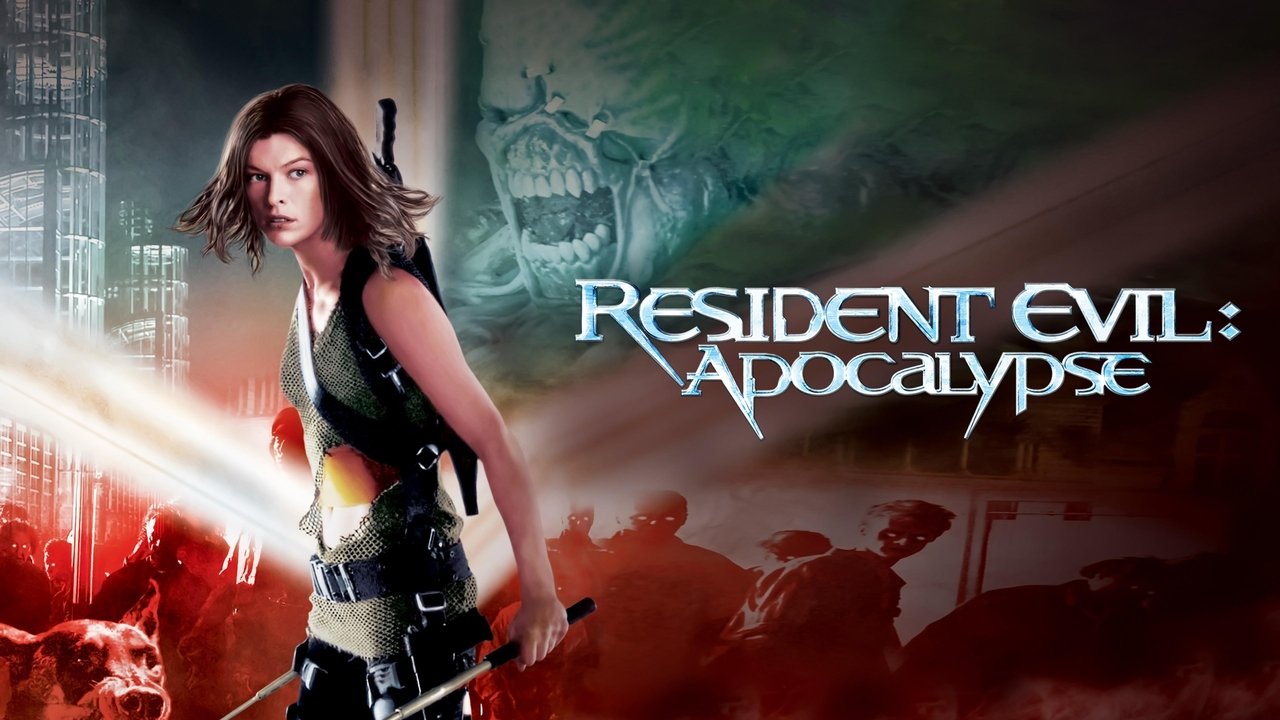
I watched this most recently on a Tuesday evening while eating a bowl of cereal that had gone slightly soggy, and honestly, the lack of crunch only made the CGI explosions feel more impactful. While the first Resident Evil (2002) was a claustrophobic, "haunted house" thriller in an underground lab, Apocalypse kicks the doors down and takes the fight to the streets of Raccoon City. It’s louder, dumber, and infinitely more confident in its own absurdity.
The Ultimate Fan-Service Evolution
For those of us who grew up clutching a PlayStation controller, the arrival of Sienna Guillory as Jill Valentine was a tectonic shift. While the first film gave us original characters, Apocalypse finally gave us the icons. I remember the collective gasp from the fanbase when the first production stills leaked; Sienna Guillory didn’t just play Jill Valentine; she stepped right out of the Resident Evil 3: Nemesis save room. She apparently spent weeks studying the character's movements from the game to get the "feel" right, and it shows in every stiff, tactical aim and stoic glare.
Then there’s Alice. Milla Jovovich was already becoming the face of the franchise, but here, the script by Paul W. S. Anderson leans fully into her transformation as a bio-engineered superhero. Watching Alice crash a motorcycle through a stained-glass church window to save a group of survivors is peak 2004 cinema. It’s essentially a high-budget cosplay event with live ammunition, and I find that refreshing in a world of overly serious, grounded reboots. The chemistry between Alice and Jill is minimal, but the visual of them standing side-by-side, guns drawn against a backdrop of urban decay, is pure nerd iconography.
Practical Monsters in a Digital City

One thing I deeply appreciate about this era of filmmaking is the lingering commitment to practical effects even as CGI began its hostile takeover. The Nemesis, played by Matthew G. Taylor, is a towering achievement of prosthetic design. Turns out, the suit weighed about 60 pounds, and Matthew G. Taylor had to be hooked up to a cooling system between takes just to survive the Toronto summer heat. You can feel that physical weight on screen. When Nemesis walks, the ground feels like it’s actually shaking, a sensation that modern, weightless digital monsters often fail to replicate.
The film also captures that post-9/11 urban anxiety that haunted early 2000s action cinema. The sight of a city being walled off, the panicked crowds at the gates, and the Umbrella Corporation’s cold, corporate indifference felt a bit more "real" than the zombie tropes of the 80s. Director Alexander Witt, who was primarily a second-unit director and cinematographer on massive projects like Gladiator (2000), brings a frantic, shaky-cam energy to the street fights. It’s a bit chaotic, but it keeps the momentum from sagging. Apparently, the production used over 1,500 extras for the main gate sequence, and you can feel the scale of the chaos.
A Relic of the DVD Revolution
Apocalypse was the kind of movie built for the "Special Edition" DVD era. I recall poring over the bonus features—the "Screaming Girl" contest winner who got a cameo, the breakdown of the wire-work stunts, and the deleted scenes that explained why Oded Fehr’s Carlos Olivera was so impossibly cool. Oded Fehr is a secret weapon here; fresh off The Mummy (1999), he brings a weary, mercenary charm that balances out the more heightened performances from Thomas Kretschmann as the villainous Major Cain.

The movie isn't a masterpiece of narrative depth. It’s a 94-minute sprint through a burning city that ends with a fistfight between a super-soldier and a mutant. But there’s a sincerity to its excess. Whether it’s Mike Epps providing comic relief as L.J. or the "stunt" where a real actor actually ran down the side of the Toronto City Hall building (with a lot of cables, of course), the film is constantly trying to show you something you haven’t seen before. It’s an unapologetic B-movie with an A-list budget.
In the grand scheme of the Resident Evil franchise, Apocalypse is the one that arguably feels the most like the games it's based on. It’s messy, the editing is sometimes too fast for its own good, and the plot is thin enough to see through, but it’s undeniably fun. It represents a time when horror-action was finding its footing in the digital age, relying on star power and creature design to carry the day. If you’re looking for a nostalgic trip back to the days of blue filters and zombie dogs, this is your ticket. It’s a loud, proud survivor of the 2000s action boom that still knows how to throw a punch.


Keep Exploring...
-
Resident Evil: Extinction
2007
-

Resident Evil
2002
-

Resident Evil: Afterlife
2010
-

Resident Evil: Retribution
2012
-

Resident Evil: The Final Chapter
2016
-

AVP: Alien vs. Predator
2004
-
Pandorum
2009
-
Blade: Trinity
2004
-
Death Race
2008
-

Deep Blue Sea
1999
-
Alien Resurrection
1997
-
Lake Placid
1999
-

World War Z
2013
-

Blade II
2002
-
The Time Machine
2002
-
Next
2007
-
Carriers
2009
-

Pitch Black
2000
-
Equilibrium
2002
-

Planet Terror
2007