Shall We Dance?
"Find the rhythm you didn't know you lost."
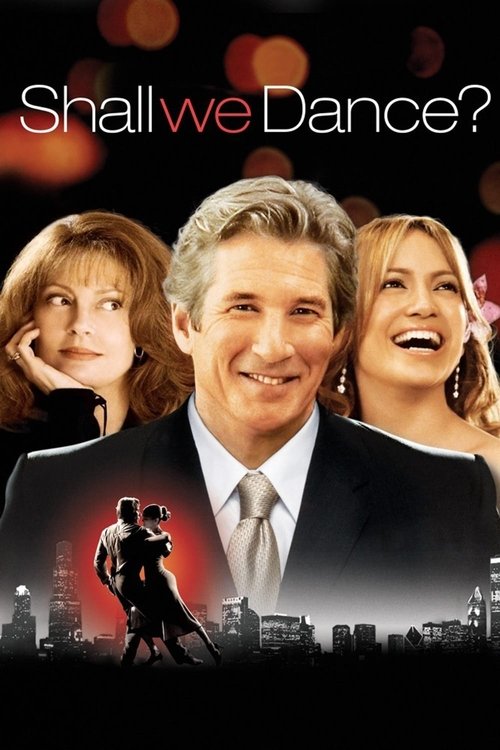
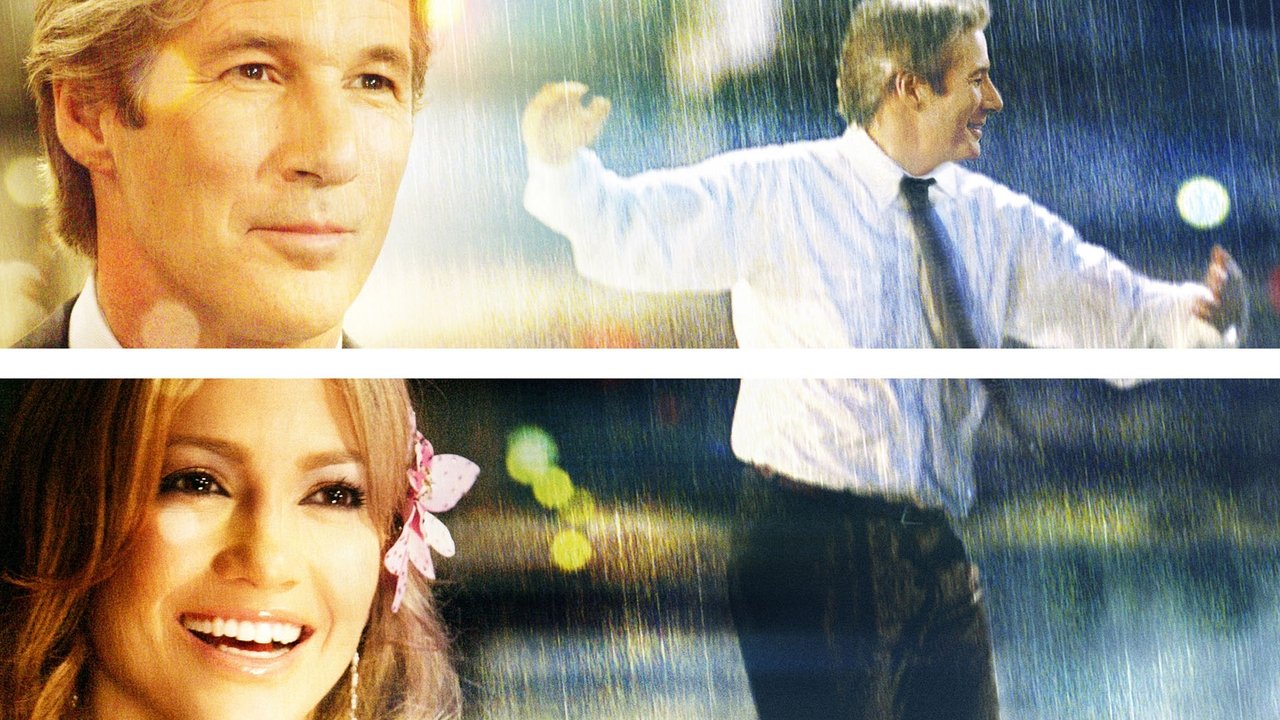
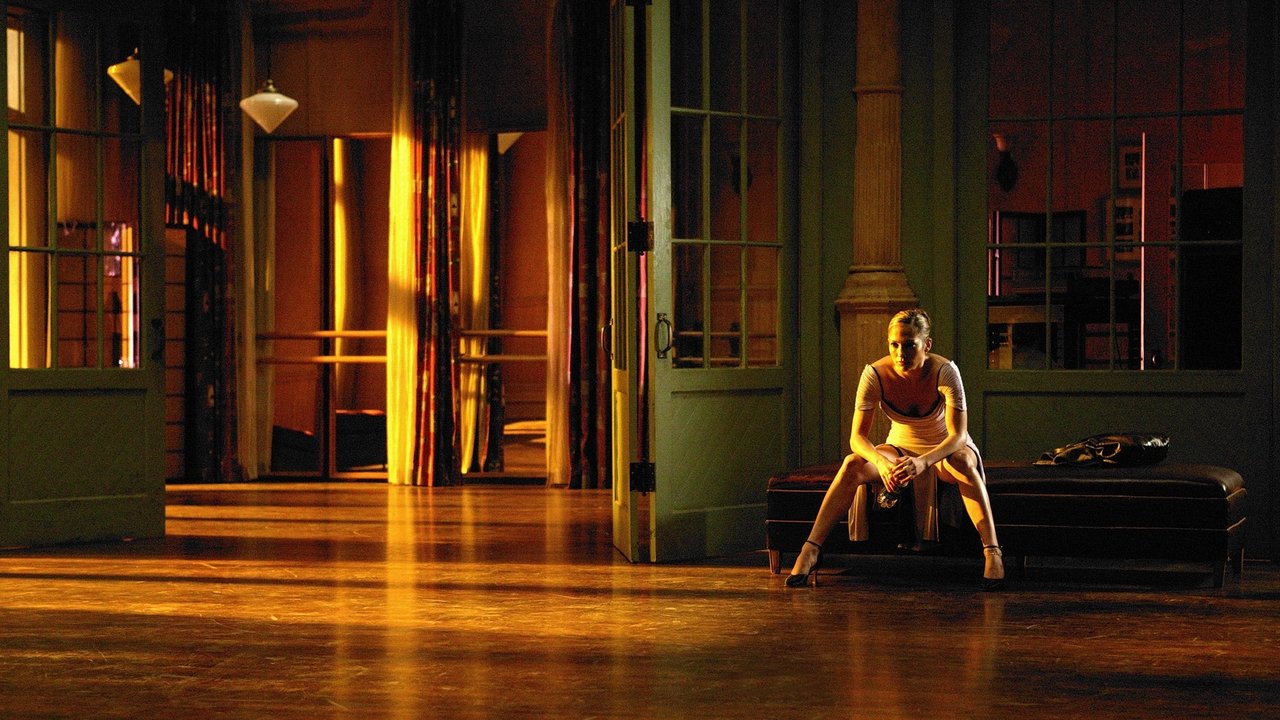
The rhythmic, industrial clack-clack of the Chicago "L" train isn't usually the prelude to a ballroom fantasy, but for John Clark, it’s the metronome of a life gone flat. Every night, Richard Gere—looking exactly like the sort of man who wins at probate law but loses at spontaneity—stares out the window at the passing tenements. Then, he sees her. Jennifer Lopez, framed in the amber glow of a second-story dance studio, looking like a melancholic statue of Terpsichore. It’s a voyeuristic hook that could easily slide into a thriller, but in the hands of director Peter Chelsom (who gave us the equally whimsical Serendipity), it becomes something far more earnest: a midlife crisis that chooses a tuxedo over a red Porsche.
I recently rewatched this while my left foot was completely asleep, which felt like a cruel irony given the film’s obsession with nimble footwork. As I waited for the pins and needles to subside, I realized that Shall We Dance? (2004) is a fascinating relic of that mid-2000s era where Miramax was still the king of the "elevated" crowd-pleaser. It’s a film that shouldn’t work—a remake of a culturally specific Japanese masterpiece—yet it manages to find its own suburban soul.
The Art of the Polite Meltdown
What I love about Richard Gere in this role is his restraint. Usually, Gere is the guy who walks into a room and owns the oxygen. Here, he’s a man who has forgotten how to breathe. He’s surrounded by a life that is "perfect" on paper—a beautiful, intelligent wife played by Susan Sarandon and a comfortable home—yet he’s hollow. When he finally gathers the nerve to step off the train and into Miss Mitzi’s studio, he isn't looking for an affair with Jennifer Lopez’s Paulina. He’s looking for a version of himself that isn't defined by a briefcase.
Jennifer Lopez is surprisingly effective here by doing very little. Coming off the high-gloss energy of Maid in Manhattan, she plays Paulina with a bruised, icy distance. She’s a dancer who has lost her "why," and the chemistry between her and Gere isn't romantic—it's more like two people trapped in different elevators trying to signal each other through the vents. The movie is essentially a high-fructose corn syrup hug for anyone who has ever felt like a background character in their own life.
Stealing the Show in a Bad Wig
While the central drama is a slow burn, the periphery is where the movie throws a party. We have to talk about Stanley Tucci. Before he was the sophisticated heart of The Devil Wears Prada, he was Link Peterson, a closeted ballroom fanatic who hides his passion behind a terrifyingly bad, jet-black toupee and fake teeth. Stanley Tucci’s wig is a sentient being that deserves its own SAG card. The moment he hits the floor to do the Cha-Cha, the movie shifts from a quiet drama into a vibrant comedy.
He’s joined by Lisa Ann Walter, who brings that brassy, "I’ve seen it all" energy she later perfected in Abbott Elementary. These supporting characters represent the "misfit" side of ballroom—the people who use the dance floor to escape their mundane reality. The film captures that specific 2004 DVD-culture vibe: it's a movie that feels designed for a rainy Sunday afternoon where you don't want to think about the geopolitical anxieties of the post-9/11 world, but you do want to feel like a better version of yourself is just one dance lesson away.
Remake Culture and the $170 Million Waltz
Looking back, 2004 was a peak year for the "Hollywood-ized" remake. We were obsessed with taking foreign hits—think The Ring or The Grudge—and polishing them until they sparkled for American audiences. The original 1996 Japanese film relied heavily on the social stigma of ballroom dancing in Japan, where public displays of intimacy were taboo. In the US version, that tension is replaced by the general "Midwest embarrassment" of a man doing something "silly."
Financially, the gamble paid off massively. With a $50 million budget, it pirouetted its way to over $170 million worldwide. That’s a staggering number for a movie where the climax involves a man holding a single rose in a mall. It speaks to a cultural moment where we were hungry for stories about "the hidden life." Before social media allowed us to perform our hobbies for the world, the idea of having a secret, private passion was a powerful narrative engine.
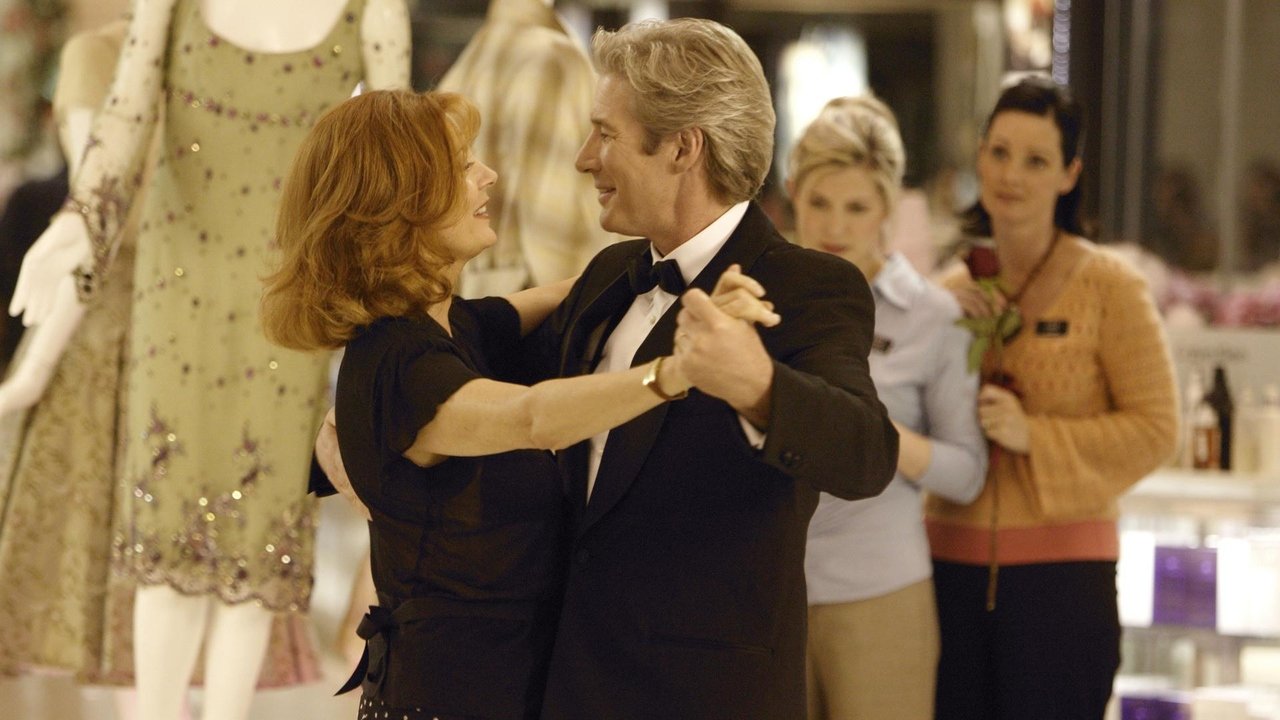
The screenplay by Audrey Wells (who also wrote the quintessential "start over" movie Under the Tuscan Sun) manages to give Susan Sarandon a subplot that actually carries weight. Instead of being the "nagging wife," she’s a woman who realizes her husband is slipping away and has the grace to wonder why. The cinematography by John de Borman captures the dance sequences with a warm, amber glow that makes even a dusty Chicago studio look like a cathedral. It’s not a gritty masterpiece, and it’s certainly not "cool," but it has a genuine, unironic heart that feels increasingly rare in the age of cynical blockbusters. It’s a reminder that sometimes, the most revolutionary thing you can do is learn how to move your feet.
Keep Exploring...
-

Hannah Montana: The Movie
2009
-
Something's Gotta Give
2003
-
Stepmom
1998
-
About a Boy
2002
-
Lost in Translation
2003
-
As Good as It Gets
1997
-
Just Like Heaven
2005
-
Love & Other Drugs
2010
-
Silver Linings Playbook
2012
-

George of the Jungle
1997
-
Hitch
2005
-
Sex and the City
2008
-
Blast from the Past
1999
-
Never Been Kissed
1999
-
High Fidelity
2000
-
Punch-Drunk Love
2002
-
S1m0ne
2002
-
Secretary
2002
-
First Daughter
2004
-

Casanova
2005