Sideways
"Pour a glass, embrace the mess."
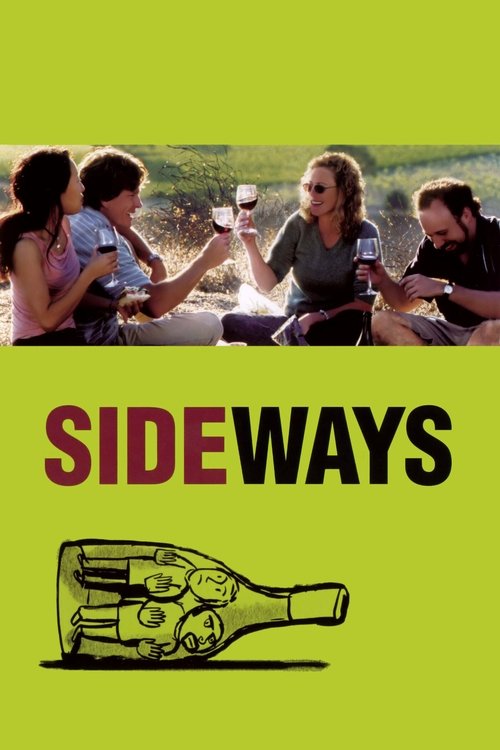
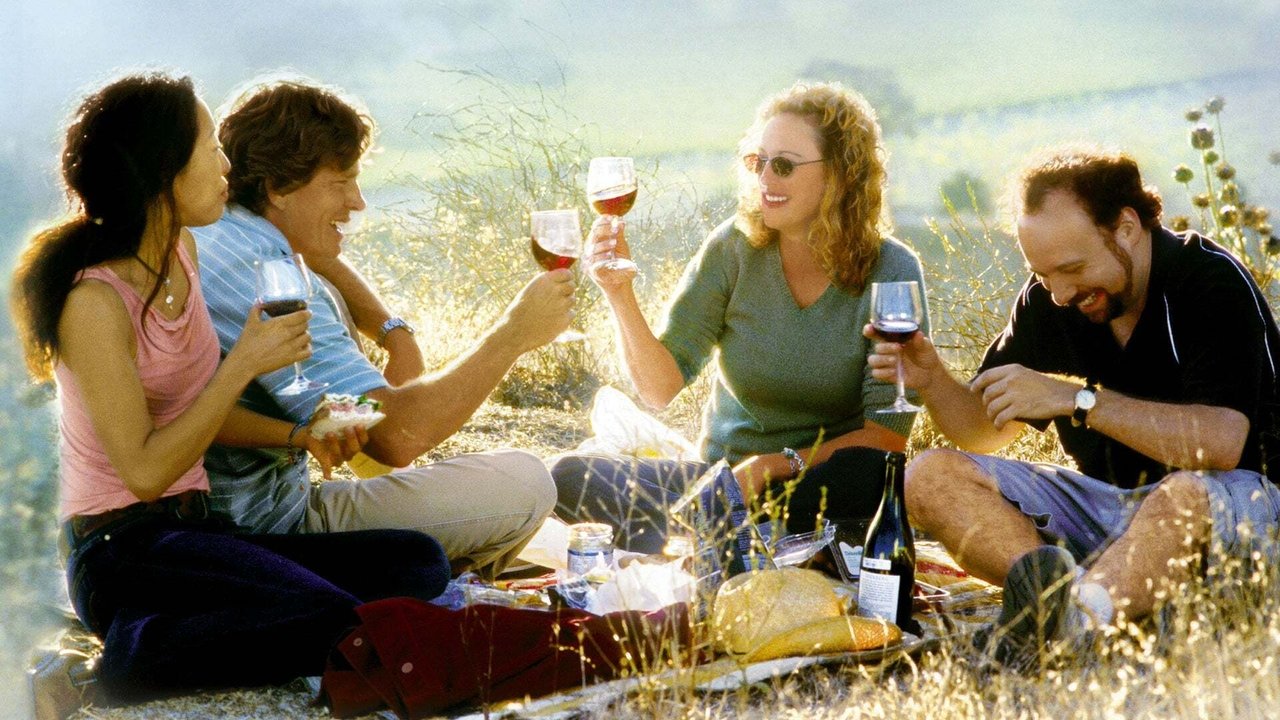
Before 2004, Merlot was just a standard red wine you’d grab at a grocery store without a second thought. After Sideways, ordering a glass of it felt like a public admission of social failure. It’s rare that a quiet, character-driven indie film manages to tank an entire agricultural commodity, but that is the power of a disgruntled Paul Giamatti shouting in a parking lot. Looking back at it now, Alexander Payne’s wine-soaked road movie isn't just a period piece of the early 2000s indie boom; it’s a painfully funny, deeply human look at why we sabotage our own happiness.
I recently re-watched this on a DVD I found in a bargain bin that still had a "2-day rental" sticker from a defunct Blockbuster, and honestly, the slight grain of the 1.85:1 aspect ratio just made the Santa Ynez Valley look even more inviting. I was eating a sleeve of slightly stale Ritz crackers at the time, which is probably the exact opposite of the refined pairing Miles would recommend, but it felt right.
The Art of the Awkward Hang
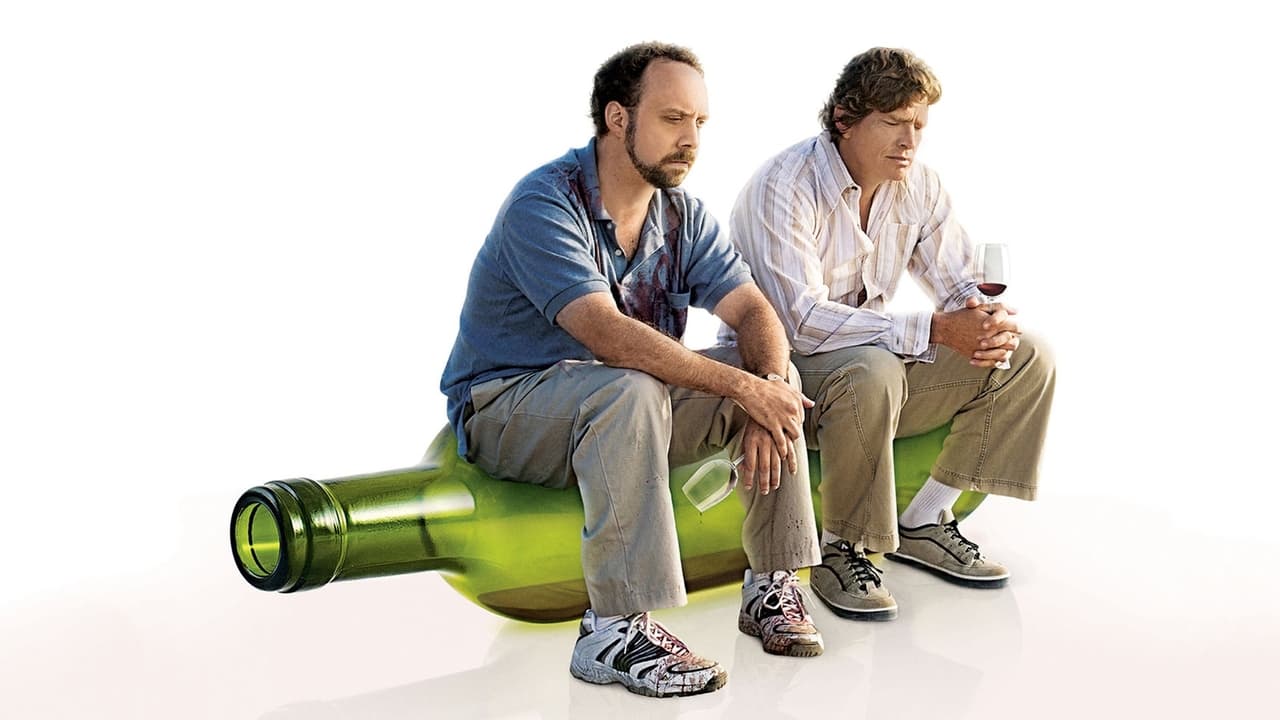
The plot is deceptively simple: Miles (Paul Giamatti), a depressed middle-school teacher and struggling novelist, takes his best friend Jack (Thomas Haden Church) on a week-long bachelor trip through California’s wine country. Miles wants to drink high-end Pinot Noir and mourn his divorce; Jack wants to get laid one last time before he commits to a life of "the noose."
What makes this work so well is the friction between the two leads. Paul Giamatti is the king of the "intellectual loser." He plays Miles with such high-strung, sweaty desperation that you can almost smell the stale wine and self-loathing coming off him. On the flip side, Thomas Haden Church—who I mostly knew as the dim-witted mechanic from the sitcom Wings before this—is a revelation. Jack is essentially a sentient Hawaiian shirt with zero impulse control, and Church plays him with a goofy, lovable vacancy that makes his terrible decisions almost forgivable.
The chemistry here isn't about two guys who are alike; it’s about two guys who have been friends so long they’ve forgotten why they like each other. We’ve all had that one friend from high school or college who we’ve outgrown but can’t quite shake, and Sideways captures that specific fatigue perfectly.
More Than Just "The Wives"
While the boys are busy falling apart, Virginia Madsen and Sandra Oh provide the film’s actual soul. In many lesser comedies of this era, the female characters would just be obstacles or trophies. Here, Maya (Virginia Madsen) and Stephanie (Sandra Oh) feel like people with lives that continue long after the camera stops rolling.
The scene where Maya and Miles talk about why they love wine is the emotional peak of the movie. It’s not actually about grapes; it’s about the way we see ourselves. Madsen delivers her monologue with a softness that makes Paul Giamatti’s Miles look like he’s finally being seen for the first time in years. Meanwhile, Sandra Oh brings a fierce, vibrant energy to Stephanie that serves as the perfect foil to Jack’s shallow charm. When she eventually finds out Jack has been lying to her, her reaction is one of the most satisfyingly brutal moments in 2000s cinema.
The $100 Million "Little Movie" That Could
It’s easy to forget now, but Sideways was a massive commercial phenomenon. Produced for a modest $16 million, it went on to gross over $109 million worldwide. This was the peak of the "Fox Searchlight" era, where smart, adult-oriented mid-budget movies could actually dominate the cultural conversation. It didn't need CGI or a franchise tie-in; it just needed a sharp script by Alexander Payne and Jim Taylor (the duo behind the equally sharp Election).
The "Sideways Effect" was a real thing. Following the film’s release, Pinot Noir production in the U.S. jumped by about 16%, while Merlot sales famously dipped. The irony, which wine geeks love to point out, is that the 1961 Château Cheval Blanc that Miles treasures—the one he finally drinks out of a Styrofoam cup in a fast-food joint—is actually a blend that includes Merlot grapes. Miles is basically a human version of a damp basement, and his refusal to acknowledge his own contradictions is exactly why the character remains so relatable.
Director Alexander Payne and cinematographer Phedon Papamichael (who also shot Ford v Ferrari) lean into a naturalistic, almost 70s-inspired aesthetic. The use of split-screens and a jazzy, lounge-style score by Rolfe Kent gives the film a breezy, sophisticated feel that contrasts hilariously with the characters' increasingly messy behavior.
Sideways holds up beautifully because it refuses to give its characters easy outs. Miles doesn't magically become a bestseller, and Jack doesn't suddenly become a man of integrity. It’s a movie about the "sideways" years of life—that middle-aged plateau where you realize the person you are might be the person you’re stuck with. It’s funny, it’s cringey, and like a good bottle of Pinot, it has enough acidity to keep the sweetness from becoming cloying. If you haven't seen it in a decade, give it another pour. Just maybe don't tell Miles if you're drinking the cheap stuff.
I left the movie feeling like I needed a long walk and a glass of something expensive. It’s a rare film that makes failure feel this poetic. Whether you’re a wine snob or someone who thinks "notes of tobacco" sounds like a cleaning accident, there’s something in Miles’s struggle that hits home. It’s a reminder that even when life goes off the rails, there’s usually a decent vineyard nearby to help you endure the crash.

Keep Exploring...
-
About Schmidt
2002
-
The Descendants
2011
-
Election
1999
-
Chocolat
2000
-
About a Boy
2002
-
The Princess Diaries 2: Royal Engagement
2004
-
Juno
2007
-
Knocked Up
2007
-

Forgetting Sarah Marshall
2008
-

High School Musical 3: Senior Year
2008
-

17 Again
2009
-
The Proposal
2009
-

Bridget Jones's Diary
2001
-
My Big Fat Greek Wedding
2002
-
Lost in Translation
2003
-

Love Actually
2003
-
Something's Gotta Give
2003
-
Shall We Dance?
2004
-
Hitch
2005
-
Sex and the City
2008