Sky Captain and the World of Tomorrow
"Yesterday's future is today's digital dream."
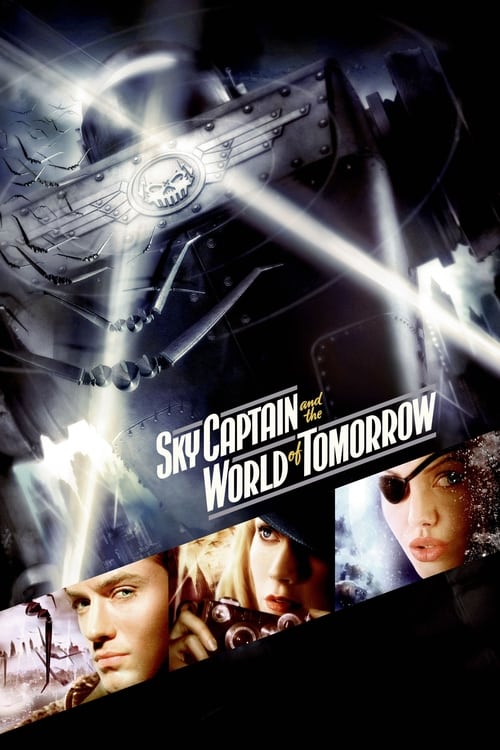
I remember walking into the theater in 2004 and feeling like I’d accidentally stepped into a time machine that was malfunctioning in the best way possible. The screen didn’t look like a movie; it looked like a stack of dusty Astounding Science Fiction magazines had been fed into a supercomputer and hallucinated into life. I watched this particular screening while nursing a lukewarm Cherry Coke and trying to ignore the guy behind me who kept whispering "How did they do that?" to his bored girlfriend. To be honest, I was asking myself the same thing.
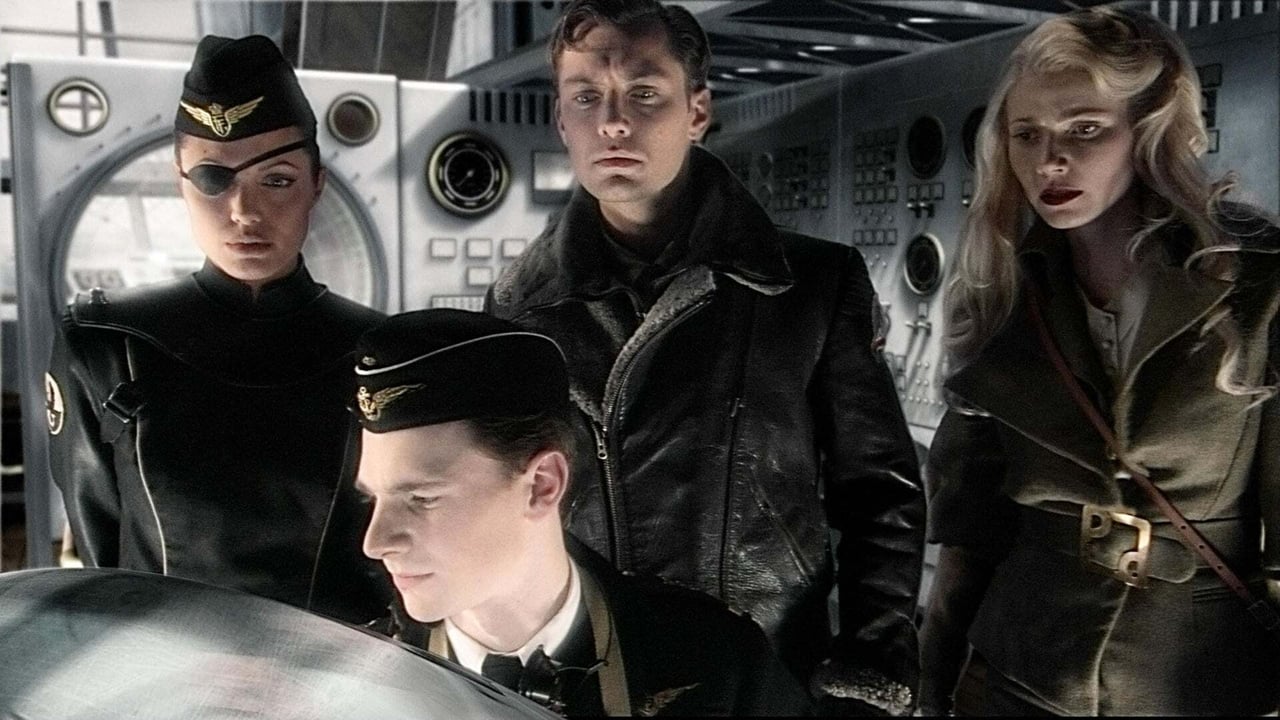
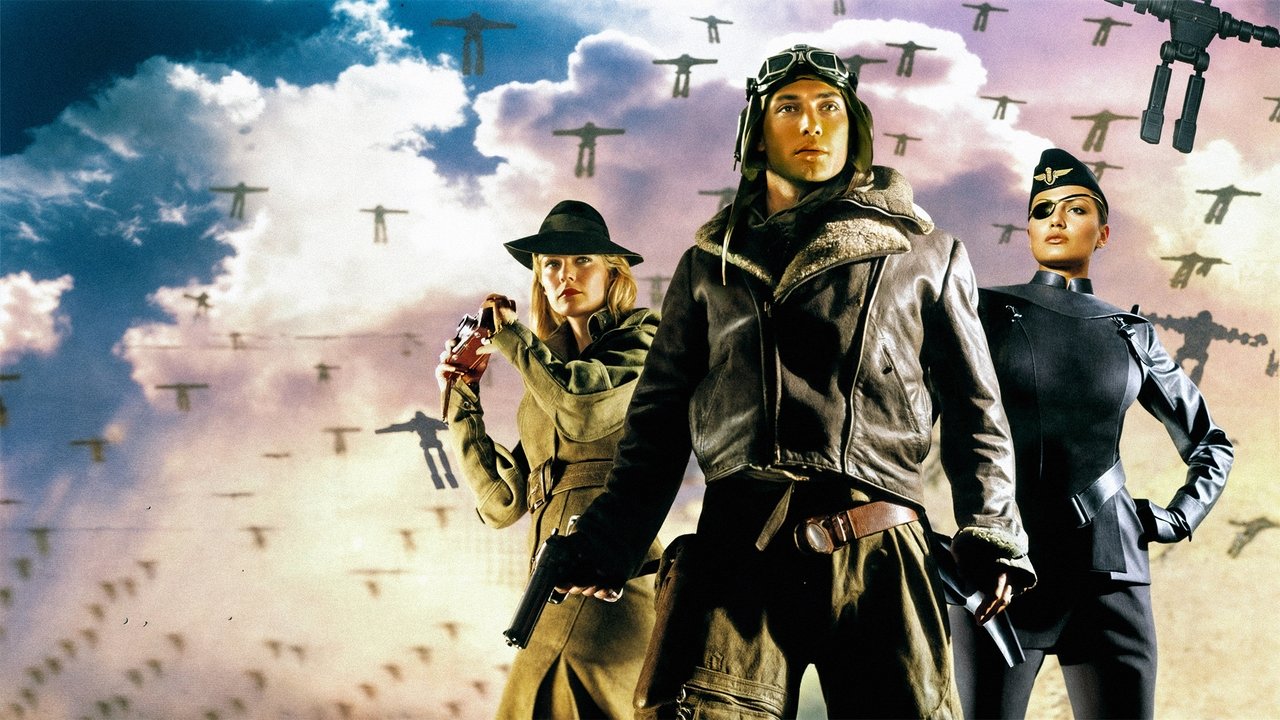
Sky Captain and the World of Tomorrow is a strange beast. It’s a $70 million art house experiment masquerading as a summer blockbuster. It’s a film where every single frame—save for the actors—was built inside a computer, a "digital backlot" technique that was revolutionary at the time and has since become the standard operating procedure for every superhero movie you’ve seen in the last decade. But back then? It felt like a transmission from another planet.
The Digital Da Vinci
The story behind the film is almost as improbable as a giant robot invading Manhattan. Director Kerry Conran (who also did the screenplay) spent years in his basement working on a Mac IIci, piecing together a four-minute teaser that eventually caught the eye of Jude Law. Law, who also produced, saw the potential in this sepia-toned vision and helped assemble a cast that, on paper, should have guaranteed a billion-dollar franchise.
Looking back, the visuals are where the film both triumphs and stumbles. It’s not "realistic" CGI, and it never tries to be. Instead, it’s an intentional homage to the soft-focus cinematography of the 1930s. Everything has a dreamy, hazy glow, as if the entire movie was filmed through a layer of gauze and cigarette smoke. It’s basically a feature-length Instagram filter created before Instagram existed. While the early digital effects can occasionally look flat by 2024 standards, the sheer ambition of the world-building is staggering. When those massive, clanking robots march through the streets of New York, they move with a heavy, deliberate rhythm that feels more like Ray Harryhausen’s stop-motion than modern, fluid pixels.
Pulp Friction and Pilot Grit
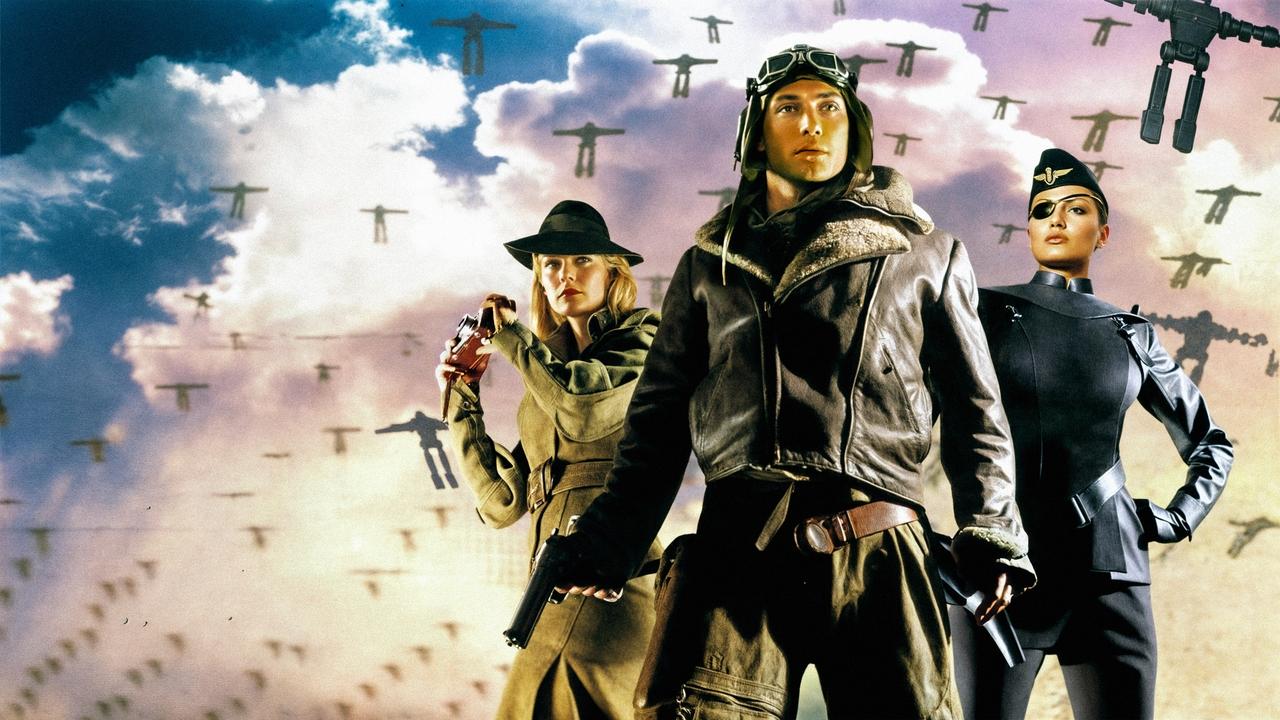
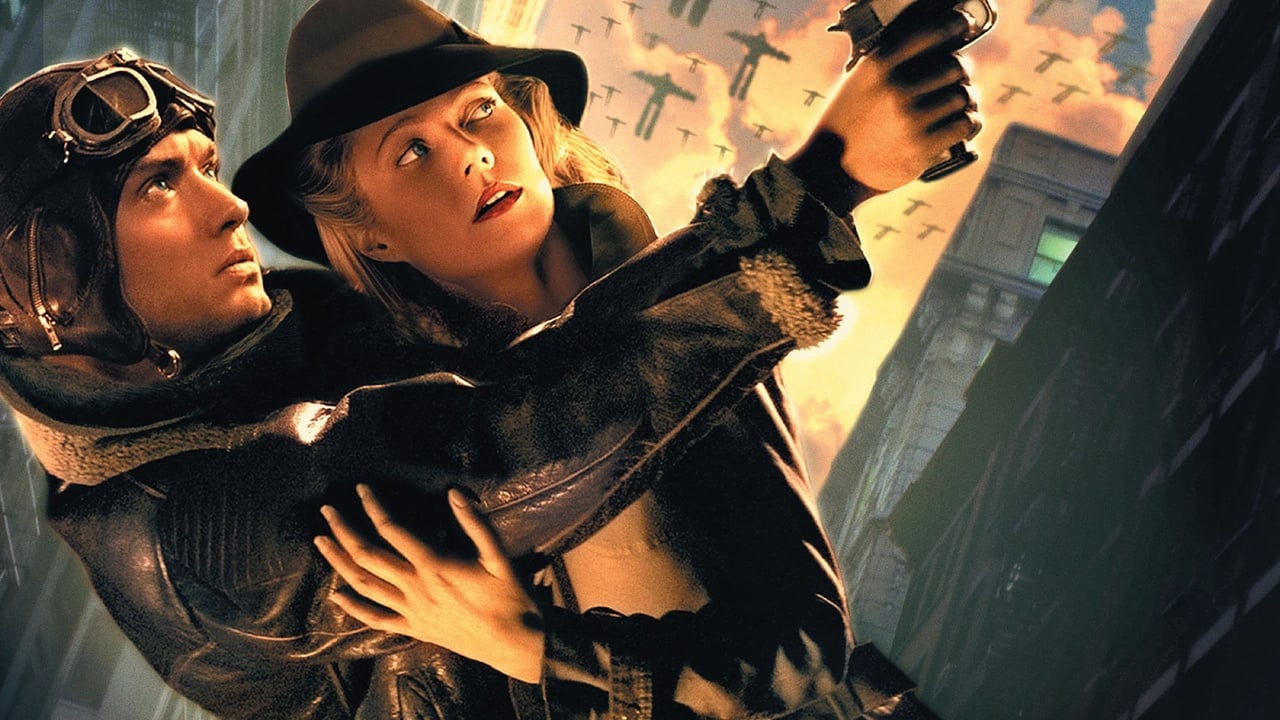
The plot is pure Saturday-morning-serial fluff. Jude Law plays Joe "Sky Captain" Sullivan with a rakish, slightly tired charm—he’s the guy you call when the world is ending but you still want someone who looks good in a flight jacket. He’s joined by Gwyneth Paltrow as Polly Perkins, a relentless reporter who spends half the movie looking for a shot and the other half bickering with her ex. Paltrow plays Polly with a high-speed, fast-talking energy that feels like she’s auditioning for a screwball comedy from 1938.
The action sequences are where the film earns its wings. The underwater dogfight—where Sky Captain’s P-40 Warhawk transforms into a submarine—is a sequence of pure, unadulterated joy. It ignores physics with a confident shrug, prioritizing the "Rule of Cool" over everything else. Then there’s Angelina Jolie (who previously starred in Lara Croft: Tomb Raider) as Franky Cook, an officer with a bedazzled eyepatch who commands a fleet of flying aircraft carriers. Her screen time is criminaly short, but she leaves a massive impression. She’s effectively playing a human cartoon, and she’s the only one who seems to realize how much fun that actually is.
Why It Vanished (And Why You Should Find It)
Despite the star power and the technical wizardry, Sky Captain crashed at the box office. It’s not hard to see why. In a year where audiences were flocking to the tactile, gritty action of The Bourne Supremacy or the epic scale of Spider-Man 2, this sepia-toned oddity felt too detached, too "fake" for the mainstream. It was a movie made for people who grew up on Flash Gordon and The Rocketeer, not for the burgeoning era of "grounded" blockbusters.
One of the most fascinating (and controversial) trivia bits is the "casting" of Sir Laurence Olivier as the villainous Dr. Totenkopf. Since Olivier had been dead for over a decade, Kerry Conran used archival footage and digital manipulation to bring him back—a move that predated the digital resurrections in Star Wars by years. It adds to the film’s eerie, "lost-in-time" quality.
Watching it now, I’m struck by how much heart is buried under those layers of digital fog. It’s a film made by someone who clearly loves the history of cinema, from the lighting of German Expressionism to the adventurous spirit of Indiana Jones. It’s a reminder of a brief window in the early 2000s when studios were willing to gamble tens of millions of dollars on a singular, weird vision.
Sky Captain and the World of Tomorrow is a gorgeous, flawed, and utterly unique piece of digital archaeology. It’s the kind of movie that makes you appreciate the "learning curve" of the CGI revolution, proving that even when the technology is new, style can still trump substance. If you’re looking for a thrill ride that feels like a trip to a museum in a parallel universe, track this one down. It’s a flight worth taking, even if the landing is a little bumpy.

Keep Exploring...
-

Paycheck
2003
-

Final Fantasy: The Spirits Within
2001
-
Star Trek: Nemesis
2002
-
Race to Witch Mountain
2009
-
Escape from L.A.
1996
-
The Saint
1997
-

Star Trek: Insurrection
1998
-
The 6th Day
2000
-

Jurassic Park III
2001
-
Planet of the Apes
2001
-

Basic
2003
-
The Matrix Revolutions
2003
-

National Treasure
2004
-
The Island
2005
-

X-Men: The Last Stand
2006
-
National Treasure: Book of Secrets
2007
-
Babylon A.D.
2008
-

G.I. Joe: The Rise of Cobra
2009
-

Knowing
2009
-
The Losers
2010