Spanglish
"A beautiful, bloated mess of a family portrait."
In 2004, Columbia Pictures spent eighty million dollars on a movie where the primary conflict involves a misunderstood houseguest, a very high-strung mother, and the construction of a perfect egg sandwich. That is Spider-Man adjacent money for a domestic dramedy. It represents a specific, vanished era of "reckless studio confidence" where mid-to-high-budget adult dramas were given the keys to the kingdom before the franchise wars of the 2010s turned everything into a cinematic universe. I watched this recently while eating a cold burrito from a gas station, which felt like a direct personal insult to the gourmet culinary artistry happening on my screen.
The $80 Million Domestic Crisis
James L. Brooks is the architect of the "sad-com." Between Terms of Endearment and As Good as it Gets, he mastered the art of making audiences laugh while simultaneously realizing their own lives are a series of quiet disappointments. Spanglish is his most ambitious swing, and perhaps his most cluttered. The film attempts to juggle a "clash of cultures" narrative, a critique of upper-class parenting, a coming-of-age story, and a forbidden romance, all while keeping the runtime at a sprawling 130 minutes.
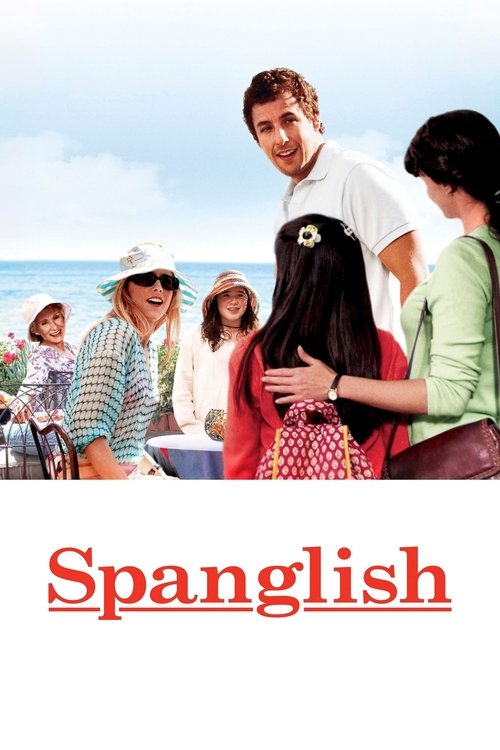
The film follows Flor (Paz Vega), a Mexican immigrant who takes a housekeeping job with the Clasky family to provide a better life for her daughter, Christina (Shelbie Bruce). The Claskys are the quintessential "Blue State" nightmare: John (Adam Sandler) is a celebrated chef who is too nice for his own good, and Deborah (Téa Leoni) is a woman whose anxiety has its own zip code. Téa Leoni’s Deborah is essentially a proto-Karen final boss, a performance so frantic and high-octane that it occasionally tips over from "character study" into "creature feature."
Sandler, Leoni, and the Art of the Simmer
What holds the film together is "The Good Sandler." This was a pivotal moment in the early 2000s when we were all trying to figure out if the guy from Billy Madison was secretly the next great dramatic lead. Following his turn in Paul Thomas Anderson's Punch-Drunk Love (2002), Sandler plays John Clasky with a soulful, simmering decency. He’s a man who communicates through his cooking, and his restraint acts as the much-needed ballast to the chaos around him.

The real discovery, however, was Paz Vega. She was a star in Spain but virtually unknown in the U.S. at the time, and she reportedly spoke no English when she was cast. This authenticates the film's central tension; when Flor finally learns English and is able to speak her mind, it feels like a dam breaking. Her chemistry with Sandler is the film's strongest asset, even if the script refuses to give them the traditional romantic payoff we expect from a Hollywood production.
Then there is the legendary Cloris Leachman as Evelyn, the alcoholic, retired-jazz-singer grandmother. She spends most of the movie in a wine-soaked haze, providing the kind of acerbic, truth-telling commentary that only a veteran like Leachman could deliver with such effortless grace. She’s the secret weapon that keeps the movie from drifting too far into melodrama.
The Ghost of the 130-Minute Dramedy
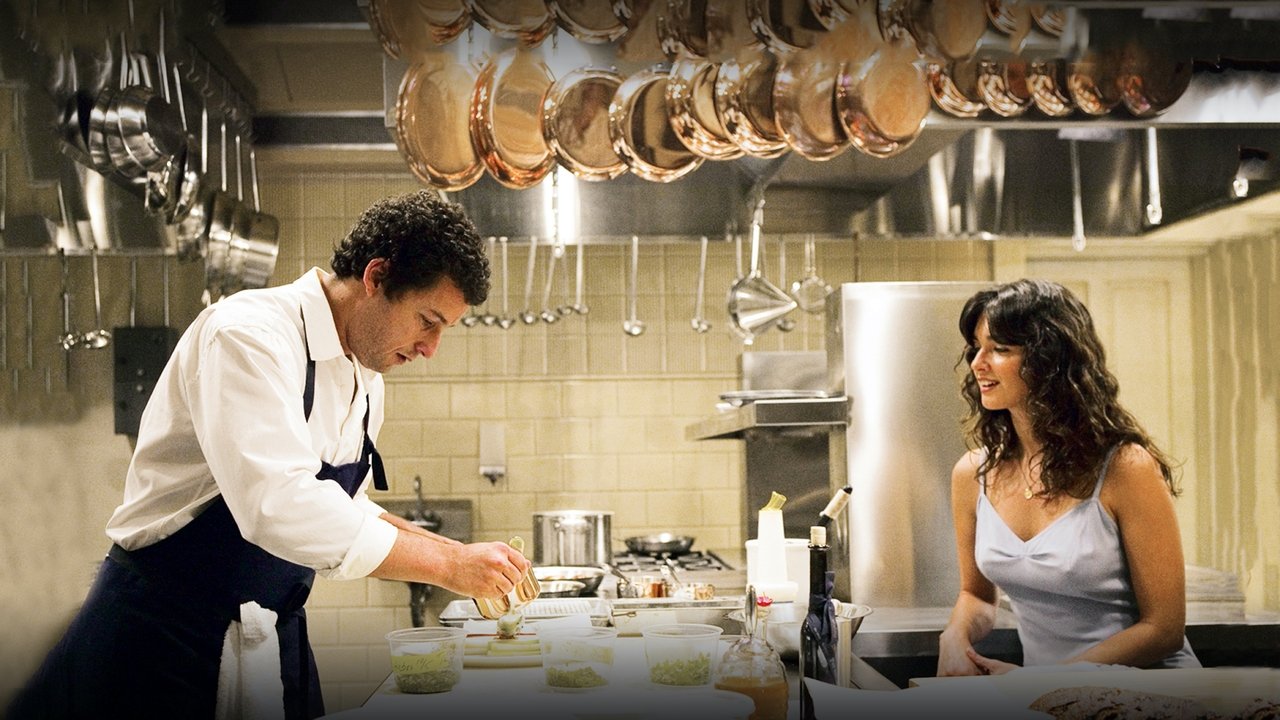
If you look at the DVD extras from the mid-2000s—the era when we actually bought physical discs and watched the "Behind the Scenes" featurettes—you’ll find that the famous sandwich scene was a masterclass in detail. James L. Brooks hired Thomas Keller, the legendary chef of The French Laundry, to teach Adam Sandler how to make that sandwich. It’s a microcosm of the whole film: meticulously crafted, expensive, and perhaps a bit more indulgent than it needs to be.
The film’s obscurity today likely stems from its tonal indecisiveness. Is it a comedy? Sometimes. Is it a heavy drama about the immigrant experience? Also yes. This movie has enough subplots to sustain a three-season HBO miniseries, and by the two-hour mark, you can feel the weight of those eighty million dollars pressing down on the narrative. It’s a messy film, but it’s a human mess. It’s about the impossible choices parents make and the ways we unintentionally hurt the people we’re trying to protect.
The final act of Spanglish avoids the easy, sugary resolution that usually defines the genre. It chooses integrity over wish-fulfillment, which is why it likely didn't set the box office on fire in 2004. It’s a fascinating relic of a time when a major studio would bet the farm on a nuanced story about a chef and his housekeeper. While the pacing is occasionally glacial and Deborah’s character can be a lot to stomach, the warmth of the performances makes it a trip worth taking. It’s a film that reminds me that sometimes the most important things in life are the ones that don't quite fit into a neat, 90-minute package.

Keep Exploring...
-
The Longest Yard
2005
-
Men, Women & Children
2014
-

The Cobbler
2014
-

Sahara
2005
-

Fred Claus
2007
-

Funny People
2009
-
As Good as It Gets
1997
-
Blast from the Past
1999
-
Never Been Kissed
1999
-

S1m0ne
2002
-

Holes
2003
-
First Daughter
2004
-

Casanova
2005
-

Ice Princess
2005
-
The Sisterhood of the Traveling Pants
2005
-

Be Kind Rewind
2008
-

Nick and Norah's Infinite Playlist
2008
-
Princess Protection Program
2009
-

The Informant!
2009
-
Maverick
1994