The Chronicles of Riddick
"He's not a hero. He's just the only one left."
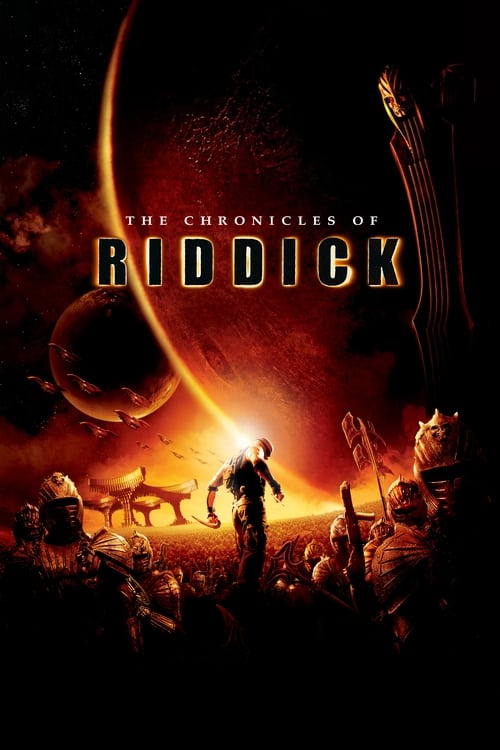
There is a specific kind of madness required to take a lean, mean $23 million survival horror like Pitch Black (2000) and decide its sequel should be a $105 million baroque space opera featuring a literal Dame of the British Empire as a floating air elemental. In 2004, Hollywood was drunk on the "trilogy mentality." Every studio was scouring their back catalogs for a protagonist they could shove into a hero’s journey arc, desperate to find the next Lord of the Rings or The Matrix. Universal looked at Vin Diesel, with his gravel-pit voice and silvered goggles, and decided he was the guy to lead a multi-film mythology.
I watched this recently on a scratched DVD I picked up for three dollars at a garage sale while my neighbor was mowing his lawn for three hours straight, and honestly, the roar of the lawnmower actually added a nice, immersive industrial drone to the film’s soundscape.
A Galaxy of Gothic Excess
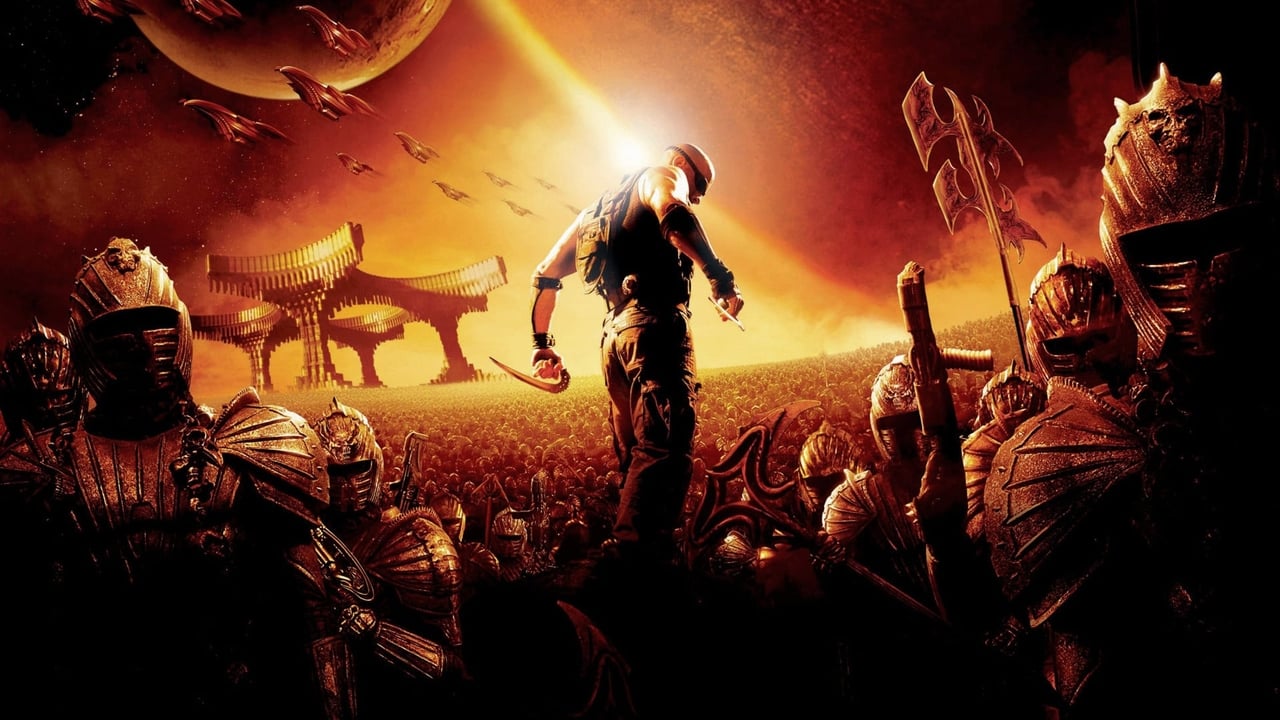
Looking back, The Chronicles of Riddick is a fascinating relic of that early-2000s transition where CGI was finally powerful enough to build entire worlds, but directors hadn't yet figured out how to make them look "lived-in." David Twohy (who also directed the excellent The Arrival) leans into a heavy, metallic aesthetic that feels more like a heavy metal album cover than a standard sci-fi flick. The villains, the Necromongers, are a "convert or die" religious cult that looks like they raided a Halloween store with a $50 million budget and a fetish for Roman breastplates.
The plot is dense—perhaps too dense for its own good. We follow Riddick as he’s pulled out of hiding to stop the Lord Marshal (Colm Feore), a man who has traveled to the "Underverse" and returned with soul-stealing powers. Along the way, we get political maneuvering from Vaako (Karl Urban) and his Lady Macbeth-lite wife, Dame Vaako (Thandiwe Newton). It’s Shakespearean in ambition but often B-movie in execution. Vin Diesel’s acting range here is restricted solely to a low-frequency rumble, but to be fair, that’s exactly what the character of Richard B. Riddick requires. He is a predator who accidentally walked into a high-stakes political drama and just wants to find a nice rock to sit on.
The Art of the Action Set-Piece
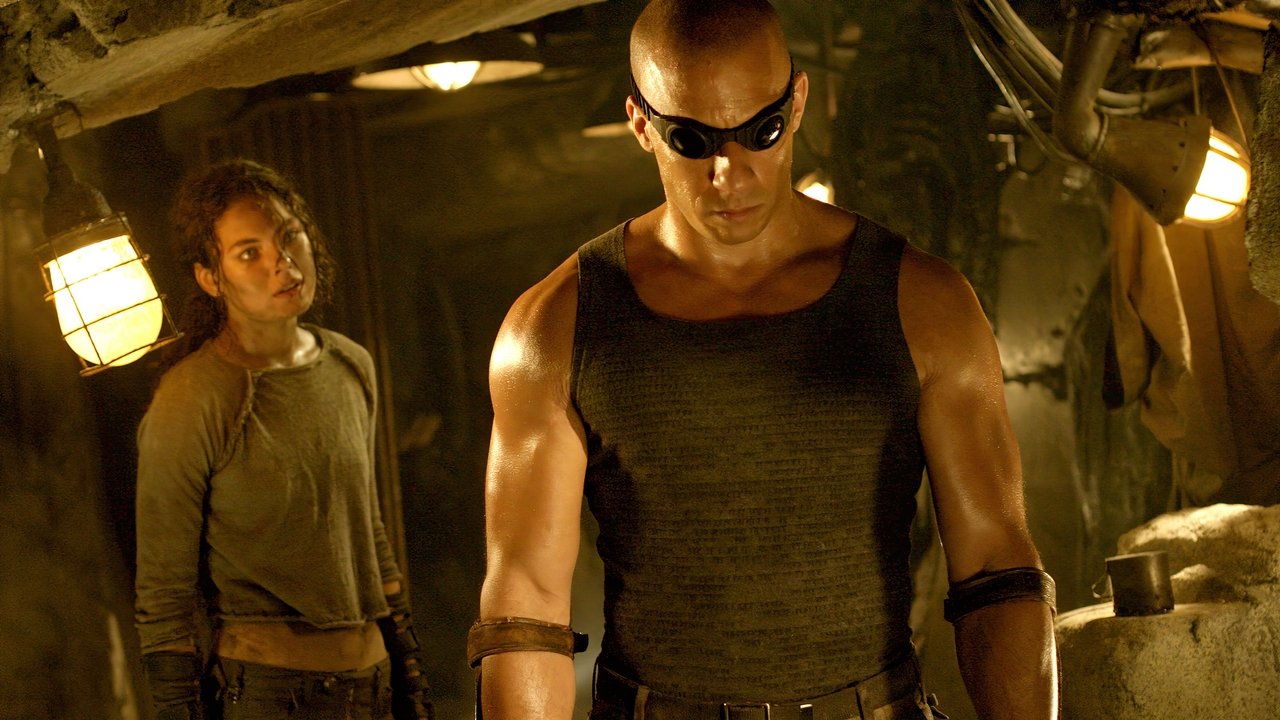
Where the film truly earns its keep is in the middle act: the escape from the prison planet, Crematoria. This is 2004 action filmmaking at its peak. The concept is pure sci-fi gold—a planet where the nights are lethal sub-zero and the days are a literal wall of fire. The sequence where Riddick and a group of convicts, including a grown-up Kyra (Alexa Davalos), have to race across the surface before the sun rises is a masterclass in tension and practical-feeling stakes.
The stunt work here feels heavy and physical. When Riddick fights, it isn’t the flashy, wire-fu seen in The Matrix; it’s brutal, close-quarters knife work and improvised weaponry. There’s a moment involving a tin cup that remains one of the most satisfyingly "tough guy" beats in 2000s cinema. The cinematography by Hugh Johnson uses a high-contrast, bleached-out palette that makes the heat feel oppressive and the shadows feel like safety, echoing the visual language of the first film while expanding the scope.
The Cult of the Director's Cut
It’s no secret that Chronicles flopped upon release. Critics found it self-important, and audiences were confused by the jump from a simple monster movie to a convoluted epic. However, the DVD era saved this film. The Director's Cut added about 15 minutes of footage that better explained Riddick’s "Furian" heritage and his connection to Judi Dench’s character, Aereon. In the early 2000s, the "Special Edition" was the ultimate tool for cinematic redemption, and David Twohy used it to turn a disjointed theatrical mess into a cult favorite.
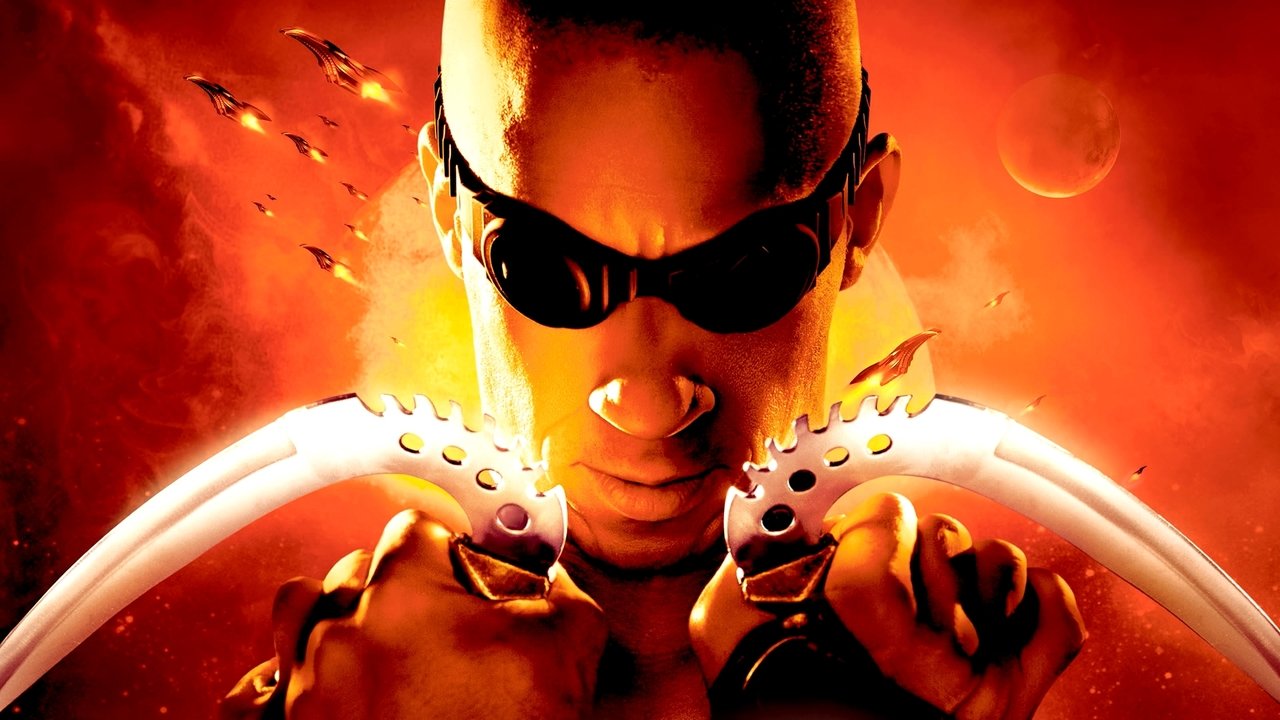
Interestingly, Vin Diesel is the ultimate champion of this franchise. He famously took a pay cut and even traded a cameo in The Fast and the Furious: Tokyo Drift (2006) to Universal in exchange for the rights to the Riddick character. That’s a level of "geek" commitment you don't often see from A-list action stars. It’s that sincerity that makes the movie work despite its flaws. It doesn't wink at the camera. It believes in its own nonsense completely.
The CGI has aged about as well as you’d expect—some of the digital backgrounds look like PlayStation 2 cutscenes—but the physical sets and the sheer audacity of the world-building keep it anchored. It’s a movie that tries to do everything at once and succeeds about sixty percent of the time. In an era of polished, focus-grouped franchise starters, there’s something genuinely refreshing about a movie this weird, this loud, and this committed to being its own strange thing.
Ultimately, The Chronicles of Riddick is the kind of ambitious failure that is infinitely more interesting than a safe success. It’s a film that asks you to care about the "Underverse" and "Threshold" while a shirtless man fights a CGI dog-beast, and if you can get on that wavelength, it’s a blast. It marks a moment in time when sci-fi was trying to find its soul in the digital age, proving that even with all the power in the universe, you still need a good, sharp shiv to get the job done.

Keep Exploring...
-
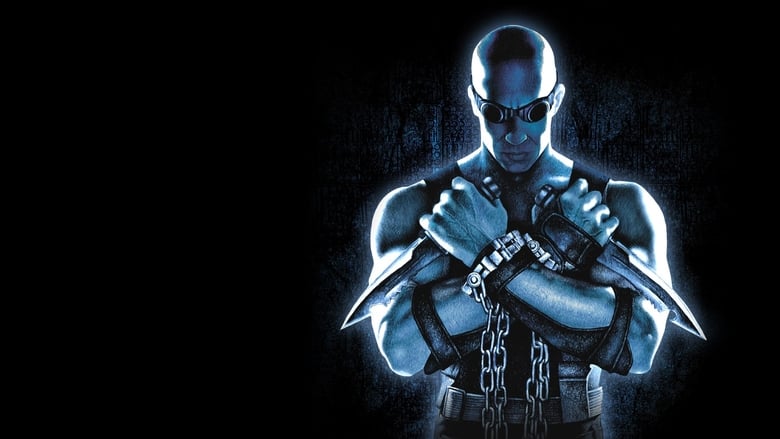
Pitch Black
2000
-

Riddick
2013
-

Babylon A.D.
2008
-

Star Trek
2009
-
Waterworld
1995
-
Hollow Man
2000
-
The 6th Day
2000
-
Evolution
2001
-
The Time Machine
2002
-

The Tuxedo
2002
-
Hulk
2003
-
Terminator 3: Rise of the Machines
2003
-
The Matrix Revolutions
2003
-
AVP: Alien vs. Predator
2004
-
Blade: Trinity
2004
-

I, Robot
2004
-

Æon Flux
2005
-
The Island
2005
-
Superman Returns
2006
-

X-Men: The Last Stand
2006