The Forgotten
"Memory is the ultimate conspiracy."
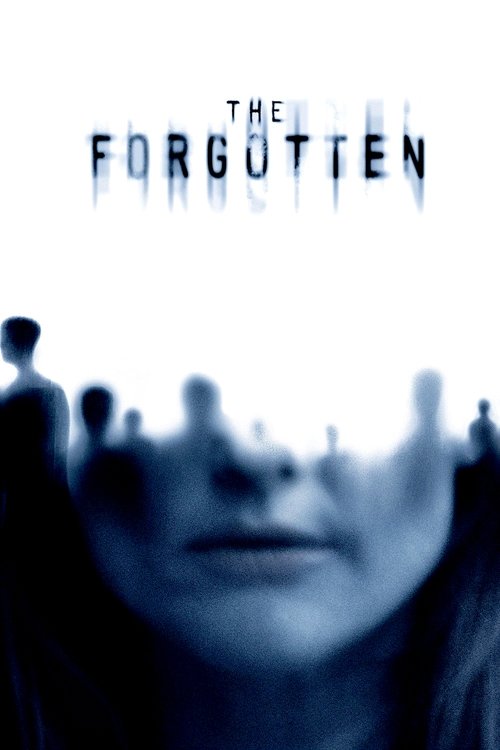
I vividly remember the marketing campaign for The Forgotten. It was 2004, and the trailers featured a scene that became an instant playground legend: a woman standing in a street, mid-conversation, only to be suddenly yanked upward into the sky at terminal velocity by an unseen force. It was the kind of "what the hell was that?" moment that sold millions of tickets. I watched this again recently on a Tuesday night while my cat, Barnaby, spent twenty minutes trying to fight a discarded crinkly plastic bag in the corner of the room, and honestly, the domestic chaos was a fitting backdrop for a movie that thrives on the sensation of the floor falling out from under you.
The early 2000s were a strange, transitional era for Hollywood. We were moving away from the gritty, tactile thrillers of the 90s and leaning into a slicker, more digital paranoia. The Forgotten sits right at that crossroads. It starts as a devastatingly grounded grief drama before pivoting into a high-concept sci-fi conspiracy that feels like a lost, big-budget episode of The X-Files.
The Weight of Julianne’s Grief
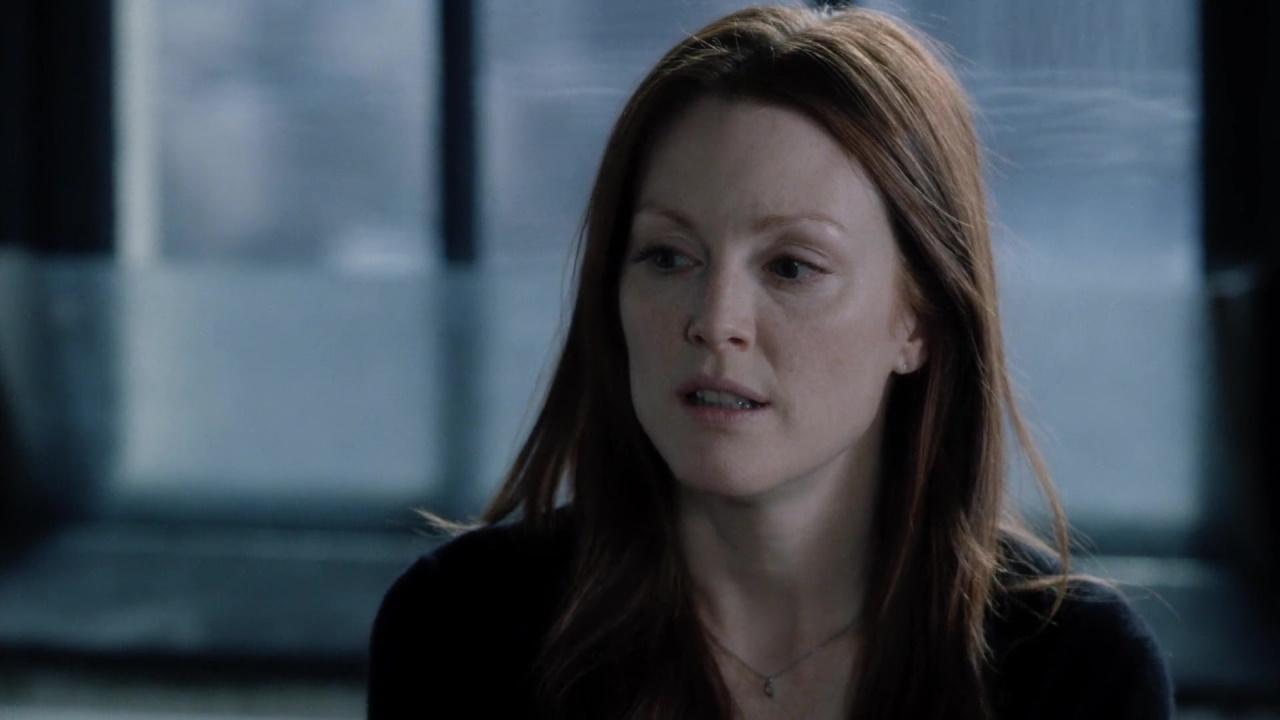
What keeps this movie from floating away into total absurdity—at least for the first hour—is Julianne Moore. Fresh off the heels of Far from Heaven (2002) and The Hours (2002), Moore was at the peak of her "queen of the psychological breakdown" era. She plays Telly Paretta with a raw, vibrating intensity that makes you feel the physical weight of her mourning. She’s grieving an 8-year-old son who, according to her husband (Anthony Edwards) and her psychiatrist (Gary Sinise), never actually existed.
The drama here is genuinely effective because it taps into a universal primal fear: gaslighting. When Telly’s photos of her son Sam turn into blank white sheets of paper, the film handles it with a quiet, eerie restraint. Director Joseph Ruben (who gave us the equally paranoid Sleeping with the Enemy) knows exactly how to frame Moore to make her look isolated, even in a crowded New York City. The scenes where she tries to force a fellow grieving father, Ash (Dominic West, bringing a rugged, pre-The Wire charm), to remember his own daughter are the film’s emotional anchor. The Forgotten is essentially a high-budget episode of The X-Files that forgot to invite Mulder, but Moore treats the material like it’s Shakespeare.
When the Sky Starts Sucking
The middle act of The Forgotten is where the "Modern Cinema" transition really shows its teeth. We see the mid-2000s fascination with "The Twist" and the increasing reliance on CGI to provide "water cooler" moments. That sky-snatch effect? It still looks bizarrely effective today. It doesn't look like traditional flying; it looks like the universe has developed a localized vacuum. The sky-snatch effect looks like God decided to use a Photoshop ‘Liquify’ tool on a human being.
However, this is also where the film’s drama starts to clash with its genre ambitions. The screenplay by Gerald Di Pego asks a lot of its audience. We go from a nuanced study of a mother’s psyche to Alfre Woodard’s Detective Anne Pope getting launched into the stratosphere. There is a specific post-9/11 anxiety baked into the DNA here—the idea of people simply vanishing, of the government (or something higher) being complicit in the erasure of our personal histories. It captures that era’s distrust of authority perfectly, but it struggles to stick the landing once the "A Friendly Man" (Linus Roache) shows up to explain the "experiment."
A Hit That Vanished Into Thin Air
It is a fascinating irony that a movie titled The Forgotten, which grossed over $117 million at the box office, has largely been erased from the cultural conversation. Why did it disappear? Part of it is the ending. It’s no secret that the film underwent significant changes. Apparently, the original ending was much more low-key and grounded, focusing on the psychological aspects rather than the extraterrestrial ones. Test audiences, however, wanted more "payoff," leading to the CGI-heavy climax we have now.
I’ve always felt that the film’s legacy was swallowed by the "twist" culture of the time. In a world where The Sixth Sense and The Others had redefined the thriller, The Forgotten’s revelation felt a bit like a "cheat" to some. But looking back, there’s a lot to admire in its craft. The score by James Horner (the legend behind Titanic and Aliens) is uncharacteristically jagged and cold, adding a layer of sophisticated dread that the script doesn't always earn.
There's also some great "Stuff You Didn't Notice" trivia involving the set design. Throughout the film, if you look closely at the background of Telly’s apartment and the doctor’s office, the colors gradually desaturate as she loses her grip on her "memories." It’s a subtle touch of film literacy that shows Joseph Ruben was trying to do something deeper than a standard popcorn flick.
The Forgotten is a weird, tonal see-saw that shouldn't work as well as it does. It survives on the sheer strength of Julianne Moore’s ability to sell the impossible and a few genuinely shocking jump scares that still hold up in the era of high-definition streaming. It’s a quintessential 2004 artifact—a time when studios were still willing to spend $40 million on an original, high-concept drama that wasn't based on a comic book or a toy line. If you can forgive the slightly goofy third-act logic, it's a journey into paranoia that is well worth a re-discovery. Just try to ignore the fact that the aliens apparently have the technology to cross galaxies but can't figure out how to stop a determined mom in a raincoat.

Keep Exploring...
-
Blindness
2008
-
The Jacket
2005
-
The Good Son
1993
-
The 6th Day
2000
-
Signs
2002
-

The Gift
2000
-
Gosford Park
2001
-
Joy Ride
2001
-
Original Sin
2001
-
The Pledge
2001
-
Solaris
2002
-
In the Valley of Elah
2007
-
Premonition
2007
-

The X Files: I Want to Believe
2008
-
Untraceable
2008
-

The Fourth Kind
2009
-
The Client
1994
-
Double Jeopardy
1999
-
The Astronaut's Wife
1999
-
What Lies Beneath
2000